Zone Skipping: An Essential Logistics Strategy
Zone skipping improves shipping efficiency by consolidating parcels for specific delivery areas, reducing costs and transit times.
Updated
Zone Skipping: An Essential Logistics Strategy
Overview
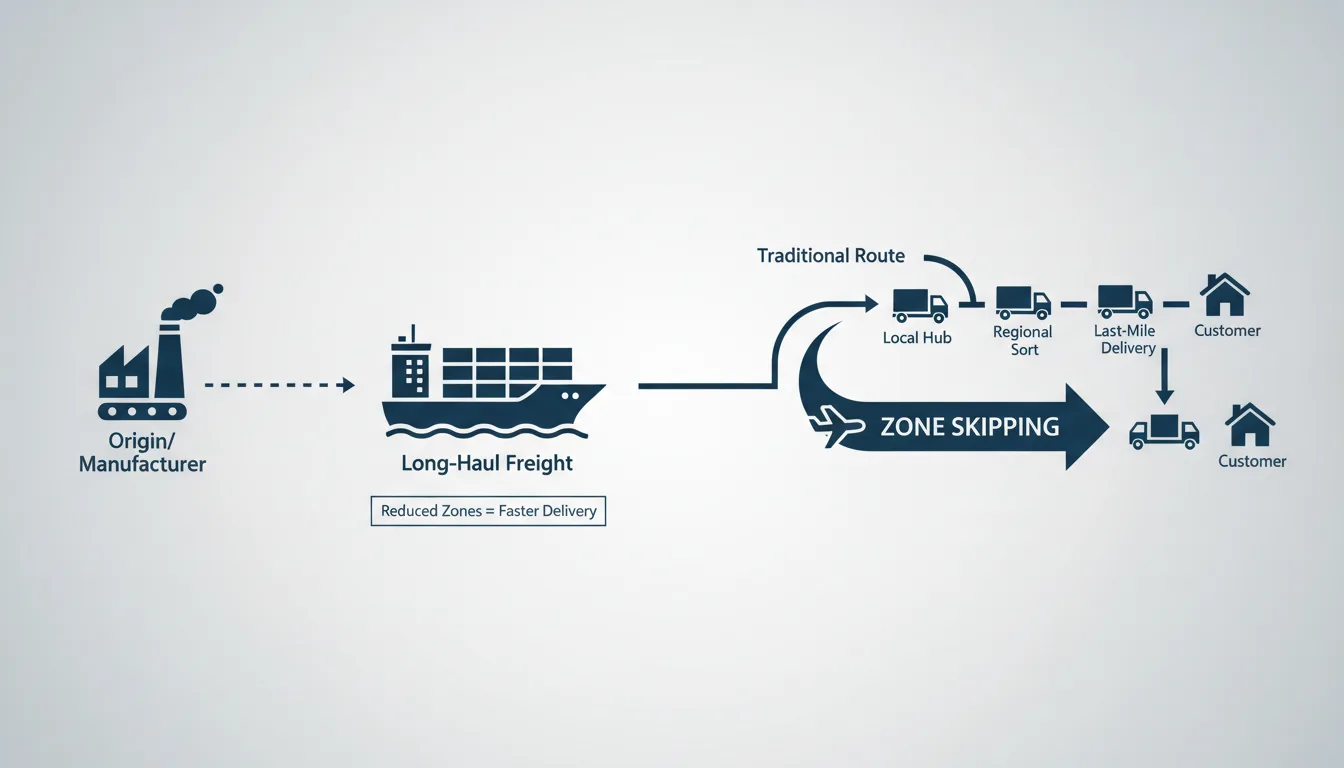
Zone skipping is a logistics strategy that involves consolidating shipments destined for the same geographical area to reduce shipping costs and transit times. This approach is particularly useful for businesses that send a large volume of packages to specific regions. By bypassing sorting facilities and streamlining deliveries directly to certain areas, companies can achieve cost-efficiency and speed in their shipping operations.1
Etymology and Origins
The term "zone skipping" is derived from the practice of bypassing certain logistics zones, which are designated areas that carriers use to sort and route packages. This term became more prominent in the late 1990s with advancements in e-commerce and the need for businesses to optimize their shipping processes. The concept reflects the growing need for efficiency in logistics practices as international trade flourished and competition intensified. The first documented usage of the term can be traced back to logistics discussions aimed at improving shipping efficiencies prior to the explosive growth of online commerce in that era. Linguistically, the term underscores the operational efficiency sought by modern logistics providers, aiming for speed and cost reduction in their services.2
Historical Development
Zone skipping emerged as a logistics concept in response to the rapid growth of e-commerce in the late 20th century. Key developments include:
- 1990s: E-commerce retailers such as Amazon pioneered strategies to reduce shipping costs, leading to the wider adoption of zone skipping practices. Companies like FedEx and UPS began offering solutions that supported direct shipping strategies, facilitating zone skipping for their clients.3
- 2000s: The growth of regional fulfillment centers facilitated the ability to implement zone skipping effectively, as companies consolidated shipments at central points for dispatch to end-users more efficiently. Notable enhancements in supply chain visibility during this decade also contributed to its natural adoption by firms seeking to boost profits amidst rising logistics costs.4
- 2010s: Advances in analytics and logistics technology, including automated shipping solutions and real-time tracking systems, allowed companies to employ more sophisticated zone skipping techniques. Integration with software tools that focus on automated rate selection became commonplace, further streamlining the process. Significant publications like the Council of Supply Chain Management Professionals (CSCMP) and industry standards established a framework for understanding and implementing zone skipping effectively.5
Core Concepts
Zone skipping operates on the principle of freight consolidation. Instead of shipping packages individually and relying on international carriers to handle sorting and delivery, companies combine multiple shipments bound for similar destinations into a single large shipment. This strategy allows companies to leverage volume discounts and negotiate better rates with carriers. Furthermore, using automated rate selection tools helps streamline the process of determining optimal shipping routes and costs, as detailed in guides on automated rate selection and management systems.6
Types and Classifications
Zone skipping can be categorized into several distinct approaches:
- Direct Zone Skipping: Skipping zones entirely and delivering straight to the destination area.
- Cross-Docking: Consolidating incoming shipments at a central location before forwarding them to the final destination without holding inventory, as outlined in the Cross-Docking Guide.
- Hybrid Approaches: Combining strategies such as zone skipping with traditional methods for efficiency.
Industry Applications
Zone skipping is utilized across various industries, particularly in e-commerce, retail, and food distribution. For example:
- E-commerce Companies: Businesses like Amazon often utilize zone skipping to consolidate deliveries from their distribution centers directly to major metropolitan areas, reducing the number of transfers and sortations. This is especially true during high-volume periods, such as the holiday season.7
- Retailers: Big-box retailers such as Walmart use zone skipping to optimize shipping to their stores, minimizing overall delivery costs and ensuring timely restocking. They often utilize advanced inventory management systems to enhance visibility and coordination across their supply chains.8
Benefits and Advantages
The advantages of zone skipping include:
- Cost Savings: Companies can significantly reduce shipping costs by consolidating their shipments and negotiating better rates with carriers.
- Improved Delivery Speed: By minimizing handling time and reducing the number of transit points, deliveries can be expedited.
- Increased Capacity Utilization: Zone skipping allows for more efficient use of truck capacity, reducing the carbon footprint per delivery while also improving sustainability metrics in logistics operations.9
Challenges and Limitations
Despite its benefits, zone skipping faces challenges such as:
- Complexity in Coordination: Managing bulk shipments to multiple destinations requires careful coordination and robust logistical planning, often necessitating more sophisticated software solutions and workflows to maintain efficiency.10
- Carrier Relationships: Companies must maintain strong relationships with logistics providers to ensure preferential treatment and optimal pricing, which can be a challenge in times of fluctuating freight rates.
Best Practices
To implement zone skipping effectively, businesses should consider the following best practices:
- Analyze Shipping Patterns: Use data analytics to understand shipping frequency and volumes to identify optimal consolidation opportunities. Tools such as order management systems can play a crucial role in this analysis.
- Leverage Technology: Invest in technology and infrastructure that enable efficient shipment consolidation and real-time tracking capabilities. This can enhance decision-making and improve shipping accuracy.
- Establish Partnerships: Collaborate with logistics providers who specialize in zone skipping and can facilitate smooth operations, particularly those that offer integrated logistics solutions to help navigate complex shipping landscapes.11
Future Trends
The evolution of zone skipping will increasingly align with technological advancements. Emerging trends include:
- Increased Use of Data Analytics: Enhanced data capabilities will allow for better shipping predictions and route optimizations, leading to more agile logistics networks.12
- Integration of Sustainable Practices: As environmental concerns grow, companies might adopt more eco-friendly logistic practices, ensuring that the efficiency of zone skipping remains aligned with sustainability goals. This includes utilizing greener transportation options and minimizing waste in logistics operations.13
Conclusion
Zone skipping is a powerful logistics strategy that can offer significant cost savings and improved efficiency for businesses engaged in shipping logistics. By understanding its core principles, practical applications, and best practices, logistics professionals can implement this technique to optimize their shipping operations effectively.14