Yard Management Systems
Software for managing trailer movements, dock scheduling, and yard operations at distribution facilities.
Updated
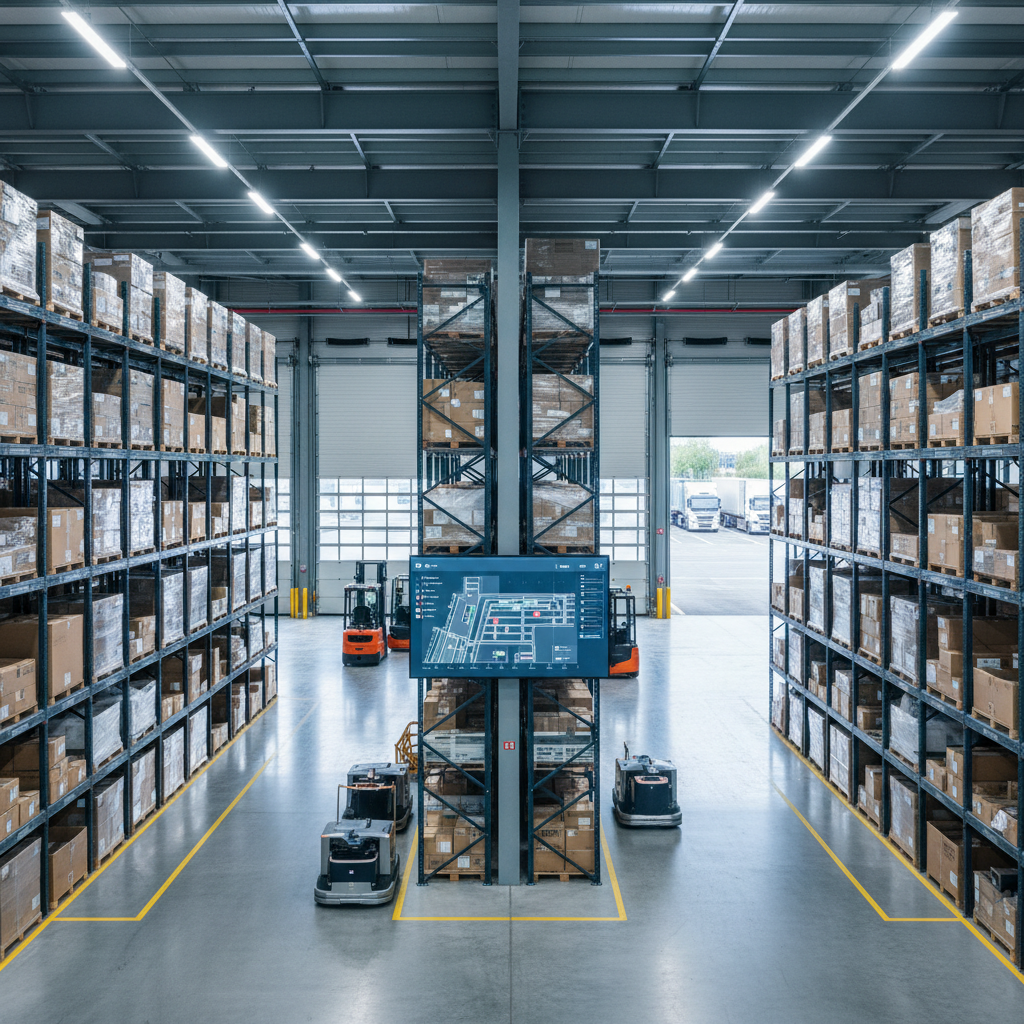
Yard Management Systems
Definition
A Yard Management System (YMS) is software that provides visibility and control over activities in the yard area of a warehouse, distribution center, or manufacturing facility. It tracks trailers, manages dock scheduling, and optimizes yard operations, ensuring that logistics flow smoothly from inbound to outbound operations. A modern YMS is often integrated with other supply chain systems to provide end-to-end operational visibility and efficiency.
Core Functions
Trailer Tracking
- Real-time location visibility enables operators to monitor where each trailer is located within the yard. This is often achieved through technologies like Real-time Locating Systems (RTLS) using RFID or GPS tags on trailers.
- Trailer status (loaded, empty, detained) helps manage inventory and loading efficiency, providing critical data for demand forecasting.
- Dwell time monitoring identifies trailers that have been in the yard for too long, allowing for proactive management actions and reducing potential detention charges.
- Check-in/check-out tracking ensures all movements are documented and accounted for, preventing lost or misplaced units and enhancing security.
Dock Scheduling
- Appointment management streamlines the process of scheduling incoming and outgoing loads, reducing delays and improving truck turn-around times. This can be enhanced by carrier portals for self-service scheduling.
- Door assignment optimization ensures that trailers are docked in the most efficient manner to minimize handling time and prevent congestion at loading docks. Algorithms often consider factors like product type, labor availability, and equipment needs.
- Carrier communication enhances collaboration between logistics providers and facility operators to ensure smooth operations and adherence to Hours of Service (HOS) regulations.
- Queue management helps maintain order and efficiency during peak loading/unloading times, often leveraging digital signage and automated call systems for drivers.
Yard Operations
- Spot trailer movements allow for optimal repositioning of trailers according to daily workload changes, ensuring the right trailer is at the right dock at the right time. Mobile devices for yard jockeys are key for efficient task execution.
- Yard jockey task management assigns tasks to yard personnel effectively, ensuring that all activities are completed in a timely manner. This can be supported by workflow automation tools.
- Route optimization improves the movement of goods within the yard, reducing unnecessary delays and fuel consumption for yard spotters.
- Asset utilization metrics provide insights into how effectively yard space is being used, paving the way for improvements in layout and capacity planning. This can be visually aided by warehouse layout tools.
Gate Management
- Guard house operations enhance security by ensuring only authorized personnel and vehicles enter the premises, often integrating with access control systems and surveillance.
- Driver check-in/check-out processes streamline trailer transfers and inspections for faster throughput, often utilizing driver self-service kiosks.
- Seal verification adds a layer of security by confirming that trailer seals are intact before loading or after unloading, preventing theft and tampering.
- Documentation capture ensures that all necessary paperwork (e.g., bills of lading, manifests) is readily available and traceable, aiding compliance and accountability during audits.
Benefits
Operational Efficiency
- YMS can reduce trailer dwell time by 30-50%, allowing for more effective use of yard resources and increasing overall throughput.
- By improving door utilization rates, facilities can increase throughput without needing to expand physical capacity, leading to better space management.
- Eliminating the need for manual yard searches saves significant time and labor costs, as personnel can quickly locate specific trailers.
- Faster trailer spotting reduces waiting times for trucks, leading to improved carrier relations and enhanced customer satisfaction.
Cost Savings
- Lower detention charges can be achieved through improved scheduling and tracking, enabling facilities to optimize their operations effectively and avoid penalties from carriers.
- Reduced labor costs result from efficient task management and automation of certain yard operations, such as automated gate processes and optimized jockey routes.
- Better asset utilization means less capital tied up in underused equipment and facilities. For instance, optimizing trailer rotation reduces the need for excess trailers.
- Fewer emergency expedites due to better prepared yard operations allow for more predictable shipping schedules and reduced reliance on costly last-minute freight.
Visibility
- Real-time trailer locations provide crucial insights for decision-making and efficient operations, empowering managers to respond quickly to changes.
- Appointment compliance metrics help track adherence to schedules, improving reliability and accountability across the supply chain.
- Performance dashboards visualize key performance indicators (KPIs) such as average dwell time, door utilization, and jockey efficiency, allowing for quick adjustments and continuous improvement.
- Carrier scorecards facilitate performance analysis and enhancement of third-party logistics relationships, encouraging better service from carriers.
Implementation Considerations
Technology Requirements
- RFID or GPS tracking is essential for accurate real-time visibility within the yard. Advanced YMS often leverage a combination of these technologies and IoT sensors.
- Mobile devices for yard jockeys simplify task execution, communication, and data capture, enhancing operational efficiency and accuracy. Reliable hardware solutions are critical here.
- Driver self-service kiosks reduce wait times for drivers and streamline check-in processes, improving driver experience and reducing administrative burden on gate staff.
- Integration with Warehouse Management Systems (WMS) and Transportation Management Systems (TMS) ensures seamless operations across the supply chain, creating a unified flow of information.
Process Changes
- Appointment scheduling policies need adjustment to incorporate YMS capabilities for optimal results, often requiring collaboration with carriers and suppliers. This frequently involves a significant change management effort.
- Gate procedures may require redefinition to align with new technologies and practices, ensuring smooth transitions and adherence to security protocols.
- Yard layouts and zones should be analyzed and adjusted based on insights gained from YMS analytics, optimizing flow and capacity utilization. This includes clearly defined bin locations or parking zones.
- Performance metrics must be refined to measure the efficacy of implemented changes accurately and drive continuous improvement initiatives.
Integration Points
A robust YMS does not operate in isolation; it integrates with various other supply chain systems to create a comprehensive logistics ecosystem:
- Warehouse Management Systems (WMS): YMS feeds trailer status and arrival predictions to the WMS, allowing for pre-staging of inventory and efficient dock door assignments. Conversely, WMS informs YMS about outbound load readiness.
- Transportation Management Systems (TMS): YMS provides real-time updates on trailer availability and status, which the TMS uses for load planning, dispatching, and carrier selection. This optimizes shipment planning and execution.
- ERP Systems: YMS communicates inventory and asset information across departments for holistic oversight. Integration with an ERP system allows for financial reconciliation, procurement planning, and overall business intelligence.
- Carrier Portals: These allow carriers to schedule appointments, view gate instructions, and receive real-time updates on their trailers, fostering better collaboration and reducing communication overhead.
- Order Management Systems (OMS): By providing accurate inbound and outbound trailer information, YMS helps the OMS manage order fulfillment timelines and promises to customers, improving pick, pack, and ship software efficiency.
Etymology and Origins
The term Yard Management System formally emerged in logistics lexicon during the early 1970s, coinciding with the increasing complexity of supply chains and the formalization of logistics as a critical business function. The word 'yard' itself has Old English roots (geard), referring to an enclosed ground or outdoor space, which evolved to describe industrial areas used for storage and staging. The addition of 'management system' reflects the broader trend of applying systematic, data-driven approaches to operational challenges, a concept that gained significant traction in the post-World War II era with the rise of operations research and scientific management principles. Its application in logistics specifically for the outdoor processing and staging of goods marked a key step in recognizing the yard as an integral, manageable part of the supply chain, rather than just an unregulated overflow area.
Historical Development
The concept of managing the flow of goods within a facility's exterior began informally in the mid-20th century as warehouses adopted more systematic approaches to inventory. However, the formal development of YMS can be traced through several key phases:
-
1950s-1960s: Manual & Early Systemization
- Initially, yard management was largely manual, relying on paper logs, whiteboards, and visual inspection. The emergence of early computer systems like Material Requirements Planning (MRP) in the 1960s, notably pioneered by IBM, began to connect internal production needs with inbound material flows, indirectly influencing yard operations.
-
1970s-1980s: Just-in-Time & Basic Automation
- The widespread adoption of Just-in-Time (JIT) inventory management principles, championed by Taiichi Ohno at Toyota, fundamentally changed how goods were tracked and managed. JIT demanded precise scheduling and rapid trailer turns, highlighting the inefficiencies of unmanaged yards. This decade saw the first dedicated efforts to apply computing power to yard processes. The introduction of barcode scanning in the 1980s significantly improved the speed and accuracy of identifying trailers and their contents.
-
1990s-Early 2000s: Dedicated Software & Real-time Visibility
- With the rise of personal computing and networking, dedicated YMS software solutions began to emerge, moving beyond rudimentary scheduling to offering real-time data capture. The integration with evolving Warehouse Management Systems (WMS) and Transportation Management Systems (TMS) became a key focus. Early YMS deployments often involved proprietary systems and significant manual data entry alongside automated processes.
-
2010s-Present: Advanced Automation, IoT, AI, and Cloud
- The last decade has seen YMS evolve into sophisticated, data-driven platforms. The proliferation of Internet of Things (IoT) technology (e.g., GPS, RFID, motion sensors) has enabled highly accurate real-time tracking of trailers and equipment. Artificial intelligence and machine learning are now employed for predictive analytics, optimizing dock assignments, forecasting arrival times, and dynamically managing yard jockey tasks. Cloud-based YMS offerings have made these advanced capabilities more accessible, facilitating rapid deployment and scalability for businesses seeking supply chain efficiency. Today's YMS are crucial components for building resilient and responsive supply chains.
Conclusion
Implementing a Yard Management System is crucial for companies looking to enhance efficiency, cut costs, and improve visibility within their operations. As logistics continues to evolve, driven by technological advancements and increasing customer expectations, so too will the capabilities and importance of YMS in building robust and agile supply chain strategies. Modern YMS solutions are indispensable tools for managing the complexities of today's dynamic logistics landscape.
Sources
- Supply Chain Management Review YMS
- Material Handling & Logistics
- Material Handling & Logistics
- Supply Chain Management Review YMS
- Yard Management Systems Moving from Simple to Sophisticated
- The Value of RTLS in Yard Management
- YMS Adds Power to Supply Chains
- SkuSavvy Visual Warehouse Layout
- SkuSavvy Hardware Guide
- SkuSavvy Workflows Overview
- SkuSavvy Integrations Hub
- SkuSavvy Visual Inventory Management System
- Yard Management Systems: Getting Smarter, More Collaborative and More Connected
- Lean Lexicon: Just-in-Time
- SkuSavvy Batch Picking Guide
- Oracle ERP Cloud
- Yard Management Systems Get Smart
- Yard Management Systems: The Key to Supply Chain Efficiency
- Yard Management Systems in Supply Chain
- Material Handling & Logistics
- Visual Inventory Management System
- Workflows Overview
- Order Management System
- The Evolution of Supply Chain Software
- Predictive Analytics: The future of the supply chain
- Yard Management Gets Smart
- Just-In-Time Inventory Management
- Hours of Service Rules: An Explainer for Shippers
- The Importance of Change Management in Logistics
- Carrier Relations Best Practices
- Yard Management Systems in Supply Chain
- Material Handling & Logistics
- Taiichi Ohno
- Supply Chain Management Review YMS
- Material Handling & Logistics
- Material Handling & Logistics
- Yard Management Systems: Moving from Simple to Sophisticated
- Lean Lexicon: Just-in-Time
- Yard Management Systems Get Smart
- Oracle ERP Cloud
- SkuSavvy Mobile Warehouse Management System
- SkuSavvy Hardware Guide
- SkuSavvy Visual Warehouse Layout
- IoT in Logistics
- YMS Integration Benefits
- Yard Management Systems Get Smart
- Yard Management Systems: The Key to Supply Chain Efficiency
- Supply Chain Management Review YMS
- Material Handling & Logistics
- Yard Management Systems Moving from Simple to Sophisticated
- The Evolution of Supply Chain Software
- Just-In-Time Inventory Management
- Yard Management Systems: Getting Smarter, More Collaborative and More Connected
- Just-In-Time Inventory Management
- The Evolution of Supply Chain Software
- Yard Management Systems: The Key to Supply Chain Efficiency
- YMS Adds Power to Supply Chains
- The Value of RTLS in Yard Management
- The Evolution of Supply Chain Software
- Material Handling & Logistics
- Supply Chain Management Review YMS
- The Value of RTLS in Yard Management
- Mobile Warehouse Management System
- Workflows Overview
- Hardware Guide
- Order Management System
- Pick, Pack, Ship Software
- Shopify Bin Locations
- IoT in Logistics
- Carrier Relations Best Practices
- The Importance of Change Management in Logistics
- Hours of Service Rules: An Explainer for Shippers
- Yard Management Gets Smart