Yard Management
Yard management is crucial for optimizing logistics operations, streamlining the movement of goods, and enhancing supply chain efficiency.
Updated
Overview
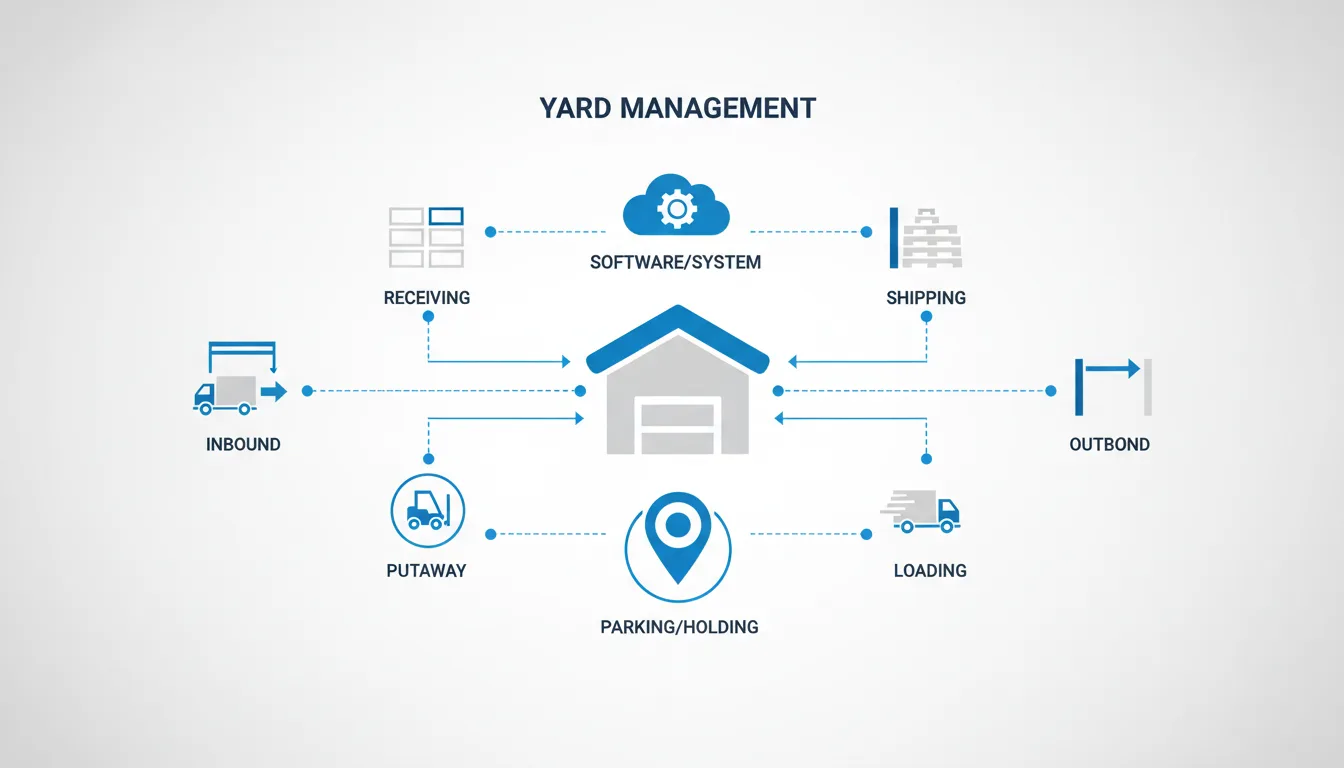
Yard management is an essential aspect of logistics operations that involves overseeing the movement and storage of trucks, trailers, and goods within a designated outdoor area, often adjacent to a warehouse or distribution center. The primary goal is to optimize the use of space, reduce waiting times, and improve overall efficiency in the supply chain. Effective yard management directly contributes to the efficiency of warehousing and distribution strategies, facilitating smoother load and unload processes and decreasing operational costs. It acts as a critical buffer and coordination point between long-haul transportation and internal warehouse operations, ensuring timely flow of inventory and assets.
Etymology and Origins
The term "yard" in a logistical context has long referred to an open area used for storage, sorting, or parking, especially for vehicles or materials. Its usage dates back centuries in various industries, from shipbuilding to railways. The concept of "yard management" as a formalized process, however, began to gain prominence in the mid to late 20th century. It emerged as logistics operations grew in complexity and scale, particularly with the rise of integrated supply chain thinking and the need for more systematic organization and control of shipping and receiving activities in these outdoor areas.
The increasing volume of freight movement post-World War II, coupled with the expansion of trucking and intermodal transportation, underscored the need for managing the flow of trailers more efficiently. While basic yard operations always existed, the formal terminology and the development of specialized systems for "yard management" began to surface in logistics literature and industry discussions in the 1980s and 1990s, reflecting a growing focus on operational efficiency beyond the four walls of the warehouse itself [3, "Yard Management Systems: A Guide to Optimizing Logistics Operations"]. This period marked the recognition of the yard as a distinct functional area requiring dedicated attention and solutions, rather than just an extension of warehouse or transportation management.
Historical Development
Yard management has evolved significantly, mirroring advancements in logistics technology and operational philosophies:
-
Pre-1950s (Manual Era): Early yard practices were entirely manual, relying on visual inspection, paper logs, chalkboards, and two-way radios. Yard personnel manually tracked trailer locations and statuses, often leading to inefficiencies, lost trailers, and significant detention costs [4, "The Evolution of Yard Management Systems"]. The focus was primarily on basic staging and parking.
-
1950s-1970s (Emergence of Scale): With the post-war economic boom and the expansion of the freight and transportation industries, companies faced growing volumes and complexity. The advent of containerization and intermodal transport further complicated yard operations. Basic dispatch and scheduling began to emerge, often still manual or using rudimentary card systems.
-
1980s (Computerization Begins): The advent of computerized systems, including early Warehouse Management Systems (WMS) and Manufacturing Resource Planning (MRP II) systems, allowed for better tracking of inventory and resources. While not directly focused on the yard, these systems laid the groundwork for automated data collection and laid the foundation for integrating yard activities with broader supply chain operations. The rise of Just-In-Time (JIT) manufacturing philosophies, championed by companies like Toyota, placed immense pressure on precise delivery and pickup schedules, making efficient yard operations critical [5, "The Toyota Production System: Leaner Manufacturing"].
-
1990s (WMS Integration & Barcode Adoption): The widespread implementation of advanced Warehouse Management Systems (WMS) began to incorporate some yard management functionalities. This decade saw the proliferation of barcode technology, enabling more accurate tracking of goods and trailers. Early standalone Yard Management Systems (YMS) also started appearing, recognizing the yard as a distinct optimization opportunity separate from the warehouse interior. These systems enabled real-time visibility and basic data analysis for trailer movements and dock utilization.
-
2000s (Real-time Visibility & Specialization): This era brought significant technological advancements. The commercial viability of Global Positioning Systems (GPS), Radio-Frequency Identification (RFID), and telematics allowed for truly real-time tracking of trailers and assets within the yard. Specialized YMS solutions became more sophisticated, offering advanced features like dynamic scheduling, gate automation, and integration with transportation management systems (TMS). Companies began to leverage web-based platforms for better communication and collaboration with carriers.
-
2010s to Present (Automation, AI, IoT, and Predictive Analytics): The modern era of yard management is characterized by deep integration of technologies such as the Internet of Things (IoT), advanced analytics, and Artificial Intelligence (AI). IoT sensors on trailers and gate equipment provide granular, real-time data. AI and machine learning algorithms are now used for predictive forecasting of yard traffic, dynamic optimization of dock assignments, and autonomous yard trucks are undergoing pilot testing in various facilities [6, "The Rise of Intelligent Automation in Logistics"]. The focus has shifted from reactive management to proactive and predictive optimization, aiming for fully digital and highly efficient yard operations.
Core Concepts
At its core, yard management entails several key activities, often orchestrated by a dedicated Yard Management System (YMS) or integrated warehouse management system, to ensure smooth operations:
-
Trailer Tracking: This involves monitoring the real-time location, status (e.g., loaded, empty, awaiting inspection, in transit to dock), and contents of trailers within the yard. Advanced systems use GPS, RFID tags, or even barcode scanning at key checkpoints to provide accurate data, ensuring optimal assignments and reducing idle time. This visibility is crucial for proactive decision-making and preventing lost or misplaced trailers.
-
Gate Check-in and Check-out: Managing the secure and efficient process of vehicles entering and leaving the yard. This includes capturing essential data like driver information, carrier, trailer number, appointment details, and seal numbers. Automated gate systems with license plate recognition (LPR) and self-service kiosks can significantly speed up this process, improve security, and feed real-time data directly into the YMS and broader order management systems.
-
Dock Scheduling: Effectively coordinating inbound and outbound dock appointments for incoming and outgoing shipments. This aims to minimize congestion, reduce driver waiting times, and optimize labor and equipment utilization at the loading docks. Modern systems incorporate factors like carrier arrival times, load characteristics, and warehouse labor availability to create dynamic schedules, preventing bottlenecks and improving overall throughput.
-
Yard Inventory Management: Beyond just tracking trailers, this involves managing the inventory within the trailers parked in the yard. For facilities using trailers as temporary storage or for cross-docking, knowing what goods are in which trailer is critical. This can be supported by visual inventory management systems that provide a graphical representation of yard contents.
-
Spotting and Shuttling: Managing the movement of trailers between parking spots, docks, and other yard locations (e.g., maintenance bays). This often involves dedicated yard hostlers or 'spotters' and can be optimized for efficiency and fuel consumption through intelligent dispatching from the YMS.
-
Yard Security: Implementing measures to protect goods, equipment, and personnel within the yard. This includes access control at gates, surveillance cameras, lighting, and clear traffic flow management to prevent theft, damage, and accidents.
Industry Applications
Yard management is integral across a wide spectrum of industries where goods are received, stored, and shipped, ranging from manufacturing to retail and third-party logistics (3PL) providers:
-
Retail and E-commerce Distribution: Major retailers and e-commerce giants utilize sophisticated YMS to streamline their large-scale distribution operations. For example, a large retailer might manage hundreds of trailers daily at a single distribution center, ensuring timely replenishment of store shelves or direct-to-consumer fulfillment. Effective yard management ensures that inbound products from suppliers are rapidly processed and that outbound shipments to stores or customers meet strict delivery windows. This is crucial for managing diverse product flows and maintaining high order fulfillment rates.
-
Manufacturing: In manufacturing plants, yard management is critical for managing the flow of raw materials, components, and finished goods. Just-In-Time (JIT) production relies heavily on precise scheduling of material deliveries to production lines. A manufacturing firm might use a YMS to coordinate the arrival of components from multiple suppliers, stage them efficiently, and ensure they are ready for production without causing delays or accumulating excess inventory. It also manages the dispatch of finished products to customers or other distribution points.
-
Third-Party Logistics (3PL) Providers: 3PLs, which manage logistics for multiple clients, heavily depend on robust yard management. Their yards often handle a diverse range of products, carriers, and service level agreements. A 3PL uses YMS to efficiently manage a shared yard space, allocating resources, prioritizing client shipments, and minimizing detention charges for their varied clientele. This capability directly impacts their ability to offer competitive and reliable logistics services.
-
Food & Beverage: For perishable goods, rapid movement through the yard is paramount. YMS helps prioritize refrigerated trailers, manage cold chain integrity, and ensure products reach their destination before spoilage, minimizing waste and ensuring food safety compliance.
Benefits and Advantages
Implementing an effective yard management system offers numerous strategic and operational advantages that contribute to overall supply chain resilience and profitability:
-
Improved Visibility and Control: Real-time data and monitoring enable operators to track trailer locations, contents, and statuses with high precision. This granular visibility leads to informed decision-making, allowing for proactive adjustments to schedules and resource allocation, ultimately enhancing throughput and operational control across the entire facility.
-
Reduced Congestion and Delays: Effective dock scheduling and dynamic yard planning minimize bottlenecks at gates and docks. By optimizing trailer flow and reducing driver waiting times, YMS significantly cuts down on carrier detention and demurrage fees, which can be substantial. This also leads to faster turnaround times for trucks, improving carrier satisfaction and relationships.
-
Enhanced Safety and Security: Better visibility, organization, and controlled traffic flow within the yard help to reduce accidents for personnel and equipment. Automated gate processes improve security by verifying credentials and logging all entries/exits, helping to prevent theft and unauthorized access. Clear traffic patterns and designated parking also contribute to a safer working environment.
-
Optimized Resource Utilization: YMS helps maximize the use of valuable yard space, docks, and spotting equipment. By providing insights into capacity and usage, it allows for more efficient staging of trailers, reducing the need for costly off-site parking. It also optimizes the dispatching of yard hostlers, ensuring they are used efficiently.
-
Cost Reduction: Through reduced detention fees, optimized labor for spotting, decreased fuel consumption from unnecessary idling, and better utilization of space, YMS directly contributes to significant operational cost savings. Avoiding product spoilage (especially in temperature-controlled environments) and minimizing inventory loss also contribute to cost efficiency.
-
Improved Compliance and Reporting: YMS facilitates compliance with safety regulations (e.g., driver hours of service), customs requirements, and environmental standards. It also generates comprehensive data for performance reporting, helping identify areas for continuous improvement and supporting audit trails.
Challenges and Limitations
Despite its significant benefits, implementing and managing a yard management system presents several challenges:
-
Data Integration Complexity: Ensuring that yard management systems are effectively integrated with broader supply chain management software—such as Warehouse Management Systems (WMS), Transportation Management Systems (TMS), Enterprise Resource Planning (ERP), and Order Management Systems (OMS)—can be technically complex and resource-intensive. Disparate systems can lead to data silos, inaccuracies, and fragmented visibility, hindering the true benefits of a YMS [7, "Supply Chain Integration: Challenges and Solutions"].
-
Changing Demand Patterns and Volatility: Fluctuations in demand, seasonality, and unexpected events (e.g., weather, traffic, supplier delays) can create unpredictable challenges in scheduling and utilization of yard resources. Static scheduling systems struggle to adapt, leading to congestion or underutilization. Modern YMS need to be agile and incorporate predictive analytics to respond effectively to these changes.
-
Infrastructure and Space Constraints: Many older facilities were not designed with modern yard management in mind. Limited physical space, inadequate lighting, poor pavement, or suboptimal gate layouts can impede efficient operations and limit the effectiveness of even the most advanced YMS. Expanding or reconfiguring a yard can be a significant capital expenditure.
-
Technology Adoption and Training: Implementing new technologies like RFID, IoT sensors, or automated gates requires significant investment not only in hardware and software but also in training personnel. Resistance to change, lack of technical skills among yard staff, or insufficient training can hinder successful adoption and lead to operational inefficiencies.
-
Cost of Implementation: While the long-term ROI of a YMS can be substantial, the initial capital outlay for software, hardware (RFID readers, GPS, cameras, automated gates), and integration efforts can be considerable, especially for larger or more complex operations. Justifying this investment requires a clear business case and anticipated returns.
To overcome these limitations, companies often invest in advanced technological solutions, leverage robust integration platforms, and adopt lean practices to improve adaptability, responsiveness, and achieve a truly connected supply chain.
Best Practices
To maximize the efficacy of yard management, organizations should consider adopting a comprehensive approach incorporating technology, process optimization, and personnel development:
-
Implement a Robust Yard Management System (YMS): Invest in a dedicated YMS or a WMS with strong yard management capabilities. This system should offer real-time visibility, automated gate processes, dynamic dock scheduling, and comprehensive reporting. Integrating it with other supply chain systems (WMS, TMS, ERP) is crucial for end-to-end visibility and data flow.
-
Utilize Mobile and Real-time Technologies: Implementing a mobile warehouse management system or mobile YMS applications can facilitate real-time updates, communication, and task management among yard team members, spotters, and gate personnel. Technologies like GPS, RFID, and IoT sensors provide invaluable real-time asset tracking and status updates, enabling proactive management.
-
Standardize Processes and KPIs: Establish clear, standardized operating procedures for all yard activities, from gate check-in to trailer spotting and dock assignments. Define and track key performance indicators (KPIs) such as average trailer dwell time, dock utilization rate, gate throughput, and carrier detention costs. Regular monitoring of these metrics helps identify bottlenecks and areas for improvement, contributing to employee productivity.
-
Optimize Yard Layout and Flow: Periodically review and optimize the physical layout of the yard to improve traffic flow, maximize space utilization, and enhance safety. Designate clear lanes for ingress/egress, parking, and staging. Consider a visual warehouse layout tool for planning and simulating changes.
-
Implement Proactive Dock Scheduling: Move beyond first-come, first-served to a proactive appointment scheduling system. This should consider factors like carrier specificities, load characteristics, required equipment, and warehouse labor availability to create balanced and efficient schedules, significantly reducing waiting times and congestion.
-
Regular Training and Continuous Improvement: Provide periodic training for staff on new technologies, standardized procedures, and safety protocols. Foster a culture of continuous improvement by conducting regular audits of yard operations, soliciting feedback from staff and carriers, and iteratively refining processes to enhance efficiency and safety.
-
Leverage Data Analytics and AI: Utilize the data collected by the YMS to gain insights into operational patterns. Employ predictive analytics (possibly via AI/ML) to forecast peak times, optimize resource allocation, and anticipate potential issues before they occur. This transforms reactive management into proactive optimization.
Future Trends
As logistics and supply chain operations continue to evolve, yard management is expected to embrace even more sophisticated technologies and strategies, transforming into highly intelligent and autonomous operations:
-
Artificial Intelligence (AI) and Machine Learning (ML): AI will play an increasingly critical role in forecasting yard traffic, optimizing resource allocation, and enhancing decision-making processes. AI algorithms can analyze historical data, real-time sensor inputs, and external factors (e.g., weather, traffic) to dynamically adjust dock schedules, optimize trailer moves, and predict potential delays or congestion points. This leads to predictive and prescriptive yard management [8, "Artificial Intelligence in Logistics and Supply Chain Management"].
-
Advanced Automation and Robotics: Automated systems will become increasingly prevalent. This includes not only automated gate processes but also the deployment of autonomous yard trucks (AYTs) or hostlers for moving trailers between parking spots and docks. Drone surveillance can provide real-time aerial views for security and identifying available spaces. These technologies aim to reduce manual labor, increase operational speed, and improve safety.
-
Internet of Things (IoT) and Digital Twins: IoT sensors on trailers, equipment, and yard infrastructure will provide a rich stream of real-time data on location, temperature, vibration, and even door status. This data will feed into a "digital twin" of the yard – a virtual replica that simulates real-world conditions, allowing managers to test scenarios, optimize layouts, and identify efficiencies in a risk-free environment.
-
Enhanced Integration and Collaboration: Future YMS will offer deeper, more seamless integration with a broader ecosystem of supply chain systems, including TMS, WMS, ERP, and even external carrier systems. This will foster greater collaboration across the entire supply chain, providing end-to-end visibility and enabling synchronized planning and execution from origin to final destination.
-
Sustainability and Green Logistics: Yard management will increasingly focus on reducing its environmental footprint. This includes optimizing trailer movements to minimize idling, transitioning to electric yard hostlers, optimizing space to reduce land use, and implementing energy-efficient lighting. YMS will incorporate sustainability metrics into its optimization algorithms.
Related Concepts
Yard management is closely related to several integral logistics concepts, as it acts as a critical nexus connecting them:
-
Supply Chain Management (SCM): YMS is a vital component of SCM, bridging the gap between transportation and warehousing. Effective yard management ensures the smooth flow of goods through the entire supply chain, impacting lead times, inventory levels, and customer satisfaction.
-
Warehouse Operations: The efficiency of a warehouse, including activities like bin put-away, stock replenishment, and order fulfillment, is heavily dependent on the timely and organized arrival and departure of trailers from the yard. Poor yard management can create significant backlogs for warehouse staff.
-
Transportation Management (TMS): YMS often integrates with TMS to provide a complete picture of freight movement. While TMS manages over-the-road transportation, YMS takes over once a truck enters the facility, optimizing its local movement and dock assignment. Data from YMS feeds back into TMS for carrier performance analysis and future scheduling.
-
Inventory Management: Trailers in the yard can often serve as temporary inventory storage. Effective yard management, therefore, plays a role in inventory visibility and ensuring that the right inventory is accessible when needed, preventing stockouts or excess holding costs.
Sources
- Mobile WMS Overview
- Order Fulfillment Guide
- Yard Management Systems: A Guide to Optimizing Logistics Operations
- The Evolution of Yard Management Systems
- The Toyota Production System: Leaner Manufacturing
- The Rise of Intelligent Automation in Logistics
- Supply Chain Integration: Challenges and Solutions
- Artificial Intelligence in Logistics and Supply Chain Management