Workforce Optimization in Logistics
Workforce optimization in logistics involves enhancing employee performance and resource allocation to improve efficiency and reduce costs.
Updated
Overview
Workforce optimization (WFO) refers to the systematic process of improving employee performance, managing labor costs, and optimizing resource allocation within an organization to enhance overall efficiency and productivity. In the logistics sector, this entails strategically streamlining operations, reducing costs, and ensuring that human resources, equipment, and facilities are utilized to their maximum potential. The importance of workforce optimization cannot be overstated, as it directly influences the efficiency of supply chain processes, from order fulfillment to inventory management and transport operations, ultimately impacting customer satisfaction and profitability.
Etymology and Origins
The term "workforce optimization" is a modern construct that gained significant traction in the late 20th and early 21st centuries. Its roots, however, can be traced back to earlier management philosophies focused on efficiency and productivity:
- Linguistic Roots: The term combines "workforce," referring to the labor pool, with "optimization," derived from the Latin optimus, meaning "best." Optimization, as a scientific concept, emerged from mathematics and operations research in the mid-20th century, aiming to find the most effective solution to a problem given specific constraints.
- Early Concepts: Precursors to modern WFO include Frederick Winslow Taylor's scientific management principles in the early 20th century, which sought to analyze and synthesize workflows to improve economic efficiency, especially labor productivity. Frank and Lillian Gilbreth's time and motion studies further refined these ideas, focusing on eliminating waste and improving efficiency in manual tasks.
- Evolution of the Term: While "workforce management" (WFM) has been around longer, primarily dealing with scheduling, time & attendance, and payroll, "workforce optimization" emerged as a broader concept. It gained prominence particularly in the call center industry in the 1990s and early 2000s, where complex scheduling, performance monitoring, and quality assurance necessitated a more integrated approach. The advent of sophisticated software solutions and data analytics then propelled its adoption across other labor-intensive sectors, including logistics, formalizing its usage beyond simple scheduling to encompass a holistic view of people, processes, and technology.
Historical Development
The concept of optimizing human effort has evolved significantly, progressing from manual analysis to sophisticated AI-driven systems:
- Early 20th Century: Scientific Management & Time Studies: The foundational ideas for workforce optimization were laid by pioneers like Frederick Taylor (late 19th - early 20th century) with his scientific management principles, and Frank and Lillian Gilbreth's systematic time and motion studies. Their work focused on standardizing tasks, improving tools, and incentivizing performance, marking the first efforts to systematically analyze and enhance labor productivity in industrial settings.
- Mid-20th Century: Operations Research & Early Computing (1940s-1960s): During and after World War II, Operations Research (OR) developed as a discipline, applying mathematical methods to complex organizational problems, including resource allocation and scheduling. Early mainframe computers began assisting with payroll and basic employee scheduling, moving beyond purely manual methods.
- 1970s: Material Requirements Planning (MRP) & Just-in-Time (JIT): The introduction of more sophisticated systems like Material Requirements Planning (MRP) helped manufacturers plan production more effectively, indirectly influencing labor needs. Simultaneously, the adoption of Just-in-Time (JIT) manufacturing at Toyota, as detailed in The Machine That Changed the World by Womack, Jones, and Roos, showcased early efforts to align workforce tasks precisely with production needs to eliminate waste and improve efficiency across the entire production system. This era emphasized lean operations and process efficiency, setting the stage for more refined workforce planning.
- 1980s: Emergence of Workforce Management Software: The advent of personal computers and more powerful databases led to the development of dedicated software for tracking employee hours, attendance, and basic labor scheduling. These automated systems laid the groundwork for modern Workforce Management (WFM) software, providing initial tools for better managing labor resources.
- 1990s: ERP Integration & Call Center WFO: Companies began adopting Enterprise Resource Planning (ERP) systems, integrating workforce management features into broader business management frameworks, enabling a more holistic view of resources. Crucially, the explosion of call centers drove the development of advanced Workforce Optimization suites, which combined scheduling, quality monitoring, and performance analytics to manage large, dynamic workforces.
- 2000s: Cloud-Based Solutions & Real-time Analytics: The proliferation of the internet and cloud computing transformed WFO. Cloud-based solutions allowed for real-time data analytics, greater flexibility in workforce management, and improved accessibility, significantly enhancing decision-making capabilities. This era saw WFO extend beyond call centers to broader service and logistics operations.
- 2010s-Present: AI, Predictive Analytics, and Mobile Integration: The current decade is characterized by the integration of artificial intelligence (AI) and machine learning (ML) for predictive analytics, enabling proactive scheduling based on forecasted demand, employee behavior, and external factors. Mobile solutions for workforce management have become standard, allowing real-time communication, task assignment, and productivity tracking on the go. Existing literature such as HR context publications from this period consistently emphasize advanced analytics and predictive modeling in employee management, contributing to a better understanding of advanced workforce optimization strategies.
Core Concepts
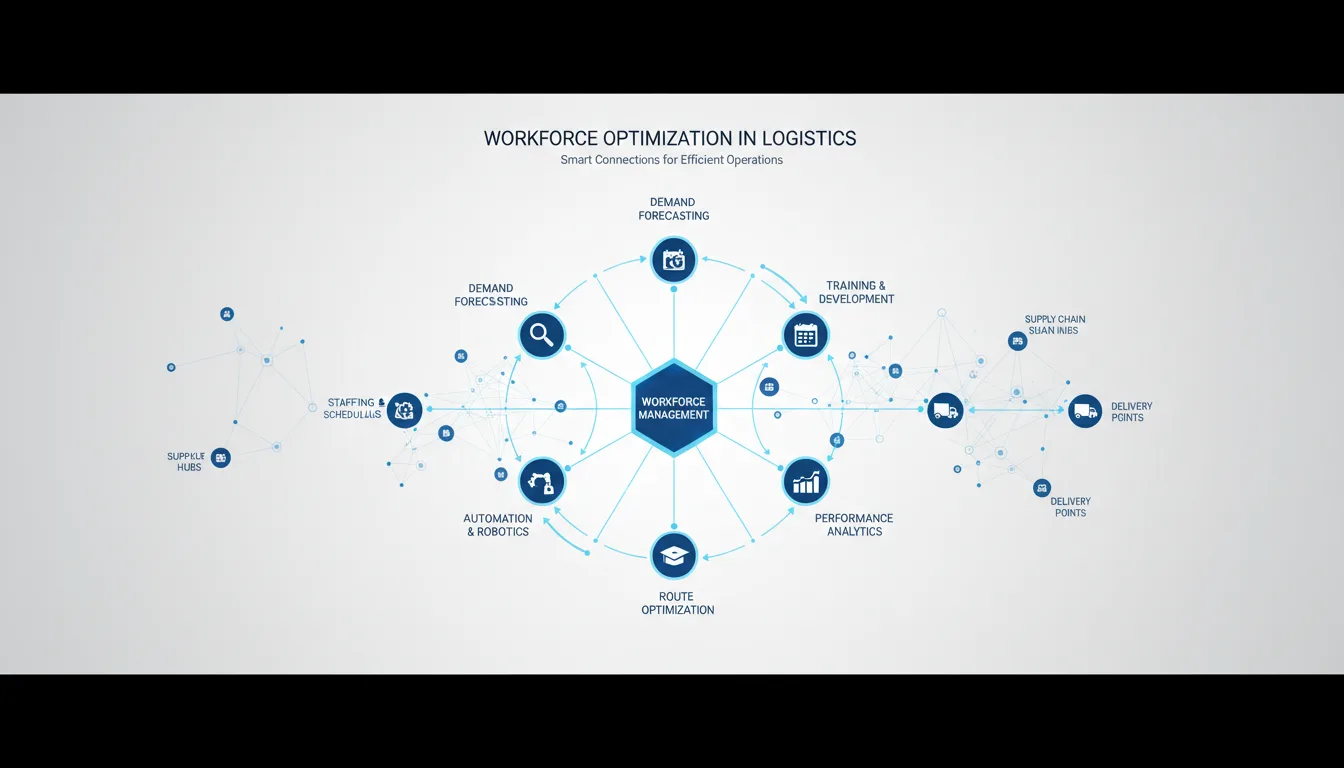
Workforce optimization consists of several interconnected core components designed to create a productive and efficient working environment:
- Data Analytics & Performance Monitoring: Leveraging data to monitor employee productivity and operational efficiency is paramount. This can include metrics like picking accuracy, order processing time, and fulfillment rates, which can be tracked using Productivity Tracking tools. Advanced analytics help identify bottlenecks, predict demand, and measure the effectiveness of operational changes.
- Scheduling and Labor Management: Implementing sophisticated software to manage shifts, plans, and schedules effectively. This involves balancing labor costs with service levels and operational demand. Modern systems can dynamically adjust schedules based on real-time needs, ensuring adequate staffing for tasks like batch picking or shipping surges. Tools which assist in this area provide comprehensive scheduling solutions tailored to the logistics environment, often integrating with Mobile WMS systems.
- Training and Employee Development: Continuous training programs are essential to help employees adapt to new technologies, improve their skills, and enhance engagement. This includes onboarding for new hires, cross-training for flexibility, and specialized training for new equipment or software, which can drastically influence overall productivity and morale in a logistics setting.
- Performance Measurement & KPIs: Establishing clear Key Performance Indicators (KPIs) that align with business objectives is crucial. These KPIs allow for real-time insights into workforce performance, such as units picked per hour, errors per order, or time taken for bin put-away. Regular feedback and transparent performance dashboards can drive continuous improvement.
- Quality Management: Ensuring that work meets defined standards. In logistics, this translates to accuracy in order fulfillment, adherence to safety protocols, and proper handling of goods. WFO systems often integrate quality checks and reporting mechanisms to identify training gaps or process failures.
Types and Classifications
Various approaches are utilized in workforce optimization, often overlapping and integrated within WFO suites:
- Task-Based Optimization: This method focuses on analyzing individual tasks, determining the most efficient way to perform them, and then assigning roles based on specific task requirements and employee capabilities. It ensures the right employees with the right skills are matched with the right opportunities, e.g., assigning a specialized forklift operator to handle oversized items in a warehouse layout.
- Time Management & Scheduling Optimization: Effective scheduling and time allocation rely on real-time demand forecasts and historical data. This approach aims to optimize shift patterns, break times, and task assignments to reduce labor costs while ensuring adequate staffing levels to meet fluctuating demand, common in areas like stock replenishment or inbound processing.
- Behavioral Analysis & Employee Engagement: Using data to understand employee actions, motivators, and sentiment. This can involve surveys, feedback loops, and performance data analysis to create a supportive environment conducive to enhancing workforce output and retention. High employee engagement often correlates with improved productivity and reduced absenteeism.
- Skills-Based Routing: Particularly relevant in complex logistics operations, this involves matching tasks to employees based on their specific certifications, training, or expertise (e.g., hazmat certification, specific equipment operation). This ensures efficiency and compliance.
Industry Applications
Workforce optimization is applicable across multiple sectors, but its impact in logistics is particularly profound due to the labor-intensive nature of operations:
- Warehousing and Distribution: WFO is critical for optimizing operations like picking, packing, shipping, receiving, and inventory transfers. It helps manage seasonal peaks, reduce idle time, and improve accuracy. For example, a WMS with WFO capabilities can optimize picker routes, assign tasks based on real-time order flow, and provide insights into individual and team performance. Tools designed for optimizing order fulfillment processes often have integrated WFO components.
- Transportation and Fleet Management: Optimizing driver schedules, routes, and vehicle utilization ensures timely deliveries, compliance with regulations (e.g., hours of service), and efficient fuel consumption. WFO in this context considers factors like traffic, delivery windows, and driver availability to create optimized dispatch plans.
- Retail and E-commerce Fulfillment: Retail environments, especially those with an e-commerce component, utilize labor optimization to enhance customer service, manage store associates, and streamline online order fulfillment processes. This is particularly crucial during peak shopping seasons, where labor needs can surge dramatically.
- Manufacturing: Manufacturing environments employ these principles to ensure that labor productivity aligns with production schedules, machinery uptime, and quality control. WFO helps in managing shift patterns, cross-training employees for different production lines, and tracking output per labor hour.
Benefits and Advantages
The benefits of workforce optimization are extensive and directly contribute to a logistics company's bottom line and competitive edge:
- Improved Operational Efficiency: By aligning labor with demand and streamlining workflows (docs/workflows), companies can significantly reduce bottlenecks, decrease processing times, and improve throughput across the supply chain. This directly translates to faster order fulfillment and quicker inventory turns.
- Reduced Labor Costs: Optimized scheduling, task assignment, and proactive management of overtime can lead to substantial reductions in labor expenditures without compromising service levels. It minimizes understaffing or overstaffing issues.
- Enhanced Employee Satisfaction and Retention: Better scheduling, clear performance expectations, fair workload distribution, and opportunities for development can lead to higher morale, reduced turnover, and a more engaged workforce. Engaged employees are often more productive and committed.
- Increased Productivity and Throughput: With the right number of skilled employees deployed at the right time, operations become more productive. For instance, optimized picking routes using a mobile WMS can significantly increase units picked per hour.
- Better Service Levels: By ensuring adequate staffing and efficient processes, WFO helps meet customer expectations for fast, accurate, and reliable delivery, leading to higher customer satisfaction.
- Scalable Growth: Optimized processes and flexible workforce models allow businesses to scale operations more easily to meet fluctuating demand, whether due to seasonal peaks or business expansion, without major disruptions.
- Improved Compliance: WFO systems can help ensure compliance with labor laws, safety regulations, and company policies by tracking hours, certifications, and training.
Challenges and Limitations
Despite its advantages, workforce optimization faces several challenges that require careful management:
- Resistance to Change: Employees may resist new systems, processes, or performance monitoring methods, viewing them as intrusive or overly controlling. Effective change management and transparent communication are crucial for adoption.
- Data Privacy and Security Concerns: Monitoring employee performance and collecting data raise legitimate concerns about privacy and how data is used. Organizations must ensure compliance with data protection regulations and maintain ethical data handling practices.
- Integration Complexity: Implementing WFO solutions often requires integration with existing ERP, WMS, and HR systems, which can be technically complex and costly.
- Need for Continuous Training and Development: Technology and best practices evolve rapidly. Organizations must invest in continuous training for both employees using the systems and managers interpreting the data to adapt to new technologies and methodologies.
- Accuracy of Forecasting: WFO relies heavily on accurate demand forecasting. Inaccurate forecasts can lead to inefficient schedules, either overstaffing or understaffing, negating the benefits of optimization.
- Initial Investment: Implementing a comprehensive WFO suite can require a significant upfront investment in software, hardware, and training. Demonstrating ROI on WMS and WFO is essential.
Best Practices
To successfully implement and leverage workforce optimization in a logistics environment, consider these best practices:
- Align WFO with Business Strategy: Ensure that WFO initiatives directly support broader business objectives, such as cost reduction, service level improvements, or capacity expansion. Clearly define KPIs that link workforce performance to strategic goals.
- Invest in Integrated Technology: Utilize modern, integrated software solutions that combine scheduling, performance management, analytics, and communication tools. Systems like SkuSavvy's Mobile WMS or Employee Management platforms can provide the necessary functionalities.
- Foster a Culture of Transparency and Feedback: Communicate the goals and benefits of WFO to employees. Encourage feedback from the workforce on optimization strategies and process improvements. Involve employees in the design and implementation phases to gain buy-in and address concerns.
- Start Small and Scale Up: Begin with a pilot program in a specific department or function, learn from the experience, and then gradually expand WFO across the organization. This allows for iterative improvements and reduces risk.
- Emphasize Training and Skill Development: Provide ongoing training to ensure employees are proficient with new tools and processes. Cross-training employees can also enhance flexibility and resilience in scheduling.
- Continuously Monitor and Adapt: Regularly assess and adapt processes based on real-time data and performance analytics. WFO is an ongoing journey, not a one-time project. Leverage data from Productivity Tracking to refine strategies.
- Consider Employee Well-being: While optimizing, ensure that employee well-being is not compromised. Factors like work-life balance, fair workload, and recognition are crucial for long-term productivity and retention.
Future Trends
The future of workforce optimization is poised for exciting developments, driven by technological advancements and evolving labor market dynamics:
- Advanced AI and Machine Learning: The integration of artificial intelligence (AI) and machine learning (ML) will become even more sophisticated, enabling hyper-accurate predictive analytics for labor demands, dynamic scheduling that responds to real-time events, and personalized performance coaching.
- Increased Adoption of Mobile Solutions: Mobile solutions for workforce management will continue to expand, offering greater flexibility for employees and managers to access information, submit requests, and make real-time decisions from anywhere, enhancing the capabilities of a Mobile WMS.
- Greater Emphasis on Employee Experience (EX): WFO will increasingly focus on the 'employee experience,' using data to improve engagement, reduce burnout, and foster a positive work environment, recognizing that engaged employees are more productive. This includes elements like gamification, peer recognition, and personalized learning paths.
- Integration with IoT and Wearable Technology: Internet of Things (IoT) devices and wearable technology could provide real-time data on employee location, task progress, and even physical strain, offering unprecedented insights for safety, efficiency, and ergonomic optimization in logistics operations.
- Predictive Compliance and Risk Management: AI-driven WFO systems will be able to proactively identify potential compliance risks (e.g., nearing overtime limits, expiring certifications) and suggest preventative measures, reducing legal and operational exposure.
- Gig Economy and Flexible Workforce Management: WFO solutions will evolve to better manage a blended workforce, incorporating both full-time employees and contingent workers from the gig economy, allowing for dynamic scaling of labor based on immediate needs.
Related Concepts
Understanding workforce optimization also encompasses knowledge of related concepts like resource allocation, supply chain management principles, and business process optimization frameworks, all of which contribute to creating a streamlined logistics environment. Other key related areas include:
- Labor Management Systems (LMS): Often a component of WFO, LMS specifically focuses on tracking, measuring, and optimizing individual and group labor performance within a warehouse or distribution center.
- Warehouse Management Systems (WMS): A WMS provides the operational framework for managing inventory and workflows. Modern Mobile Warehouse Management Systems often include integrated WFO functionalities for task assignment, productivity tracking, and scheduling.
- Lean Logistics: A philosophy focused on eliminating waste and maximizing value in logistics processes, directly benefiting from optimized workforce deployment.
- Talent Management: A broader HR concept that includes recruitment, retention, performance management, learning and development, which WFO supports through data-driven insights.
Overall, workforce optimization represents a critical factor in the logistics industry, contributing not only to financial success but also to employee satisfaction and engagement, which are vital for long-term sustainability and efficiency.
Sources
- Productivity Tracking
- Order Fulfillment Guide
- Employee Management
- Workflows Overview
- Scientific Management
- Time and motion study
- What is Workforce Optimization (WFO)?
- Operations Research (OR)
- Material requirements planning (MRP)
- Just-in-Time (JIT) Definition, Principles, and Example
- The Machine That Changed the World: The Story of Lean Production
- Workforce Management Solutions & Software
- Enterprise Resource Planning (ERP)
- The Evolution of Workforce Optimization (WFO)
- Mobile Warehouse Management System
- Warehouse Layout Preview
- Stock Replenishment Guide
- Bin-to-Bin Inventory Transfer Guide
- Pick, Pack, Ship Software
- Shipping and Fulfillment Software
- How to Calculate ROI on Shopify Inventory Management App
- WMS vs ERP Analysis
- Benefits of Employee Engagement
- IoT in Logistics: Revolutionizing Supply Chain Operations