Workforce Management in Logistics
Workforce management is crucial for optimizing labor efficiency in the logistics sector, involving scheduling, tracking, and enhancing employee performance.
Updated
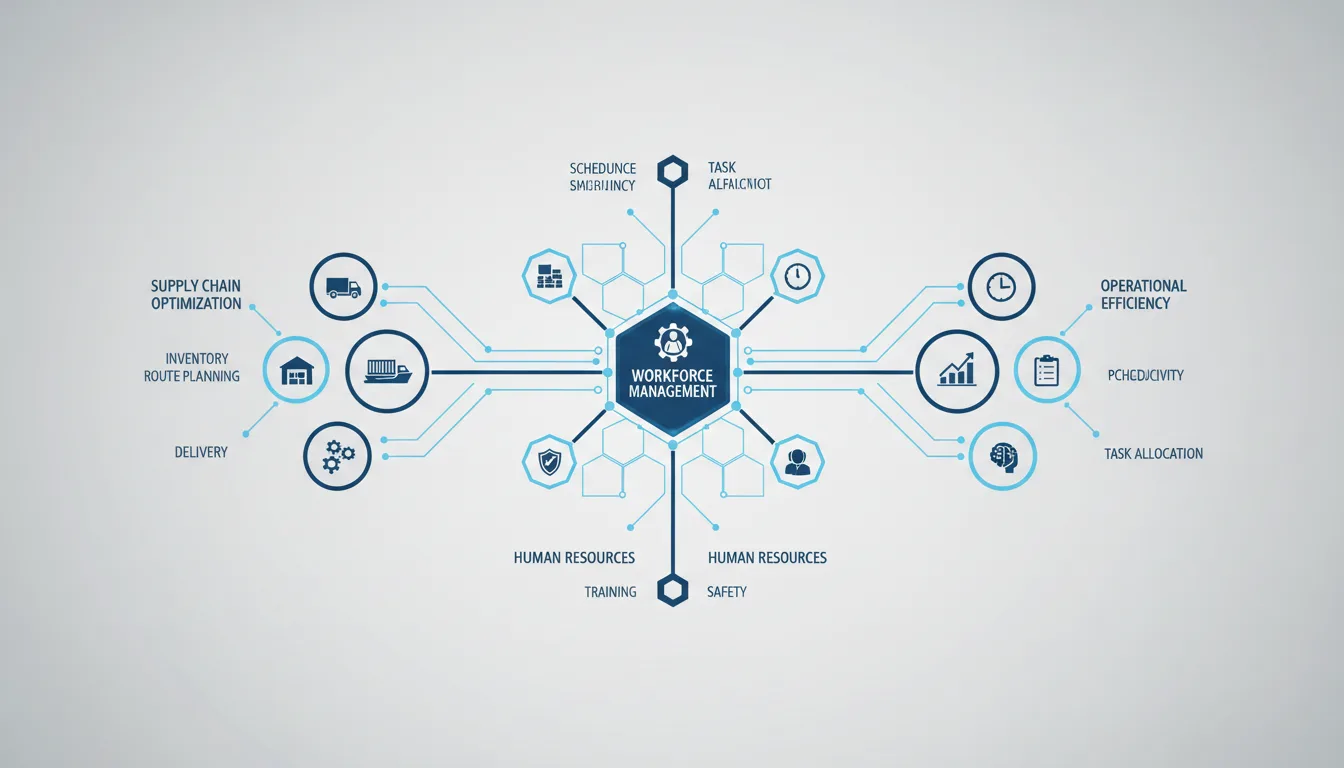
Workforce Management in Logistics
Overview
Workforce management in the logistics sector encompasses a range of processes, tools, and techniques aimed at optimizing the productivity, effectiveness, and efficiency of the workforce. This includes scheduling, performance tracking, labor forecasting, and ensuring compliance with labor regulations. A robust workforce management system is essential for maintaining operational efficiency and can significantly reduce costs associated with labor inefficiencies.
Etymology and Origins
The term "workforce management" traces its roots back to the early 1990s as businesses began to recognize the importance of labor as a critical component in operational success. Prior to this, concepts like "personnel management" or "labor management" focused more narrowly on administrative tasks or industrial relations. The shift to "workforce management" reflected a more strategic, integrated approach to managing human capital, often enabled by advances in information technology. Early references appear in academic journals and business literature, notably during the rise of human resources management practices. The linguistic roots combine 'workforce'—denoting the labor pool—and 'management'—the act of administering, organizing, and controlling, thus signifying a systematic approach to overseeing human capital. Over the decades, the expression has evolved, particularly as technological advancements have shaped its scope, now encompassing strategic elements for labor optimization and employee engagement.
Historical Development
The evolution of workforce management, from rudimentary oversight to sophisticated technological systems, reflects broader industrial and technological changes:
- Early 20th Century (Scientific Management Era): The foundational concepts of optimizing labor began with Frederick Winslow Taylor's scientific management principles around 1911. His work, along with pioneers like Frank and Lillian Gilbreth, introduced time-motion studies, which aimed to optimize efficiency by analyzing work tasks in detail. These early approaches focused on standardization, task analysis, and incentive systems to maximize individual worker output.
- Mid-20th Century (Post-WWII & Operations Research): The growth of large corporations and complex logistics during and after World War II spurred the development of operations research and industrial engineering disciplines. Early computer systems were used for basic payroll and attendance tracking, laying the groundwork for more sophisticated systems. Personnel management evolved, moving beyond mere administration to include training and basic employee relations.
- 1960s-1970s (MRP & Early Computerization): The introduction of Material Requirements Planning (MRP) systems in manufacturing began to link production schedules to raw material and, implicitly, labor requirements. While not direct WFM, MRP highlighted the need for integrated planning. Basic automated time clocks and early Human Resources Information Systems (HRIS) began to centralize employee data.
- 1980s (JIT & Dedicated Software): The rise of Just-In-Time (JIT) manufacturing principles, pioneered by Toyota, emphasized lean operations and efficient resource utilization, including labor. The term "workforce management" itself emerged, with early dedicated tools focusing on basic scheduling and payroll management, reflecting the growing complexity of managing labor resources.
- 1990s (Client-Server & ERP Integration): The proliferation of personal computers and client-server architectures led to computerized workforce management systems, drastically changing the landscape of labor tracking and employee scheduling. Companies like Kronos (now UKG) and ADP began developing more comprehensive software tailored for these needs, often integrating with nascent Enterprise Resource Planning (ERP) systems to provide a holistic view of resources, including human capital.
- 2000s (Web-Based & Analytics): The internet boom facilitated web-based WFM solutions, offering greater accessibility and scalability. The integration of advanced analytics and software tools, such as Employee Management Systems, provided real-time data and enhanced decision-making capabilities, moving beyond reactive scheduling to proactive forecasting.
- 2010s-Present (Cloud, Mobile, AI/ML): The adoption of cloud-based solutions and mobile applications has allowed businesses to manage their workforce remotely and in real-time, incorporating tools for enhanced productivity and performance tracking. Innovations in artificial intelligence and machine learning began influencing predictive labor analytics, enhancing scheduling and forecasting efficiency. Modern WFM systems are often part of broader human capital management (HCM) suites.
Notable companies like ADP (Automatic Data Processing) and Kronos (now UKG) have been pioneers in providing comprehensive workforce management solutions, while influential publications such as The Workforce Management Handbook offer extensive insights into the field's evolution.
Core Concepts
Workforce management involves several core concepts, all critical for optimizing labor in a logistics environment:
- Scheduling: Developing optimal work schedules that align workforce availability, skills, and legal compliance with business needs is critical. This includes considering demand fluctuations, employee preferences, and cost efficiency. Technologies such as mobile workforce management systems enable real-time changes and monitoring, allowing for dynamic adjustments to unforeseen operational changes, like sudden surges in order volume.
- Time and Attendance Tracking: Implementing accurate systems to track employee hours and attendance ensures compliance with labor laws (e.g., break times, overtime rules) and helps manage wages effectively. Advanced systems can integrate biometric measurements, geo-fencing for mobile teams, and self-service portals for accuracy and employee convenience.
- Labor Forecasting: Utilizing sophisticated analytics to predict labor needs based on historical data, seasonal trends, promotional events, and external factors enhances operational efficiency. This is vital in industries such as logistics, where demand can fluctuate significantly. Accurate forecasting minimizes both understaffing (leading to delays) and overstaffing (leading to unnecessary labor costs).
- Performance Management: Continuously assessing employee performance against key performance indicators (KPIs) enables organizations to identify areas for improvement, recognize high achievers, and provide targeted training. This not only improves individual productivity but also boosts morale and reduces turnover. Feedback loops, coaching, and goal setting are integral parts of this process.
- Compliance Management: Ensuring adherence to a complex web of local, national, and international labor laws, collective bargaining agreements, and company policies. This includes regulations on working hours, breaks, overtime, health and safety, and equal opportunity. Automated compliance checks within WFM systems reduce legal risks and potential penalties.
Industry Applications
Workforce management finds applications across various sectors, but its impact is particularly critical in logistics due to the dynamic nature of operations and tight margins:
- Warehouse Operations: Managing labor scheduling to optimize critical processes like receiving, putaway, picking, packing, and shipping during peak seasons is crucial. Tools like Order Management Systems integrated with WFM allow for efficient assignment of tasks based on order priority and employee availability. Visual tools, such as a Visual Inventory Management System, can help managers allocate labor more effectively by providing a real-time overview of inventory and operational bottlenecks. This can lead to substantial efficiency gains and reduced overtime costs.
- Case Study: A large e-commerce fulfillment center used predictive analytics in its WFM system to forecast daily order volumes with 95% accuracy. This allowed them to dynamically adjust staffing levels for pickers and packers, reducing labor costs by 15% during off-peak times and ensuring 99% on-time order fulfillment during peak seasons.
- Transportation and Delivery Services: Efficiently scheduling drivers, dispatchers, and support staff is essential to meet customer demands, comply with hours of service (HOS) regulations, and minimize fuel and labor costs. Route optimization software, when integrated with WFM, can help assign drivers to routes that maximize deliveries per shift while minimizing drive time and ensuring regulatory compliance. This is particularly vital with rising shipping volumes in e-commerce.
- Manufacturing: Ensuring that labor aligns with production schedules to maintain continuous flow and efficiency is paramount. Methods such as Just-In-Time (JIT) manufacturing and Lean principles rely heavily on precise labor allocation. WFM systems help manage shift changes, skill-based assignments, and cross-training to adapt to varying production demands, minimizing downtime and maximizing throughput.
Benefits and Advantages
Implementing effective workforce management systems offers numerous benefits that directly impact the bottom line and operational resilience:
- Increased Productivity: Optimizing labor scheduling, task assignment, and skill matching directly increases efficiency and output. By placing the right person with the right skills on the right task at the right time, organizations can achieve higher productivity levels.
- Cost Reduction: Reducing labor costs associated with overtime, absenteeism, and high turnover can result in significant savings. Proper forecasting and scheduling minimize overstaffing, while improved employee satisfaction can lower recruitment and training costs, potentially saving up to 30% on labor expenses, depending on industry and operational conditions.
- Enhanced Compliance: Maintaining accurate records, adhering to scheduled breaks, and monitoring working hours helps organizations comply with complex labor laws, union agreements, and internal policies, thereby protecting them from potential liabilities, fines, and legal disputes.
- Improved Employee Satisfaction and Retention: Efficient and fair management, transparent scheduling, opportunities for self-service, and clear performance feedback lead to better job satisfaction. This reduces turnover rates, fosters a more positive workplace environment, and improves employee engagement.
- Better Decision-Making: Real-time data and advanced analytics provided by WFM systems offer insights into labor utilization, productivity trends, and cost drivers, enabling managers to make more informed strategic and operational decisions.
Challenges and Limitations
Despite the clear benefits, workforce management faces several inherent challenges:
- Data Accuracy and Integration: Ensuring the accuracy of workforce data (e.g., time logs, skill sets, availability) is critical for successful outcomes. Inaccuracies, often stemming from manual entry errors or disparate systems, can lead to compliance issues, incorrect payroll, and flawed operational decisions. Integrating WFM systems with ERP, HRIS, and WMS can be complex.
- Technology Adoption and Change Management: Resistance to technological changes from employees and management can hinder the successful implementation of new workforce management systems. This often stems from insufficient training, fear of job displacement, or a lack of understanding of the system's benefits. Effective change management strategies are crucial.
- Labor Shortages and Skills Gaps: Competing for skilled labor in a historically tight labor market, exacerbated by global events or specific industry demands (e.g., certified forklift operators), can challenge operational efficiency and flexibility. WFM systems must adapt to variable labor availability and facilitate cross-training.
- Regulatory Complexity: Managing labor across different regions or countries involves navigating a complex and constantly evolving landscape of labor laws, union regulations, and payroll tax requirements. This complexity can make standardized WFM practices difficult.
- Balancing Efficiency with Employee Well-being: While WFM aims for efficiency, overly rigid or optimized schedules can lead to employee burnout, reduced morale, and increased turnover if not carefully balanced with considerations for work-life balance and fair treatment.
Best Practices
To optimize workforce management and overcome its challenges, companies should adopt the following best practices:
- Invest in Integrated Technology: Utilize advanced, integrated WFM software that connects with HRIS, payroll, and operational systems (like WMS or TMS). This streamlines processes, provides real-time insights, improves oversight, and eliminates data silos. Systems that support workflows and automation are particularly beneficial.
- Empower Employees through Self-Service: Provide tools for employees to view schedules, request time off, swap shifts, and update availability. This not only enhances job satisfaction and reduces administrative burdens but also encourages autonomy and engagement. Mobile applications are key to this empowerment.
- Implement Continuous Training and Development: Regular training ensures employees and managers can utilize workforce management tools effectively. Beyond system usage, training on compliance, safety, and new skills (e.g., cross-training for different warehouse roles) fosters a culture of learning and adaptability, making the workforce more versatile.
- Leverage Data for Predictive Analytics: Move beyond reactive scheduling to proactive, data-driven forecasting. Use historical data, current trends, and predictive models to anticipate labor needs, identify potential issues, and optimize staffing levels weeks or months in advance.
- Establish Clear Communication Channels: Foster open communication between management and the workforce regarding schedules, expectations, and changes. Clear feedback mechanisms and transparent processes help build trust and address concerns proactively.
Future Trends
As industries evolve and technology advances, workforce management continues to adapt, driven by innovation and changing labor dynamics. Key trends include:
- Integration of AI and Machine Learning: Predictive analytics powered by AI will play an even more crucial role in labor forecasting, personalized scheduling, and performance evaluation. AI can analyze vast datasets to identify optimal staffing patterns, predict absenteeism, suggest training needs, and automate compliance checks, leading to more informed operational decisions and efficient workforce deployment. This will move WFM towards hyper-personalization and automation. AI's transformative potential is already being realized.
- Gig Economy Influence and Flexible Work Models: As the gig economy grows and the demand for flexible work arrangements increases, traditional workforce management practices must adapt to new employment models. This requires systems that can manage a blend of full-time employees, part-time staff, and contingent workers, necessitating flexibility in scheduling, payment, and engagement strategies. Companies will increasingly leverage dynamic labor marketplaces.
- Focus on Employee Well-Being and Experience: Beyond mere efficiency, WFM systems will increasingly prioritize employee well-being, mental health, and work-life balance. Features supporting flexible schedules, fair shift distribution, and stress monitoring will become more common, recognizing that a healthy and engaged workforce is a productive one. The concept of employee experience (EX) will heavily influence WFM design.
- Enhanced Compliance Automation: With increasing regulatory complexity, future WFM systems will offer more robust and dynamic compliance automation. This includes real-time alerts for potential violations, automated updates to regulatory changes, and granular tracking to ensure adherence to diverse global and local labor laws.
- Real-time Workforce Optimization: The ability to make real-time adjustments to schedules and task assignments based on immediate operational conditions (e.g., sudden order surge, equipment breakdown, employee call-out) will become standard. This requires advanced analytics, IoT integration, and mobile capabilities to empower frontline managers.
Conclusion
Workforce management is an integral and increasingly strategic component of logistics and supply chain operations. By optimizing labor resources through effective scheduling, tracking, performance management, and leveraging advanced technologies, organizations can significantly enhance productivity, reduce costs, improve compliance, and foster greater employee satisfaction. As the logistics landscape continues to evolve, effective workforce management will remain a cornerstone of operational excellence and competitive advantage.
Sources
- Mobile Warehouse Management System Overview
- Employee Management Guide
- Productivity Tracking Guide
- Order Management System
- The Future of Workforce Management
- The Impact of Workforce Management on Business Performance
- AI in Workforce Management
- The Future of Workforce Management
- The Impact of Workforce Management on Business Performance
- Time-Motion Studies: Key to Operational Efficiency
- Information technology in personnel and human resource management: An overview
- The Principles of Scientific Management
- An Application of the Materials Requirements Planning System
- Just-In-Time (JIT) production: a literature review
- Human Capital Management (HCM)
- Visual Inventory Management System
- Workflows Overview
- The Employee Experience Revolution