Workflow Management
An extensive overview of Workflow Management, highlighting its definition, historical context, core concepts, benefits, challenges, and future trends in logistics.
Updated
Overview
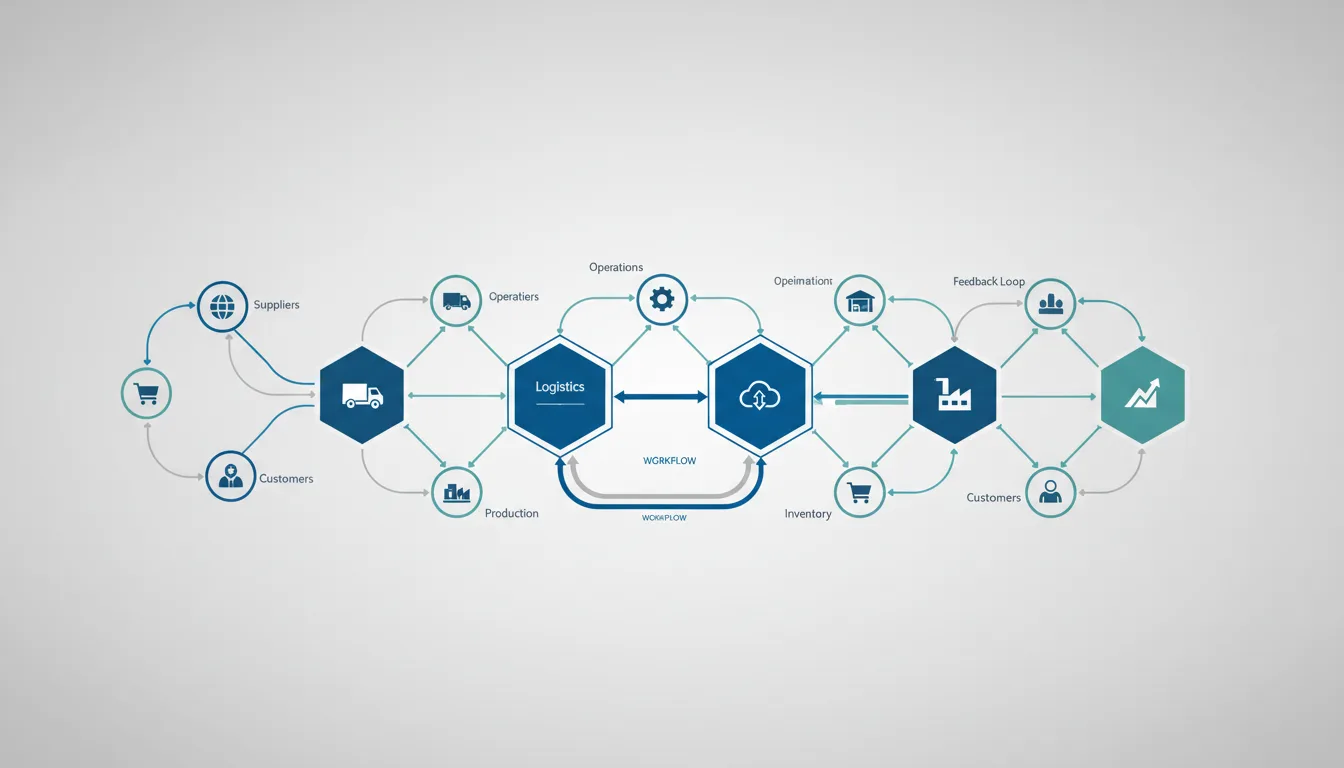
Workflow management refers to the systematic organization and optimization of business processes to enhance efficiency, accuracy, and productivity within logistics and supply chain operations. It encompasses the analysis, design, and implementation of workflows that define how tasks, information, and resources move through different stages of a process. Given the increasing complexity of supply chains, effective workflow management is pivotal in ensuring timely delivery, reducing operational costs, and improving overall service quality. Modern workflow systems are central to achieving operational excellence, especially in dynamic environments like e-commerce and global logistics [1].
Etymology and Origins
The term "workflow" is a compound of "work" and "flow," describing the sequential movement of tasks. While the concept of organizing work has existed for centuries, the modern term gained prominence with the rise of industrial engineering and scientific management in the early 20th century. Frederick Winslow Taylor's principles of scientific management in the late 19th and early 20th centuries laid the groundwork for analyzing and optimizing discrete work tasks and their sequence, effectively formalizing the "flow" of work [4]. Pioneers like Henry Gantt further visualized these flows with his eponymous charts for scheduling and project management.
The specific phrase "workflow" began to appear in management and computing literature in the mid-20th century, becoming more prevalent in the 1980s and 1990s with the advent of office automation and business process reengineering (BPR) initiatives [5]. It evolved from simply describing a sequence of operations to encompassing the entire lifecycle of a business process, including data, documents, and approvals, often facilitated by information technology. The formal discipline of "workflow management" emerged as a response to the need for structured approaches to automate and control these processes, aiming to improve organizational efficiency and responsiveness.
Historical Development
Early Beginnings (Late 19th - Mid 20th Century)
The foundations of workflow management can be traced back to the Industrial Revolution's emphasis on efficiency and standardization [6]. Early industrial engineers, such as Frederick Winslow Taylor and Frank and Lillian Gilbreth, pioneered Scientific Management, focusing on time-and-motion studies to optimize individual tasks and sequences on factory floors [4]. This systematic approach to work design, although not yet termed "workflow management," laid the intellectual groundwork for analyzing and improving process flows. Visual tools like Gantt charts developed by Henry Gantt in the 1910s provided early methods for planning and tracking task dependencies and progress within complex projects [7].
The Rise of Office Automation and BPR (1960s-1990s)
In the 1960s and 1970s, the advent of mainframe computers and early office automation systems brought the concept of structured information flow to administrative tasks [8]. This era saw the development of technologies to manage documents and data electronically, hinting at the potential for digital workflow. The late 1970s and 1980s witnessed the emergence of Business Process Reengineering (BPR) initiatives, a radical approach popularized by academics like Michael Hammer and James Champy. Their influential book, Reengineering the Corporation: A Manifesto for Business Revolution (1993), advocated for fundamental rethinking and redesign of business processes to achieve dramatic improvements in performance. BPR explicitly highlighted the need for end-to-end workflow analysis, moving beyond departmental silos. Early workflow management systems (WFMS) began to appear, driven by vendors like IBM (with its Workflow Management Facility) and FileNet (with FileNet WorkFlo), primarily focusing on automating document-centric processes [9]. The establishment of the Workflow Management Coalition (WfMC) in 1993 marked a significant step towards standardization and interoperability in workflow software [10].
Digital Transformation and Integration (2000s)
The 2000s ushered in the era of pervasive internet connectivity and the widespread adoption of Enterprise Resource Planning (ERP) systems [3]. ERP systems integrated various business functions, providing a holistic view of operations and enabling more sophisticated workflow automation across departments. This period saw the evolution of WFMS into broader Business Process Management (BPM) suites, which offered tools for process modeling, execution, monitoring, and optimization [11]. Technologies like XML and web services facilitated better integration between disparate systems, making it easier to automate complex, cross-functional workflows. The focus shifted from mere automation to continuous process improvement and agility.
Modern Era: Cloud, AI, and Automation (2010s-Present)
The last decade has been characterized by rapid technological advancements further transforming workflow management. The rise of cloud computing has made powerful workflow solutions more accessible and scalable [12]. Mobile warehouse management systems [2] now enable real-time updates and task management from the shop floor. The integration of Artificial Intelligence (AI) and Machine Learning (ML) has brought predictive analytics, intelligent routing, and anomaly detection to workflow processes, moving beyond rigid rules-based automation [13]. Robotic Process Automation (RPA) has emerged as a key technology for automating repetitive, rule-based digital tasks, often complementing existing workflow systems [14]. Process mining tools use event logs to discover, monitor, and improve real processes, providing deeper insights into actual workflow execution [15]. Companies like SkuSavvy leverage these advancements to provide visual inventory management systems and robust workflow tools that streamline logistics and supply chain operations, reflecting the ongoing evolution towards smarter, more adaptive, and highly automated workflows [16].
Core Concepts
Workflow management revolves around several core concepts:
- Process Mapping and Modeling: This involves visually representing a workflow, typically using flowcharts or Business Process Model and Notation (BPMN) diagrams [17]. The goal is to understand each step, decision point, input, output, and resource involved, identifying bottlenecks and inefficiencies. Tools for visual inventory management and warehouse layout previews can be crucial for modeling physical logistics workflows, such as bin putaway criteria and stock replenishment sequences.
- Automation: The use of software and technology to execute routine, repetitive, and rule-based tasks without human intervention. This can range from simple email notifications to complex robotic process automation (RPA) or automated stock replenishment triggers. Automation in logistics includes automated data entry, purchase order generation, and pick, pack, ship processes, significantly reducing manual effort and human error. SkuSavvy, for instance, automates various warehouse processes, including batch picking and bin-to-bin inventory transfers, leading to improved efficiency.
- Monitoring and Control: This involves defining key performance indicators (KPIs) and metrics to track the performance of workflows in real-time. Examples include cycle time, error rates, resource utilization, and compliance. Modern systems provide dashboards and reporting tools to visualize these metrics, allowing managers to identify deviations, proactively address issues, and maintain control over operations [18].
- Continuous Improvement: An ongoing commitment to enhancing workflow efficiency, effectiveness, and adaptability. Methodologies like Lean Manufacturing, Six Sigma, and the Deming Cycle (Plan-Do-Check-Act) are applied to analyze workflow data, identify root causes of problems, implement changes, and measure their impact [19]. This iterative process ensures that workflows remain optimized in response to changing business needs and market conditions.
Benefits and Advantages
Implementing effective workflow management offers numerous benefits:
- Increased Efficiency: By eliminating redundant steps and automating tasks, workflows become faster and smoother. For example, a streamlined order fulfillment workflow can reduce the time from order placement to shipment, directly impacting customer satisfaction and increasing throughput.
- Enhanced Accuracy: Automated data validation and rule-based processing minimize human errors. This is particularly critical in inventory management, where precise tracking of lots and expiration dates prevents costly mistakes like shipping expired products or stockouts due to miscounts.
- Improved Communication and Collaboration: Clear workflow definitions ensure that everyone understands their roles and responsibilities. Integrated systems facilitate seamless information sharing, preventing miscommunications and delays across departments and with external partners. This is vital in complex supply chains involving multiple vendors and departments, where a vendor portal can provide a centralized communication hub.
- Cost Reduction: Optimizing resource allocation, reducing waste, and minimizing errors directly translates to lower operational costs. For instance, automated purchase quantity calculations can prevent overstocking or understocking, reducing holding costs and lost sales. Similarly, automated rate selection for shipping ensures the most cost-effective carriers are always chosen.
- Better Compliance and Risk Management: Documented and automated workflows ensure adherence to regulatory requirements and internal policies, reducing the risk of non-compliance and associated penalties. This is crucial for industries with strict regulations or high-value goods.
Challenges and Limitations
While workflow management brings substantial improvements, challenges still persist:
- Resistance to Change: Human factors are often the biggest hurdle. Employees accustomed to traditional methods may view new systems as complex or threatening to their job security, necessitating robust change management strategies and thorough training [20].
- Complexity of Integration: Modern supply chains involve diverse systems (ERP, WMS, TMS, e-commerce platforms). Integrating a new workflow system with this existing, often legacy, infrastructure can be technically challenging, time-consuming, and expensive [21]. This is where flexible integration platforms and APIs, such as those offered by SkuSavvy, become critical.
- Keeping Up with Technology: The rapid pace of technological innovation, particularly in AI, machine learning, and RPA, means that workflow systems need continuous updates and adaptation. Organizations must invest in ongoing training and system upgrades to remain competitive.
- Scope Creep and Over-automation: Without clear objectives, workflow projects can suffer from scope creep, attempting to automate too much or processes that are not yet well-defined. Over-automation can lead to rigid systems that lack the flexibility needed for dynamic business environments.
- Data Quality Issues: Workflows rely heavily on accurate data. Poor data quality can lead to flawed automated decisions and inefficient processes, undermining the benefits of workflow management [22]. Implementing data governance policies is essential.
Best Practices
To maximize workflow management effectiveness, organizations should:
- Document Processes Thoroughly: Develop comprehensive process maps and standard operating procedures (SOPs) for all key workflows. This clarity is crucial for training, compliance, and identifying improvement opportunities.
- Involve Stakeholders Early and Often: Engage employees, managers, and external partners (e.g., vendors) in the design and implementation phases. This fosters buy-in, addresses practical concerns, and ensures the workflows are realistic and effective. For example, involving warehouse staff in designing bin put-away criteria ensures practical usability and greater adoption.
- Leverage Analytics and Process Mining Tools: Utilize data analytics to monitor workflow performance in real-time, identify bottlenecks, measure cycle times, and pinpoint areas for improvement. Process mining takes this a step further by analyzing system event logs to discover actual process flows, uncover hidden deviations, and benchmark performance against theoretical models [15].
- Start Small, Scale Incrementally: Begin with a pilot project on a critical but manageable workflow. Learn from this experience, refine the approach, and then gradually scale to more complex areas. This iterative approach minimizes risk and maximizes success.
- Choose Flexible and Scalable Technology: Select workflow management solutions that can adapt to changing business needs and integrate easily with existing and future systems. Modern WMS platforms [2] are designed with flexibility and scalability in mind, often offering APIs for custom integrations.
- Prioritize User Experience (UX): Ensure that workflow tools are intuitive and easy for end-users to adopt. A clunky interface can lead to frustration, errors, and resistance to adoption, undermining efficiency gains.
Technology and Tools
Modern workflow management systems (WFMS) leverage advanced technologies to enhance efficiency and provide robust control:
- Workflow Engines: The core component that executes process logic, routes tasks, and manages data flow according to predefined rules.
- Process Modeling Tools: Visual interfaces for designing and documenting workflows, often using BPMN standards, enabling clear visualization of sequential and parallel tasks.
- User Interfaces and Dashboards: Provide employees with their task lists and managers with real-time performance monitoring and reporting, offering actionable insights.
- Integration Capabilities: APIs and connectors to integrate seamlessly with other enterprise systems like ERP, CRM, and WMS. For instance, SkuSavvy offers robust integrations with e-commerce platforms like Shopify and shipping carriers via ShipEngine.
- Reporting and Analytics: Tools for collecting, analyzing, and visualizing workflow data to identify trends and areas for improvement, supporting data-driven decision-making.
- Mobile Access: Allowing users to manage and complete tasks on the go, particularly valuable for warehouse operations and field logistics using mobile order fulfillment software.
Examples of technologies applied within workflow management:
- Warehouse Management Systems (WMS): Platforms like SkuSavvy are specialized WFMS that manage and optimize all processes within a warehouse, from receiving and putaway (e.g., bin put-away criteria) to picking (e.g., batch picking, pick-to-tote) and shipping (e.g., automated rate selection). They provide visual tools like warehouse layout previews to aid in optimizing physical flows.
- Enterprise Resource Planning (ERP) Systems: Integrated software suites that manage core business processes, often including workflow modules for finance, HR, and supply chain. SkuSavvy also offers insights into WMS vs ERP systems [3].
- Robotic Process Automation (RPA): Software robots that mimic human actions to automate repetitive digital tasks, such as data entry, invoice processing, or generating reports [14].
- Artificial Intelligence (AI) and Machine Learning (ML): Used for predictive analytics (e.g., demand forecasting, identifying potential bottlenecks), intelligent routing of tasks, and anomaly detection in complex workflows [13].
Future Trends
The future of workflow management will likely be characterized by:
- Hyperautomation: This involves the combination of multiple advanced technologies, including RPA, AI, ML, and traditional workflow automation, to automate as many business processes as possible [23]. The goal is to create highly intelligent and adaptive automated systems.
- Process Intelligence and Predictive Analytics: Increased reliance on data science to not only monitor but also predict workflow performance, anticipate issues, and recommend optimal process adjustments in real-time. This will move workflow management from reactive to proactive.
- Low-Code/No-Code Platforms: These platforms will empower business users, not just IT professionals, to design, build, and modify workflows using visual interfaces and minimal coding. This democratizes process automation and increases agility [24].
- Event-Driven Architectures: Workflows will increasingly be triggered by specific events (e.g., a new order, a stock level dropping below a threshold) rather than strict sequential processing, enabling more dynamic and responsive operations.
- Blockchain for Supply Chain Transparency: While still emerging, blockchain technology holds promise for creating immutable records of transactions and movements within supply chains, enhancing transparency and trust in multi-party workflows, especially for tracking goods and ensuring compliance [25].
- Sustainability-Driven Workflows: Future workflows will increasingly incorporate environmental considerations, optimizing routes, reducing waste, and tracking carbon footprints to meet corporate sustainability goals and regulatory requirements [26].
Related Concepts
Understanding workflow management also involves familiarity with related concepts such as supply chain management, process optimization techniques (e.g., Lean, Six Sigma), and project management methodologies, all of which contribute to a comprehensive understanding of operational efficiency within logistics. Concepts like cycle counting and kitting are specific workflows within a broader warehouse management context that benefit significantly from structured workflow management.
For further understanding and practical applications, organizations can explore resources such as the Workflows Overview provided by SkuSavvy.
Sources
- Visual Inventory Management System | SkuSavvy
- SkuSavvy Workflows Overview
- SkuSavvy Mobile Warehouse Management System
- SkuSavvy WMS vs ERP Analysis
- Scientific management - Principles, History, & Facts
- Office automation and business process reengineering (BPR)
- Industrial Revolution
- A Brief History of the Gantt Chart
- The History of Workflow Management
- What is the Workflow Management Coalition (WfMC)?
- Gantt Chart History
- BPM vs. Workflow Management: Key Differences & Similarities
- Cloud Computing
- Workflow automation software
- What Is RPA? Robotic Process Automation Explained
- What is Process Mining?
- Business Process Model and Notation
- The Importance of Performance Monitoring in Business Operations
- Lean Manufacturing
- Project Change Management: Techniques and Best Practices
- Challenges of System Integration
- The Impact of Data Quality on Business Outcomes
- Hyperautomation
- Low-Code Application Platform (LCAP)
- Blockchain in Supply Chain: Use cases and benefits
- Sustainable Supply Chain Management: What It Is and Why It Matters
- Warehouse Layout Preview | SkuSavvy
- Bin Put-Away Criteria Guide | SkuSavvy
- Pick, Pack, Ship Software | SkuSavvy
- Batch Picking Guide | SkuSavvy
- Bin-to-Bin Inventory Transfer | SkuSavvy
- Order Fulfillment Guide | SkuSavvy
- Lots & Expiration Dates Guide | SkuSavvy
- Vendor Portal | SkuSavvy
- Automated Purchase Quantity | SkuSavvy
- Automated Rate Selection for Shipping | SkuSavvy
- Integrations Hub | SkuSavvy
- Mobile Order Fulfillment Software | SkuSavvy
- Pick-to-Tote Guide | SkuSavvy
- Cycle Counting Guide | SkuSavvy
- Kitting Guide | SkuSavvy