Waste Management in Logistics
This article explores waste management in logistics, its significance, historical development, and industry practices.
Updated
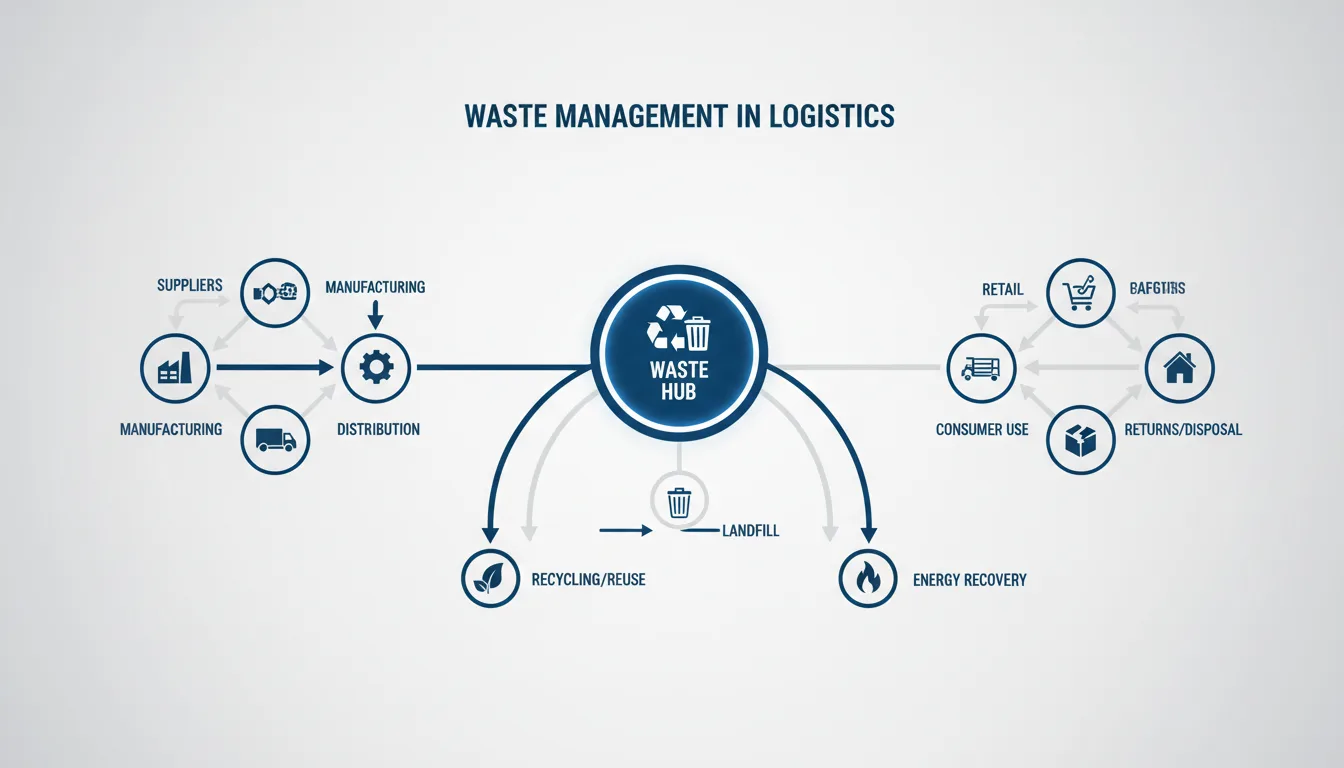
Overview
Waste management refers to the systematic collection, transportation, processing, and disposal of waste materials. Within the context of logistics, it focuses on optimizing these processes to minimize waste generation, enhance operational efficiency, and mitigate environmental impact across the entire supply chain. Effective waste management is crucial for reducing the environmental footprint of logistics operations and meeting increasingly stringent regulatory requirements, especially given global concerns about climate change and resource depletion.
Waste management in logistics ensures that resources are utilized efficiently, which significantly contributes to the sustainability goals of businesses. It involves various proactive and reactive practices aimed at reducing waste at every stage of the supply chain, including raw material sourcing, production, inbound and outbound transportation, warehousing, distribution, and even reverse logistics for returns and end-of-life products.
Etymology and Origins
The term "waste management" combines the words "waste" and "management," both with ancient linguistic roots. "Waste" is derived from the Old English wæste, meaning 'destruction, ruin,' and further from the Latin vastus, signifying 'empty, desolate.' "Management" originates from the Latin manu agere, meaning 'to handle or direct,' evolving through Old French ménagement to describe the act of directing or controlling. The conceptual understanding of waste has drastically shifted from simple discard to a manageable resource.
The earliest documented usage of phrases resembling "waste management" in an organized, public health context can be traced to the late 19th and early 20th centuries. Before this, waste disposal was largely unorganized, with practices like dumping into rivers or open pits. However, as urbanization and industrialization accelerated, particularly during the Industrial Revolution, the sheer volume and toxicity of waste necessitated more structured approaches to protect public health. Early discussions focused on sanitation and public hygiene, laying the groundwork for modern waste management terminology. The term's evolution is closely tied to growing environmental awareness and regulatory frameworks.
Historical Development
Early Practices (Pre-Industrial to Early 20th Century)
Historically, waste disposal was rudimentary, often involving straightforward burial, burning, or dumping. In ancient civilizations, waste was typically organic and biodegraded naturally or was simply removed from populated areas. The Industrial Revolution in the 18th and 19th centuries dramatically increased the volume and complexity of waste, introducing non-biodegradable materials and industrial pollutants. This led to significant public health crises in rapidly growing urban centers, prompting early municipal efforts at organized waste collection, often for rudimentary landfilling or incineration. The first municipal incinerator in the U.S. was established in 1885 in Governor's Island, NY, reflecting an early attempt at volume reduction and sanitation.
Mid-20th Century: Industrial Boom and Environmental Awakening (1950s-1970s)
Following World War II, a boom in manufacturing and consumerism led to a "throwaway society," characterized by increased packaging and disposable products. This era saw a dramatic rise in waste generation. By the 1960s, growing environmental awareness, catalyzed by publications like Rachel Carson's Silent Spring (1962), which exposed the dangers of pesticides, prompted a shift in public perception. This era marked the birth of the modern environmental movement. Major milestones include:
- 1960s: The rise of environmental movements prompted businesses to adopt more structured waste management practices. Concerns about pollution led to calls for government intervention.
- 1970s: A pivotal decade for environmental legislation. The establishment of the United States Environmental Protection Agency (EPA) in 1970 marked a significant step towards regulating and overseeing waste management practices. Key legislation like the Clean Air Act (1970), Clean Water Act (1972), and the Resource Conservation and Recovery Act (RCRA) of 1976 in the U.S. provided the framework for managing hazardous and non-hazardous waste [5]. Similar environmental protection agencies and laws emerged in Europe and other developed nations.
Modern Waste Management (1980s-Present)
- 1980s: The concept of recycling gained significant traction, moving beyond niche efforts to mainstream municipal programs, particularly in response to landfill capacity crises. Waste-to-energy technologies also began to see broader adoption. Companies like Waste Management, Inc., founded in 1968, played a significant role in scaling waste collection and processing services.
- 1990s: Focus expanded to waste reduction at the source and the development of international standards. The ISO 14000 series for environmental management systems, introduced in 1996, provided a globally recognized framework for organizations to manage their environmental responsibilities, including waste [7]. The adoption of technologies such as RFID tracking systems and GPS in waste collection vehicles enabled more robust waste tracking and management processes.
- 2000s-Present: The rise of the circular economy concept has fundamentally shifted the paradigm from "take-make-dispose" to "reduce, reuse, recycle, recover." Digital transformation, including advanced analytics, IoT, and AI, began to revolutionize waste stream monitoring, sorting, and optimization. This period emphasizes resource efficiency and minimizing waste sent to landfills.
Core Concepts
Waste management in logistics is guided by the Waste Hierarchy, a framework that prioritizes actions based on environmental impact, with prevention being the most preferred option [8]. The core principles include:
- Waste Reduction (Prevention): The most crucial step, focusing on minimizing waste generation at the source. This involves improving processes, optimizing product design (e.g., using less packaging, designing for durability), and efficient resource utilization. In logistics, this means reducing damaged goods, obsolete inventory, and unnecessary packaging.
- Reuse: Extending the life of products or components by using them again for the same or a different purpose without significant reprocessing. Examples include reusable packaging (pallets, containers) in closed-loop systems or remarketing returned products.
- Recycling: Processing used materials to recover valuable resources and reduce landfill use. This includes sorting, cleaning, and reprocessing materials like plastics, paper, metals, and glass back into new products.
- Composting: An organic waste management technique that converts biodegradable materials (e.g., food waste, yard waste) into valuable compost, a nutrient-rich soil amendment for agricultural or horticultural use.
- Resource Recovery (Energy from Waste): Extracting energy (e.g., through incineration with energy capture) or materials from waste that cannot be practically reused or recycled. This is often seen as preferable to landfilling.
- Disposal: The least preferred option, involving the safe and responsible disposal of residual waste that cannot be prevented, reused, recycled, or recovered, typically in engineered landfills.
Implementation Techniques
Effective waste management in logistics relies on a combination of strategic planning, process optimization, and technology adoption. Key techniques include:
- Lean Logistics Principles: Applying lean methodologies to identify and eliminate waste (e.g., unnecessary movement, waiting, over-processing, defects) throughout the supply chain.
- Optimized Packaging: Designing packaging that minimizes material use, maximizes product protection, and facilitates recycling or reuse. This includes initiatives like bin packing optimization to reduce void fill and packaging material, and using eco-friendly or biodegradable materials.
- Inventory Optimization: Reducing waste from obsolescence, spoilage, or damage through accurate forecasting, efficient stock replenishment strategies, and effective management of perishable or time-sensitive goods using features like lots and expiration dates tracking. Mobile Warehouse Management Systems (WMS) play a vital role in enhancing waste management by optimizing inventory handling, reducing errors, and preventing damage through better resource allocation and real-time visibility.
- Reverse Logistics: Establishing efficient systems for collecting, sorting, and processing returned, defective, or end-of-life products for repair, refurbishment, recycling, or proper disposal. This minimizes waste sent to landfills and recovers value.
- Waste Audits and Analytics: Regularly analyzing waste streams to identify types, quantities, and sources of waste, using data to pinpoint reduction opportunities and measure progress. Tools within a Visual Inventory Management System can help track damaged or obsolete stock more effectively.
Industry Applications
Effective waste management practices are applied extensively across various sectors, demonstrating tailored approaches to specific waste challenges:
- Manufacturing: Implementing lean manufacturing techniques to reduce material waste from production processes, scrap, and defective products. This includes optimizing cutting patterns, material substitution, and closed-loop systems for process water or chemicals. For example, automobile manufacturers often have robust systems for recycling metals and plastics from production scraps.
- Retail: Retailers are increasingly adopting Order Fulfillment strategies that include efficient, right-sized packaging to reduce void fill and material use, and managing returns for resale or recycling. Supermarkets, for instance, focus on reducing food waste through better inventory management, donating unsold but edible food, and composting organic waste.
- Food Services: A significant producer of organic waste. Practices include composting food waste, using biodegradable packaging, optimizing portion sizes to reduce plate waste, and establishing partnerships with food banks to donate surplus food. Starbucks, for example, has implemented composting programs in many of its stores and is exploring reusable cup programs to reduce disposable cup waste [10].
- Construction: Focusing on minimizing construction and demolition waste through deconstruction (reusing building materials), material recycling (concrete, metal, wood), and careful site planning. This can significantly reduce landfill burden and demand for virgin materials.
- Healthcare: Managing hazardous medical waste, sharps, and pharmaceuticals through specialized disposal methods, while also focusing on reducing general waste, recycling, and optimizing supply chain packaging for medical supplies.
Benefits and Advantages
Implementing comprehensive waste management strategies can yield significant benefits for logistics operations and the wider business:
- Cost Savings: Reduced disposal costs (landfill fees), lower raw material costs through waste reduction and recycling, and increased operational efficiency from optimized processes. For example, a company that redesigns its packaging to use less material can save on both material costs and shipping volume costs.
- Regulatory Compliance: Meeting legal requirements for waste management, emissions, and environmental protection, thus avoiding substantial fines, penalties, and legal action. This proactive approach helps businesses maintain their operating licenses and social license to operate.
- Enhanced Reputation and Brand Image: Businesses that demonstrate a genuine commitment to sustainability and responsible waste management often enjoy improved public perception, stronger brand loyalty, and appeal to environmentally conscious consumers and investors.
- Resource Efficiency and Security: By reducing, reusing, and recycling, companies lessen their dependence on virgin raw materials, contributing to resource security and mitigating risks associated with supply chain disruptions and fluctuating commodity prices.
- Employee Morale and Engagement: Employees often value working for environmentally responsible companies. Engaging staff in waste reduction initiatives can foster a positive workplace culture and improve morale.
Challenges and Limitations
Despite the clear benefits, implementing effective waste management programs presents several challenges:
- Initial Investment: The upfront costs of implementing advanced waste management systems, new equipment (e.g., sorting machinery, compactors), sustainable packaging solutions, or reverse logistics infrastructure can be substantial.
- Complex Regulations: Navigating varying and often conflicting waste management and environmental regulations across different regions, countries, and municipalities can be complicated for multinational companies. Compliance requires continuous monitoring and adaptation.
- Lack of Infrastructure: In many regions, the infrastructure for advanced recycling, composting, or specialized waste treatment may be inadequate or non-existent, limiting options for businesses.
- Data Collection and Analysis: Accurately tracking waste streams, quantities, and costs across a complex supply chain can be challenging without robust data management systems. This hinders identification of reduction opportunities and measurement of ROI.
- Contamination and Quality Control: The effectiveness of recycling, for instance, is highly dependent on the quality of sorted materials. Contamination in waste streams can significantly reduce the value and recyclability of collected materials.
- Consumer Behavior: Influencing consumer behavior regarding proper waste segregation, return of reusable packaging, or responsible disposal of products can be difficult, impacting the success of circular economy initiatives.
Best Practices
Organizations can adopt several best practices for effective waste management in logistics:
- Conduct Comprehensive Waste Audits: Regular and detailed assessments of waste streams (types, volumes, sources) to identify key reduction opportunities, measure baselines, and track improvements. This data is critical for strategic planning.
- Integrate Waste Management into Supply Chain Design: Design products and processes with waste minimization in mind from the outset. This includes working with suppliers on sustainable sourcing and packaging, and optimizing inbound logistics to reduce packaging waste.
- Engage and Educate Employees: Provide continuous training and foster a culture of waste reduction and environmental responsibility among all staff, from warehouse workers to management. Empower employees to identify and implement waste-saving measures.
- Leverage Advanced Technology: Utilize advanced analytics, IoT sensors, and inventory management systems to improve waste tracking, forecasting, and measurement. Implement workflows for process automation that minimize errors leading to waste (e.g., accurate picking, preventing over-ordering). Tools like SkuSavvy's Purchase Order Management can help prevent over-ordering, a source of potential waste.
- Optimize Reverse Logistics: Develop efficient and cost-effective systems for handling returns, damaged goods, and end-of-life products to maximize recovery of value through repair, refurbishment, or recycling.
- Collaborate with Suppliers and Customers: Work closely with supply chain partners to implement shared sustainability goals, including designing for recyclability, using reusable transport items, and optimizing packaging.
- Set Clear Metrics and Targets: Establish measurable goals for waste reduction, recycling rates, and landfill diversion, and regularly report on progress to stakeholders.
Future Trends
The future of waste management in logistics looks promising, driven by innovation and increasing environmental imperatives:
- Circular Economy Models: A strong shift towards designing out waste and pollution, keeping products and materials in use, and regenerating natural systems. This will involve more robust closed-loop supply chains, product-as-a-service models, and greater material traceability.
- Smart Technologies and Digitalization: Widespread adoption of AI, IoT, blockchain, and big data analytics for real-time monitoring of waste streams, predictive maintenance to prevent equipment failures and waste, automated sorting facilities, and optimizing logistics routes for waste collection. Digital twins of logistics networks could simulate waste impacts.
- Advanced Material Science: Development and wider adoption of novel biodegradable materials, advanced recycling techniques (e.g., chemical recycling for plastics), and materials with self-healing properties to extend product life cycles.
- Increased Regulations and Extended Producer Responsibility (EPR): Stricter government regulations will push companies to adopt more sustainable practices, with an increased emphasis on producers being responsible for the entire life cycle of their products, including post-consumer waste management.
- Waste-to-Value Innovation: New technologies that convert difficult-to-recycle waste into valuable products, fuels, or chemicals, further reducing landfill dependence and creating new revenue streams.
Related Concepts
Waste management is closely related to other critical logistics and supply chain concepts, highlighting the interconnected nature of modern operations and their impact on sustainability:
- Reverse Logistics: The process of moving goods from their typical final destination for the purpose of capturing value or proper disposal, directly impacting how waste is recovered or managed.
- Green Logistics / Sustainable Logistics: A broader concept encompassing all efforts to minimize the environmental impact of logistics activities, of which waste management is a core component.
- Supply Chain Management: The overarching discipline that plans and manages all activities involved in sourcing and procurement, conversion, and all logistics management activities, where waste generation and reduction must be integrated throughout.
- Recycling Practices: A specific component of waste management, focusing on processing materials for reuse in manufacturing.
- Environmental, Social, and Governance (ESG): Waste management performance is a key metric within the environmental pillar of ESG reporting, reflecting a company's commitment to sustainability for investors and stakeholders.
Sources
- Mobile Warehouse Management System
- Order Management System
- Visual Inventory Management System
- A Brief History of Solid Waste Management in the U.S.
- Resource Conservation and Recovery Act (RCRA) Overview
- Waste Management, Inc. - About Us
- ISO 14000 family - Environmental management
- The Waste Hierarchy
- Lean Manufacturing: A Plant Manager's Guide
- Starbucks Global Environmental Report
- Digital Twins for Sustainable Waste Management
- Reducing and Reusing Basics
- Trade and the Environment: Overview
- The 17 Goals | Sustainable Development
- Waste Disposal Practices in the Industrial City: A Historical Perspective
- The Environmental Movement and the Origins of U.S. Environmental Policy
- Industrial Revolution | Definition, History, Dates, & Facts
- Silent Spring - The Rachel Carson Council
- A Brief History of EPA
- Visual Warehouse Layout
- Bin Packing Visualizer
- Stock Replenishment Guide
- Lots & Expiration Dates
- Workflows Overview
- Purchase Order Management
- Lean Manufacturing - The Lean Enterprise Institute