Warehouse Safety and Compliance
Essential safety protocols and regulatory compliance requirements for warehouse operations.
Updated
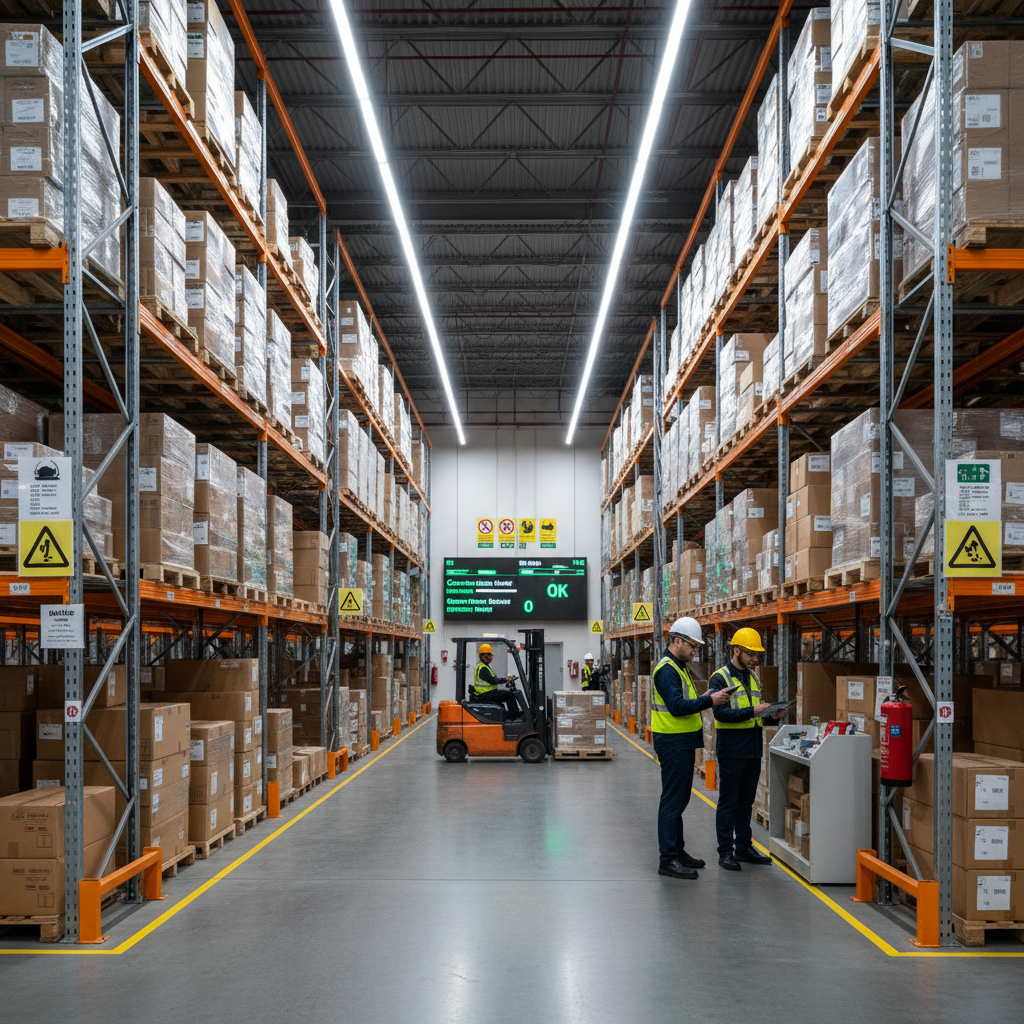
Warehouse Safety and Compliance
Importance of Safety
Warehouse environments present numerous hazards, including moving equipment, heavy loads, heights, and hazardous materials. A strong safety program is essential not only for protecting workers but also for reducing costs associated with accidents and regulatory fines. A well-implemented safety program can result in a decrease in incident rates and an overall improvement in workplace morale.
Common Warehouse Hazards
Physical Hazards
- Forklift and equipment collisions: Proper training and maintenance can significantly reduce these incidents.
- Falling objects from racking: Implementing safety netting and regular inspections can mitigate this hazard.
- Slips, trips, and falls: Ensuring that floors are kept clean and free of obstructions is critical.
- Ergonomic injuries from lifting: Providing equipment like forklifts and trolleys, along with ergonomic training, can help minimize these types of injuries.
Environmental Hazards
- Poor lighting: Adequate lighting is crucial for preventing accidents from unseen hazards.
- Extreme temperatures: Implementing climate control solutions improves worker comfort and productivity.
- Noise exposure: Using hearing protection and sound-absorbing materials can address noise concerns.
- Air quality issues: Regularly inspecting for pollutants and providing ventilation systems contributes significantly to air quality.
Material Hazards
- Hazardous chemicals: Appropriate labeling and storing practices are essential for safety.
- Flammable materials: Proper storage solutions and training can prevent fires.
- Electrical hazards: Regular checks and maintenance are vital for all electrical equipment.
- Confined spaces: Training employees in safe practices for entering confined spaces is necessary to prevent accidents.
Key Regulations
OSHA Standards
- General industry standards: 29 CFR 1910 outlines the fundamental safety and health regulations.
- Powered industrial truck requirements: Specific regulations govern the safe operation of forklifts.
- Hazard communication (HazCom): This standard requires employers to inform employees about chemical hazards.
- Personal protective equipment (PPE): Regulations on the use of PPE ensure that employees are safeguarded against workplace hazards.
Fire Safety
- The National Fire Protection Association (NFPA) codes and standards govern fire safety in warehouses.
- Sprinkler system requirements: These systems are essential in minimizing fire damage.
- Emergency exit requirements: Clear and accessible exit routes are mandated by regulations.
- Fire extinguisher placement: Proper placement and maintenance of fire extinguishers are critical for emergency preparedness.
Safety Best Practices
- Training Programs: Conduct regular safety training for all employees to reinforce safety protocols.
- Equipment Maintenance: Establish preventive maintenance schedules to keep all equipment in optimal condition.
- Signage and Marking: Utilize clear floor marking and warning signs to direct employee traffic safely.
- PPE Requirements: Ensure enforcement of proper safety gear in compliance with regulations.
- Incident Reporting: Create an easy reporting and investigation process to address any safety concerns promptly.
Safety Metrics
Monitoring safety metrics is crucial for improving warehouse operations:
- Lost Time Injury Rate (LTIR): This metric helps quantify productivity losses due to workplace injuries.
- Total Recordable Incident Rate (TRIR): TRIR is vital for assessing the effectiveness of safety programs.
- Near-miss reporting frequency: Encouraging reports of near-miss incidents can help prevent future accidents.
- Safety audit scores: Regular audits assess compliance and identify areas for improvement.
- Workers compensation costs: Tracking these costs can highlight the impact of safety on the bottom line.
Etymology and Origins
The term "warehouse safety" first appeared in industry literature around the 1970s as part of a broader discourse on workplace safety regulations introduced by organizations like the Occupational Safety and Health Administration (OSHA) and the National Safety Council. Its roots stem from the imperative need to protect workers in environments characterized by heavy machinery and inventory management.
Over the years, as operations became more complex due to automation and expanded logistics networks, the nuances of warehouse safety evolved significantly. The integration of new technologies such as automated safety alarms and safety management software has become pivotal since the late 1980s.
Historical Development
The notion of safety in warehouses gained traction in the 1960s, with key figures such as Dr. H.W. Heinrich proposing safety protocols that would later influence OSHA standards. The era also witnessed the publication of influential texts addressing workplace safety practices, including Industrial Safety Management.
Technological evolution played a significant role in reshaping warehouse safety practices. Initially reliant on manual methods, advancement in computerization led to better safety tracking tools in the 1980s, while the adoption of barcoding technology in the 1990s streamlined inventory management. Major milestones like the Just-In-Time (JIT) production philosophy adopted by Toyota in the 1970s further emphasized the importance of safety protocols due to increased operational pace and complexity.
Understanding and implementing safety compliance standards has only become more critical as logistics and supply chain management have transformed dramatically in the 21st century, reinforcing the importance of safety as a fundamental tenet of operational excellence in warehouses.
Sources
- OSHA Warehouse Safety
- National Safety Council
- OSHA Safety and Health Management Systems
- Forklift Safety
- NIOSH - Ventilation
- Visual Inventory Management System
- Lots & Expiration Dates Guide
- Emergency Action Plan Fact Sheet
- Employee Management Guide
- Bin Put-Away Criteria
- Workflows Overview
- Bin Packing Visualizer
- History of Labor, DOL
- About OSHA
- Barcodes Guide
- OSHA Warehouse Safety
- National Safety Council
- OSHA Safety and Health Management Systems
- NIOSH - Ventilation