Warehouse Network Optimization
Warehouse network optimization focuses on improving the efficiency of logistics operations through strategic warehouse placement and management.
Updated
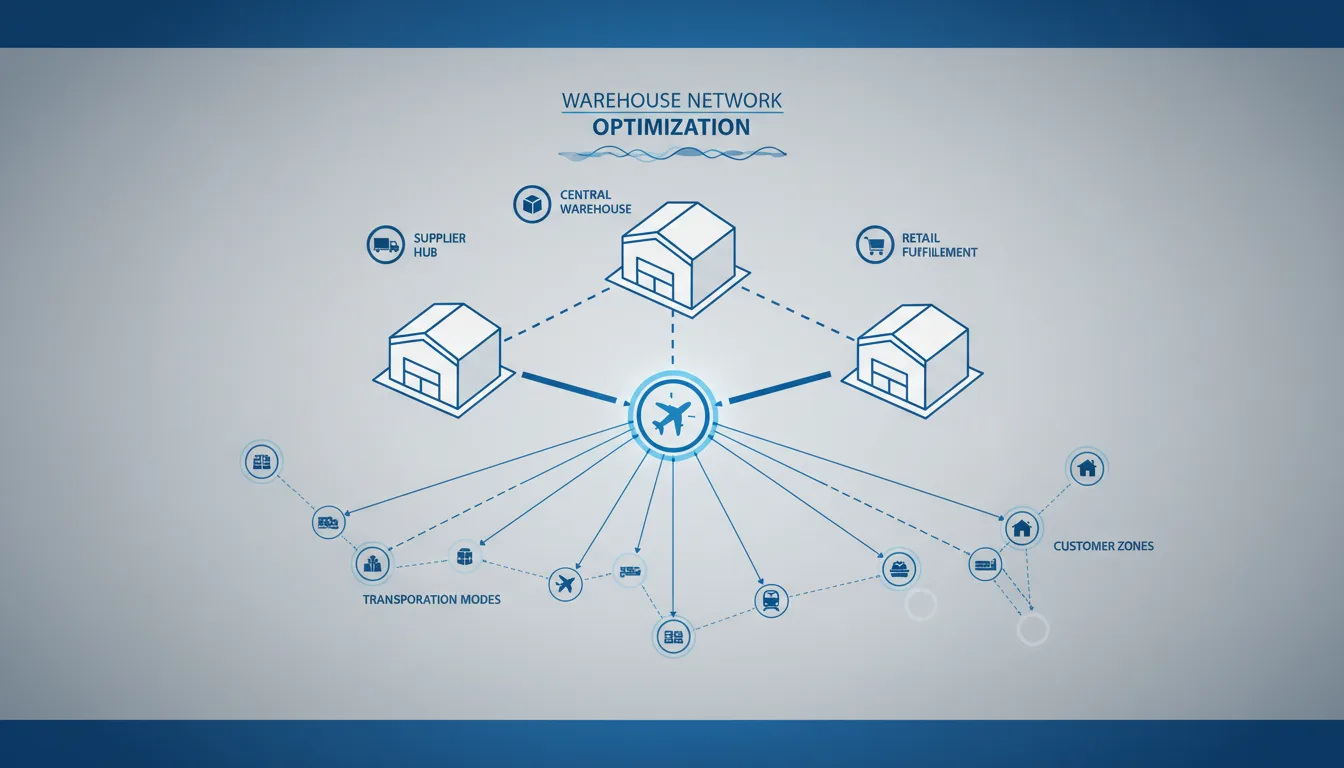
Warehouse Network Optimization
Overview
Warehouse network optimization is a strategic process aimed at enhancing the efficiency and effectiveness of logistics operations by optimizing the configuration and management of warehouses within a supply chain. This practice is essential to achieve greater operational efficiency, reduce costs, and improve customer service by ensuring timely and accurate deliveries. By structuring a warehouse network effectively, companies can also manage inventory more efficiently, reduce lead times, and enhance fulfillment capabilities. For instance, companies implementing Mobile WMS systems can boost operational responsiveness and flexibility, enabling faster and more accurate order fulfillment processes.
Etymology and Origins
The term warehouse network optimization can be traced back to the merging of logistics and supply chain management disciplines in the late 20th century, particularly during the rise of integrated logistics strategies in the 1980s. The linguistic roots lie in the concepts of "warehouse"—derived from the Old English "warian," meaning to store, and "network," which finds its origins in "net," referring to interconnected systems.
The concept has evolved significantly over time, especially with the advent of logistics technology innovations and methodologies such as Just-In-Time (JIT) and Total Quality Management (TQM) in the 1990s. This evolution laid the groundwork for the modern framework of logistics and supply chain optimization, influencing how warehouses function as critical nodes within interconnected logistic networks.
Historical Development
The development of warehouse network optimization has been marked by several significant milestones:
- 1960s-1970s: The introduction of Material Requirements Planning (MRP) systems, notably those developed by IBM, began to transform how inventory was managed within warehouses, focusing on demand-driven approaches. The publication Logistics and Supply Chain Management by Martin Christopher also played a crucial role in this transformation by documenting best practices in the field.
- 1980s: The concept of Just-In-Time (JIT) manufacturing, introduced by Toyota, emphasized the need for warehouses to support more agile and synchronized supply chains. This led to a shift in warehouse operations from mere inventory storage to optimizing flow and efficiency.
- 1990s: The rise of computerized warehouse management systems (WMS) brought about automation in inventory tracking, order management, and integration with enterprise resource planning (ERP) systems. These advancements significantly improved accuracy and reduced overhead costs, making warehouses central to efficient logistics operations.
- 2000s-Present: The emergence of advanced technologies such as automation, robotics, and artificial intelligence has redefined warehouse operations. Enhanced predictive analytics for inventory management now enables real-time decision-making in logistics. For example, automated systems can optimize storage space and streamline the picking process by analyzing demand patterns more effectively.
Key industry publications, including the Council of Supply Chain Management Professionals, have provided frameworks and standards to guide organizations in implementing effective warehouse strategies focusing on continuous improvement and efficiency maximization.
This evolution is further encapsulated in seminal texts that explore best practices and trends in the industry. As warehouse optimization continues to evolve, emerging technologies will likely drive further innovations, reinforcing the importance of agility and resilience in logistics operations.
Best Practices for Warehouse Network Optimization
- Assessment of Current Operations: Conduct a thorough review of current warehousing processes to identify bottlenecks and opportunities for improvement. Tools such as cycle counting can assist in this analysis.
- Invest in Technology: Leverage modern WMS systems that can automate key processes, including inventory tracking and order fulfillment, thus reducing human error and improving efficiency.
- Strategic Location Planning: Optimize warehouse locations based on a thorough analysis of shipping patterns, customer locations, and associated costs to minimize the travel distance of goods.
- Evaluate and Adapt: Continuously monitor performance metrics and implement feedback loops to refine processes as needed. Adapting to market changes and technological advancements is crucial.
- Training and Workforce Management: Regularly train staff on best practices and new technologies to improve productivity and efficiency within the warehouse environment. Tools like the Employee Management Guide can help structure training programs effectively.
By following these best practices and continuously evaluating warehouse efficiency, companies can enhance their supply chain performance, ultimately providing better service at lower operational costs.