Warehouse Management Software
An in-depth exploration of warehouse management software, covering its definition, history, applications, and benefits.
Updated
Overview
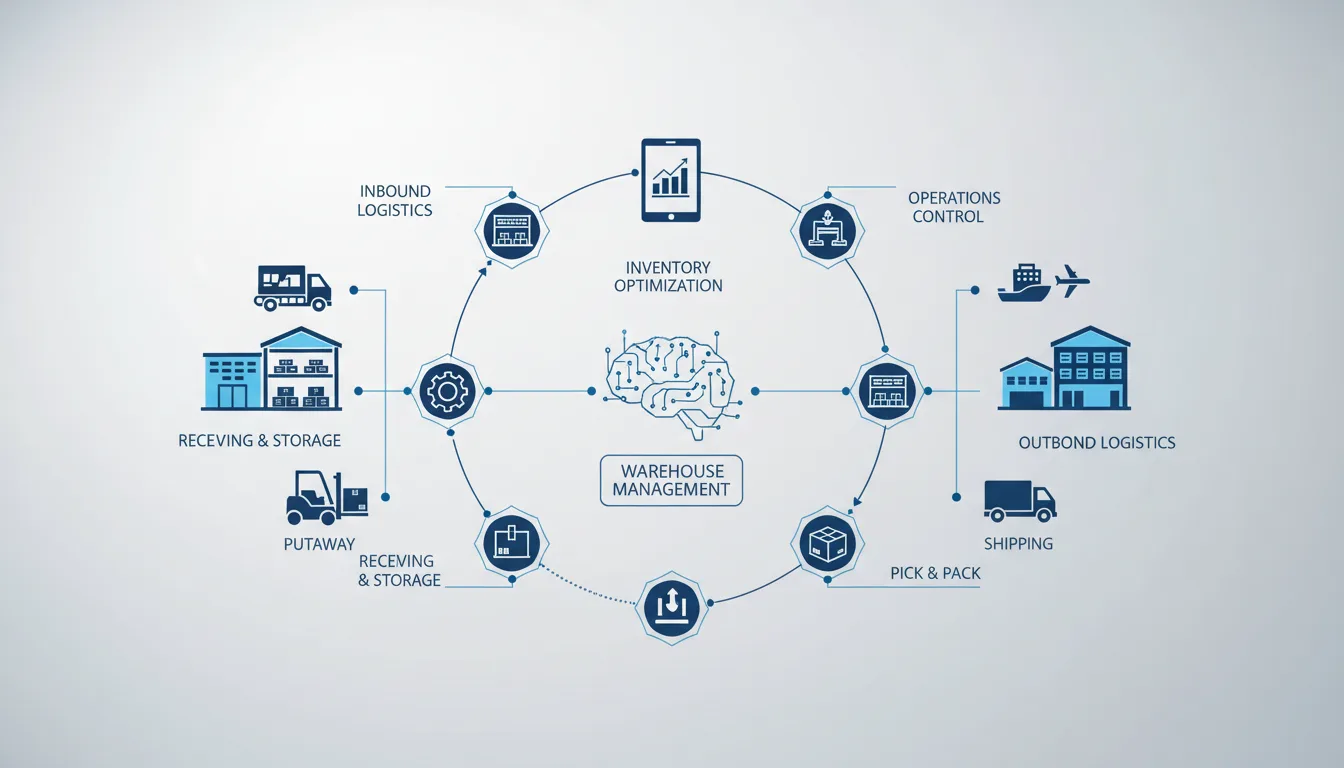
Warehouse Management Software (WMS) is a vital component in the logistics and supply chain management sector, designed to optimize warehouse functionality and management processes. WMS enhances inventory accuracy, improves order fulfillment rates, and facilitates the efficient movement of goods within a warehouse environment. This software can streamline operations through various mechanisms, such as inventory management, order tracking, and process automation, significantly impacting overall operational efficiency and offering a competitive edge in today's dynamic markets.
Etymology and Origins
The concept of managing goods in storage is ancient, but the term "warehouse management software" is a relatively modern construct, emerging as computing power became integral to logistics. Initially, the focus was on inventory control systems, evolving from manual ledgers and card-based systems like Kardex in the mid-20th century. As businesses grew in complexity and scale, the necessity for more sophisticated, automated control over physical inventory processes became apparent.
The term "Warehouse Management System" (WMS) began to appear in academic and industry literature in the late 1970s and early 1980s, coinciding with the rise of dedicated software applications for logistics. One of the earlier documented usages can be found in discussions around materials handling and logistics system design, where software solutions started to replace manual methods for managing stock location, movement, and order picking within the warehouse. The addition of "software" to the term explicitly highlighted the central role of information technology in orchestrating these complex operations, marking a significant departure from purely manual or mechanized systems.
Historical Development
The evolution of warehouse management software began in the 1960s with the introduction of barcodes and early mainframe computers, which paved the way for automated inventory tracking and basic stock accounting. These initial steps focused primarily on recording inventory levels and transactions.
The 1970s saw the development and adoption of Material Requirements Planning (MRP) systems, which helped manufacturers manage raw materials and production schedules. While not directly WMS, MRP laid crucial groundwork for integrated inventory management. The 1980s marked a significant technological milestone with the emergence of dedicated computerized WMS solutions. Industry leaders recognized the potential of software applications to optimize not just inventory but the entire flow of goods within a warehouse. Pioneers like EXE Technologies (now Infor) developed early standalone WMS products. This era also saw the profound influence of Just-in-Time (JIT) manufacturing principles, popularized by Toyota, which demanded highly accurate and efficient inventory movement, directly fueling the need for robust WMS.
By the 1990s, as Enterprise Resource Planning (ERP) systems like SAP R/3 and Oracle Applications gained prominence, WMS functionalities often became integrated modules within these larger systems, offering a more holistic view of business operations. Leading retail companies adopted WMS to manage their increasingly complex supply chains, with publications such as "Logistics Management" journal highlighting its growing importance in the sector. The rise of technologies like Radio Frequency Identification (RFID) further advanced WMS capabilities in the early 2000s, drastically improving accuracy and automation of data collection without line-of-sight scanning.
In the 2010s and beyond, the shift to cloud-based WMS became dominant, offering greater flexibility, scalability, and accessibility. The explosion of e-commerce and omnichannel retail necessitated even more sophisticated WMS solutions capable of handling diverse order profiles, rapid fulfillment, and real-time inventory visibility across multiple locations. Today, modern WMS leverages advanced analytics, mobile technologies, and integrates with automation and robotics, transforming warehouses into highly optimized fulfillment centers.
Core Concepts
Warehouse Management Software typically supports various functionalities crucial for effective operations, moving beyond simple inventory tracking to comprehensive logistics orchestration:
- Inventory Control: Real-time tracking of stock levels ensures accuracy in inventory reporting, enhancing stock replenishment processes. This includes managing lots and expiration dates, handling different units of measure, and providing a visual overview of inventory.
- Order Fulfillment: WMS automates and optimizes the order-picking, packing, and shipping processes, leading to increased order cycle speed and accuracy. This includes advanced strategies like batch picking and pick-to-tote. Further details are outlined in the Order Fulfillment Guide and supported by pick, pack, ship software.
- Warehouse Layout Optimization: Effective warehouse design is paramount to streamline operations. WMS solutions often provide insights into warehouse layout for optimal space utilization, guiding processes like bin put-away criteria and bin packing.
- Receiving and Putaway: Manages the efficient receipt of goods, quality control, and strategic placement of items within the warehouse to optimize storage space and retrieval times. This includes purchase order check-in and directed putaway.
- Shipping and Distribution: Integrates with carriers and provides tools for efficient shipment planning, manifesting, and tracking, often including automated rate selection and multi-box shipping capabilities.
Industry Applications
Warehouse Management Software is utilized across various industries, adapting its functionalities to meet sector-specific demands:
- Retail & E-commerce: Major retailers and online businesses employ WMS to handle high volumes of inventory, manage omnichannel fulfillment, and ensure rapid, accurate order processing for customer satisfaction. SkuSavvy's Shopify WMS is an example tailored for this sector.
- Manufacturing: WMS aids manufacturers in managing raw materials, work-in-progress, and finished goods, enabling just-in-time inventory practices and seamless integration with production lines.
- Pharmaceuticals: WMS is essential for managing controlled substances, adhering to strict regulatory compliance (e.g., FDA requirements), tracking batch numbers and expiration dates, and maintaining specific storage conditions.
- Third-Party Logistics (3PL): 3PL providers leverage advanced WMS to manage diverse client inventories, optimize multi-client warehousing operations, and provide transparent reporting.
Benefits and Advantages
The advantages of implementing Warehouse Management Software are manifold, leading to significant operational improvements and cost savings:
- Increased Efficiency: Automated processes, guided picking, and optimized workflows reduce human error and improve the speed of operations, contributing to a faster order turnaround. This is often achieved through streamlined workflows.
- Enhanced Accuracy: Utilizing methods such as cycle counting and bin-to-bin transfers, WMS ensures inventory accuracy, which is crucial for complex processes like kitting and assembly.
- Cost Reduction: By optimizing labor, space utilization, and inventory management, organizations can significantly reduce warehousing operational costs, minimize waste, and improve profitability. This includes reducing carrying costs and preventing stockouts or overstocks.
- Improved Customer Satisfaction: Faster, more accurate order fulfillment directly translates to happier customers, leading to repeat business and stronger brand loyalty.
- Better Visibility and Reporting: WMS provides real-time data and comprehensive reports on inventory, order status, and operational performance, enabling informed decision-making and continuous improvement.
Challenges and Limitations
Despite the various benefits, implementing and managing Warehouse Management Software can present several challenges:
- Integration Complexity: Ensuring seamless integration with existing enterprise systems (like ERP, CRM, and e-commerce platforms) can be complex, time-consuming, and costly. Achieving a truly unified data flow often requires significant technical effort, as detailed in discussions around WMS vs ERP.
- Upfront Costs: The initial investment for state-of-the-art WMS software, hardware (e.g., scanners, mobile devices), implementation services, and training can be substantial, potentially deterring smaller operations or those with limited capital.
- Change Management: Introducing a new WMS often requires significant changes to established workflows and processes, necessitating comprehensive employee training and overcoming resistance to change for successful adoption.
- Data Migration: Transferring existing inventory data, customer information, and operational records accurately into a new WMS system can be a complex and error-prone process.
Best Practices
To maximize the effectiveness and return on investment of Warehouse Management Software, companies should consider the following best practices:
- Thorough Planning and Needs Assessment: Before implementation, clearly define business requirements, assess current pain points, and select a WMS that aligns with both current operations and future growth strategies.
- Regular Training and Continuous Improvement: Provide comprehensive and continuous training for staff to adapt to software updates, new features, and optimized workflows. Foster a culture of continuous improvement by regularly reviewing performance metrics and adjusting WMS configurations.
- Master Data Management: Maintaining clean, accurate, and standardized data (e.g., product dimensions, bin locations, supplier information) is crucial for the WMS to operate efficiently and provide reliable insights.
- Pilot Programs: Implement the WMS in phases or use a pilot program in a controlled environment to identify and resolve issues before a full-scale rollout.
- Leverage Workflows: Utilize customizable workflows within the WMS to standardize processes, ensure compliance, and guide staff through tasks like picking, packing, and receiving.
Technology and Tools
Modern WMS solutions are increasingly sophisticated, leveraging cutting-edge technologies to enhance capabilities:
- Mobile Applications: Many WMS systems now offer mobile capabilities, allowing users to manage warehouse operations, perform tasks like picking and cycle counting, and access real-time data from anywhere on the warehouse floor using handheld devices or smartphones. This extends to mobile order fulfillment software.
- Cloud Computing: Cloud-based WMS facilitates remote access, scalability for growing businesses, reduced IT infrastructure costs, and easier updates and maintenance.
- Internet of Things (IoT): Integration with IoT devices, such as smart shelves or environmental sensors, provides real-time data on inventory conditions, location, and movement, enhancing visibility and proactive management.
- Robotics and Automation: WMS can integrate with automated guided vehicles (AGVs), autonomous mobile robots (AMRs), and other robotic systems to automate material handling, picking, and putaway, dramatically increasing throughput and accuracy.
Future Trends
Looking forward, Warehouse Management Software will likely continue to evolve at a rapid pace, driven by technological advancements and changing market demands:
- Artificial Intelligence (AI) and Machine Learning (ML): AI and ML will play pivotal roles in predictive analytics (e.g., demand forecasting, labor planning), dynamic slotting, route optimization, and proactive anomaly detection within warehouse operations.
- Blockchain: Enhancing transparency and traceability in supply chains through decentralized inventory management and immutable transaction records will become more prevalent, particularly for high-value or regulated goods.
- Enhanced Personalization and Customization: WMS will offer greater flexibility for businesses to tailor features and workflows to their unique operational needs, moving beyond one-size-fits-all solutions.
- Augmented Reality (AR): AR applications could guide warehouse workers through picking routes, provide real-time product information, and assist with assembly, further improving efficiency and reducing errors.
In conclusion, Warehouse Management Software is an essential and continuously evolving tool that can vastly improve warehouse operations and management. As industries continue to evolve and adopt advanced technologies, driven by global supply chain complexities and e-commerce growth, the demand for efficient, intelligent, and effective WMS solutions is anticipated to grow significantly, playing a central role in optimizing the entire supply chain.
Sources
- Stock Replenishment Guide
- Order Fulfillment Guide
- Kitting Guide
- Warehouse Layout Preview
- Mobile Warehouse Management System
- Barcodes Guide
- The Evolution of Inventory Control, Part I: From Ancient Times to the 1970s
- The Evolution of MRP: From a scheduling tool to an enterprise strategy
- Inventory Management and Warehouse Management: Software Solutions
- Just-in-Time (JIT) Definition and How It Works
- About EPC/RFID
- Visual Inventory Management System
- Lots & Expiration Dates
- Unit of Measure Guide
- Batch Picking Guide
- Pick-to-Tote Guide
- Pick, Pack, Ship Software
- Bin Put-Away Criteria
- Bin Packing Visualizer
- PO Check-In Guide
- Automated Rate Selection
- Multi-Box Shipping
- Shopify WMS Overview
- Workflows Overview
- What is Cloud WMS?
- Mobile Order Fulfillment