Warehouse Management
An in-depth exploration of warehouse management, covering its significance, historical development, core concepts, and best practices in logistics.
Updated
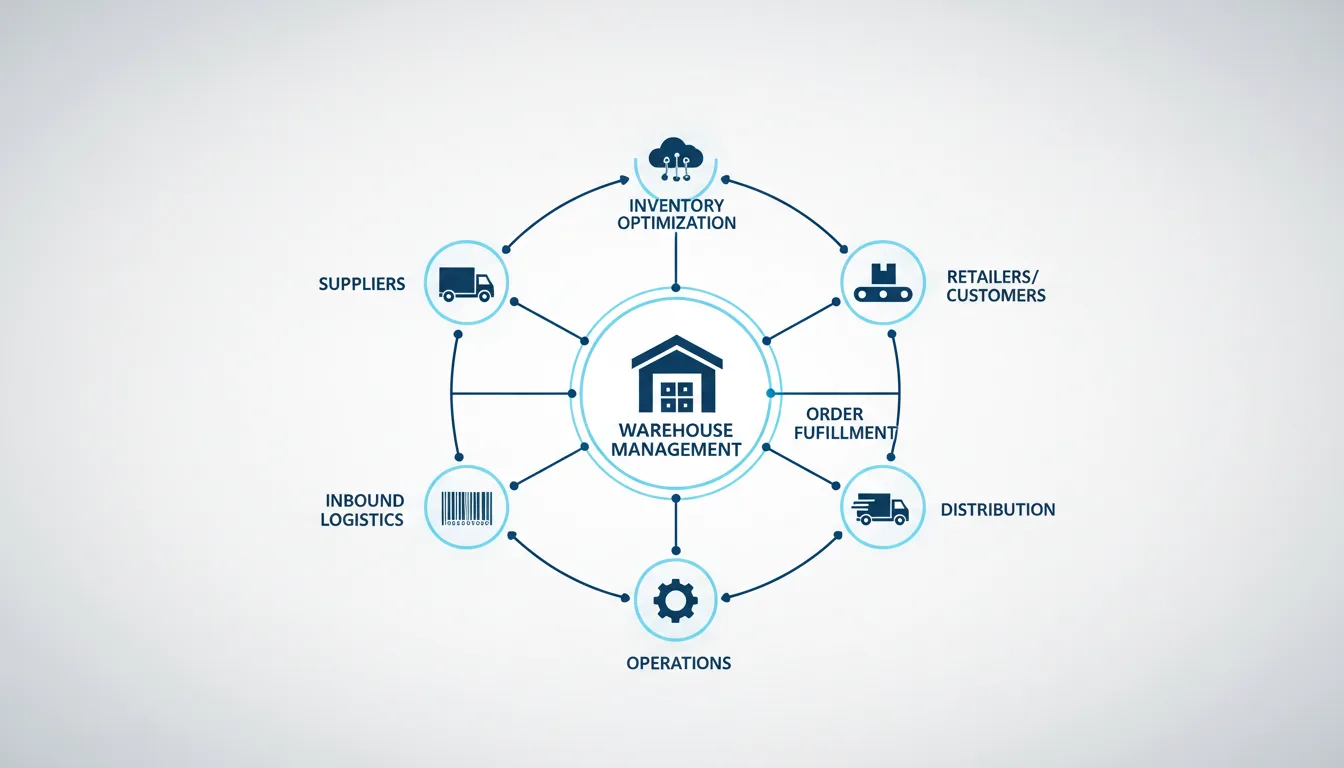
Overview
Warehouse management encompasses the processes and systems involved in managing the storage and movement of goods within a warehouse facility. This discipline plays a crucial role in ensuring that inventory is managed efficiently, which, in turn, enhances the overall supply chain performance. Effective warehouse management can lead to reduced operational costs, improved customer satisfaction, and optimized inventory levels.
The significance of warehouse management is reflected in its integration with advanced technologies such as Mobile WMS, sophisticated automation systems, and various inventory control methodologies. Modern warehouse operations often leverage a visual inventory management system to provide real-time visibility and control over stock.
Etymology and Origins
The term "warehouse" itself has deep historical roots. It originates from the Middle English warenhouse, which combines the Old English word warian meaning "to keep safe, to guard, to store" and the word house. The concept of a dedicated facility for storing goods predates the modern term, with evidence of communal granaries and mercantile storage depots found in ancient civilizations like Egypt and Mesopotamia.
The phrase "warehouse" began to gain widespread popularity and formalized usage in the 17th century, particularly with the rise of global commercial trade in Europe. As sailing ships transported vast quantities of goods across continents, the necessity for large, dedicated storage facilities at ports and trade hubs became paramount. Early warehouses were primarily functional spaces for safeguarding goods, often lacking the structured management systems seen today. The evolution from mere storage spaces to dynamic, managed systems of organization and technology was a direct response to expanding commerce and the increasing complexity of supply chains.
Historical Development
Emergence and Evolution
The practice of warehouse management traces its roots back to ancient civilizations when merchants needed space for storing their produce, grains, and goods for sale. Early forms of storage included granaries in ancient Egypt for agricultural surpluses and Roman horrea which served as both public and private storage facilities for various commodities. However, it wasn't until the Industrial Revolution in the 18th century that warehouses began to incorporate more structured management processes, driven by the mass production of goods and the need for efficient distribution.
In the late 19th and early 20th centuries, the principles of scientific management, pioneered by figures like Frederick Winslow Taylor, began to influence industrial operations, including material handling and storage. The development of powered forklifts in the 1920s by companies like Clark Equipment and Raymond Corporation significantly mechanized warehouse operations, improving stacking efficiency and reducing manual labor.
The mid-20th century saw substantial advancements. During and after World War II, sophisticated logistics strategies developed by the military influenced commercial practices. The 1950s also marked the introduction of modern inventory control systems, driven by techniques such as Materials Requirements Planning (MRP) and later Just-in-Time (JIT) inventory, popularized by the Toyota Production System. These methodologies emphasized waste reduction, efficiency, and precise inventory synchronization, directly impacting warehouse design and processes.
Key Milestones
- Ancient Times - 18th Century: Basic storage facilities and granaries evolve into more formalized mercantile depots, particularly with the growth of international trade routes like the Silk Road and maritime commerce. The British East India Company, for instance, operated extensive warehouses [12].
- Late 19th - Early 20th Century: Introduction of scientific management principles, mechanization through early conveyor systems, and the advent of the forklift, dramatically improving material handling efficiency.
- 1950s: Adoption of lean manufacturing and Materials Requirements Planning (MRP) principles began to influence warehouse operations in manufacturing facilities. The widespread use of palletization became a standard for unitizing loads, revolutionizing storage density and handling speed.
- 1970s: The introduction of Electronic Data Interchange (EDI) standards enabled improved electronic communication between warehouses, suppliers, and customers, laying the groundwork for integrated supply chains.
- 1980s - 1990s: The emergence of specialized Warehouse Management Systems (WMS) as commercially available software solutions. Early WMS focused on inventory tracking, putaway, and picking optimization, moving away from paper-based systems. Barcode scanning became commonplace, automating data capture and improving accuracy.
- 2000s: The proliferation of e-commerce led to a recalibration of logistics strategies, demanding faster fulfillment and omni-channel capabilities. WMS became more sophisticated, integrating with enterprise resource planning (ERP) systems and incorporating advanced analytics. Automation like Automated Storage and Retrieval Systems (AS/RS) and early robotics began to be adopted in large-scale distribution centers.
- 2010s - Present: Continued advancements in robotics (e.g., Kiva Systems, acquired by Amazon), Artificial Intelligence (AI), Machine Learning (ML), and the Internet of Things (IoT) further transformed warehouse operations. Real-time data analytics, predictive capabilities, and sustainable practices became central to modern warehouse management.
Core Concepts
Warehouse management involves several core concepts that ensure effective operation and contribute to overall supply chain success:
- Inventory Management: This encompasses monitoring stock levels, managing stock rotations (e.g., FIFO, LIFO), and ensuring accurate replenishment strategies like stock replenishment. Techniques such as cycle counting and physical inventories are essential for maintaining data accuracy and operational efficiency. Understanding lots and expiration dates is crucial for perishable or regulated goods.
- Order Fulfillment: Efficiently processing customer orders, managing picking, packing, and organizing shipping logistics are critical aspects. A well-defined order fulfillment process, often supported by pick, pack, ship software, can significantly improve accuracy and reduce lead times. This includes managing returns (reverse logistics) as a vital part of the customer experience.
- Warehouse Layout and Design: The physical design and organization of the warehouse significantly impact efficiency, safety, and capacity utilization. Tools such as the Visual Warehouse Layout can help optimize space utilization, traffic flow, and storage density, including defining bin put-away criteria.
- Picking Methods: Various strategies are employed to streamline the picking process, leading to faster order processing and reduced labor costs. Examples include batch picking, zone picking, and pick-to-tote strategies, each suited to different order profiles and warehouse configurations.
- Receiving and Putaway: The process of accepting incoming goods, verifying their quantity and quality, and then strategically placing them into storage locations. Efficient receiving reduces bottlenecks and ensures products are available for picking quickly.
- Shipping: The final stage of preparing and dispatching orders to customers. This involves packaging, labeling, loading onto carriers, and managing shipping documentation. Systems like shipping and fulfillment software help automate and optimize this process.
Types and Classifications
Warehouse management approaches can be classified into various types based on their features, operational methodologies, and levels of automation:
- Traditional Warehousing: Often employs manual or semi-manual systems for inventory management, record-keeping, and material handling. While suitable for smaller operations or those with low inventory turnover, it typically offers lower efficiency and higher error rates compared to automated systems.
- Automated Warehousing: Utilizes advanced technologies such as robotic picking systems, Automated Storage and Retrieval Systems (AS/RS), Conveyor systems, and Automated Guided Vehicles (AGVs). These systems enhance speed, accuracy, labor efficiency, and throughput. Examples include large e-commerce fulfillment centers that heavily invest in robotics for order fulfillment.
- Cross-Docking: A logistics procedure where incoming goods are directly transferred from an inbound transportation vehicle to an outbound transportation vehicle with minimal or no storage in between, as outlined in the Cross-Docking Guide. This method is ideal for high-volume, time-sensitive goods and can significantly reduce storage costs and lead times.
- Distribution Centers (DCs): More than just storage, DCs are highly dynamic facilities focused on rapid inventory turnover, consolidation, and breaking bulk to fulfill customer orders quickly. They are central to modern logistics networks.
- Third-Party Logistics (3PL) Warehousing: Companies outsource their warehousing and logistics needs to a 3PL provider. These providers offer specialized services, technology, and scalability, allowing businesses to focus on their core competencies.
Industry Applications
Warehouse management systems are utilized across a wide range of industries, each with unique requirements and complexities:
- Retail: Managing vast inventories, handling seasonal demand fluctuations, and supporting both in-store and online fulfillment (omni-channel logistics). Shopify WMS solutions are crucial for e-commerce retailers.
- Pharmaceuticals: Ensuring strict compliance with regulatory requirements (e.g., FDA), tracking lots and expiration dates with precision, and maintaining specific temperature-controlled storage conditions for sensitive products.
- E-commerce: Demands rapid order processing, efficient returns management, and often relies heavily on automation and advanced picking strategies to meet customer expectations for fast delivery. Solutions like mobile order fulfillment software are essential.
- Automotive: Managing complex Bill of Materials (BOM), supporting Just-in-Time (JIT) delivery to assembly lines, and handling a wide variety of part sizes and types.
- Food & Beverage: Requires stringent hygiene standards, precise temperature control, and robust tracking of expiration dates and batches to ensure food safety and minimize waste.
Benefits and Advantages
Effective warehouse management delivers numerous strategic and operational benefits, contributing to a company's competitive advantage:
- Cost Reductions: Streamlined operations, optimized space utilization, reduced labor through automation, and minimized inventory holding costs all contribute to lowered overhead. Proper bin-to-bin inventory transfer practices can reduce unnecessary movements and improve efficiency.
- Enhanced Customer Satisfaction: Faster and more accurate order fulfillment, reduced lead times, and reliable inventory availability directly translate into improved customer experiences and loyalty.
- Improved Inventory Control: Real-time visibility into inventory levels, accurate stock counts through practices like cycle counting, and better demand forecasting lead to optimized stock levels, reducing both stockouts and overstocking.
- Increased Operational Efficiency: Automation, optimized workflows, and intelligent layout design maximize throughput and productivity per square foot.
- Better Space Utilization: Strategic warehouse layout preview and storage solutions ensure that every square foot of warehouse space is used effectively, reducing the need for expansion.
- Enhanced Data Accuracy: Digital systems minimize human error in data entry and tracking, leading to more reliable information for decision-making.
Challenges and Limitations
Despite its benefits, warehouse management presents several ongoing challenges that organizations must address:
- Inventory Visibility and Accuracy: Maintaining real-time, highly accurate visibility into inventory levels across multiple locations can be difficult without proper systems and diligent processes. Discrepancies can lead to stockouts, overstocks, and lost sales.
- Workforce Management: Attracting, training, and retaining a skilled and efficient workforce is critical. Labor shortages, high turnover, and the need for continuous training on new technologies can significantly affect productivity and operational costs. Employee management features can help track and optimize.
- Technology Implementation and Integration: Transitioning to and integrating advanced automated systems and WMS can require significant capital investment, extensive planning, and training. Compatibility issues between different systems (e.g., WMS, ERP, TMS) can also pose challenges.
- Space and Capacity Constraints: Optimizing existing space or finding suitable expansion options can be a major hurdle, especially in urban areas where real estate is expensive.
- Demand Volatility: Fluctuations in customer demand, often driven by seasonal trends or market changes (e.g., e-commerce surges), make capacity planning and labor scheduling complex.
- Sustainability Pressures: Meeting environmental regulations and customer expectations for sustainable operations requires energy-efficient equipment, waste reduction strategies, and optimized transportation, adding complexity.
Best Practices
To optimize warehouse management and overcome common challenges, consider implementing the following best practices:
- Leverage a Robust WMS: Implement a comprehensive Warehouse Management System (WMS) to automate and streamline core processes, from receiving and putaway to picking, packing, and shipping. A WMS, like SkuSavvy's order management system, provides real-time data, improves accuracy, and optimizes workflows, including managing purchase order approval and PO check-in.
- Optimize Warehouse Layout: Regularly review and optimize the physical layout using tools like warehouse layout preview to minimize travel time, improve traffic flow, and maximize storage density. Consider slotting strategies based on product velocity and dimensions.
- Implement Advanced Picking Strategies: Employ appropriate picking methods such as batch picking, zone picking, or pick-to-tote to increase picking efficiency and reduce labor costs.
- Regular Training and Development: Continuously train staff on warehouse technologies, safety protocols, and efficient processes. A well-trained workforce is more productive, accurate, and adaptable to new systems and challenges. Track employee productivity for continuous improvement.
- Conduct Regular Inventory Auditing: Implement frequent cycle counting to maintain high inventory accuracy and reduce the need for disruptive annual physical inventories. Utilize barcode scanning for faster and more accurate counts.
- Embrace Automation and Robotics: Gradually integrate automation where it provides a strong ROI, such as AS/RS for high-density storage, AGVs for material transport, or robotic pickers for repetitive tasks. This reduces labor dependency and increases throughput.
- Data-Driven Decision Making: Utilize the data generated by WMS and other systems to analyze performance, identify bottlenecks, forecast demand, and make informed decisions for continuous improvement. SkuSavvy's workflows overview provides insight into optimized processes.
- Focus on Sustainability: Implement eco-friendly practices such as energy-efficient lighting, optimizing packaging to reduce waste, and consolidating shipments to lower carbon footprints.
Future Trends
The future of warehouse management is poised to be influenced by numerous transformative trends, driven by technological advancements and evolving consumer demands:
- Increased Automation and Robotics: The trend toward automation will continue to accelerate, with innovations in collaborative robots (cobots), autonomous mobile robots (AMRs), and advanced robotic manipulation playing pivotal roles in warehouse efficiency, further reducing manual labor and increasing throughput.
- Artificial Intelligence (AI) and Machine Learning (ML): AI and ML will enhance predictive analytics for demand forecasting, optimize dynamic slotting and route planning, improve inventory placement, and enable self-optimizing warehouse operations. This will move warehouses towards truly 'smart' facilities.
- Internet of Things (IoT) Integration: IoT sensors embedded in equipment, products, and infrastructure will provide real-time data on environmental conditions, asset tracking, and equipment performance, enabling predictive maintenance and greater visibility across the warehouse floor.
- Sustainability Practices and Green Warehousing: As businesses prioritize environmental responsibility, environmentally friendly warehouse designs, energy-efficient operations (e.g., solar power, LED lighting), waste reduction strategies, and optimized transportation for lower emissions will become paramount. This includes efforts to make supply chains more circular.
- Omni-channel Fulfillment: Warehouses will continue to evolve to support seamless omni-channel strategies, blurring the lines between retail stores, distribution centers, and e-commerce fulfillment centers to meet diverse customer expectations.
- Blockchain Technology: While still nascent, blockchain could potentially enhance transparency, traceability, and security within the supply chain, particularly for high-value goods or those requiring strict regulatory compliance.
Related Concepts
Warehouse management is intrinsically intertwined with other critical logistics and supply chain concepts. Its effective integration with these areas enhances overall operational efficiency and effectiveness in fulfilling customer demand:
- Supply Chain Management (SCM): Warehouse management is a foundational component of the broader SCM framework, ensuring the smooth flow of goods from suppliers to customers.
- Inventory Management: Directly linked, as effective warehouse management is impossible without precise control over stock levels, locations, and movements.
- Distribution Logistics: Encompasses the entire process of moving goods from the point of manufacture to the point of sale or consumption, where warehouses serve as crucial nodes.
- Transportation Management: Involves planning, optimizing, and executing the movement of goods. Warehouses act as hubs for consolidating and deconsolidating shipments, interacting directly with transportation carriers.
- Order Management: Closely related, as the efficiency of order processing and fulfillment within the warehouse directly impacts customer satisfaction and delivery times.
- Materials Handling: The systemic movement, storage, and control of materials within a facility. Modern warehouse management heavily relies on advanced materials handling equipment and techniques.
Sources
- Mobile WMS Overview
- Cycle Counting Guide
- Visual Warehouse Layout
- Order Fulfillment Guide
- Cross-Docking Guide
- Lots & Expiration Dates
- Bin-to-Bin Transfers
- Workflows Overview
- Horreum
- History of the Forklift
- The Toyota Production System
- British East India Company
- Pallet History: When Were Pallets Invented?
- A Brief History of Barcodes
- What is Automated Storage and Retrieval System (AS/RS)?
- What is a Circular Supply Chain?
- Visual Inventory Management System
- Stock Replenishment Guide
- Pick, Pack, Ship Software
- Bin Put-Away Criteria
- Shipping & Fulfillment Software
- Shopify WMS Overview
- Mobile Order Fulfillment
- Employee Management
- Order Management System
- Purchase Order Management
- PO Approval Workflow
- PO Check-In Guide
- Barcodes Guide
- Productivity Tracking
- What is supply chain management, and why is it important for your business?
- Grain storage
- Warehouse
- Ancient Egyptian Food Storage Techniques: The Granary as a Model for Sustainability
- Frederick W. Taylor
- The Evolution of Inventory Management
- Materials Requirements Planning (MRP)
- What is EDI?
- Amazon’s Warehouse Robotics and Fulfillment
- Picking Methods: Zone Picking and Batch Picking