Warehouse Capacity Planning
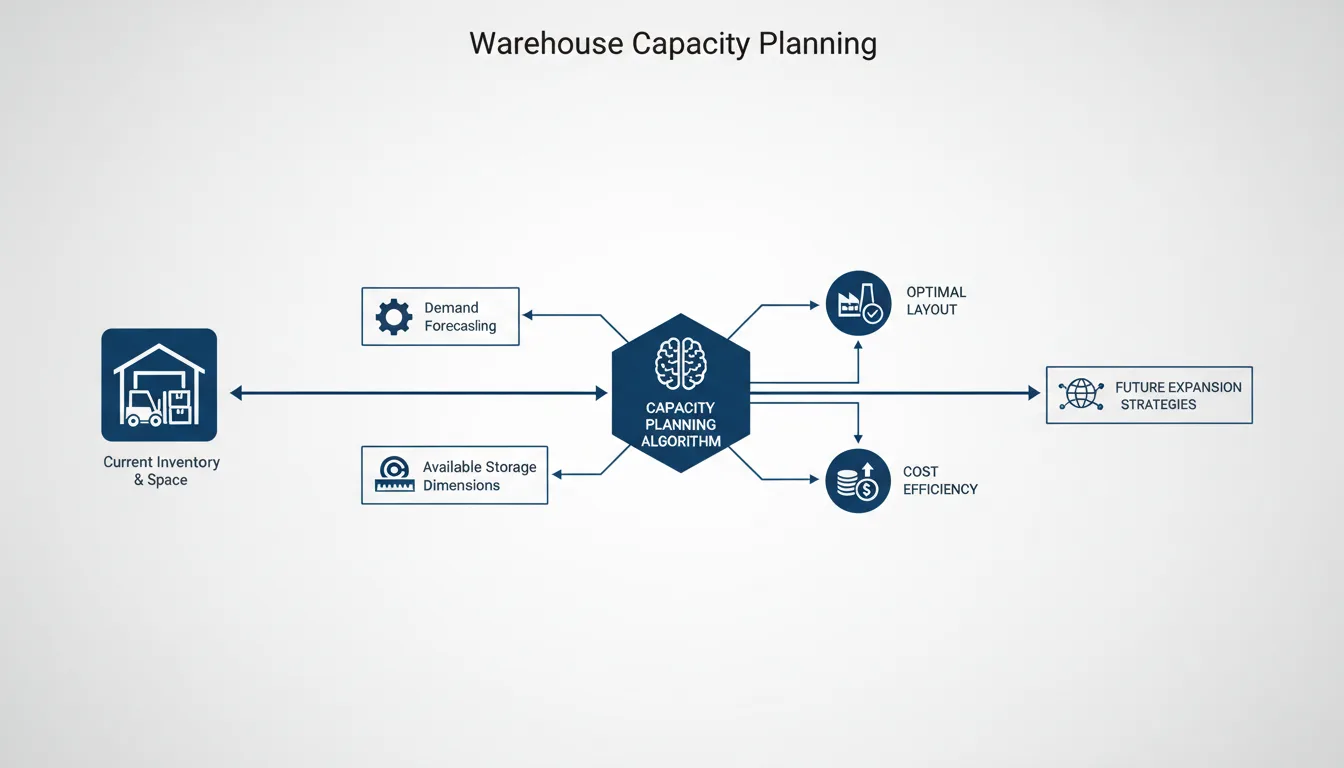
Warehouse capacity planning is vital for effective logistics management, ensuring optimal space utilization and inventory control.
Updated
Overview
Warehouse capacity planning is a strategic and systematic approach to optimizing the storage, movement, and processing capabilities within a warehouse or distribution center. Its primary purpose is to ensure that the available physical space, equipment, and human resources can efficiently meet current and projected operational demands, including fluctuating inventory levels and varying order fulfillment volumes. Effective capacity planning is crucial for minimizing operational costs, preventing bottlenecks, reducing order fulfillment delays, and ultimately enhancing overall supply chain efficiency and customer satisfaction. By proactively managing space, businesses can avoid costly expansions, improve throughput, and maintain competitive service levels.
Etymology and Origins
The concept of 'capacity planning' has roots deeply embedded in industrial engineering and operations research, disciplines that emerged in the early 20th century to optimize complex systems. The term 'capacity' itself derives from the Latin capacitas, meaning 'ability to hold or contain,' while 'planning' comes from the Old French plan, signifying a 'ground-plan' or 'drawing'.
Early documented usage of 'capacity planning' can be traced to the manufacturing industry in the early 1900s, where it referred to the allocation of machinery, labor, and raw materials to meet production schedules. Pioneers of scientific management, such as Frederick Winslow Taylor, laid the groundwork for systematic production planning, which inherently involved capacity considerations. As businesses grew in complexity and supply chains began to form, the focus broadened from purely production-centric capacity to include inventory management, transportation, and ultimately, warehouse operations. The evolution of the term reflects the increasing recognition that efficient storage and material flow are as critical to overall productivity as manufacturing efficiency.
Historical Development
Emergence and Early Developments (Pre-1960s)
Warehouse capacity planning, in its rudimentary form, has existed for as long as goods have been stored. However, systematic approaches began to emerge with the Industrial Revolution. Early concepts of logistics and storage management were integrated into factory planning. Post-World War II, the field of operations research applied scientific methods to logistical problems, leading to initial models for inventory control, such as the Economic Order Quantity (EOQ) model, which indirectly influenced storage needs. The 1950s saw a rise in the understanding of the warehouse as more than just a static storage unit, but as a dynamic component of the supply chain.
Rise of Modern Logistics and Computerization (1960s-1980s)
The mid-20th century marked a significant shift with the formalization of logistics as a management discipline. The 1960s and 1970s witnessed the introduction of sophisticated inventory management techniques, particularly driven by the growth of just-in-time (JIT) manufacturing pioneered by Toyota. JIT philosophies, emphasizing minimal inventory and efficient flow, directly challenged traditional large-warehouse models and necessitated precise capacity planning to support frequent, smaller deliveries and rapid stock turnover.
During this era, the first mainframe computers began to be employed for inventory tracking and rudimentary space calculations. Material Requirements Planning (MRP) systems, developed in the 1970s, helped manufacturers plan raw material and component procurement, indirectly affecting inbound warehouse capacity.
Technological Revolution and WMS Adoption (1980s-2000s)
The 1980s and 1990s brought about a revolution with the widespread adoption of personal computers and the development of specialized software. This period saw the emergence of dedicated Warehouse Management Systems (WMS), which moved beyond simple inventory tracking to manage physical space, labor, and equipment more effectively. The introduction of technologies like barcoding and Radio Frequency Identification (RFID) significantly enhanced real-time visibility into inventory movement and location, enabling more accurate capacity utilization.
Key figures and companies, such as Sam Walton of Wal-Mart, revolutionized retail logistics by investing heavily in advanced distribution networks and using data analytics to optimize inventory flow and warehouse space. Their methodologies in warehouse capacity planning set benchmarks for the industry, proving the strategic advantage of efficient logistics. J.B. Hunt Transport Services also transformed transportation logistics, influencing warehouse operations through optimized routing and scheduling.
Digital Transformation and Automation (2000s-Present)
From the 2000s onwards, advancements in technology continued to accelerate. The rise of e-commerce necessitated agile and highly efficient warehouse operations, pushing the boundaries of capacity planning to handle unprecedented volumes of smaller, more frequent orders. Mobile technologies, cloud computing, and advanced analytics became integral to WMS, allowing for dynamic adjustments to warehouse layouts and storage strategies. Seminal publications, including the Warehouse Management Handbook by Gwynne Richards (2011), contributed to disseminating best practices and integrating new technologies into capacity planning methodologies.
Core Concepts
Warehouse capacity planning operates on several core principles, each critical for achieving optimal warehouse performance:
- Space Optimization: This goes beyond simply filling available square footage. It involves intelligent utilization of all dimensions – horizontal, vertical, and even 'cube' space. Techniques include optimizing aisle widths, using high-density storage systems like narrow aisle racking or automated storage and retrieval systems (AS/RS), and strategic placement of popular SKUs for faster access. The goal is to maximize storage density while maintaining efficient material flow and accessibility.
- Inventory Forecasting: Accurate forecasting is the bedrock of effective capacity planning. It involves analyzing historical data, market trends, seasonality, promotional impacts, and external economic factors to predict future inventory needs. Sophisticated forecasting models, often integrated into modern WMS solutions, help anticipate fluctuations in demand and supply, allowing planners to adjust storage strategies proactively and manage stock replenishment.
- Load Capacity Studies: This involves a thorough assessment of the physical constraints and capabilities of warehouse infrastructure. It includes evaluating the weight-bearing capacity of racking, shelving, and floor areas, as well as the volume and dimensional characteristics of products to ensure safe and efficient storage. This also extends to considering material handling equipment capabilities and safety regulations.
- Operational Efficiency: Capacity planning directly impacts operational workflows. By designing a layout that supports efficient processes, warehouses can reduce travel time, minimize touches, and accelerate order fulfillment. This includes implementing strategies such as pick-to-tote systems, optimized picking paths, and effective bin put-away criteria to streamline goods movement from receiving to shipping.
- Throughput Planning: Beyond static storage, capacity planning considers the maximum rate at which goods can move through the warehouse – from receiving and put-away, through picking and packing, to shipping. This involves analyzing equipment, labor, and process capabilities to identify potential bottlenecks and ensure smooth, continuous operations, especially during peak periods.
Types and Classifications
Warehouse capacity can be classified into several categories, each offering a different perspective for planning and management:
- Static (Design) Capacity: This refers to the maximum physical storage space available based on the building's dimensions, fixed infrastructure (e.g., permanent racking, structural columns), and total square footage. It represents the theoretical upper limit under ideal conditions, without considering operational constraints or inefficiencies. It's the 'blueprint' capacity.
- Dynamic (Adjustable) Capacity: This adaptive space utilization changes based on current inventory strategies, demand fluctuations, and available technologies. It considers factors like reconfigurable storage systems, flexible aisle layouts, and temporary overflow solutions. Dynamic capacity planning allows for agile responses to changing business needs, such as seasonal surges or new product introductions.
- Effective (Realized) Capacity: This is the practical, achievable amount of storage space utilized efficiently, taking into account operational constraints, labor availability, equipment limitations, and necessary aisle space for movement and safety regulations. It's almost always less than static capacity due to factors like honeycombing, empty slots, and space reserved for staging or processing. Optimizing effective capacity is the primary goal of capacity planning.
- Throughput Capacity: While often linked to storage, throughput capacity specifically measures the rate at which products can be received, processed, and shipped through the warehouse over a given period (e.g., units per hour/day). This is crucial for planning labor, equipment, and dock door utilization.
Industry Applications
Warehouse capacity planning is a universally critical function, with industry-specific nuances:
- E-commerce and Retail: These industries face extreme demand volatility, requiring highly flexible and scalable capacity. Retailers must plan for dramatic peak seasons (e.g., Black Friday, holidays) and manage high volumes of individual orders efficiently. This often involves dynamic storage solutions, automated systems, and robust order management systems to handle rapid fulfillment of a diverse product range.
- Manufacturing: For manufacturers, capacity planning is intertwined with production schedules. It involves accommodating just-in-time (JIT) or just-in-sequence (JIS) deliveries of raw materials, storing work-in-progress (WIP), and managing finished goods inventories before shipment. The focus is often on optimizing inbound logistics and efficient staging areas.
- Pharmaceuticals and Healthcare: This sector requires stringent adherence to regulatory compliance (e.g., FDA, GMP), which significantly impacts warehouse design and space planning. Specific temperature controls, segregation of hazardous materials, strict lot and expiration date management, and traceability requirements dictate specialized storage solutions and layouts, often reducing the effective capacity compared to general merchandise.
- Third-Party Logistics (3PL): 3PL providers manage inventory and fulfillment for multiple clients, necessitating highly flexible and multi-tenant warehouse capacity planning. They must optimize shared resources and space to meet diverse client requirements, often using advanced WMS to dynamically allocate space and labor.
Benefits and Advantages
Effective warehouse capacity planning offers substantial benefits that directly impact a company's bottom line and competitive standing:
- Maximized Storage Space and Reduced Costs: By optimizing layout and utilization, businesses can defer or avoid costly new warehouse construction or expansion, leading to significant savings in real estate and operational overheads. Efficient space usage also reduces utility costs and property taxes.
- Enhanced Order Fulfillment Rates and Accuracy: Streamlined operations resulting from well-planned capacity lead to faster picking, packing, and shipping times. This minimizes errors, improves order accuracy, and allows for meeting demanding delivery schedules, which is critical for customer satisfaction.
- Improved Inventory Turnover and Cash Flow: Better management of storage ensures that inventory moves efficiently, reducing holding costs, minimizing obsolescence, and improving inventory turnover rates. This frees up working capital and enhances overall cash flow.
- Increased Operational Efficiency and Productivity: A well-planned warehouse layout and optimized workflows reduce travel time, eliminate bottlenecks, and enhance labor productivity. This contributes to a smoother operation, higher throughput, and better resource allocation.
- Scalability and Adaptability: Proactive planning allows a warehouse to scale operations up or down in response to market changes, seasonal peaks, or unexpected disruptions, ensuring resilience and business continuity.
Challenges and Limitations
Despite its importance, warehouse capacity planning is not without its hurdles:
- Inaccurate Data: Reliance on outdated, incomplete, or incorrect historical data for forecasting and inventory analysis can lead to poor decision-making regarding space allocation and resource deployment. This is a common pitfall without a robust visual inventory management system.
- Fluctuating Demand and Seasonality: Rapidly changing customer demand, unpredictable market shifts, and pronounced seasonality can make it extremely difficult to maintain optimal inventory levels and capacity, requiring constant adjustments and agile strategies.
- Integration of Legacy Systems: Many organizations still operate with disparate or older legacy systems that lack modern capabilities for real-time data exchange and advanced analytics. This can hinder the adoption of modern capacity planning tools and create data silos.
- High Cost of Automation and Infrastructure: Implementing advanced automation (e.g., AS/RS, robotics) or reconfiguring warehouse layouts can require significant capital investment, posing a barrier for smaller businesses.
- Labor Shortages and Skill Gaps: The availability of skilled labor for material handling, equipment operation, and WMS management can constrain operational capacity, even if physical space is abundant.
- Product Proliferation and SKU Diversity: An increasing number of SKUs, varying in size, weight, and handling requirements, complicates storage optimization and requires more flexible and intelligent capacity planning.
Best Practices
To implement truly effective warehouse capacity planning, businesses should adopt a comprehensive approach:
- Regularly Assess and Re-evaluate Storage Needs: Conduct frequent audits of space utilization, equipment performance, and labor productivity. Base these assessments on historical data, future projections, and dynamic business requirements. Utilize tools for visual warehouse layout planning to experiment with different configurations.
- Invest in a Modern Warehouse Management System (WMS): A comprehensive WMS is indispensable. It provides real-time inventory tracking, detailed space utilization reports, automated put-away and picking strategies, and integrates with other supply chain systems. A mobile WMS further enhances operational flexibility and data accuracy.
- Utilize Advanced Methodologies: Implement techniques like cross-docking to reduce handling times and temporary storage needs, cycle counting for continuous inventory accuracy, and slotting optimization to place products strategically based on demand and size.
- Embrace Data Analytics and Predictive Modeling: Leverage historical sales data, seasonal trends, and external factors to develop accurate forecasts. Use these insights to proactively adjust capacity and resource allocation. Tools that enable automated purchase quantity planning can further refine inventory levels.
- Design for Flexibility and Scalability: Plan layouts and processes that can adapt to changing demands. This includes modular racking, flexible storage zones, and the ability to easily integrate new technologies or expand operations.
- Implement Robust Training and Safety Programs: Ensure staff are well-trained on WMS, material handling equipment, and safety protocols to maximize efficiency and minimize accidents that can impact operational capacity.
Technology and Tools
Modern warehouse capacity planning is heavily reliant on advanced technology and software solutions:
- Warehouse Management Systems (WMS): These are the central nervous system of modern warehouses. They assist in real-time inventory management, optimal space allocation (e.g., guided put-away, slotting), labor management, and order processing. A comprehensive WMS overview is available here, highlighting features like bin-to-bin inventory transfer management and workflow automation.
- Data Analytics and Business Intelligence (BI) Tools: Technologies that analyze historical data, identify patterns, and provide actionable insights for forecasting inventory needs, optimizing layouts, and predicting future capacity requirements. These tools often feed into WMS dashboards and reporting.
- Visualization and Simulation Tools: Software for better understanding warehouse layouts, material flow, and potential adjustments. Examples include Bin Packing Visualizer for optimizing container and bin space, and 3D warehouse modeling software to simulate operational changes before physical implementation.
- Internet of Things (IoT) and Sensors: Devices that collect real-time data on equipment performance, environmental conditions, and inventory movement, providing valuable data for dynamic capacity adjustments and predictive maintenance.
- Robotics and Automation: Automated Guided Vehicles (AGVs), Autonomous Mobile Robots (AMRs), and AS/RS can significantly increase storage density and throughput capacity, reducing reliance on manual labor for repetitive tasks. They require precise capacity planning to integrate seamlessly into existing operations.
Future Trends
Looking ahead, advancements in artificial intelligence (AI) and machine learning (ML) will continue to revolutionize warehouse capacity planning. These technologies will leverage predictive analytics to better anticipate consumer demand, optimize dynamic slotting, and proactively adjust space and resource allocation. AI-powered forecasting models will become even more accurate, reducing the risk of over or under-capacity. Automation technologies, including increasingly sophisticated robotics and drone-based inventory checks, will play an even more significant role in improving efficiencies, increasing storage density, and accelerating throughput in warehouse operations. The integration of digital twins – virtual replicas of physical warehouses – will allow for real-time simulation and optimization of capacity planning strategies, enabling continuous improvement and agile response to market dynamics.
Conclusion
Warehouse capacity planning is an indispensable and evolving discipline critical for successful logistics and supply chain management. By adopting a proactive, data-driven approach and leveraging modern technologies, businesses can optimize their physical and operational assets, reduce costs, prevent bottlenecks, and significantly improve service levels. As supply chains become more complex and customer expectations rise, the ability to strategically plan and dynamically manage warehouse capacity will remain a key differentiator for competitive advantage.
Sources
- Bin-to-Bin Inventory Transfer
- Visual Warehouse Layout
- Mobile Warehouse Management System
- Pick-to-Tote Guide
- Cross-Docking Guide
- Bin Packing Visualizer
- Visual Inventory Management System
- Logistics and Supply Chain Management (5th ed.)
- Online Etymology Dictionary - Capacity, Plan
- Operations Management (13th ed.)
- The Principles of Scientific Management
- Operations Research
- The Toyota Way: 14 Management Principles from the World's Greatest Manufacturer
- MRP - Material Requirements Planning
- RFID in the Supply Chain: A Guide to Best Practice
- Sam Walton: Made in America
- Stock Replenishment Guide
- Warehouse Operations: A Practical Guide
- Digital Twin in Logistics and Supply Chain: A Systematic Literature Review
- Bin Put-Away Criteria
- Order Management System
- Lots & Expiration Dates
- Cycle Counting Guide
- Automated Purchase Quantity