Vendor Relationship Management
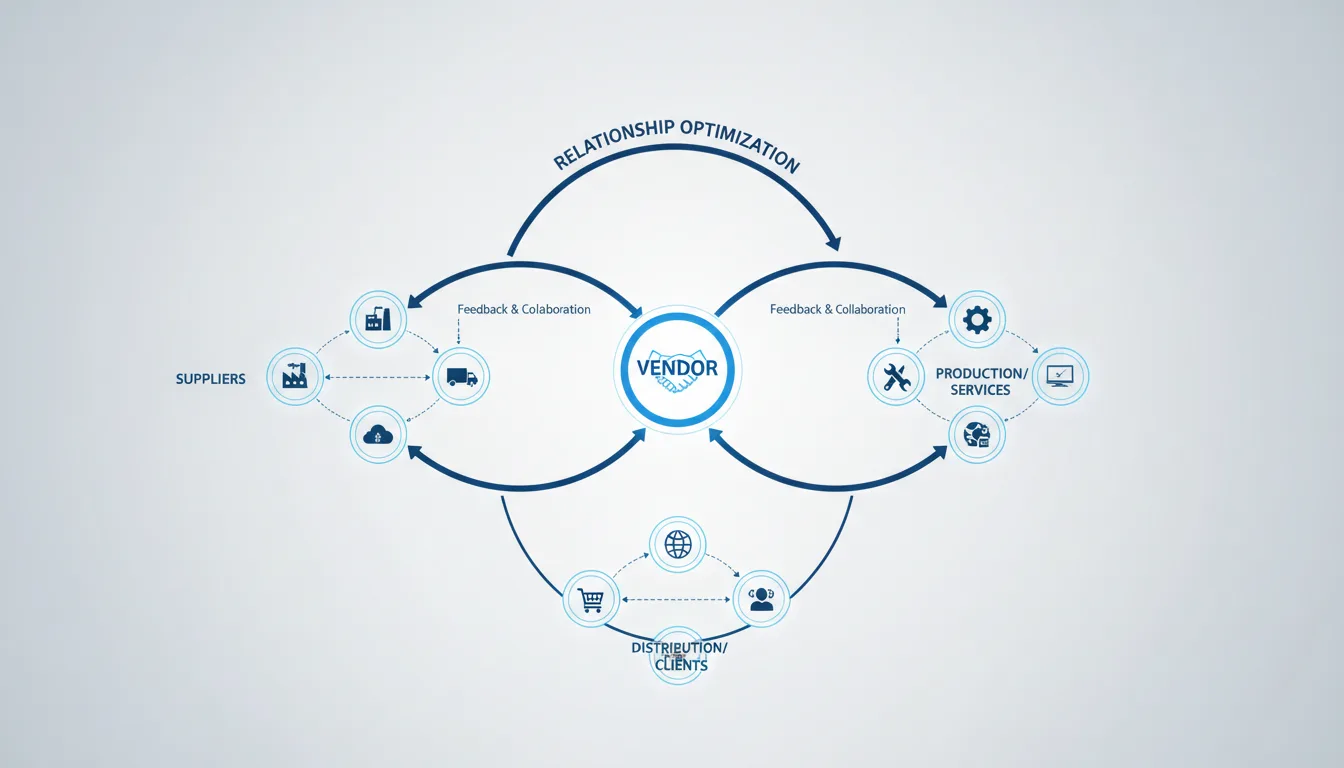
Vendor Relationship Management (VRM) is crucial for organizations to optimize supplier interactions, enhance collaboration, and drive supply chain success.
Updated
Overview
Vendor Relationship Management (VRM) refers to the systematic approach organizations use to manage interactions with suppliers throughout the procurement process. This includes building effective partnerships to enhance collaboration, improve efficiency, and ensure the timely delivery of goods and services. Proper VRM can significantly impact an organization's operational efficiency, cost savings, and product quality, making it a vital component of supply chain management.
Etymology and Origins
The term "Vendor Relationship Management" (VRM) evolved from the broader concept of Supplier Relationship Management (SRM). While often used interchangeably in business and logistics, SRM gained prominence in the late 20th century as businesses transitioned from traditional, transactional buyer-seller interactions to more strategic and collaborative supplier partnerships. The linguistic roots stem from the growing recognition that vendors, or suppliers, are not merely external entities but integral partners whose performance directly impacts an organization's success.
The impetus for structured VRM arose from business practices aimed at optimizing procurement processes, initially framed within the broader context of Supply Chain Management (SCM). The concept solidified as global markets expanded and supply chains became increasingly complex, necessitating a disciplined approach to managing diverse vendor ecosystems. Early discussions around supplier partnerships in the 1980s laid the groundwork for formal VRM methodologies by the 1990s [4].
Historical Development
VRM practices have a rich history intertwined with the evolution of procurement and supply chain management:
-
Pre-1970s: Transactional Procurement Era: Supplier interactions were largely adversarial and focused solely on price and immediate delivery. Relationships were short-term and tactical, with little emphasis on collaboration or long-term value. Procurement was often seen as an administrative function rather than a strategic one [5].
-
1970s-1980s: Emergence of Collaborative Models: The rise of concepts like Just-In-Time (JIT) production and Total Quality Management (TQM), particularly championed by Japanese manufacturers like Toyota, fundamentally shifted the perspective on supplier relations. Toyota's close, long-term partnerships with its suppliers, fostering mutual trust and continuous improvement, became a benchmark for collaborative VRM [6]. During this period, early forms of Electronic Data Interchange (EDI) began to automate document exchange, laying the foundation for digital collaboration.
-
1990s: Strategic Sourcing and Supply Chain Management (SCM): The 1990s saw the formalization of Supply Chain Management as a distinct discipline. Researchers like Michael Porter's work on value chains highlighted the strategic importance of supplier networks. Key figures, such as academic researchers and consultants, developed frameworks for supplier segmentation and strategic sourcing, emphasizing partnership over pure transactional buying. The concept of Peter Kraljic's Purchasing Portfolio Matrix (1983) became influential, guiding organizations on how to manage different types of suppliers based on their strategic importance and supply risk.
-
2000s: E-Procurement and Specialized SRM Software: The internet boom and advancements in enterprise software led to the development of sophisticated e-procurement platforms and dedicated Supplier Relationship Management (SRM) software. These systems enabled more automated processes, better data analytics, and improved communication channels. Seminal publications, such as "The New Science of Retailing" (2010) and numerous articles in journals like the Journal of Supply Chain Management, highlighted the critical role of effective vendor relationships for competitive advantage.
-
2010s: Cloud-Based Collaboration and Risk Management: The widespread adoption of cloud computing revolutionized VRM by enabling real-time collaboration, greater scalability, and enhanced data integration across disparate systems. The focus broadened to include robust supply chain risk management, ethical sourcing, and sustainability considerations, often driven by consumer demand and regulatory pressures.
-
2020s: AI, Blockchain, and Predictive Analytics: The current era is characterized by the integration of advanced technologies. AI-driven analytics tools are used for predictive insights into vendor performance and risk, while blockchain technology offers the potential for unprecedented transparency and trust in transactions [7].
Core Concepts
At the heart of VRM are several core concepts designed to optimize supplier interactions:
-
Supplier Segmentation: This critical process involves categorizing suppliers based on criteria such as their strategic importance, the financial impact of their products/services, supply risk, and total spend. A common framework is the Kraljic Matrix, which segments suppliers into routine, leverage, bottleneck, and strategic categories, allowing organizations to tailor their management approach for each. This ensures resources are allocated effectively to foster productive relationships.
-
Performance Metrics (KPIs): Establishing clear Key Performance Indicators (KPIs) is fundamental for measuring vendor performance and ensuring alignment with organizational objectives. Common KPIs include on-time delivery rates, quality compliance (defect rates), cost-effectiveness, responsiveness to issues, innovation contribution, and adherence to sustainability standards.
-
Collaboration and Communication Tools: Leveraging technology to streamline interactions is crucial. Tools like Purchase Order Management (POM) systems facilitate efficient order placement and tracking. Dedicated Vendor Portals provide a centralized platform for secure information exchange, document sharing, and real-time communication, fostering transparency and reducing manual effort.
-
Contract and Compliance Management: Effective VRM involves meticulously managing contracts, ensuring legal compliance, and tracking adherence to agreed-upon terms and conditions. This includes monitoring service level agreements (SLAs), pricing structures, and regulatory requirements to mitigate risks and ensure accountability.
-
Risk Management: Identifying, assessing, and mitigating potential risks associated with suppliers is a core VRM activity. This includes financial instability, geopolitical events, natural disasters, quality issues, or disruptions in the supply chain. Proactive risk assessment and contingency planning are essential for supply chain resilience.
Types and Classifications
Vendor relationship management strategies can be classified into various types, reflecting different levels of engagement and strategic importance:
-
Transactional VRM: This approach focuses on the basic, short-term exchange of goods or services, typically for non-critical, low-value items. Interactions are minimal, price-driven, and involve little to no integration or collaboration beyond the purchase order and payment. Examples include buying office supplies from a generic distributor.
-
Collaborative VRM: Involves enhanced communication, shared information, and joint decision-making for semi-critical or moderately important goods/services. This often includes sharing forecasts, inventory data, or process improvements. Utilizing platforms like SkuSavvy's Purchase Order Management system or a Vendor Portal can facilitate this type of relationship, leading to improved efficiency and responsiveness.
-
Strategic VRM: Entails long-term partnerships with highly critical or strategic suppliers. Both parties invest significantly in each other’s success, often involving joint product development (co-innovation), shared technology, knowledge transfer, and integrated planning. This type of VRM aims for mutual competitive advantage and resilience, often seen in automotive or high-tech manufacturing industries.
-
Alliance VRM: Represents the highest level of integration, where organizations form deep, often exclusive alliances with a select few suppliers. These relationships blur organizational boundaries, with shared goals, shared risks, and highly interdependent operations. This is less common but can be found in sectors requiring highly specialized inputs or technologies.
Industry Applications
VRM principles are universally applicable and critical across various industries:
- Manufacturing: Firms like Toyota have famously used strong vendor relationships to ensure quality, drive innovation, and achieve efficiency through just-in-time production methods. For example, automotive manufacturers rely on VRM to coordinate complex supply chains for hundreds of components, ensuring synchronized delivery and quality control.
- Retail & E-commerce: Successful retail chains and online businesses rely on robust VRM to manage inventory levels, optimize product assortment, and mitigate supply chain disruptions. Close collaboration with clothing manufacturers, electronics suppliers, or food producers helps manage seasonal demand, reduce lead times, and maintain product freshness. Systems that integrate Purchase Order Management and Visual Inventory Management are key here.
- Healthcare: In healthcare, VRM is crucial for managing suppliers of medical equipment, pharmaceuticals, and services. Ensuring compliance with strict regulatory standards, securing reliable supply chains for critical items, and managing complex service agreements with specialized vendors are paramount for patient safety and operational continuity.
- Technology & IT: Tech companies manage a diverse array of vendors, from hardware component manufacturers to software service providers and cloud infrastructure partners. VRM in this sector focuses on intellectual property protection, rapid innovation cycles, and ensuring the scalability and reliability of outsourced services.
- Construction: Managing relationships with subcontractors, material suppliers, and equipment rental companies is vital for project timelines and budget adherence. Effective VRM helps coordinate complex logistics, manage change orders, and ensure quality and safety standards are met across multiple project stakeholders.
Benefits and Advantages
The advantages of effective VRM are extensive and contribute significantly to an organization's competitive edge:
- Enhanced Product Quality and Innovation: Close collaboration often leads to suppliers contributing to product design and process improvements, resulting in higher quality goods and innovative solutions. Shared insights and goals drive mutual advancement.
- Cost Savings and Efficiency: Improved negotiation leverage, volume discounts, reduced administrative overhead due to streamlined processes, and joint efforts to identify cost-saving opportunities (e.g., optimized warehouse layouts or efficient bin putaway criteria) all contribute to significant cost reductions.
- Increased Speed and Responsiveness: Strong vendor partnerships enable quicker reactions to market changes, supply fluctuations, or unexpected disruptions. Shared planning and transparent communication accelerate decision-making and execution.
- Reduced Supply Chain Risks: Proactive risk identification, contingency planning, and shared responsibility with trusted vendors significantly minimize the impact of disruptions, ensuring supply chain resilience and continuity of operations.
- Improved Compliance and Reputation: Adhering to ethical sourcing practices, sustainability standards, and regulatory requirements through close vendor oversight enhances an organization's reputation and reduces legal liabilities.
- Access to Expertise and Resources: Strategic vendors often bring specialized knowledge, R&D capabilities, and resources that can be leveraged to achieve organizational goals that might otherwise be unattainable.
Challenges and Limitations
Despite its benefits, VRM can present several challenges:
- Resistance to Change: Shifting from traditional, transactional procurement teams towards a relationship-oriented approach requires significant cultural change, training, and new skill sets, which can meet internal resistance.
- Difficulty in Measuring ROI: Quantifying the true value and return on investment (ROI) of softer aspects of vendor partnerships, such as innovation or improved collaboration, can be challenging compared to purely cost-based metrics.
- Data Integration and System Silos: Integrating data across different internal systems (e.g., ERP, WMS, procurement) and external vendor platforms can be complex, leading to data inconsistencies and inefficient processes. This is where comprehensive platforms like SkuSavvy's suite of inventory and order management tools can help bridge gaps.
- Over-reliance and Vendor Lock-in: Deep strategic relationships, while beneficial, can sometimes lead to over-reliance on a single vendor, increasing risk if that vendor faces issues or reducing negotiation leverage in the long term.
- Trust and Transparency Issues: Building and maintaining trust requires sustained effort. Lack of transparency or misaligned incentives can quickly erode partnership foundations.
Best Practices
To maximize the effectiveness of VRM, organizations should consider the following best practices:
- Develop Clear Communication Protocols: Establish explicit guidelines for information exchange, meeting cadences, and escalation paths. Utilize platforms like a Vendor Portal to ensure consistent, transparent, and secure communication.
- Invest in Technology: Implement robust Purchase Order Management systems, SRM software, and Mobile Warehouse Management Systems (WMS) that facilitate data sharing, automation, and real-time visibility across the supply chain. This helps manage the entire vendor lifecycle, from PO approval workflows to performance tracking.
- Regularly Review and Adjust Performance Criteria: Vendor performance criteria and KPIs should not be static. They need to be regularly reviewed and adjusted to align with evolving business objectives, market conditions, and strategic goals. Conduct periodic business reviews (QBRs) with key vendors.
- Foster a Culture of Partnership: Encourage a mindset within the organization that views vendors as extensions of the team rather than mere transaction partners. Promote mutual respect, shared problem-solving, and a focus on long-term value.
- Implement a Structured Onboarding Process: Ensure new vendors are properly onboarded, understanding expectations, processes, and technological requirements. This includes clarity on how they will interact with internal systems and personnel.
- Diversify and Segment Suppliers: While strategic partnerships are vital, maintain a balanced supplier portfolio. Don't put all your eggs in one basket. Segment suppliers to apply appropriate management strategies and avoid undue reliance.
- Incorporate Ethical and Sustainable Sourcing: Integrate ethical conduct, social responsibility, and environmental sustainability into vendor selection and performance evaluation criteria. This aligns VRM with corporate values and stakeholder expectations.
Future Trends
The future of VRM is likely to be shaped by several transformative trends:
- AI and Machine Learning (ML) for Predictive Analytics: Increasingly sophisticated AI and ML tools will analyze vast datasets to predict vendor performance, identify potential risks before they materialize, optimize inventory levels (e.g., through automated purchase quantity recommendations), and even recommend optimal negotiation strategies.
- Greater Emphasis on Ethical Sourcing and Sustainability: Driven by consumer demand, regulatory pressures, and corporate social responsibility, VRM will place an even greater focus on ensuring vendors adhere to strict ethical, labor, and environmental standards throughout their operations. Supply chain transparency will become paramount.
- Enhanced Integration of Blockchain Technology: Blockchain is poised to revolutionize VRM by providing an immutable, transparent, and secure ledger for tracking transactions, origins of goods, compliance certifications, and payments. This can build unprecedented trust and reduce fraud across complex global supply chains [7].
- Hyper-personalization of Vendor Relationships: As data analytics improve, organizations will be able to tailor their VRM strategies to an even greater degree for individual suppliers, optimizing engagement and value extraction.
- Real-time Collaboration and Digital Twin Supply Chains: Advanced digital platforms, including visual inventory management systems and digital twins of entire supply chains, will enable unprecedented levels of real-time collaboration, visibility, and scenario planning with vendors.
Related Concepts
VRM is closely related to other concepts within supply chain management, such as:
- Supply Chain Management: The overarching discipline that encompasses VRM and other aspects of procurement, logistics, and operations, aiming to optimize the entire flow of goods and services.
- Supplier Relationship Management (SRM): A subset of VRM focusing specifically on the optimization of the interaction between organizations and their suppliers, often used synonymously with VRM in a B2B context.
- Procurement Management: The process of acquiring goods and services from external sources, which relies heavily on effective VRM for strategic sourcing, negotiation, and contract management.
- Inventory Management: Closely linked to VRM, as effective vendor relationships ensure timely and accurate supply of goods, directly impacting inventory levels and carrying costs, often managed through visual inventory systems.
Overall, effective Vendor Relationship Management is critical for organizations that seek to optimize their supply chain operations, enhance their competitive edge, and build resilient, sustainable businesses in today’s dynamic market environment.
Sources
- Visual Warehouse Layout
- Purchase Order Management
- Vendor Portal
- A History of Supply Chain Management
- The Evolution of Procurement: From Administrative to Strategic
- The Toyota Production System: Leaner, Faster, Better
- Blockchain in Supply Chain: A Game Changer
- WMS vs ERP: Understanding the Difference
- Visual Inventory Management System
- Mobile Warehouse Management System
- Automated Purchase Quantity
- PO Approval Workflow
- Bin Put-Away Criteria Guide