Various Concepts in Logistics
An exploration of the key concepts in logistics, including definitions, historical developments, and modern applications.
Updated
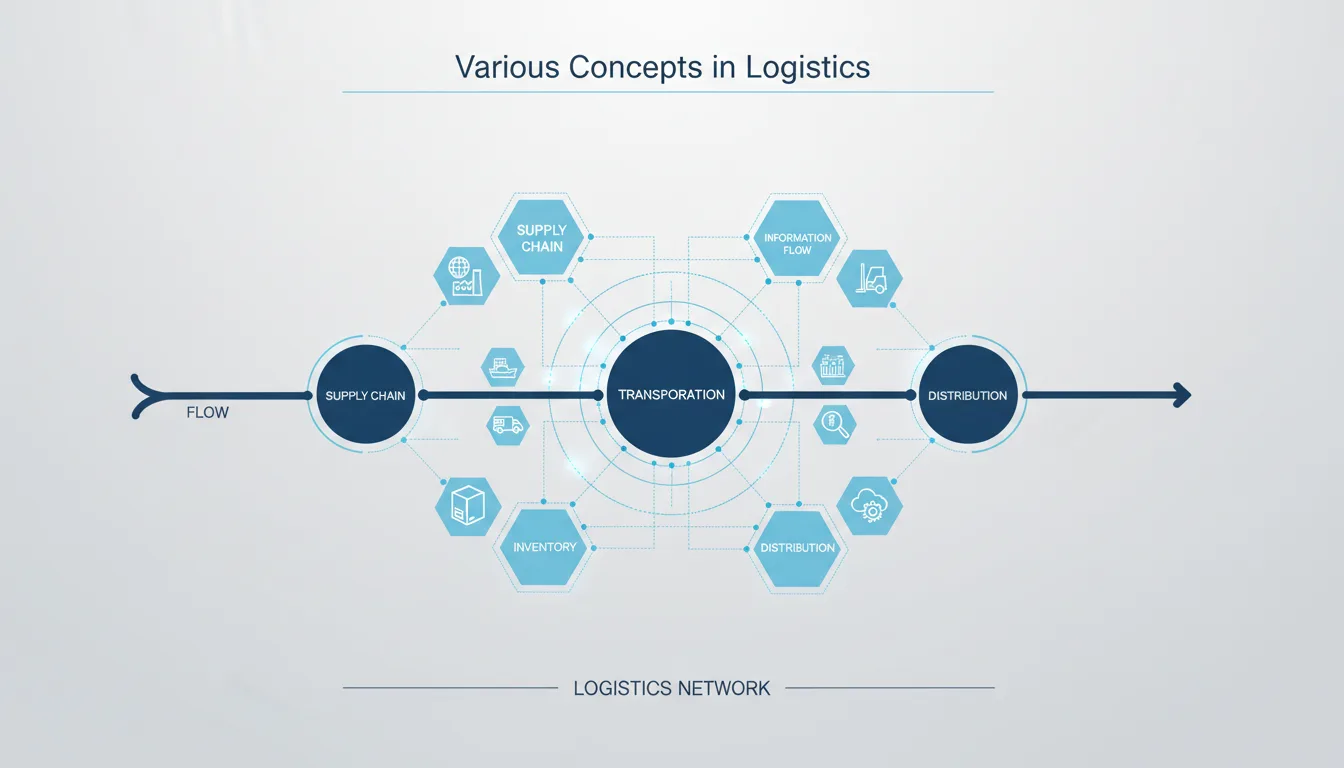
Various Concepts in Logistics
Overview
The term logistics refers to the intricate processes involved in the movement and management of goods, services, and information throughout the supply chain. It encompasses a range of activities, including transportation, warehousing, inventory management, and order fulfillment. Logistics plays a crucial role in ensuring that products reach consumers efficiently and effectively, making it an essential aspect of modern commerce.
Etymology and Origins
The word logistics originates from the French term logistique, which was utilized in a military context to denote the art of moving and supplying troops. The first documented usage of the term in this sense dates back to the late 19th century. The term evolved to incorporate broader applications in business and supply chain contexts during the late 20th century as economic globalization intensified and supply chain networks expanded. The evolution of the word reflects the increasing complexity of managing supply chains across various industries. Additionally, academic publications, such as those from the Council of Supply Chain Management Professionals, have played a role in formalizing and expanding the field's terminology and practices.
Historical Development
Logistics has significantly evolved over time, with its roots in military operations going back to the Greeks and Romans, who developed primitive methods of supply chain management for their armies. The De Re Militaris, a seminal work by the Roman author Vegetius, highlighted the principles of military logistics around AD 390. The development continued during the Industrial Revolution in the 19th century, as innovations like the steam engine improved transportation methods, facilitating greater movement and distribution of goods.
Key Milestones in Logistics History:
- 1920s-1930s: The introduction of scientific management principles by Frederick Taylor established a framework for more efficient supply chain practices. Taylor's works, including The Principles of Scientific Management (1911), laid the groundwork for improving operational efficiency.1
- 1960s: The implementation of computerized systems began to revolutionize logistics management, marking a shift to modern methods. The advent of barcodes and computers drastically improved inventory tracking and order processing capabilities. The publication of the first edition of the Journal of Business Logistics in 1980 also marked a formal recognition of logistics as a field of academic and professional interest.
- 1980s: Major companies like Walmart and Toyota implemented sophisticated logistics strategies highlighting concepts such as just-in-time (JIT) inventory and lean supply chain management. The work of Taiichi Ohno, particularly in the Toyota Production System, became a reference point for efficiency in logistics.2
- 2000s onward: The rise of the internet and e-commerce paved the way for new logistics innovations, including advanced warehouse management systems (WMS) and automated fulfillment solutions. The establishment of global logistics standards, like ISO 9001, further formalized quality management practices in supply chain operations.
Core Concepts
Logistics encompasses various core concepts, including:
- Supply Chain Management: A holistic approach to managing the flow of goods from suppliers to consumers, focusing on efficiency and responsiveness.
- Warehouse Management: Involves best practices in storing, retrieving, and tracking inventory within facilities. Effective warehouse strategies can greatly enhance efficiency, as described in the Warehouse Order Fulfillment Guide.
- Transportation Management: Refers to the planning and execution of the movement of goods, which is essential for ensuring timely delivery.
- Inventory Control: Techniques such as cycle counting and stock replenishment are critical for maintaining optimal stock levels and meeting customer demand.
Types and Classifications
Logistics can be categorized into several broad types:
- Inbound Logistics: The procurement and transportation of materials required for production.
- Outbound Logistics: The distribution of finished products to customers. This aspect is vital for maintaining customer satisfaction and achieving a competitive edge.
- Reverse Logistics: The processes involved in the return of goods, often associated with returns management.
- Third-Party Logistics (3PL): Outsourcing logistics and distribution activities to third-party providers, which can help companies streamline their operations.
Industry Applications
Various industries apply logistics concepts differently based on their needs:
- Retail: Companies use logistics to optimize inventory levels in stores, exemplified by practices such as pick-to-tote.
- Manufacturing: Just-in-time delivery methods minimize storage costs and increase production efficiency. The well-documented success of Toyota serves as a landmark case in the effective application of JIT in logistics.
- E-commerce: Automated order fulfillment systems are essential for rapid service and customer satisfaction as mentioned in the Shipping & Fulfillment Software provided by logistics partners.
Benefits and Advantages
Effective logistics management offers numerous benefits, including:
- Cost Reduction: Optimized supply chains help to reduce operational costs, as evidenced by companies increasingly using data analytics for logistics efficiency.
- Improved Customer Satisfaction: Enhanced delivery times and accurate order fulfillment contribute positively to customer experiences. Studies show that companies with effective logistics strategies see an uptick in customer loyalty.
- Operational Efficiency: Streamlined processes lead to increased productivity across the supply chain and can reduce waste through methods like lean management.
Challenges and Limitations
Despite its significance, logistics faces challenges such as:
- Increased Customer Expectations: The demand for fast and flexible service requires adaptation and innovation, pushing companies to rethink their logistics strategies.
- Global Supply Chain Disruptions: Events like natural disasters or geopolitical issues can severely impact logistics operations, highlighting the need for risk management practices.
- Technological Adaptation: The need to continually adopt new technologies poses a challenge for many organizations, with resistance to change often impeding progress.
Best Practices
To ensure optimal logistics performance, companies should consider the following best practices:
- Implement regular training programs for personnel to stay updated on logistics technology and processes.
- Leverage data analytics to enhance decision-making in logistics management, allowing organizations to identify patterns and make informed adjustments.
- Utilize mobile warehouse management systems to improve real-time tracking and efficiency, enhancing responsiveness to market changes.
Technology and Tools
Logistics technology has advanced significantly, with tools such as:
- Automated Warehouse Management Systems: These systems streamline operations and are essential for modern logistics, reducing manual errors and improving speed.
- Cloud-Based Software: Enables real-time data accessibility and better scalability, as highlighted by companies offering Inventory Management Solutions. This technology allows users to manage stocks from anywhere, enhancing operational flexibility.
- AI and Machine Learning: These technologies facilitate predictive analytics, which can greatly contribute to enhanced logistics planning. For instance, companies are increasingly using algorithms to predict demand and optimize inventory levels accordingly.
Future Trends
The future of logistics is set to experience emerging trends such as:
- Sustainability: Increasingly, companies are focusing on eco-friendly logistics practices, including reducing carbon footprints and optimizing resource usage.
- Blockchain Technology: This technology is expected to enhance transparency and traceability within supply chains, allowing real-time tracking and verification of goods as they move through the logistics network.
- Further Automation: The implementation of drones and autonomous vehicles for delivery is likely to gain traction, reflecting a broader trend toward increased automation in supply chain processes.
Related Concepts
Logistics is interconnected with various other disciplines, including:
- Supply Chain Management: Encompasses a broader approach to logistics and procurement.
- Operations Management: Shares principles and practices to improve efficiency across production and delivery systems.
- Inventory Management: A critical element of logistics focusing specifically on stock control and warehousing.
Understanding these various concepts in logistics is crucial for professionals in the field to navigate the complexities of modern supply chains effectively.
Footnotes
Sources
- Warehouse Order Fulfillment Guide
- Warehouse Layout Preview
- Shipping & Fulfillment Software
- Mobile Warehouse Management System Overview
- Visual Inventory Management System
- Cycle Counting Guide
- Barcodes Guide
- Council of Supply Chain Management Professionals
- Frederick Taylor's Principles of Scientific Management
- Toyota Production System
- ISO 9001 Standards