The Concept of Used Extensively in Logistics
An overview of the concept 'used extensively' in logistics, highlighting its significance, historical development, applications, and best practices.
Updated
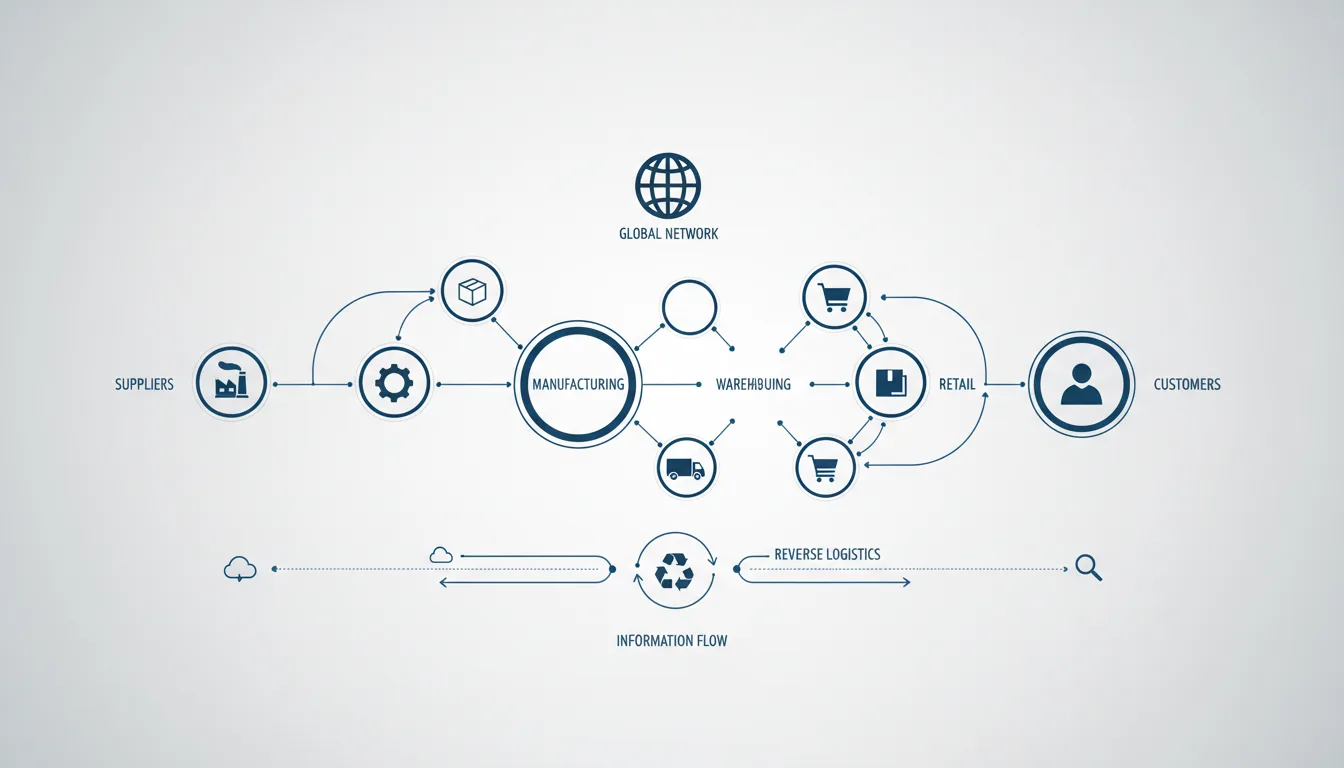
The Concept of Used Extensively in Logistics
Overview
The term used extensively in logistics indicates practices, tools, and methodologies that are widely adopted across the industry. The importance of such practices lies in their ability to enhance efficiency, improve inventory management, and streamline operations. Concepts and approaches that are used extensively are integral to modern supply chain management, reflecting a high degree of utilization in critical processes such as order fulfillment, inventory control, and warehouse management. Their widespread adoption often signifies proven efficacy and standardization within the global logistics landscape.
Etymology and Origins
The phrase "used extensively" is not a formally coined logistical term itself, but rather a descriptive observation indicating the widespread adoption and common application of specific methodologies and technologies within the logistics and supply chain domain. Its roots are inextricably linked to the evolution of management science and operations research in the mid-20th century.
Following World War II, the emphasis on efficiency and systematic approaches to complex problems grew significantly. Concepts like Standard Operating Procedures (SOPs) and "best practices" began to emerge across industries, driven by pioneers in quality management like W. Edwards Deming and Joseph M. Juran. As businesses became more complex and global, the need for standardized, repeatable processes that demonstrably improved outcomes became paramount.
By the 1960s and 1970s, as logistics began to be recognized as a distinct management discipline, the identification and dissemination of effective practices accelerated. Early discussions in supply chain management literature, particularly from organizations like the National Council of Physical Distribution Management (NCPDM, now CSCMP) 8, focused on integrating various operational functions. This pursuit of integrated efficiency led to the formalization of methods for inventory control, transportation, and warehousing. Over time, with the rise of technology such as Warehouse Management Systems (WMS) and the formalization of logistical concepts, the terminology evolved to emphasize systems and practices that were extensively employed due to their proven benefits in optimizing logistics operations.
Historical Development
The practice of being used extensively in logistics is a reflection of the industry's continuous evolution towards greater efficiency, integration, and responsiveness, driven by technological advancements and global economic shifts. This progression can be traced through several key periods:
Early Beginnings (Pre-1960s)
Prior to the mid-20th century, logistics was largely fragmented, focusing primarily on physical distribution and transportation. While efficient movement of goods has existed since ancient civilizations (e.g., Roman road networks, military supply lines), the holistic management of logistics as a strategic function was not yet formalized. The Industrial Revolution brought about mass production and the need for more structured approaches to material handling and distribution, with early scientific management principles laid down by figures like Frederick Winslow Taylor and Henry Ford influencing factory layouts and workflows.
Formalization of Logistics (1960s-1970s)
This era marked the emergence of logistics as a distinct academic and business discipline. The formation of the National Council of Physical Distribution Management (NCPDM, later renamed the Council of Supply Chain Management Professionals - CSCMP) in 1962 8 was a seminal moment, fostering research and best practice sharing. The concept of the "total cost approach" to logistics gained traction, advocating for optimizing the entire system rather than individual components 9. Simultaneously, early Material Requirements Planning (MRP) systems, pioneered by companies like IBM 10, began to computerize manufacturing planning, laying the groundwork for integrated supply chain systems.
Globalization and Efficiency Drives (1980s)
The 1980s witnessed increased globalization and intense competitive pressures, particularly from Japanese manufacturing techniques. The adoption of Just-in-Time (JIT) inventory systems, famously implemented by Toyota, emphasized minimizing inventory and waste, becoming a widely studied and adopted practice. This decade also saw the evolution of MRP into Manufacturing Resource Planning (MRP II), which integrated more business functions beyond just materials. The personal computer became a common tool, enabling more sophisticated inventory control and planning within individual companies.
Supply Chain Management Era & Early Digitalization (1990s)
The term "Supply Chain Management" itself gained widespread recognition and formal definition in the early 1990s 11, emphasizing the integration of all activities across the value chain. Technologies like Electronic Data Interchange (EDI), which facilitated paperless exchange of business documents between trading partners, became extensively used for streamlining transactions. This period also saw the initial proliferation of Warehouse Management Systems (WMS), moving beyond simple inventory tracking to optimize picking, putaway, and shipping processes. Enterprise Resource Planning (ERP) systems began to offer comprehensive integration of business processes, including logistics modules.
E-commerce Boom & Advanced Analytics (2000s)
The dawn of the internet and the rapid growth of e-commerce revolutionized logistics, demanding faster, more accurate, and customer-centric fulfillment. This era saw the rise of advanced analytics, allowing for data-driven decisions, reinforcing practices that were extensively used to optimize supply chains. Technologies like Radio-Frequency Identification (RFID) emerged for enhanced tracking and visibility 12. The Software-as-a-Service (SaaS) model also began to make sophisticated logistics software more accessible to a wider range of businesses.
Mobility, Cloud, and Big Data (2010s)
The 2010s were characterized by the widespread adoption of mobile and cloud technologies. The integration of mobile order fulfillment systems became widespread, significantly enhancing operational efficiency and real-time data capture in warehouses. Cloud computing enabled scalable, flexible, and remotely accessible logistics platforms. Big Data analytics became crucial for demand forecasting, route optimization, and identifying supply chain inefficiencies.
AI, IoT, and Resilience (2020s - Present)
Today, the logistics sector continues to evolve rapidly. Concepts such as AI and machine learning are extensively used for predictive analytics, autonomous operations (e.g., self-driving vehicles, warehouse robots), and optimized decision-making. The Internet of Things (IoT) provides real-time tracking, condition monitoring, and enhanced visibility across the supply chain 13. A renewed focus on supply chain resilience, sustainability, and transparency has also become paramount, integrating these advanced technologies into core operational practices.
Core Concepts
In logistics, practices termed used extensively require a deep technical understanding of their execution and influence. These core concepts underpin the efficiency and effectiveness of modern supply chains:
- Inventory Management: Advanced systems like visual inventory management are employed to simplify inventory tracking, optimize stock levels, and minimize carrying costs. Techniques such as cycle counting are extensively used for maintaining inventory accuracy without halting operations.
- Warehouse Operations: Efficient warehouse layout and design are crucial, alongside optimized workflows for bin put-away criteria and bin-to-bin inventory transfers. Cross-docking is extensively used for expediting product flow by minimizing storage time.
- Order Fulfillment: Techniques like batch picking, pick-to-tote, and kitting are widely utilized to improve speed and accuracy in fulfilling customer orders. A robust Order Management System (OMS) is foundational for coordinating these activities.
- Purchasing and Procurement: Purchase order management systems, including features like automated purchase quantity and vendor portals, are extensively used to streamline the procurement process, manage supplier relationships, and ensure timely replenishment.
Industry Applications
Practices extensively recognized in logistics are critical across various industry sectors, each adapting them to their specific operational needs:
- E-commerce: This sector relies heavily on optimal order fulfillment strategies to meet demanding customer expectations for speed and accuracy. Extensively used methods include automated rate selection for cost-effective shipping and multi-box shipping for managing diverse product orders. Shopify integrations are also extensively used by e-commerce businesses to synchronize inventory and order data.
- Manufacturing: Incorporates comprehensive inventory strategies, such as those outlined in the Stock Replenishment Guide, to maintain just-in-time effectiveness and support complex production schedules. Unit of Measure (UOM) conversions are also critical for managing raw materials and finished goods.
- Retail: Employs robust inventory management systems to ensure product availability across multiple channels (brick-and-mortar, online), often utilizing global inventory visibility. Practices like bin packing are used to optimize space utilization in backrooms and distribution centers.
- Healthcare: Requires stringent lot and expiration date tracking and precise inventory control to manage critical medical supplies and pharmaceuticals, where accuracy is paramount for patient safety.
Benefits and Advantages
The widespread adoption of extensively used practices in logistics yields significant advantages for organizations:
- Increased Operational Efficiency: Streamlined processes, optimized workflows, and automation lead to faster order processing, reduced labor costs, and improved throughput. This is evident in practices like cross-docking and batch picking.
- Improved Inventory Accuracy and Cost Reduction: Precise inventory management, supported by tools like cycle counting and visual inventory management, minimizes stockouts, overstocking, and waste, leading to substantial cost savings.
- Enhanced Customer Satisfaction: Faster and more accurate order fulfillment, enabled by systems like mobile order fulfillment, directly translates into improved customer experiences and loyalty. This includes reliable delivery times and correct order contents.
- Better Decision-Making: The data generated by these widely adopted systems provides actionable insights, enabling managers to make informed decisions regarding procurement, staffing, and strategic planning.
- Scalability and Flexibility: Standardized and technologically-driven processes allow businesses to scale operations up or down more easily in response to market fluctuations or growth, adapting to new demands effectively.
Challenges and Limitations
Despite their undeniable benefits, practices that are used extensively also present challenges that organizations must navigate:
- Complexity of Implementation: Integrating new technologies and processes, such as a comprehensive WMS or an OMS, can be complex, time-consuming, and require significant initial investment. The transition can disrupt existing operations.
- Need for Continuous Training and Adaptation: The rapid evolution of logistics technology necessitates ongoing training for staff to effectively utilize new systems and adapt to evolving best practices. Resistance to change can hinder successful adoption.
- Potential Over-reliance on Technology: While technology drives efficiency, an excessive dependency can create vulnerabilities. System failures, cyber threats, or technical glitches can bring operations to a standstill, highlighting the need for robust backup systems and contingency plans.
- Data Security and Privacy: As more data is collected and shared across the supply chain, ensuring the security and privacy of this information becomes a critical challenge, requiring compliance with various regulations.
- Interoperability Issues: Different systems and platforms used by various supply chain partners may not always integrate seamlessly, leading to data silos and hindering end-to-end visibility. This underscores the importance of integrations hubs and open APIs.
Best Practices
Implementing widely accepted and extensively used practices in logistics involves a strategic and continuous effort:
- Thorough Operational Assessment: Begin by conducting comprehensive assessments of existing operations to identify inefficiencies, bottlenecks, and areas ripe for improvement. This diagnostic phase should involve mapping current workflows and quantifying performance metrics.
- Strategic Technology Investment: Invest in robust and scalable logistics technologies, such as a mobile WMS or a shipping and fulfillment software, that align with business goals and future growth. Prioritize solutions offering strong integrations with existing systems.
- Continuous Staff Training and Development: Implement ongoing training programs for staff to ensure they are proficient in using new systems and understand the underlying principles of modern logistics practices like cycle counting and bin put-away. Foster a culture of continuous learning and adaptation.
- Key Performance Indicator (KPI) Monitoring and Evaluation: Regularly evaluate performance metrics and KPIs (e.g., order accuracy, on-time delivery, inventory turnover) to measure the effectiveness of implemented practices. Use these insights to continually adapt and refine processes for maximum efficiency and responsiveness.
- Foster Collaboration and Visibility: Promote collaboration with suppliers, carriers, and customers to enhance supply chain visibility and coordination. Leverage tools like vendor portals and shared platforms to improve communication.
- Embrace Agility and Resilience: Design logistics processes to be agile and resilient, capable of adapting to unexpected disruptions (e.g., global events, demand spikes). This includes building redundancy, diversifying sourcing, and leveraging predictive analytics.
Future Trends
The logistics sector is poised to embrace even more advanced technologies, further solidifying new practices as extensively used norms. Future trends include:
- Increased Reliance on AI and Machine Learning: For predictive analytics in inventory and demand management, optimized routing, fraud detection, and even autonomous decision-making in warehouses and transportation 14.
- Hyper-automation and Robotics: Widespread adoption of robotic process automation (RPA), automated guided vehicles (AGVs), and robotic systems for picking, packing, and sorting, significantly boosting efficiency and reducing labor dependency.
- Enhanced IoT Integration: The growing integration of IoT devices for real-time tracking of goods, environmental condition monitoring, and predictive maintenance of equipment, leading to unparalleled visibility and optimized logistics applications 13.
- Blockchain for Transparency and Security: Use of blockchain technology to create immutable records of transactions and movements, enhancing transparency, traceability, and security across complex supply chains.
- Sustainability and Green Logistics: A stronger focus on eco-friendly practices, including optimized routes to reduce fuel consumption, sustainable packaging, and reverse logistics for recycling and waste reduction.
- Continued Expansion of Mobile and Cloud-Based Solutions: Further development of sophisticated cloud-based platforms and mobile applications that allow for enhanced flexibility, real-time data access, and remote management across logistics operations.
Related Concepts
The extensively used practices in logistics interface with various other concepts such as supply chain visibility, demand forecasting, and sustainability initiatives, all aimed at fostering efficiency and innovation within logistics operations. These include Purchase Order Management, Pick, Pack, Ship Software, and Warehouse Layout Optimization, which are becoming standard components of competitive supply chains.
Sources
- Mobile Warehouse Management System Overview
- Stock Replenishment Guide
- Visual Inventory Management System
- Cycle Counting Guide
- Batch Picking Guide
- Automated Rate Selection
- Multi-Box Shipping
- The Council of Supply Chain Management Professionals (CSCMP)
- Bowersox, D. J., & Closs, D. J. (1996). Logistical Management: The Integrated Supply Chain Process. McGraw-Hill.
- What is MRP? Material Requirements Planning Explained
- The Emergence of Supply Chain Management
- Radio Frequency Identification (RFID) - IBM
- Internet of Things (IoT) in Supply Chain Management
- AI in Supply Chain Management: Boosting Efficiency and Resilience