Understanding 'Is Crucial' in Logistics Management
This article explores the importance of critical elements in logistics management, emphasizing their impacts on efficiency and effectiveness in supply chains.
Updated
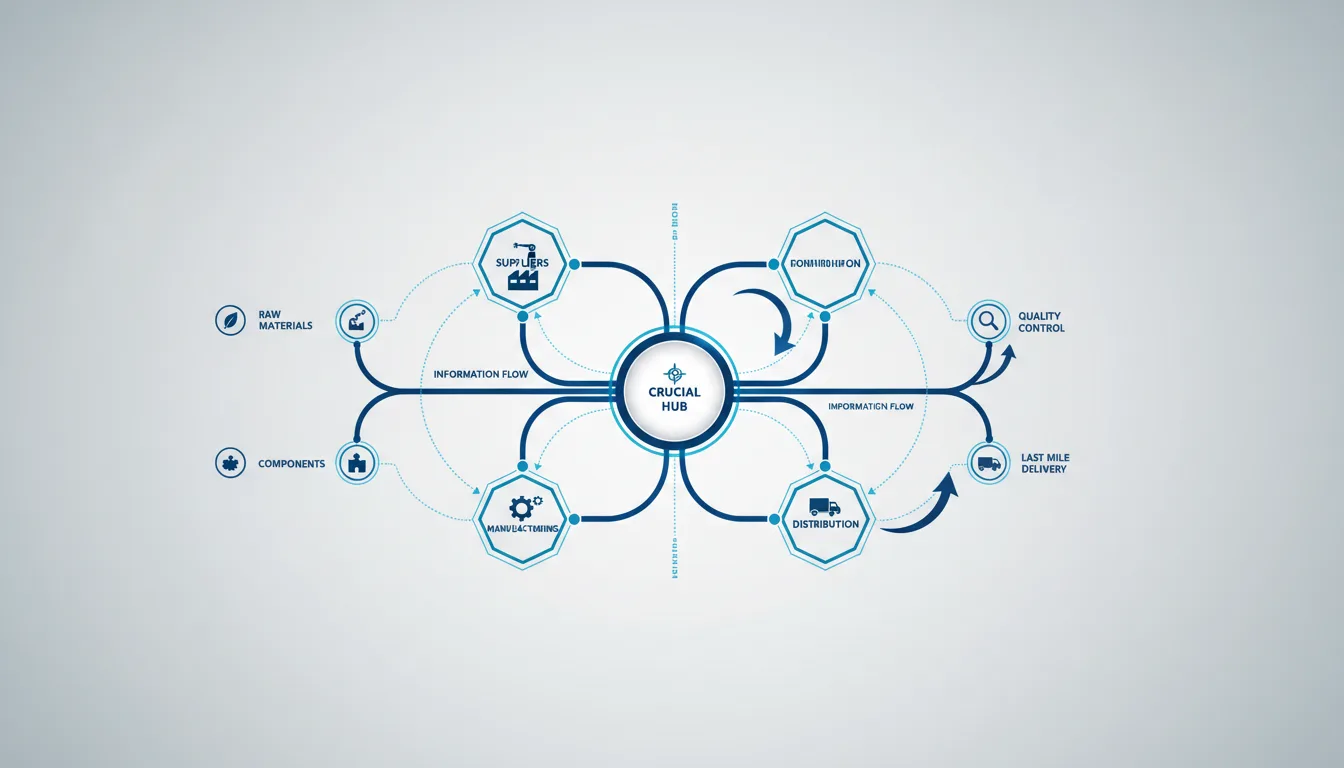
Overview
In logistics management, the term "is crucial" pertains to elements or principles deemed essential for efficient and effective operations. Understanding these critical components is pivotal for supply chain managers, as they directly influence strategic decision-making, optimize processes, and enhance overall organizational performance. These critical elements directly impact supply chain resilience [9], operational costs, and customer satisfaction, forming the bedrock of a competitive logistics strategy. Elements such as inventory management, order fulfillment, and warehouse operations are often highlighted as crucial aspects of a successful logistics framework.
Etymology and Origins
The phrase "is crucial" stems from the Latin root "crux," meaning "cross," which gave rise to "crucialis," signifying "of the cross" or "decisive" [10]. Historically, the term gained significant prominence in scientific discourse through Francis Bacon's concept of "experimentum crucis" (crucial experiment) in the 17th century. This denoted a decisive test that could determine the truth or falsity of a scientific theory [11], highlighting moments of critical decision-making or pivotal importance. By the 18th century, its usage evolved to mean "of supreme importance; decisive," particularly in English [10]. In modern usage, especially within operational contexts like logistics, it signifies elements that are critical, indispensable, or foundational for achieving desired outcomes and preventing systemic failure. The adoption of this term in supply chain vocabulary reflects the growing complexity of these systems, where identifying key, high-leverage factors is necessary for success and competitive advantage.
Historical Development
The recognition of crucial logistics components can be traced through various milestones in the evolution of supply chain management, showcasing how indispensable elements have adapted with technological and economic shifts:
- Ancient & Pre-Industrial Eras: Early forms of logistics were crucial for military campaigns (e.g., Roman legions' supply lines) and trade routes (e.g., Silk Road). The efficient movement and storage of goods were implicitly understood as critical for survival and prosperity.
- Early 20th Century - Scientific Management & Physical Distribution (1900s-1940s): The principles of scientific management, championed by Frederick Taylor, brought focus to efficiency in production, including early forms of inventory control and optimized factory layouts. This period laid the groundwork for modern logistics, with emphasis on individual process optimization. The term "physical distribution" emerged, focusing on the movement and storage of finished goods from production to consumers [12].
- Post-WWII - Integrated Logistics (1950s-1960s): The immense logistics challenges of World War II propelled the discipline forward. Post-war economic expansion saw a shift from fragmented activities to an integrated view, aiming to minimize the total cost of logistics (transportation, warehousing, inventory holding). Management guru Peter Drucker emphasized the importance of "physical distribution" as the "last frontier for cost economies" [13], recognizing its crucial impact on profitability.
- 1970s-1980s - Just-in-Time (JIT) & Material Requirements Planning (MRP): The rise of Japanese manufacturing, particularly the Toyota Production System [14], introduced the just-in-time approach to minimize inventory and waste, making precise timing and supplier coordination absolutely crucial. Concurrently, the development of computer-based Material Requirements Planning (MRP) systems [15] (pioneered by IBM and others) revolutionized production planning by managing raw materials, components, and subassemblies, ensuring their availability at the right time. This required accurate data and synchronized processes, highlighting data accuracy as crucial.
- 1990s - Emergence of Supply Chain Management (SCM): The concept of Supply Chain Management broadened the scope beyond traditional logistics, encompassing all activities from raw material sourcing to final customer delivery. Globalization and the advent of advanced Information Technology (IT) and Electronic Data Interchange (EDI) made seamless information flow and collaboration across multiple entities crucial for competitive advantage.
- 2000s - E-commerce, Globalization & Digitalization: The internet and rapid growth of e-commerce transformed customer expectations, making rapid and accurate order fulfillment and efficient shipping and fulfillment software crucial for meeting consumer demands. Globalized supply chains also introduced new complexities, emphasizing risk management and visibility as vital.
- 2010s-Present - AI, Automation, Sustainability, & Resilience: The current era is defined by the proliferation of advanced technologies like Artificial Intelligence, machine learning, and IoT for predictive analytics in demand forecasting [16] and optimization. Automation and robotics in warehouse management have become crucial for efficiency and scalability. Furthermore, increasing awareness of environmental impacts has made sustainability in logistics paramount, while recent global disruptions (e.g., pandemics, geopolitical conflicts) have underscored the crucial role of supply chain resilience and adaptability.
Core Concepts
Several core concepts embody the notion of what is crucial in logistics, recognizing that these elements are dynamic and their criticality can shift based on market conditions and technological advancements:
- Inventory Management: Maintaining optimal stock levels is crucial for minimizing carrying costs, preventing stockouts, and meeting customer demands effectively. This involves mastering techniques such as cycle counting, implementing safety stock, reorder points, and optimized stock replenishment strategies. Effective Purchase Order Management [17] is equally crucial for controlling inbound inventory flow.
- Order Fulfillment: Ensuring timely, accurate, and cost-effective order processing is crucial for customer satisfaction and retention. This encompasses efficient picking, packing, and shipping processes. The integration of robust order management systems and mobile order fulfillment software can enhance this process significantly.
- Warehouse Operations: A well-organized and efficiently run warehouse is crucial for overall operational efficiency and speed. Strategic warehouse layout, optimized storage solutions (like bin put-away criteria), and advanced warehouse management systems that support methods like batch picking and pick-to-tote directly impact logistics performance.
Types and Classifications
Logistics encompasses various types of crucial operations, each with specific challenges and importance:
- Inbound Logistics: Involving the transportation, storage, and receiving of raw materials, components, and supplies from vendors to the production facility or warehouse. Efficient vendor management and purchase order processes are crucial here.
- Outbound Logistics: Focusing on the distribution of finished goods from the organization to customers, including order processing, warehousing, and transportation. This directly impacts customer service and market reach.
- Reverse Logistics: Addressing the return of goods, which can be crucial for customer relationship management, sustainability initiatives (e.g., recycling), and recovering value from returned products.
- Internal Logistics: Managing the flow of materials, goods, and information within an organization's own facilities, such as between departments or production stages. Optimized workflows are crucial for efficiency.
- Third-Party Logistics (3PL): Outsourcing logistics functions to specialized external providers. For many businesses, particularly those scaling rapidly or lacking in-house infrastructure, partnering with a 3PL becomes crucial for market access, cost efficiency, and flexibility [18].
Industry Applications
The application of these crucial concepts varies significantly across industries, often dictating sector-specific best practices:
- In retail, effective visual inventory management systems are crucial to ensure stores are properly stocked, prevent stockouts, and avoid lost sales, directly impacting customer experience and profitability. For e-commerce retailers, advanced solutions like Shopify WMS are vital.
- In manufacturing, just-in-time manufacturing and lean principles highlight the need for tightly coordinated supply chains to minimize excess inventory and optimize production flow, making supplier reliability and internal logistics synchronization absolutely crucial.
- E-commerce platforms leverage advanced logistics solutions to ensure swift shipping and fulfillment functionality, which is crucial for meeting consumer expectations for fast delivery. For example, Amazon's continuous investment in its sophisticated fulfillment network, including extensive automation and AI-driven routing, showcases how crucial efficient warehousing and delivery are for maintaining market dominance in e-commerce [19].
- In healthcare, maintaining a robust cold chain [20] for vaccines, pharmaceuticals, and sensitive medical supplies is crucial to ensure product efficacy, regulatory compliance, and patient safety. Any disruption can have severe public health consequences.
- For humanitarian aid organizations, rapid and effective emergency logistics [21] are paramount. The ability to quickly deploy aid, medical supplies, and personnel to disaster-stricken areas is crucial, where every minute saved can mean lives saved.
Benefits and Advantages
Recognizing and proactively addressing what is crucial in logistics yields several significant benefits for organizations:
- Increased Efficiency: Streamlined operations reduce waste, optimize resource use, and accelerate throughput, leading to higher productivity.
- Enhanced Customer Satisfaction: Timely, accurate, and consistent fulfillment leads to improved customer experiences, fostering loyalty and repeat business.
- Cost Savings: Minimization of excess inventory, reduced transportation costs through optimized routing, and elimination of operational waste directly contribute to significant cost reductions.
- Competitive Advantage: Mastering crucial logistics elements enables companies to offer superior service, faster delivery, or lower prices, differentiating them in the market.
- Improved Decision-Making: Clear understanding of critical factors allows for data-driven strategic planning and resource allocation.
Challenges and Limitations
Logistics professionals must navigate several pervasive challenges related to identifying and managing crucial elements:
- Complexity: As supply chains grow more intricate, globalized, and interconnected, identifying and prioritizing critical factors can become daunting. Interdependencies make single-point failures impactful.
- Technological Integration: Implementing new solutions often requires substantial investment in technology and infrastructure, as well as significant training for personnel. Achieving seamless integration across disparate systems remains a challenge.
- Global Disruptions: Geopolitical events (e.g., trade wars), natural disasters (e.g., earthquakes, floods), and pandemics (e.g., COVID-19) can severely disrupt supply chains, making robust resilience planning [22] a crucial and ongoing aspect of modern logistics.
- Talent Shortages: A persistent lack of skilled labor, particularly in areas like warehousing, transportation, and data analytics, can significantly impede operational efficiency and growth.
- Data Security and Privacy: With increasing reliance on digital systems and data exchange, protecting sensitive logistics data from cyber threats and ensuring compliance with privacy regulations is crucial.
Best Practices
To maximize the impact of crucial logistics elements and navigate associated challenges, organizations should adopt the following best practices:
- Strategic Planning & Agility: Develop a long-term logistics strategy that incorporates flexibility and agility to respond quickly to market changes and unforeseen disruptions. Regular supply chain risk assessments [23] are crucial.
- Technology Adoption: Leverage advanced technologies like Warehouse Management Systems (WMS), Order Management Systems (OMS), and Shipping & Fulfillment Software to automate and streamline processes, ensuring accuracy and speed.
- Data-Driven Decision Making: Implement robust analytics capabilities to gather, interpret, and act upon logistics data, enabling predictive forecasting [16], performance optimization, and continuous improvement.
- Supplier Relationship Management (SRM): Build strong, collaborative relationships with suppliers, fostering transparency and trust. Utilizing tools like a vendor portal [24] is crucial for clear communication, efficient purchase order management [17], and mitigating supply risks.
- Continuous Improvement & Training: Foster a culture of continuous improvement, regularly evaluating processes, investing in employee training, and prioritizing adaptability and responsiveness to changes in demand and technology.
- Sustainability Integration: Incorporate sustainable practices throughout the supply chain, from sourcing to delivery, to reduce environmental impact and meet evolving consumer and regulatory demands.
Future Trends
The future of logistics management will likely see increasing emphasis on aspects deemed crucial, driven by technological advancements and evolving global dynamics:
- Artificial Intelligence (AI) and Machine Learning (ML): Continued advancements will enable highly sophisticated predictive analytics in demand forecasting [16], optimized route planning, automated warehouse operations, and personalized customer experiences, making data-driven insights even more crucial.
- Automation & Robotics: Further integration of robotics and automation in warehouses (e.g., for picking, packing, and sorting) and autonomous vehicles in transportation will enhance operational efficiency, reduce labor costs, and improve speed and accuracy, making timely operations more crucial than ever.
- Blockchain Technology: Adoption of blockchain for enhanced transparency, traceability, and security across complex supply chains, crucial for verifying product authenticity, ethical sourcing, and compliance [25].
- Sustainability & Circular Economy: Growing awareness of environmental impacts will push organizations to integrate sustainable practices, emphasizing circular economy principles, green logistics, and reduced carbon footprints. This shift will make eco-friendly logistics solutions increasingly crucial.
- Last-Mile Delivery Optimization: Addressing the growing complexity and cost of the final stage of delivery, leveraging technologies like drones, electric vehicles, and dynamic routing to meet increasing customer expectations for speed and convenience.
Related Concepts
Several logistics concepts are inherently related to what is crucial, as they deal with the essential building blocks and strategic considerations for effective operations:
- Supply Chain Resilience: The ability of a supply chain to anticipate, absorb, adapt to, and recover from disruptions. Identifying crucial nodes and alternative pathways is essential for maintaining continuity.
- Risk Management: Identifying, assessing, and mitigating potential risks that could disrupt operations. This is crucial for safeguarding supply chain operations and ensuring business continuity.
- Total Cost of Ownership (TCO): Understanding all direct and indirect costs associated with logistics decisions and assets, from procurement to disposal. A holistic view of TCO is crucial for making informed investment and operational choices.
- Value Chain Analysis: A framework for identifying all activities an organization performs to deliver a product or service and how they add value. Pinpointing crucial value-adding activities is key to competitive advantage.
- Key Performance Indicators (KPIs): Quantifiable measures used to evaluate the success of an organization or a particular activity. Selecting and tracking the most crucial KPIs allows for effective performance monitoring and strategic adjustments.
In conclusion, the phrase "is crucial" encompasses significant terminology within logistics management, emphasizing the need for efficiency, resilience, and strategic alignment across various operational components. Recognizing these elements, coupled with continuous adaptation to technological advancements and global challenges, enables supply chain managers to enhance performance, mitigate risks, and achieve organizational goals effectively. The definition of what is 'crucial' will continue to evolve, but its fundamental importance to successful logistics remains constant.
Sources
- Mobile Warehouse Management System
- Order Management System
- Shipping & Fulfillment Software
- Warehouse Layout Preview
- Visual Inventory Management System
- Automated Rate Selection
- Stock Replenishment Guide
- Warehouse Order Fulfillment Guide
- Supply Chain Resilience in a Post-Pandemic World
- Online Etymology Dictionary: Crucial
- Stanford Encyclopedia of Philosophy: Francis Bacon
- Britannica: Scientific Management
- The Economy's Dark Continent (Peter Drucker)
- The Toyota Way: 14 Management Principles
- IBM History: Material Requirements Planning
- AI-powered predictive demand forecasting with explainability
- Purchase Order Management
- CSCMP Supply Chain Management Terms and Glossary
- Amazon: Investor Relations
- WHO: Effective vaccine management handbook
- WFP: Emergency Logistics
- Supply Chain Dive: What is supply chain resilience?
- PwC: Supply Chain Risk Management
- Vendor Portal
- World Economic Forum: Blockchain in supply chain