Transport Management
An overview of transport management, covering its definition, historical development, core concepts, benefits, and industry applications.
Updated
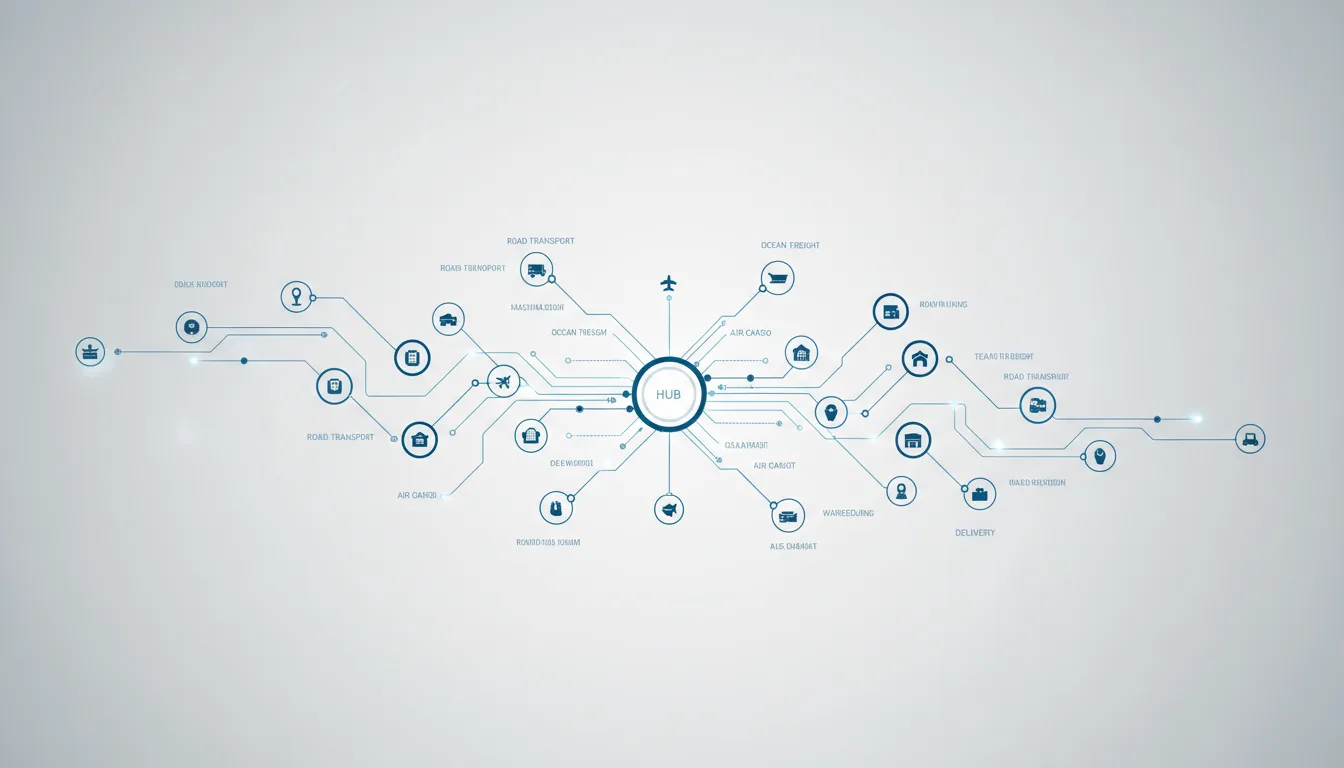
Transport Management
Overview
Transport management refers to the comprehensive process of planning, executing, monitoring, and optimizing the physical movement of goods, materials, and services from one point to another. Effective transport management is critical to modern supply chain success, ensuring timely and reliable deliveries while minimizing costs, improving efficiency, and enhancing customer satisfaction. The primary goal is to strategically coordinate all transportation activities to achieve seamless and cost-effective logistics operations, often forming the backbone of an organization's overall Order Management System.
Etymology and Origins
The term "transport" originates from the Latin verb transportare, which means "to carry across" (trans- meaning across, and portare meaning to carry). The fundamental act of moving goods has been central to human civilization since ancient times, facilitated by early trade routes such as the Silk Road and sophisticated infrastructure like the Roman road network.
The concept of management applied to transport evolved more systematically. Early forms of organized transport management can be traced to military logistics, where the efficient movement of troops and supplies was crucial for campaign success, as documented in texts like Sun Tzu's The Art of War. During the Renaissance and Age of Exploration, burgeoning global trade necessitated better coordination of maritime and overland routes. However, the formal discipline of "transport management" as a distinct operational area began to coalesce with the industrial revolution, focusing on optimizing the increasing volume and complexity of commercial freight movement.
Historical Development
Transport management has undergone significant transformations, mirroring technological advancements and global economic shifts:
- Ancient to Pre-Industrial Era: Transportation relied on human, animal, and natural power (wind for sailing). Early logistics were predominantly military-driven, focused on supplying armies. Organized trade routes like the Silk Road and the development of major port cities facilitated early large-scale goods movement, though without systematic 'management' in the modern sense.
- 18th-19th Century (Industrial Revolution): The invention of the steam engine revolutionized transportation with canals, railways, and steamships, allowing for unprecedented volumes and speeds. This period saw the beginnings of professional freight forwarding and early efforts to schedule and optimize routes for mass production and distribution.
- Early 20th Century: The advent of the internal combustion engine led to the widespread adoption of trucks and cars. Frederick W. Taylor's principles of scientific management, published in 1911, began to influence logistics, promoting efficiency studies in material handling and scheduling. The First and Second World Wars spurred massive advancements in logistics planning and execution, demonstrating the critical link between efficient transport and national capability.
- 1950s-1960s (The Container Revolution): A pivotal moment was the introduction of standardized cargo containers by Malcolm McLean in 1956. This innovation dramatically streamlined freight transport by enabling intermodal shipping (seamless transfer between ships, trains, and trucks), significantly reducing cargo handling times, costs, and theft. Simultaneously, early computer applications began to assist with inventory management and basic scheduling.
- 1970s-1980s (Deregulation and Early IT Adoption): The deregulation of the trucking and rail industries in the U.S. (e.g., the Motor Carrier Act of 1980 and the Staggers Rail Act of 1980) fostered increased competition and flexibility. This era also saw the rise of Materials Requirements Planning (MRP) and later Enterprise Resource Planning (ERP) systems, which integrated manufacturing and distribution processes, including transport planning. The first dedicated Transportation Management Systems (TMS) emerged, moving beyond manual processes to automate freight rating, carrier selection, and load planning.
- 1990s (Supply Chain Management and Globalization): The concept of Supply Chain Management (SCM) gained prominence, emphasizing the integration of all upstream and downstream processes, with transport as a crucial link. The widespread adoption of the internet and Global Positioning Systems (GPS) enabled better communication, real-time tracking, and more sophisticated route optimization.
- 2000s and Beyond (Digital Transformation and Advanced Analytics): Modern transport management is characterized by advanced technologies like cloud-based TMS platforms, Internet of Things (IoT) devices for real-time asset tracking and condition monitoring, Artificial Intelligence (AI) and Machine Learning (ML) for predictive analytics and route optimization, and blockchain for enhanced transparency and security. The rise of e-commerce has also put significant focus on last-mile delivery optimization, sustainability, and resilience against disruptions.
Core Concepts
The core concepts of transport management are designed to orchestrate the complex movement of goods efficiently:
- Transportation Modes: Strategic selection and combination of various transport methods, including road, rail, air, sea, pipeline, and intermodal transport. Each mode offers distinct trade-offs in terms of cost, speed, capacity, and environmental impact.
- Route Planning and Optimization: Encompasses the evaluation, selection, and dynamic adjustment of routes to ensure timely delivery, minimize mileage, reduce fuel consumption, and avoid congestion. This includes advanced techniques like solving the Vehicle Routing Problem (VRP) and leveraging automated rate selection for cost-effective carrier choices.
- Load Optimization and Consolidation: Maximizing the utilization of vehicle space and capacity to reduce costs per unit. Strategies include cross-docking, which minimizes storage time and streamlines the shipping process, and freight consolidation, where multiple smaller shipments are combined into a full truckload or container.
- Carrier Management: The process of selecting, negotiating with, and managing relationships with transportation providers (carriers) to ensure service levels, competitive rates, and compliance with contractual agreements.
- Freight Auditing and Payment: Verifying shipping invoices against agreed-upon rates and services to ensure accuracy and cost control, followed by timely payment processing.
- Documentation and Compliance: Managing all necessary paperwork, such as bills of lading, customs declarations, proofs of delivery, and complying with regional, national, and international regulations (e.g., Incoterms for international trade).
- Visibility and Tracking: Implementing systems to monitor the location and status of goods in transit in real-time, providing proactive alerts and enhancing responsiveness to disruptions. This often involves technologies like GPS, RFID, and telematics.
Benefits and Advantages
Proper transport management offers numerous strategic and operational benefits:
- Cost Reduction: By optimizing routing, consolidating loads, and leveraging competitive carrier rates, businesses can significantly reduce their transportation expenses, which often represent a substantial portion of total logistics costs.
- Improved Service Levels: Enhanced schedule reliability, faster transit times, and proactive communication about shipment status lead to higher customer satisfaction and retention. This directly impacts on-time delivery performance.
- Better Visibility and Control: Real-time tracking and comprehensive reporting provide granular insights into the supply chain, enabling informed decision-making, proactive problem-solving, and improved inventory control, often facilitated by a Visual Inventory System.
- Increased Efficiency and Productivity: Automation of tasks such as booking, dispatching, and tracking reduces manual effort and errors, freeing up staff for more strategic activities.
- Enhanced Supply Chain Resilience: The ability to quickly adapt to disruptions, reroute shipments, and switch carriers improves the overall robustness of the supply chain.
Challenges and Limitations
Despite its advantages, transport management faces persistent and evolving challenges:
- Complexity in Global Logistics Networks: Managing transportation across multiple regions, countries, and regulatory environments becomes increasingly intricate with globalized supply chains, requiring sophisticated planning and coordination.
- Fluctuating Fuel Prices: Variability in fuel prices directly impacts transport costs, necessitating agile budgeting, fuel hedging strategies, and constant route optimization to mitigate economic shocks.
- Regulatory Compliance and Trade Barriers: Keeping up with constantly changing national and international regulations, customs requirements, and trade agreements poses a significant compliance burden for businesses.
- Infrastructure Limitations: Aging or inadequate transportation infrastructure (roads, ports, railways) in many regions can lead to delays, increased costs, and capacity constraints, impacting efficiency and reliability.
- Driver Shortages: A persistent shortage of qualified truck drivers in many parts of the world creates capacity challenges, drives up labor costs, and affects service levels.
- Sustainability Pressures: Growing environmental concerns and stricter emissions regulations compel businesses to seek greener transportation options, such as electric vehicles, optimized routes to reduce fuel consumption, and sustainable logistics practices, which can add complexity and initial investment costs.
Technology and Tools
The evolution of transport management has been heavily influenced by technological advancements, leading to sophisticated tools:
- Transportation Management Systems (TMS): These software solutions are the backbone of modern transport management, aiding in route planning, load optimization, carrier selection, freight tendering, tracking, and auditing. Modern Shipping & Fulfillment Software integrates these functions to streamline operations, reduce costs, and improve service levels.
- Real-Time Tracking and Telematics: GPS, RFID, and advanced telematics systems (which combine telecommunications and informatics) provide real-time visibility into the location, speed, and even condition (e.g., temperature, vibration) of goods and vehicles. This enhances supply chain transparency and enables proactive management.
- Mobile Solutions: The use of mobile apps and Mobile Warehouse Management Systems (WMS) on handheld devices allows drivers and field staff to capture data, update delivery statuses, and communicate in real-time, improving data accuracy and operational agility.
- Artificial Intelligence (AI) and Machine Learning (ML): These technologies are used for predictive analytics (e.g., predicting delivery delays, maintenance needs), dynamic route optimization based on real-time traffic, demand forecasting, and automated decision-making in complex scenarios.
- Cloud-Based Platforms: Enable seamless data access, collaboration, and scalability, allowing businesses to manage their transportation operations from anywhere and easily integrate with partners.
- Blockchain: Offers the potential for enhanced transparency, security, and traceability of shipments and transactions across the supply chain, reducing fraud and improving auditability.
Industry Applications
Transportation management is vital across virtually all sectors, playing a specialized role in each:
- Retail and E-commerce: Ensures rapid and timely deliveries of goods to stores and directly to consumers, managing the complex logistics of last-mile delivery, returns, and peak season demand. Integration with platforms like Shopify is crucial for efficient order fulfillment.
- Manufacturing: Coordinates inbound raw materials and components, ensuring just-in-time delivery to production lines, and outbound finished products to distribution centers or customers. This minimizes inventory holding costs and supports lean manufacturing principles.
- Consumer Goods: Manages the high-volume, often time-sensitive, distribution of products to retail outlets, warehouses, and increasingly, direct-to-consumer shipments. This sector heavily relies on efficient Order Fulfillment Guide and robust distribution networks.
- Pharmaceuticals and Food & Beverage: Requires specialized cold chain logistics to maintain precise temperature controls throughout transit, ensuring product integrity and compliance with strict health and safety regulations.
- Construction and Heavy Industry: Involves the specialized transport of oversized, heavy, or hazardous materials and equipment, requiring complex permits, specialized carriers, and meticulous route planning.
Future Trends
Looking ahead, transport management is poised for significant evolution driven by innovation and changing global demands:
- Increased Automation and Autonomous Vehicles: The deployment of autonomous trucks and drones for last-mile delivery promises to address labor shortages, improve safety, and enhance efficiency. However, regulatory and ethical considerations remain significant.
- Advanced Data Analytics and AI: Deeper integration of AI and ML for predictive capabilities, such as forecasting demand, anticipating disruptions, optimizing maintenance schedules for fleets, and enabling dynamic pricing and route optimization based on real-time conditions.
- Sustainability and Green Logistics: Continued focus on reducing carbon footprints through the adoption of electric vehicles, alternative fuels, optimizing routes to minimize emissions, and promoting multimodal transport. Circular economy principles will also influence return logistics and waste reduction.
- Hyper-connectivity and IoT Integration: Seamless integration of IoT sensors, telematics, and cloud platforms to provide end-to-end visibility, enabling proactive management and real-time decision-making across the entire transport network.
- Resilience and Risk Management: Development of more robust and flexible transport networks capable of withstanding disruptions from geopolitical events, natural disasters, and pandemics, emphasizing diversified routes and backup carriers.
- Last-Mile and Urban Logistics Innovation: Continued evolution of solutions for efficient urban delivery, including micro-fulfillment centers, locker systems, crowd-sourced delivery, and novel vehicle types.
Related Concepts
Transport management is an indispensable component of broader logistics and supply chain management practices. It is intricately linked with areas such as warehouse management (for efficient loading and unloading), inventory control (to manage stock levels in transit), and demand forecasting (to anticipate transport needs). Its effective implementation contributes significantly to an organization’s overall operational efficiency, responsiveness, and strategic competitiveness.
Sources
- Cross-Docking Guide
- Visual Inventory System
- Order Fulfillment Guide
- Shopify WMS Overview
- Supply Chain Success Hinges on Efficient Transport
- Mobile Warehouse Management System
- Shipping & Fulfillment Software
- The Father Of Containerization
- New ATA’s Driver Shortage Report Finds Industry Still Needs Record Number of Drivers
- AI in logistics: How to unleash the potential
- When will autonomous trucks hit the road, and what will it mean for the trucking industry?