Task Optimization in Logistics
Task optimization in logistics enhances efficiency by minimizing waste and streamlining processes across supply chains.
Updated
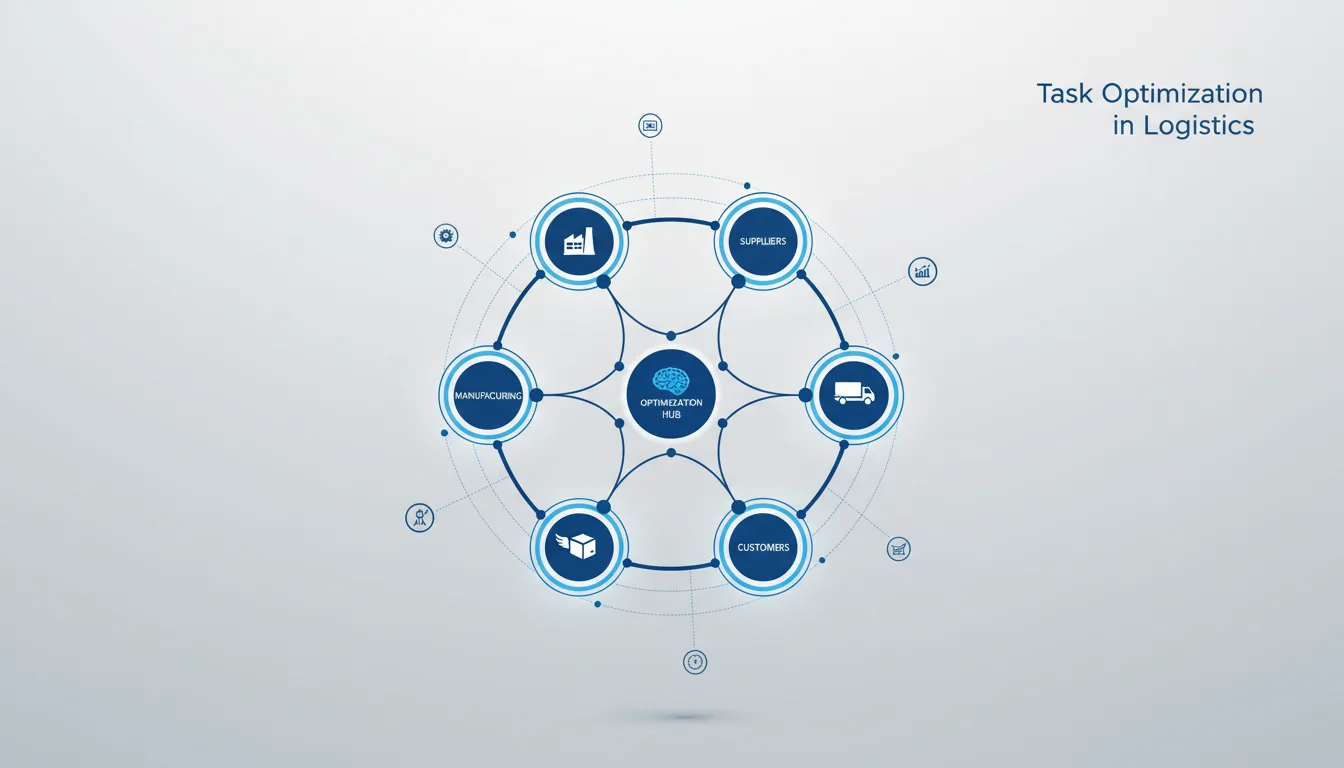
Overview
Task optimization refers to the systematic approach of improving work processes to increase efficiency, productivity, and resilience in logistics operations. This involves identifying bottlenecks, strategically reallocating resources, and streamlining workflows to ensure tasks are completed with minimal time, cost, and effort. Given the increasing complexity of global supply chains, effective task optimization is crucial for reducing operational costs, improving service levels, and enhancing overall performance and competitive advantage.
Etymology and Origins
The term "optimization" comes from the Latin word "optimus," meaning "the best." Its usage in a mathematical context dates back to the 17th century with Gottfried Leibniz, but its application to systematic problem-solving in industrial and logistics operations gained significant traction in the mid-20th century. The concept's roots are deeply embedded in operations research (OR), a discipline that emerged during World War II. Military strategists and scientists used OR techniques to optimize resource allocation for wartime efforts, such as improving convoy routing and bomb targeting.
Post-war, these mathematical and analytical methods were rapidly adopted by industry. The formal development of linear programming by George Dantzig in 1947 provided a powerful tool for optimizing various business problems, from production scheduling to transportation planning. Therefore, while the linguistic root is ancient, the systematic application of "optimization" to tangible business "tasks" in logistics primarily evolved from these mid-20th-century quantitative methods.
Historical Development
Task optimization has its foundational roots in industrial engineering, with early developments seen in the 18th and 19th centuries during the Industrial Revolution, focusing on machine efficiency and factory layout. However, the systematic study of human tasks began with Frederick Taylor's principles of scientific management introduced in 1911, which aimed to improve labor productivity through time-and-motion studies and standardized procedures.
Mid-20th Century (1940s-1960s): The field truly blossomed with the advent of Operations Research (OR) during World War II, which applied advanced mathematical and statistical methods to complex logistical and strategic problems. Post-war, these techniques, including linear programming, found civilian applications in industries seeking to rebuild and grow efficiently. The application of mathematical models for logistics optimization, particularly linear programming, emerged in the mid-20th century. In the 1960s, the rise of mainframe computers enabled the practical implementation of these complex algorithms. Companies like IBM contributed significantly to the development of early optimization software and the first Material Requirements Planning (MRP) systems, which revolutionized production scheduling and inventory control.
Late 20th Century (1970s-1990s): The 1970s saw the development of the Just-In-Time (JIT) philosophy at Toyota, which drastically reduced waste and inventory by synchronizing production with demand. This period also witnessed the evolution of MRP into Manufacturing Resource Planning (MRP II), integrating more business functions, and subsequently, the emergence of Enterprise Resource Planning (ERP) systems in the 1990s. The increasing power of personal computers and networking facilitated more sophisticated data analysis and the adoption of dedicated systems like Warehouse Management Systems (WMS) and Transportation Management Systems (TMS).
21st Century and Beyond: The turn of the millennium brought the explosion of the internet, e-commerce, and advanced data analytics. The evolution of technology, including more powerful computing, sensor networks (IoT), and autonomous systems, facilitated complex optimization processes, enabling real-time data-driven decision making and predictive capabilities. Today, artificial intelligence and machine learning are pushing the boundaries further, allowing for dynamic optimization in highly volatile environments.
Core Concepts
Task optimization in logistics revolves around several core concepts aimed at maximizing output while minimizing input:
- Workflow Analysis: Systematically evaluating the steps involved in a task or process to identify non-value-added activities, bottlenecks, and areas for improvement. Techniques often include value stream mapping and process flow analysis.
- Resource Allocation: Strategically assigning and managing physical resources (e.g., inventory, equipment, facilities), human capital (labor), and financial capital to tasks or processes to achieve optimal performance. This includes optimizing warehouse layouts and equipment utilization.
- Process Standardization: Establishing clear, consistent standard operating procedures (SOPs) and best practices to minimize variability, reduce errors, and enhance predictability and training efficiency. This often involves defining workflows, which can be digitally managed.
- Advanced Analytics: Utilizing sophisticated data analytics tools and algorithms to forecast demands, simulate scenarios, optimize routes, manage inventory levels, and guide strategic decision-making. This is fundamental to modern mobile warehouse management systems.
- Performance Measurement: Establishing Key Performance Indicators (KPIs) to monitor the efficiency and effectiveness of optimized tasks, providing critical feedback for continuous improvement.
Types and Classifications
Various task optimization methodologies are employed in logistics, often used in conjunction:
- Lean Operations: Originating from the Toyota Production System, Lean focuses on minimizing waste (Muda) across all aspects of an operation without sacrificing productivity. It identifies seven main types of waste: overproduction, waiting, transport, over-processing, inventory, motion, and defects.
- Six Sigma: A data-driven methodology developed by Motorola, aimed at improving quality by identifying and removing the causes of defects and minimizing variability in manufacturing and business processes. It seeks to achieve near-perfection, striving for no more than 3.4 defects per million opportunities.
- Kaizen: A Japanese term meaning "change for the better" or "continuous improvement." It emphasizes incremental, ongoing positive changes involving all employees, from top management to assembly line workers. Kaizen encourages a culture of constant problem-solving and efficiency enhancement.
- Just-In-Time (JIT): A production and inventory strategy that strives to improve a business's return on investment by reducing in-process inventory and associated carrying costs. Goods are acquired or produced only as needed, driven by customer demand, which requires highly synchronized supply chains and processes to avoid disruptions.
Industry Applications
Task optimization is applied across various sectors within logistics and supply chain management, driving efficiency and competitive advantage:
- Manufacturing: Companies utilize optimization techniques to streamline assembly lines, balance workloads, reduce production costs, and improve throughput. This includes optimizing raw material flow, kitting processes for assembly, and production scheduling.
- Warehousing: Optimization is critical for maximizing space utilization, improving pick accuracy and speed, and reducing labor costs. Techniques include batch picking, slotting, cross-docking, bin put-away criteria, and efficient cycle counting to maintain inventory accuracy.
- Transportation: Route optimization algorithms minimize travel times, fuel consumption, and operational costs for fleets. This includes dynamic routing, load consolidation, and automated rate selection for shipping, significantly benefiting logistics companies and reducing environmental impact.
- Retail and E-commerce: Optimization is applied to order fulfillment, last-mile delivery, and returns management. Mobile order fulfillment software and automated packing systems ensure rapid and accurate delivery to customers.
Benefits and Advantages
The critical advantages of effective task optimization extend across the entire logistics value chain:
- Cost Reduction: Streamlined processes, reduced waste (materials, time, labor), and optimized resource allocation directly lead to lower operational expenditures, such as decreased fuel costs and inventory holding costs.
- Improved Efficiency: Optimization results in faster task completion, increased throughput, reduced lead times, and higher productivity per employee or machine. This means more goods moved with less effort.
- Higher Quality: By focusing on process consistency and key performance indicators, optimization reduces errors, defects, and damages, thereby enhancing overall service delivery and customer satisfaction.
- Enhanced Flexibility and Agility: Optimized systems are often more adaptable to changing market demands, supply chain disruptions, and unforeseen circumstances, allowing organizations to respond quickly and effectively.
- Better Resource Utilization: Ensures that materials, labor, capital, and equipment are used to their fullest potential, minimizing idle time and maximizing output.
- Increased Sustainability: Reducing waste, optimizing routes, and streamlining operations contribute to a smaller carbon footprint and more environmentally responsible logistics practices.
Challenges and Limitations
While highly beneficial, task optimization initiatives face several challenges:
- Resistance to Change: Employees may resist new processes or technologies due to fear of the unknown, job insecurity, or perceived loss of autonomy. Effective change management strategies are crucial.
- Significant Upfront Investment: Implementing advanced optimization technologies (e.g., WMS, automation, analytics software) and training staff can require substantial initial capital outlays.
- Data Quality and Availability: Optimization relies heavily on accurate, timely, and comprehensive data. Poor data quality, fragmented data sources, or lack of data can severely undermine optimization efforts.
- System Integration Complexities: Integrating new optimization tools with existing legacy systems (ERP, WMS, TMS) can be technically challenging and time-consuming, creating data silos or compatibility issues.
- Over-optimization: Sometimes, striving for absolute perfection can lead to overly rigid systems that lack resilience and struggle to cope with unexpected variability or disruptions.
- Lack of Skilled Personnel: Developing and managing complex optimization models and technologies requires specialized skills in data science, operations research, and industrial engineering.
To address these issues, companies should prioritize robust change management strategies, invest in data governance, and implement pilot programs to demonstrate tangible benefits before a full-scale rollout.
Best Practices
Successful task optimization strategies are iterative, data-driven, and people-centric:
- Data-Driven Decision Making: Implement robust data collection and analysis systems. Utilize advanced analytics tools for better insights, predictive modeling, and continuous monitoring of KPIs. Ensure data integrity and accessibility.
- Employee Training and Engagement: Invest in comprehensive training for staff on new systems, processes, and methodologies. Foster a culture of continuous improvement (Kaizen) by involving employees in the optimization process and valuing their feedback. Consider tracking employee productivity for performance insights.
- Pilot Testing and Phased Implementation: Implement changes in smaller, controlled environments (pilot programs) to test affordability, effectiveness, and identify potential issues before a full-scale rollout. This allows for adjustments and reduces risk.
- Continuous Feedback Loops and Monitoring: Establish mechanisms for regular review and assessment of optimized processes. Use performance metrics and feedback to make adjustments and ensure ongoing relevance and efficiency. This aligns with enterprise fulfillment best practices.
- Stakeholder Alignment: Ensure that all relevant departments and management levels are aligned with optimization goals and understand their role in the process. This fosters collaboration and reduces resistance.
- Leverage Technology Appropriately: Choose and implement technologies that align with specific optimization goals, ensuring they are scalable and integrate well with existing infrastructure. For example, using barcode technology for accurate tracking.
Technology and Tools
Modern logistics task optimization relies heavily on various advanced technologies and integrated software solutions:
- Warehouse Management Systems (WMS): Sophisticated systems that manage and optimize all warehouse operations, from inventory receiving and putaway (e.g., bin put-away criteria) to order picking (e.g., pick-to-tote), packing, and shipping. Modern WMS, particularly mobile warehouse management systems, enhance operational efficiency by providing real-time visibility and guiding workers through optimized workflows.
- Route Optimization Software: Advanced algorithms and GIS mapping tools that calculate the most efficient delivery routes, considering factors like traffic, delivery windows, vehicle capacity, and fuel costs for logistics firms. These systems dynamically adjust routes in real-time.
- Internet of Things (IoT) Solutions: Devices and sensors that provide real-time tracking of inventory, assets, and environmental conditions (e.g., temperature, humidity), helping to optimize stock levels, prevent spoilage, and enhance security throughout the supply chain.
- Enterprise Resource Planning (ERP) Systems: Integrated software suites that manage core business processes, including finance, human resources, manufacturing, and supply chain. ERPs provide a centralized database for holistic optimization efforts.
- Advanced Planning and Scheduling (APS) Systems: Specialized software that uses sophisticated algorithms to optimize production schedules, material planning, and capacity utilization, often extending beyond the capabilities of traditional MRP systems.
- Robotics and Automation: Technologies like Automated Guided Vehicles (AGVs), Autonomous Mobile Robots (AMRs), automated storage and retrieval systems (AS/RS), and robotic picking arms significantly reduce manual labor, increase speed, and improve accuracy in warehouses and factories.
- Barcode and RFID Technology: Essential for accurate and efficient identification and tracking of inventory, assets, and shipments throughout the supply chain, facilitating data collection for optimization systems. SkuSavvy offers comprehensive barcode support.
Future Trends
The future of task optimization in logistics is likely to be driven by continued technological innovation and an increasing focus on resilience and sustainability:
- Artificial Intelligence (AI) and Machine Learning (ML): AI-driven algorithms will increasingly predict demand fluctuations with higher accuracy, optimize complex network designs, automate decision-making in real-time, and enable predictive maintenance for logistics assets.
- Autonomous Vehicles and Drones: Expanding use of self-driving trucks, delivery robots, and drones will reduce delivery times, mitigate labor shortages, and lower operational costs, especially in last-mile delivery.
- Blockchain Technology: Enhancing transparency, traceability, and trust in supply chain processes by providing an immutable ledger for transactions and movements, improving data integrity for optimization.
- Digital Twins: Creating virtual replicas of physical supply chain systems, allowing for real-time monitoring, simulation of scenarios, and predictive analysis to optimize operations before implementing changes in the real world.
- Hyper-personalization and Micro-fulfillment: Optimization efforts will focus on delivering highly personalized customer experiences with rapid fulfillment, leading to the rise of localized micro-fulfillment centers and advanced last-mile strategies.
- Sustainability-Driven Optimization: Growing emphasis on green logistics, optimizing routes for minimal emissions, reducing packaging waste, and supporting circular economy principles throughout the supply chain.
Related Concepts
Task optimization is closely linked to concepts such as inventory management, fulfillment strategies, order management systems, and supply chain management, each contributing to enhanced operational efficiency, resilience, and responsiveness in logistics. Other related concepts include Lean Manufacturing, Six Sigma quality management, and operations research.
Sources
- Mobile Warehouse Management System Overview
- Batch Picking Guide
- Order Fulfillment Guide
- Visual Inventory Management System
- Pick, Pack, Ship Software
- The Increasing Complexity of Supply Chains
- Operations research
- Resource Allocation
- George Dantzig and the birth of linear programming
- OR: A Brief History
- Assembly line
- Material requirements planning
- Toyota Production System
- Manufacturing resource planning
- Enterprise resource planning
- Transportation management system
- Supply chains are far more complex than companies realize
- Warehouse Layout Preview
- Workflows Overview
- Value Stream Mapping
- Six Sigma In Detail
- Kitting Guide
- Warehouse Slotting Best Practices
- Cross-Docking Guide
- Bin Put-Away Criteria
- Cycle Counting Guide
- Automated Rate Selection
- Last-Mile Delivery Optimization
- Mobile Order Fulfillment Software
- SmartWay Strategies for Freight Efficiency
- Sustainable Transport
- The Hard Side of Change Management
- How Advanced Analytics Is Transforming Supply Chains
- Productivity Tracking
- 8 Enterprise Fulfillment Best Practices for Shopify Plus Merchants
- Barcodes Guide
- Bin-to-Bin Inventory Transfer
- Pick-to-Tote Guide
- Order Management System