Supply Planning
Learn about supply planning, its origins, core concepts, applications, and the critical role it plays in logistics and supply chain management.
Updated
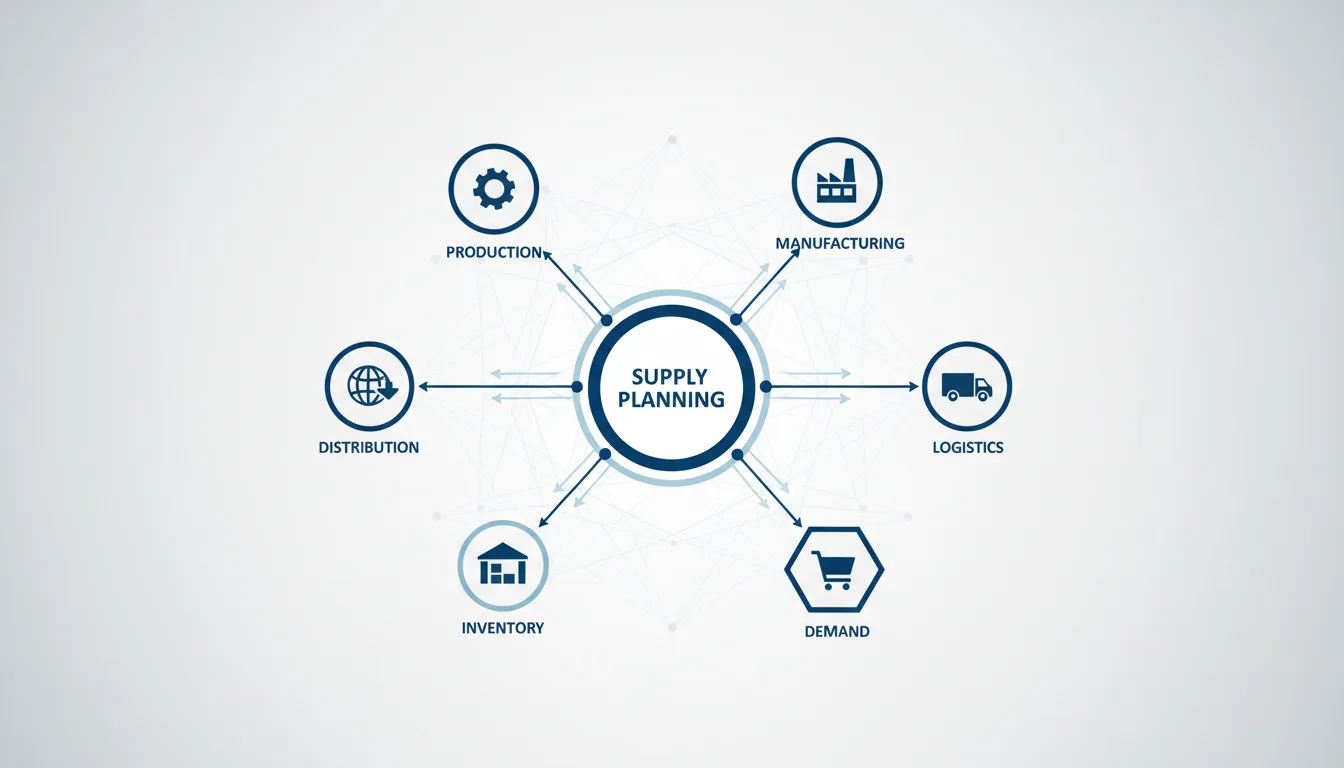
Overview
Supply planning is a critical function within the logistics and supply chain management sectors, focused on ensuring that an organization has the necessary materials and products on hand to meet forecasted demand. The primary goal is to efficiently balance supply levels with customer demand while minimizing excess inventory, reducing costs, and maintaining optimal service levels. Effective supply planning leads to improved customer satisfaction, reduced lead times, optimized resource utilization, and enhanced operational efficiency.
Etymology and Origins
The concept of managing resources and materials dates back to ancient civilizations, where early forms of inventory control were essential for survival, such as in ancient granaries or military logistics [4]. However, the term 'supply planning' as a distinct and proactive discipline is a more recent development.
Historically, terms like "stock control," "materials management," and "production planning" were more prevalent [5]. These earlier concepts primarily focused on managing existing inventory or scheduling production in isolation. The semantic growth of 'supply planning' reflects a shift from reactive stock-keeping to a more holistic, integrated, and strategic approach to anticipating and meeting future demand across an entire network [6]. The term gained prominence as businesses moved from localized, simpler production models to complex, global supply chains requiring coordinated efforts across multiple entities and functions, emphasizing forward-looking strategy rather than just operational execution [7].
Historical Development
Supply planning as a structured practice has evolved significantly over the past century, driven by advancements in business theory, quantitative methods, and computing technology.
- Early Foundations (Pre-20th Century): The roots of supply planning can be traced back to early human societies managing agricultural yields or military logistics [4]. Formal inventory management began to emerge with the Industrial Revolution and the rise of mass production. In the early 20th century, pioneers like Frederick Winslow Taylor introduced scientific management principles that optimized production processes, indirectly laying groundwork for planned material flows [5].
- Mid-20th Century - The Quantitative Era (1940s-1960s):
- Post-World War II, Operations Research (OR) techniques, developed for military logistics, were adapted for industrial settings to optimize resource allocation and inventory levels [8].
- In 1913, Ford W. Harris published his work on the Economic Order Quantity (EOQ) model, providing a mathematical basis for determining optimal order sizes to minimize inventory costs [9].
- Just-in-Time (JIT): Introduced by Toyota in the 1950s as a core component of the Toyota Production System, JIT revolutionized manufacturing by emphasizing continuous flow, minimal inventory, and rapid response to demand [10]. This paradigm shift underscored the need for highly precise and integrated supply planning.
- The Computerized Era (1960s-1980s):
- Materials Requirements Planning (MRP): Developed in the 1960s, MRP was one of the first computerized systems to manage components and parts needed to produce a final product. Companies like IBM were instrumental in developing and popularizing MRP software, which calculated production schedules and purchase orders based on a master production schedule and bill of materials [11].
- Manufacturing Resource Planning (MRPII): By the 1980s, MRP evolved into MRPII, expanding beyond just materials to include other manufacturing resources like labor and machine capacity, integrating financial data, and providing simulation capabilities [12].
- Enterprise Resource Planning (ERP): Emerging in the 1980s and becoming prominent in the 1990s, ERP systems integrated MRPII with other business functions like finance, human resources, and customer relationship management, providing a unified view for planning across the enterprise [13].
- Modern Supply Chain Era (1990s-Present):
- The rise of global supply chains and the internet in the 1990s led to the development of dedicated Supply Chain Management (SCM) software, which focused on end-to-end process visibility and optimization across multiple companies [14]. Advanced Planning and Scheduling (APS) systems offered more sophisticated optimization algorithms.
- AI and Machine Learning: Since the 2010s, Artificial Intelligence (AI) and Machine Learning (ML) have been increasingly integrated, enabling predictive analytics for demand forecasting, prescriptive recommendations for inventory optimization, and automated decision-making in complex supply networks [15].
- IoT and Big Data: The Internet of Things (IoT) provides real-time data from various points in the supply chain, while big data analytics processes this information to enhance visibility, track assets, and improve responsiveness [16].
Core Concepts
At its core, effective supply planning involves several key concepts that interlink to form a comprehensive strategy:
- Demand Forecasting: This is the process of estimating future customer demand based on historical data, market trends, sales forecasts, and other relevant factors. Accurate forecasting is foundational, influencing production schedules, inventory levels, and purchasing decisions. Both qualitative (e.g., expert opinion) and quantitative (e.g., statistical models, machine learning algorithms) methods are employed [17].
- Inventory Management: This involves the systematic oversight of ordering, storing, and using a company's inventory, crucial for balancing supply and demand. Key aspects include setting safety stock levels, determining reorder points, managing lead times, and optimizing inventory turns. Advanced systems can track items by lots and expiration dates and facilitate stock replenishment to ensure product availability while minimizing holding costs.
- Supply Chain Collaboration: This refers to the coordination and communication among all stakeholders in the supply chain—suppliers, manufacturers, distributors, and retailers. Practices like Vendor Managed Inventory (VMI) and Collaborative Planning, Forecasting, and Replenishment (CPFR) improve transparency, align objectives, and reduce bullwhip effect fluctuations across the chain [18].
- Lead Time Management: The process of analyzing and reducing the time between initiating a purchase order and receiving goods, or between placing an order and its fulfillment. Efficient lead time management is essential for enhancing responsiveness to market changes, minimizing the need for large safety stocks, and improving overall customer service. Tools like purchase order management systems help track and expedite orders.
Industry Applications
Supply planning is vital across various industries, adapting its principles to meet specific sector needs:
- Retail: Retailers use supply planning to manage stock levels across multiple locations, including brick-and-mortar stores, e-commerce warehouses, and in-transit inventory. This involves sophisticated forecasting for seasonal demand, promotional events, and omnichannel fulfillment strategies. Systems like visual inventory management help with oversight, and platforms like Shopify inventory management integrate planning with sales channels.
- Manufacturing: Companies employ supply planning to coordinate raw material procurement, work-in-progress (WIP) inventory, and finished goods production schedules. This includes capacity planning, master production scheduling, and detailed material requirements planning to ensure production lines run efficiently without bottlenecks or shortages [19].
- Healthcare: In the healthcare sector, efficient supply planning is critical for ensuring that medical facilities have essential supplies, pharmaceuticals, and equipment available without overstocking, which can lead to waste due to expiration or obsolescence. It also addresses challenges like cold chain logistics and strict regulatory compliance [20].
- Food & Beverage: This industry faces unique challenges due to product perishability, strict shelf-life requirements, and significant seasonal demand fluctuations. Supply planning here focuses on precise forecasting, efficient distribution networks, and waste reduction strategies to manage fresh, chilled, and frozen goods effectively [21].
Benefits and Advantages
Effective supply planning offers numerous strategic and operational advantages to organizations:
- Cost Efficiency: By accurately predicting demand and optimizing inventory levels, organizations can significantly reduce carrying costs, storage expenses, and the risk of obsolescence or spoilage. This also leads to more efficient purchasing through automated purchase quantity calculations, reducing expedited shipping costs [22].
- Improved Customer Satisfaction: Timely delivery of products, reduced stockouts, and consistent product availability directly enhance customer trust and loyalty. Meeting demand reliably is a cornerstone of a positive customer experience.
- Agility and Flexibility: Organizations with robust supply planning can quickly adjust their supply strategies in response to changes in market demand, unforeseen disruptions, or shifts in economic conditions. This adaptability allows them to capitalize on opportunities and mitigate risks more effectively.
- Enhanced Visibility: Comprehensive supply planning systems provide a clearer, end-to-end view of the supply chain, enabling better decision-making and proactive problem-solving [23].
Challenges and Limitations
Despite its benefits, supply planning faces several complex challenges:
- Data Quality: Inaccurate, incomplete, or outdated data can severely compromise forecasting accuracy and planning decisions. Data silos, inconsistent data formats, and a lack of master data management can render even the most sophisticated planning tools ineffective. Regular cycle counting and data governance are crucial for maintaining data integrity.
- Complexity in Supply Chains: Modern supply chains are often multi-tiered, global, and highly interconnected, involving numerous suppliers, manufacturers, distributors, and logistics partners. This complexity makes coordination challenging due to varying lead times, supplier reliability issues, and diverse regulatory environments [24].
- Market Volatility: Unexpected and rapid changes in market conditions, consumer preferences, geopolitical events, natural disasters, or pandemics can disrupt planning efforts significantly. This requires highly agile and adaptive strategies that can respond quickly to unpredictable shifts [25].
- Lack of Visibility: Despite technological advancements, many organizations struggle with end-to-end supply chain visibility. Gaps in tracking capabilities, reliance on manual processes, and lack of integration between systems can obscure real-time status, hindering effective planning and rapid response.
- Talent and Expertise Gap: Effective supply planning requires a specialized skillset encompassing analytics, logistics, strategic thinking, and technological proficiency. A shortage of skilled professionals can limit an organization's ability to implement and optimize advanced planning strategies [26].
Technology and Tools
As technology continues to evolve, a sophisticated array of tools supports and enhances supply planning capabilities:
- Demand Planning Software: These specialized tools analyze historical sales data, market indicators, and external factors to generate accurate demand forecasts. They often include features for statistical modeling, scenario analysis, and collaborative forecasting with sales and marketing teams.
- Inventory Management Systems: Integrated solutions like order management systems help track stock levels, automate reorder points based on demand forecasts, manage multiple warehouses, and optimize inventory placement. SkuSavvy's tools also assist with adding inventory and managing unit of measure conversions.
- Warehouse Management Systems (WMS): A WMS, such as a mobile warehouse management system, plays a crucial role in executing the supply plan by managing the day-to-day operations of a warehouse. It optimizes storage, picking, packing, and shipping processes, ensuring that goods move efficiently according to the plan [27].
- Purchase Order Management Systems: These systems streamline the procurement process, from requisition to payment. Tools like SkuSavvy's Purchase Order Management help generate purchase orders, manage vendor relationships, track incoming shipments, and automate quantity suggestions based on inventory needs and lead times [28].
- Advanced Analytics & AI/ML Platforms: These are critical for enhancing decision-making. AI-driven systems leverage machine learning algorithms to identify patterns in vast datasets, improving forecasting accuracy, optimizing inventory policies, predicting potential disruptions, and suggesting prescriptive actions [15].
- Transportation Management Systems (TMS): While more focused on execution, TMS supports supply planning by optimizing routes, selecting carriers, and managing freight costs, ensuring planned supplies reach their destinations efficiently [29].
- Supplier Relationship Management (SRM) Systems: These platforms facilitate better collaboration and communication with suppliers, crucial for ensuring material availability, managing contracts, and mitigating supply risks [30].
Future Trends
Looking ahead, the landscape for supply planning is expected to undergo significant changes, driven by technological advancements and evolving global dynamics:
- Increased Automation: The rise of robotic process automation (RPA), automated guided vehicles (AGVs), and automated material handling systems in warehouses will streamline operations, reduce manual errors, and accelerate throughput. This automation will require even more precise and dynamic supply plans [31].
- Integration of IoT and Edge Computing: The Internet of Things (IoT) will allow for real-time tracking of inventory, assets, and environmental conditions (e.g., temperature for cold chain). Edge computing will process data closer to its source, enabling faster insights and more immediate decision-making, improving responsiveness across the supply chain [32].
- Sustainability Practices and Circular Economy: As organizations strive to minimize their environmental impact, sustainable sourcing, ethical procurement, and circular economy principles will become integral to supply planning. This includes optimizing transportation to reduce carbon footprint and planning for reverse logistics [33].
- Blockchain for Transparency: Blockchain technology offers the potential for immutable and transparent record-keeping across the supply chain. This can enhance traceability of products from origin to consumer, verify ethical sourcing, and simplify audits, building greater trust and accountability [34].
- Digital Twins: Creating virtual replicas of physical supply chain assets, processes, and networks will enable companies to simulate various scenarios, test planning strategies, predict outcomes, and optimize operations in a risk-free environment before implementation [35].
- Emphasis on Resilience and Risk Mitigation: Learning from recent global disruptions, future supply planning will place a greater emphasis on building resilient supply chains through diversification of suppliers, multi-sourcing strategies, and advanced risk assessment and mitigation frameworks [25].
Related Concepts
Understanding supply planning also involves familiarity with several interconnected logistics and business concepts. These areas highlight the complexity and strategic importance of efficient supply planning in today's business environment:
- Inventory Management: The practices and processes for managing goods through their lifecycle, crucial for operationalizing supply plans.
- Demand Planning: The precursor to supply planning, focusing on forecasting future customer needs.
- Order Fulfillment: The process from receiving a customer order to its delivery, which is the operational output of effective supply planning.
- Supply Chain Management (SCM): The overarching discipline encompassing all aspects of planning, implementing, and controlling the flow and storage of goods, services, and information.
- Sales & Operations Planning (S&OP): A strategic process that balances demand and supply by bringing together sales, marketing, manufacturing, and finance to align their plans.
- Integrated Business Planning (IBP): An evolution of S&OP that extends beyond operations to integrate financial planning and external market dynamics for a more comprehensive business plan.
- Master Production Scheduling (MPS): A detailed plan for the production of individual products, which directly informs material requirements planning and capacity planning [19].
- Purchase Order Management: The system for creating, tracking, and managing purchase orders, directly feeding into the supply side of planning.
Sources
- Mobile WMS Overview
- Visual Inventory System
- Order Management System
- History of Logistics: The Military Roots of Logistics
- Inventory Control
- Supply Chain Management Overview
- Evolution of Supply Chain Management
- History of Operations Research
- Ford W. Harris and the Economic Order Quantity Model
- The Toyota Production System
- What is MRP? Materials Requirements Planning
- What is Manufacturing Resource Planning (MRP II)?
- What is ERP (Enterprise Resource Planning)?
- Supply Chain Management (SCM)
- How AI Is Transforming Supply Chain Management
- The Role of IoT and Big Data Analytics in Supply Chain Management
- The importance of demand forecasting in supply chain management
- Collaborative Planning, Forecasting, and Replenishment (CPFR)
- Lead time: it’s critical to managing your supply chain
- Production Planning and Control in Manufacturing
- Supply Chain Management in the Healthcare Industry
- The role of supply chain management in food and beverage sector
- Cost optimization in supply chain management
- Supply Chain Visibility
- Master Data Management (MDM)
- Building Supply Chain Resilience Amidst Global Disruptions
- The Supply Chain Talent Gap
- What is a WMS? (Warehouse Management System)
- What is a Transportation Management System (TMS)?
- Supplier Relationship Management (SRM)
- Automation in Logistics and Supply Chain Management
- IoT and Edge Computing in Supply Chain
- Supply Chain Sustainability
- Blockchain in Supply Chain: A Comprehensive Review
- Digital Twins in Supply Chain Management
- Sales and Operations Planning (S&OP)
- What is Integrated Business Planning (IBP)?
- Frederick W. Taylor
- Lots & Expiration Dates
- Stock Replenishment Guide
- Purchase Order Management
- Shopify Inventory Management
- Automated Purchase Quantity
- Cycle Counting Guide
- Adding Inventory Guide
- UOM Conversion Workflow