Supply Chain Visibility
How real-time tracking and data sharing improves transparency across the entire supply chain network.
Updated
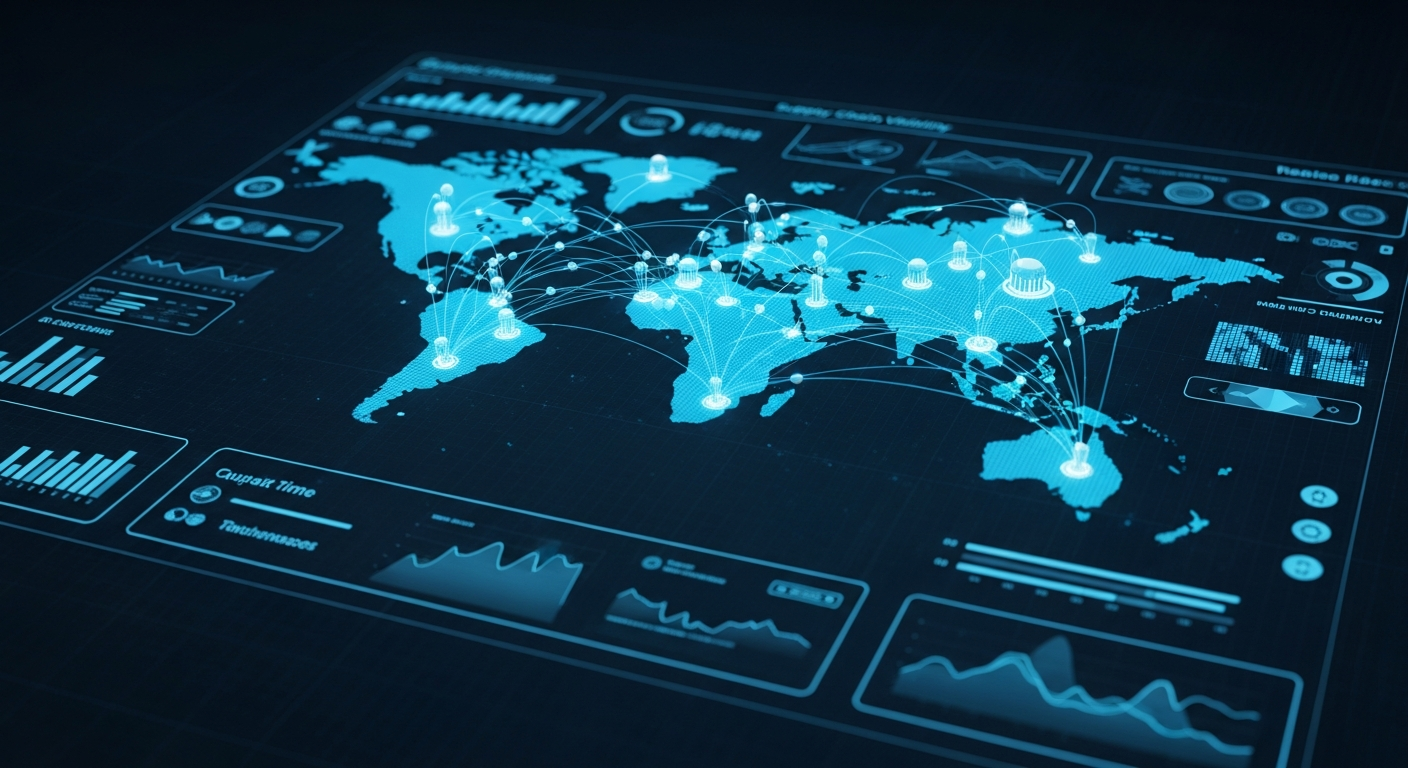
Supply Chain Visibility
Definition
Supply chain visibility is the capability to track components, parts, and products in transit, from their manufacturing to the final destination. This transparency offers businesses a comprehensive perspective on inventory and activities throughout the supply chain, facilitating improved decision-making and risk management. It enables organizations to swiftly respond to disruptions, ensuring a smoother operational flow and enhancing overall supply chain resilience. Achieving true visibility means understanding the status of goods, orders, and resources at every point, from raw material sourcing to final delivery, often extending to post-delivery customer feedback.
Etymology and Origins
The term supply chain visibility evolved from the broader concept of supply chain management. While the term "supply chain" itself was popularized in the early 1980s by consultant Keith Oliver, the specific emphasis on "visibility" gained prominence in the late 1990s and early 2000s. This period saw rapid advancements in information technology and global logistics, making it technically feasible to track goods across multiple tiers of suppliers and transportation modes. The need for visibility grew as supply chains became more complex, geographically dispersed, and vulnerable to disruptions, pushing companies to seek greater transparency into their operations. Early discussions often centered around the ability to track materials and products as they moved between different enterprises, leading to the development of dedicated software solutions for this purpose.
Importance of Visibility
In today's intricate global supply chains, visibility is critical for:
- Managing disruptions proactively by providing early warnings of potential issues like port delays, material shortages, or geopolitical events.
- Meeting customer expectations by offering accurate delivery estimates and real-time order tracking, which are now standard in e-commerce.
- Reducing costs and inefficiencies through optimized inventory levels, improved routing, and minimized expedited shipping fees.
- Ensuring compliance and sustainability by providing auditable trails of product origin, ethical sourcing, and environmental impact data.
- Building resilient operations that can adapt quickly to market changes and unexpected events, fostering business continuity.
- Enhancing inventory accuracy and control, which directly impacts financial performance and operational efficiency.
Levels of Visibility
Supply chain visibility can be categorized into progressive levels, each offering more granular control and predictive capabilities:
Level 1: Basic Tracking
This foundational level involves knowing the location and status of goods at key transactional points. It's often manual or relies on limited data feeds.
- Shipment status updates upon arrival or departure from major hubs.
- Estimated delivery dates, often static and based on initial schedules.
- Manual data entry or batch updates from carriers or logistics providers.
- Often involves tracking numbers and basic web portals.
Level 2: Real-Time Tracking
Leveraging modern technologies, this level provides continuous, near-instantaneous updates on product movement and condition.
- GPS trackers and IoT sensors provide continuous location data for assets and shipments.
- Automated status updates pushed directly from carriers or internal systems.
- Exception alerts notify stakeholders immediately of deviations from planned routes or schedules, enabling rapid response.
- Facilitated by mobile warehouse management systems that provide live inventory updates from the warehouse floor.
Level 3: Predictive Visibility
Moving beyond real-time, this level uses advanced analytics to forecast future events and identify potential risks before they materialize.
- Machine learning algorithms analyze historical data and current conditions to provide accurate predictive ETAs.
- Proactive risk identification through scenario planning and impact analysis of potential disruptions.
- Demand sensing capabilities help anticipate future inventory needs and optimize stock levels.
- Incorporates external data sources like weather patterns, traffic, and geopolitical news for more informed predictions.
Level 4: End-to-End Visibility
This is the most comprehensive level, extending across the entire supply network, from raw material suppliers (Tier-N) to the end customer.
- Tier-n supplier tracking provides insight into the origins and availability of critical components, revealing potential upstream bottlenecks.
- Full product traceability ensures an unbroken chain of custody, vital for compliance, quality control, and recall management, often utilizing unique identifiers like lot numbers or serial numbers.
- Carbon footprint monitoring and other sustainability metrics are tracked throughout the product's journey.
- Integration with order management systems provides a unified view of customer demand and fulfillment status.
Key Technologies
Achieving sophisticated supply chain visibility relies on a convergence of technologies:
IoT and Sensors
These devices provide the raw data needed for real-time tracking and condition monitoring.
- GPS trackers for location tracking of vehicles, containers, and high-value shipments.
- Temperature monitors and humidity sensors are critical for cold chain logistics, ensuring product integrity for perishables and pharmaceuticals.
- Shock and tilt sensors detect mishandling or damage during transit.
- RFID (Radio-Frequency Identification) tags enable automated identification and tracking of individual items or pallets without line-of-sight scanning, improving inventory accuracy within warehouses and transit points.
Data Platforms
These systems centralize, process, and present visibility data to stakeholders.
- Control towers aggregate data from disparate sources, providing a single pane of glass for real-time monitoring, analytics, and event management.
- Transportation management systems (TMS) optimize routes, manage carrier relations, and provide shipment tracking.
- Dedicated visibility platforms offer specialized features for tracking, alerting, and reporting across complex supply networks.
- API integrations are crucial for connecting various internal and external systems, ensuring seamless data flow between partners, carriers, and customers.
- Purchase Order Management (POM) systems provide inbound visibility into supplier performance and expected deliveries.
Advanced Analytics & AI
These tools transform raw data into actionable insights and predictive capabilities.
- Predictive ETA algorithms use AI and historical data to forecast accurate arrival times, accounting for traffic, weather, and other variables.
- Risk scoring models identify potential disruptions and assess their impact, allowing for proactive mitigation strategies.
- Demand sensing and network optimization leverage AI to forecast demand more accurately and design resilient supply chain networks.
- Blockchain technology provides a secure, immutable, and transparent ledger for recording transactions and product provenance, enhancing trust and traceability, especially in complex multi-party supply chains.
Benefits
Investing in supply chain visibility yields numerous strategic and operational advantages:
- Improved Customer Service: Accurate delivery promises and proactive updates significantly enhance customer satisfaction and loyalty. Customers appreciate knowing exactly where their order is and when it will arrive.
- Reduced Inventory: Enhanced planning minimizes safety stock needs across the network, leading to lower carrying costs, reduced obsolescence, and allowing for more efficient capital allocation. Just-in-time (JIT) strategies become more feasible with high visibility.
- Lower Costs: By identifying inefficiencies in transportation, warehousing, and inventory management, organizations can optimize routes, consolidate shipments, reduce waste, and decrease overall operational costs.
- Risk Mitigation: Early warnings of potential disruptions, whether from natural disasters, geopolitical events, or supplier failures, enable timely interventions, alternative sourcing, and rerouting, thus preserving supply chain integrity and minimizing financial impact.
- Sustainability: Companies can track and report their environmental impact, monitor ethical sourcing, and measure compliance with regulations, aligning with modern consumer values and corporate social responsibility goals. This includes monitoring emissions and waste throughout the supply chain.
- Enhanced Collaboration: Improved data sharing fosters stronger relationships with suppliers, carriers, and customers, leading to more synchronized and efficient operations.
Implementation Challenges
While the benefits are clear, implementing comprehensive supply chain visibility comes with its own set of hurdles:
- Data silos and legacy systems often impede visibility across the supply chain, as critical information remains fragmented within different departments or outdated software. Integrating these systems requires significant effort.
- Supplier adoption and compliance present significant barriers. Many smaller suppliers may lack the technological infrastructure or willingness to share data, making end-to-end visibility difficult to achieve without strong incentives or mandates.
- Prioritizing data quality and standardization is essential for accurate tracking and analysis. Inconsistent data formats, missing information, or incorrect entries can render visibility efforts ineffective. Standards like GS1 Global Standards are crucial here.
- Integration complexities among diverse platforms (ERP, WMS, TMS, carrier systems) require careful planning, robust API development, and ongoing maintenance.
- Change management strategies are vital to promote adoption within the workforce and across partner networks. Employees need training and clear communication on the benefits and new processes to overcome resistance to new technologies.
- Cost of technology investment for advanced platforms, IoT sensors, and data analytics tools can be substantial, especially for small and medium-sized enterprises (SMEs).
Historical Development
The journey toward modern supply chain visibility has been a continuous evolution, driven by technological advancements and increasing global complexity.
-
Pre-1960s: Manual & Limited Visibility Before the widespread adoption of computers, supply chain visibility was largely manual, relying on paper records, phone calls, faxes, and in-person communication. Information was often delayed, inconsistent, and fragmented, leading to significant lead times and large safety stocks. Logistics was primarily viewed as a cost center, with little focus on integrated information flow.
-
1960s-1970s: Early Computerization & Internal Focus The advent of mainframe computers introduced the first attempts at digitizing inventory and order management. Materials Requirements Planning (MRP), pioneered in the 1960s and refined in the 1970s, allowed companies like IBM to manage internal production schedules and inventory levels more efficiently. This marked a shift from reactive to proactive inventory control, albeit still largely confined within a single enterprise. Pioneers like Joseph Orlicky at IBM were instrumental in developing MRP concepts.
-
1980s: Barcodes & EDI - Extending Visibility Beyond the Walls The 1980s saw significant advancements with the widespread adoption of barcodes for automated product identification and tracking. This revolutionized point-of-sale and warehouse operations, enabling faster and more accurate data capture. Simultaneously, Electronic Data Interchange (EDI) emerged as a standard for inter-company communication, allowing businesses to exchange purchase orders, invoices, and shipping notices electronically. This laid the groundwork for sharing information with direct partners, providing early, albeit batch-based, external visibility.
-
1990s: ERP & the Internet - Integrated Supply Chains The 1990s were characterized by the rise of Enterprise Resource Planning (ERP) systems, which integrated various internal functions (finance, HR, manufacturing, supply chain) into a single software suite. Companies like SAP became dominant. Critically, the commercialization of the internet provided a low-cost, global communication medium, facilitating the creation of B2B portals and early web-based tracking systems. Concepts like Just-in-Time (JIT) principles, championed by Toyota, highlighted the importance of lean inventory and rapid information flow, further emphasizing the need for synchronized operations and visibility across the immediate supply chain.
-
2000s: Globalization & Dedicated Visibility Platforms The turn of the millennium brought rapid globalization, expanding supply chains across continents and increasing their complexity. This era saw the emergence of dedicated supply chain visibility platforms, often separate from ERPs, that specialized in aggregating data from multiple logistics providers and enterprise systems. RFID technology began to gain traction, promising item-level tracking, although its widespread adoption faced cost and infrastructure challenges. The importance of real-time shipment tracking became paramount for managing international freight.
-
2010s-Present: Real-time, Predictive & End-to-End Visibility The last decade has seen an explosion of advanced technologies driving true end-to-end visibility. The Internet of Things (IoT) with its array of sensors (GPS, temperature, humidity) provided unprecedented granularity in tracking. Artificial Intelligence and Machine Learning enabled predictive analytics, allowing companies to anticipate disruptions and optimize responses. Blockchain technology emerged as a solution for secure and transparent multi-party data sharing. The concept of the supply chain control tower became central to orchestrating and visualizing this vast amount of data. Events like the COVID-19 pandemic further underscored the critical need for comprehensive and proactive visibility to navigate global disruptions, pushing companies to invest heavily in resilient and transparent supply networks.
Sources
- Gartner Supply Chain Technology
- Supply Chain Digital
- Gartner Supply Chain Technology
- Supply Chain Digital
- Gartner Supply Chain Technology
- Supply Chain Digital
- Gartner Supply Chain Technology
- Supply Chain Digital
- Gartner Supply Chain Technology
- Supply Chain Digital
- Who Coined the Term Supply Chain?
- The Evolution of MRP, ERP, and SCMP
- The history of Lean Manufacturing
- The history of SAP: ERP history
- What is the Internet of Things?
- Supply Chain Control Towers
- How Blockchain Can Revolutionize Supply Chain Transparency
- AI and Machine Learning in Supply Chain
- Temperature Monitoring is Crucial for Cold Chain Logistics
- GS1 Electronic Data Interchange (EDI)
- Traceability in Food Industry
- Mobile Warehouse Management System
- Purchase Order Management
- Order Management System
- Lots & Expiration Dates
- Unit of Measure Guide
- Shipping & Fulfillment Software
- Automated Purchase Quantity
- Automated Rate Selection
- The Four Building Blocks of Change
- Gartner Supply Chain Technology
- Supply Chain Digital
- Eli Goldratt Biography
- Toyota JIT Principles
- Gartner Supply Chain Technology
- Supply Chain Digital
- Who Coined the Term Supply Chain?
- The Evolution of MRP, ERP, and SCMP
- The history of Toyota JIT Principles
- Eliyahu Goldratt Biography
- Gartner Supply Chain Technology
- Visual Inventory Management System
- Order Management System
- Purchase Order Management
- RFID (Radio-Frequency Identification) Tags
- How Blockchain Can Revolutionize Supply Chain Transparency
- GS1 Global Standards
- Joseph Orlicky Biography