Supply Chain Planning
A comprehensive guide on supply chain planning, its importance, historical development, core concepts, and future trends.
Updated
Overview
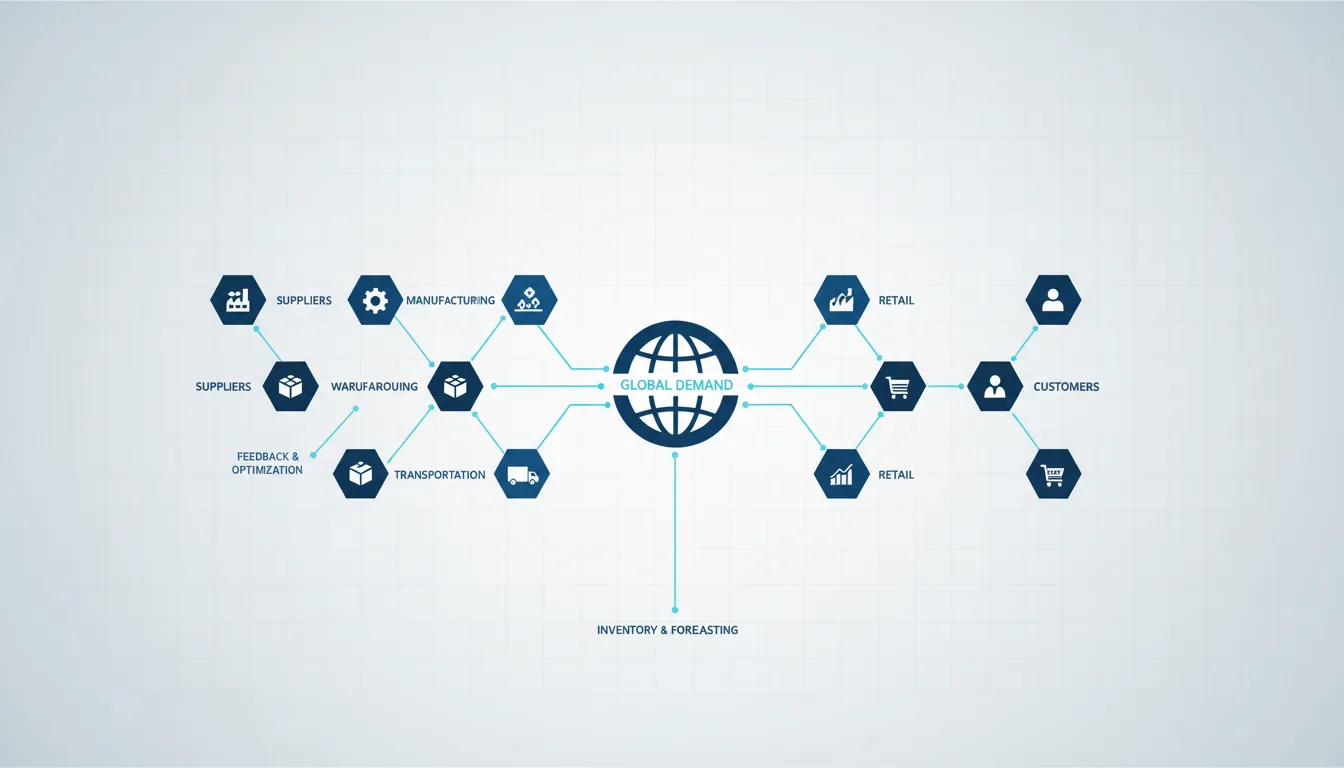
Supply chain planning (SCP) refers to the comprehensive processes involved in managing the flow of goods, information, and finances as products move from raw material extraction through manufacturing, to wholesaler, retailer, and finally to the consumer. Effective supply chain planning ensures that supply and demand are strategically balanced, aiming to enhance operational efficiency, reduce costs, and improve customer satisfaction. As businesses scale and globalize, mastering SCP becomes increasingly essential for maintaining competitive advantage and navigating complex market dynamics.
Etymology and Origins
The foundational concepts underpinning modern supply chain planning have roots in logistics and operations management, particularly military logistics dating back centuries. However, the explicit term "supply chain" began to gain traction in the mid-20th century, notably appearing in academic literature related to inventory and production planning. Jay Forrester's work on Industrial Dynamics in the late 1950s illustrated interconnected material and information flows, laying conceptual groundwork for what would become known as the supply chain.
The term "supply chain management" was famously coined and popularized by Keith Oliver, a consultant at Booz Allen Hamilton in an interview with the Financial Times in 1982. Oliver articulated the concept as coordinating and integrating these various flows from end-to-end to optimize value for the customer. Prior to this, fragmented approaches like "physical distribution management" dominated, focusing primarily on the outbound logistics aspect. The linguistic roots are straightforward: "supply" refers to the provision of resources, and "chain" signifies a sequence of linked processes, evolving to encompass wider aspects of procurement, production, distribution, and fulfillment as industries matured.
Historical Development
The evolution of supply chain planning can be delineated into several key phases, marked by technological shifts and conceptual advancements:
-
Pre-1980s: Functional Silos and Physical Distribution. Supply chain activities were largely managed in isolated functional departments such as purchasing, production, and transportation. The dominant focus was on cost reduction within each function, often leading to sub-optimization. "Physical Distribution Management" emerged post-World War II, concentrating on the efficient movement and storage of finished goods from production to the final customer, with early forms of inventory management and warehousing being primary concerns.
-
1980s: Integration and Lean Principles. This decade witnessed significant shifts with the advent of Computer Integrated Manufacturing (CIM) and the rise of Japanese management philosophies. Just-in-Time (JIT) production, pioneered by Toyota, emphasized waste reduction and efficient material flow, necessitating closer coordination with suppliers. Total Quality Management (TQM) also gained prominence, advocating for quality across all stages. The popularization of "supply chain management" by Oliver and Webber in 1982 marked a paradigm shift from logistics to a more comprehensive, integrated strategy encompassing the entire network.
-
1990s: Globalization and ERP Systems. The decade was characterized by rapid globalization and the proliferation of Enterprise Resource Planning (ERP) systems. Companies like SAP and Oracle became central to integrating disparate business functions, including manufacturing, finance, human resources, and supply chain operations. This provided a single source of truth for data, enabling better visibility and coordination across the enterprise. Early specialized Supply Chain Management (SCM) software also emerged, focusing on planning and optimization modules.
-
2000s onward: Digitalization, Resilience, and Sustainability. The rise of e-commerce, widespread internet adoption, and advancements in data analytics fundamentally transformed SCP. Real-time data, facilitated by technologies like RFID (Radio-Frequency Identification) and later the Internet of Things (IoT), enabled more precise forecasting and proactive management. Post-9/11 and subsequent natural disasters highlighted the critical need for supply chain resilience and risk management. Cloud computing, big data analytics, and the increasing focus on sustainability and ethical sourcing became central themes, pushing SCP beyond mere cost and efficiency to encompass social and environmental responsibilities.
Core Concepts
Supply chain planning is structured around several interconnected core concepts:
-
Demand Planning: This critical process involves forecasting future customer demand based on historical sales data, market analysis, promotional activities, and external factors like economic trends or seasonality. Accurate demand forecasts are essential for aligning supply with market needs, minimizing stockouts, and reducing excess inventory. Advanced techniques leverage machine learning and AI for predictive analytics.
-
Supply Planning: Once demand is understood, companies must manage the sources of supply, ensuring materials and products are available when and where needed. This includes raw material procurement, supplier relationship management, capacity planning, and managing purchase orders. Techniques like stock replenishment and utilizing automated purchase quantity models are employed here to optimize inventory levels and supplier lead times.
-
Production Planning: This aspect focuses on orchestrating manufacturing operations to meet demand forecasts efficiently. It involves determining how much and when to produce, scheduling production runs, managing work-in-progress (WIP) inventory, and resource allocation. Methodologies such as Master Production Scheduling (MPS) and Material Requirements Planning (MRP) are key, often supported by kitting processes for assembly efficiency.
-
Inventory Management: Effective inventory management strategies, detailed in guides like the Cycle Counting Guide, ensure that businesses maintain the right levels of raw materials, components, WIP, and finished goods while minimizing carrying costs, obsolescence, and stockouts. This includes setting safety stock levels, reorder points, and optimizing inventory turns.
-
Logistics Planning: This encompasses the planning and execution of transportation and warehousing activities. It involves optimizing freight routes, selecting carriers, managing warehouse layout and storage, and overseeing inbound and outbound movements. Cross-docking and efficient pick-pack-ship operations are central to this area.
-
Sales and Operations Planning (S&OP): A critical, integrated business management process that balances demand and supply by aligning sales, marketing, production, finance, and new product development plans. S&OP meetings are typically held monthly to make collective decisions on how to allocate resources to meet customer demand profitably over a tactical horizon (e.g., 3-18 months).
Types and Classifications
Supply chain planning operates at various organizational levels, each with distinct time horizons and objectives:
-
Strategic Planning: Focuses on long-term goals, typically spanning 2-5 years or more. This level involves senior management decisions regarding network design (e.g., location of plants, warehouses), sourcing strategies (global vs. local), technology investments (e.g., WMS implementation), and strategic partnerships. Its aim is to build a competitive and resilient supply chain infrastructure.
-
Tactical Planning: Shorter-term focus, typically spanning from 3 months to a year. This level translates strategic goals into actionable plans, such as aggregate production planning, inventory policies (e.g., safety stock levels), transportation capacity planning, and workforce scheduling. S&OP is a prime example of a tactical planning process.
-
Operational Planning: Daily or weekly planning that details the minutiae of day-to-day supply chain operations. This includes detailed production schedules, order fulfillment (e.g., batch picking, bin putaway), dispatching trucks, and managing immediate customer orders. Mobile order fulfillment software and real-time inventory adjustments are critical at this level.
Industry Applications
Supply chain planning is vital across various industries, each presenting unique challenges and opportunities:
-
Retail & E-commerce: Companies like Walmart and Amazon utilize sophisticated inventory management systems and order management systems to minimize stockouts, manage omnichannel fulfillment, and optimize last-mile delivery. The ability to handle rapid shifts in consumer demand and manage complex return logistics is paramount. Shopify WMS solutions are crucial for many online retailers.
-
Manufacturing: Automotive manufacturers (e.g., Toyota, BMW) use advanced planning systems to synchronize their complex global supply chains, managing thousands of suppliers, JIT deliveries, and intricate assembly processes. Aerospace and defense (e.g., Boeing) require highly precise planning due to long lead times, strict quality control, and extensive regulatory compliance.
-
Pharmaceuticals & Healthcare: This sector demands highly compliant and secure supply chains due to product sensitivity, strict regulations, and critical public health implications. SCP ensures cold chain integrity for vaccines, manages expiration dates (see Lots & Expiration Dates guide), tracks serialized products, and ensures product availability to meet global health needs while managing sensitive, high-value inventory efficiently.
-
Food & Beverage: Requires meticulous planning to manage perishable goods, comply with food safety regulations, handle seasonal demand fluctuations, and optimize cold chain logistics from farm to fork. Traceability and waste reduction are key objectives.
Benefits and Advantages
The advantages of effective supply chain planning are multifaceted and contribute significantly to business success:
- Improved Efficiency and Reduced Operational Costs: By optimizing inventory levels, streamlining production, and rationalizing logistics, SCP directly lowers warehousing, transportation, and production expenses. This can lead to significant cost savings, directly impacting profitability.
- Enhanced Customer Satisfaction: Reliable product availability, faster delivery times, and accurate order fulfillment, supported by tools like automated rate selection, lead to happier customers and stronger brand loyalty.
- Increased Visibility and Collaboration: Integrated planning systems provide end-to-end visibility across the entire supply chain, fostering better communication and collaboration among internal departments, suppliers (vendor portal), and partners.
- Better Risk Management and Adaptability: Proactive planning allows organizations to identify potential disruptions (e.g., supplier failures, natural disasters, geopolitical instability) and develop mitigation strategies, making the supply chain more resilient and agile in responding to market changes.
- Optimized Resource Utilization: SCP ensures that assets like manufacturing plants, warehouses, and transportation fleets are utilized efficiently, reducing idle capacity and improving return on investment.
Challenges and Limitations
Despite its benefits, supply chain planning faces several persistent and emerging challenges:
- Market Volatility and Demand Uncertainty: Unpredictable consumer behavior, economic fluctuations, and global events can significantly disrupt demand forecasts, making accurate planning difficult.
- Globalization and Complexity: Managing global supply chains involves navigating diverse regulatory environments, geopolitical risks, currency fluctuations, and extended lead times, adding layers of complexity.
- Data Silos and Integration Issues: Many organizations struggle with integrating data from disparate systems (e.g., ERP, WMS, CRM), leading to fragmented visibility and hindering effective planning. This often requires robust integration hubs.
- Resistance to Change: Implementing new planning methodologies or technologies often faces internal resistance from employees accustomed to traditional processes, hindering adoption and optimization efforts.
- Talent Gap: A shortage of skilled supply chain professionals proficient in advanced analytics, technology, and strategic decision-making can limit an organization's ability to execute sophisticated SCP strategies.
- Sustainability and Ethical Pressures: Increasing consumer and regulatory demands for environmentally friendly and ethically sourced products add constraints and complexity to planning processes.
Best Practices
Successful supply chain planning incorporates several key best practices:
- Integrated Business Planning (IBP) / S&OP: Implement a robust Sales and Operations Planning (S&OP) process to align demand, supply, and financial plans across the organization, fostering cross-functional collaboration.
- Leverage Advanced Analytics and AI: Utilize predictive and prescriptive analytics, powered by artificial intelligence and machine learning, for more accurate forecasting, inventory optimization, and dynamic routing decisions.
- End-to-End Visibility: Invest in technologies that provide real-time, comprehensive visibility across the entire supply chain, from raw materials to customer delivery. This can be enabled by mobile WMS systems and IoT devices.
- Supplier Collaboration and Relationship Management: Foster strong, collaborative relationships with key suppliers through platforms like a vendor portal to ensure reliable supply, share forecasts, and co-innovate.
- Risk Management Frameworks: Develop proactive strategies to identify, assess, and mitigate potential disruptions, including geopolitical events, natural disasters, and cybersecurity threats.
- Continuous Improvement and Agility: Regularly review and adapt planning processes, embrace lean principles, and foster a culture of continuous improvement and adaptability to market changes and technological advancements.
- Talent Development: Invest in training and upskilling staff in new technologies, data analytics, and strategic supply chain management methodologies to enhance processes and decision-making capabilities.
Future Trends
Looking ahead, several transformative trends are shaping the future of supply chain planning:
- Artificial Intelligence (AI) and Machine Learning (ML): Will move beyond predictive forecasting to prescriptive analytics, recommending optimal actions for inventory, production, and logistics. AI will power intelligent automation in various planning tasks.
- Increased Focus on Sustainability and Circular Economy: Planning will increasingly incorporate environmental, social, and governance (ESG) factors, optimizing for reduced carbon footprint, waste reduction, and supporting circular economy models. This impacts everything from sourcing to reverse logistics.
- Hyper-Automation and Digital Twins: Greater reliance on automation, robotics, and drones in warehouses (mobile warehouse management system) and transportation. Digital twins, virtual replicas of physical supply chains, will enable simulation, optimization, and scenario planning in real-time.
- Blockchain for Transparency and Traceability: Distributed ledger technology will enhance supply chain transparency, improve traceability of goods, and bolster trust among partners, especially crucial for pharmaceuticals and food safety.
- Edge Computing and IoT: Real-time data from IoT sensors at the edge of the network will feed planning systems, enabling more immediate responses to disruptions and optimizing processes like predictive maintenance and dynamic routing.
- Human-Machine Collaboration: The role of human planners will evolve from routine data processing to higher-value activities like strategic decision-making, exception management, and fostering collaboration, leveraging AI tools to augment their capabilities.
Related Concepts
Supply chain planning is deeply interconnected with various other fields, forming a holistic approach to managing the flow of goods and information:
- Logistics Management: Focuses on the efficient and effective forward and reverse flow and storage of goods, services, and related information between the point of origin and the point of consumption. SCP provides the strategic and tactical blueprint for logistics execution.
- Procurement: Deals with the acquisition of goods, services, or works from an external source. Supply planning heavily relies on effective procurement strategies and purchase order management.
- Production Operations: The processes involved in transforming raw materials into finished goods. Production planning is a core component of SCP.
- Inventory Optimization: A specialized area within inventory management that uses advanced mathematical models to determine optimal stock levels across the supply chain, considering costs, service levels, and demand variability.
- Transportation Management (TMS): Focuses on planning, executing, and optimizing the physical movement of goods. SCP provides the demand and supply signals that a TMS uses to optimize routes and carriers.
- Warehouse Management (WMS): Systems like SkuSavvy's WMS manage daily warehouse operations, including receiving, putaway, picking, packing, and shipping, acting as the operational arm of inventory and logistics planning.
Understanding these relationships is essential for developing a well-rounded and effective approach to managing supply chain processes.
Sources
- Visual Inventory Management System
- Stock Replenishment Guide
- Cycle Counting Guide
- Shopify Inventory Management
- WMS vs ERP Analysis
- The Supply Chain: A New Way to Add Value
- Supply Chain Management: From The Silk Road To The Future
- Industrial Dynamics
- The father of supply chain management
- Computer Integrated Manufacturing
- Decoding the DNA of the Toyota Production System
- RFID EPC Global Standard
- The future of supply chain planning and operations
- AI in the Supply Chain
- Purchase Order Management
- Automated Purchase Quantity
- Kitting Guide
- Warehouse Layout Preview
- Cross-Docking Guide
- Pick, Pack, Ship Software
- Sales and Operations Planning (S&OP) Glossary
- Mobile Warehouse Management System
- Batch Picking Guide
- Bin Put-Away Criteria
- Mobile Order Fulfillment Software
- Order Management System
- Shopify WMS
- Lots & Expiration Dates
- Automated Rate Selection
- Integrations Hub
- Vendor Portal