Supply Chain Management
An in-depth examination of supply chain management, its history, core concepts, challenges, and modern tools for efficient logistics.
Updated
Overview
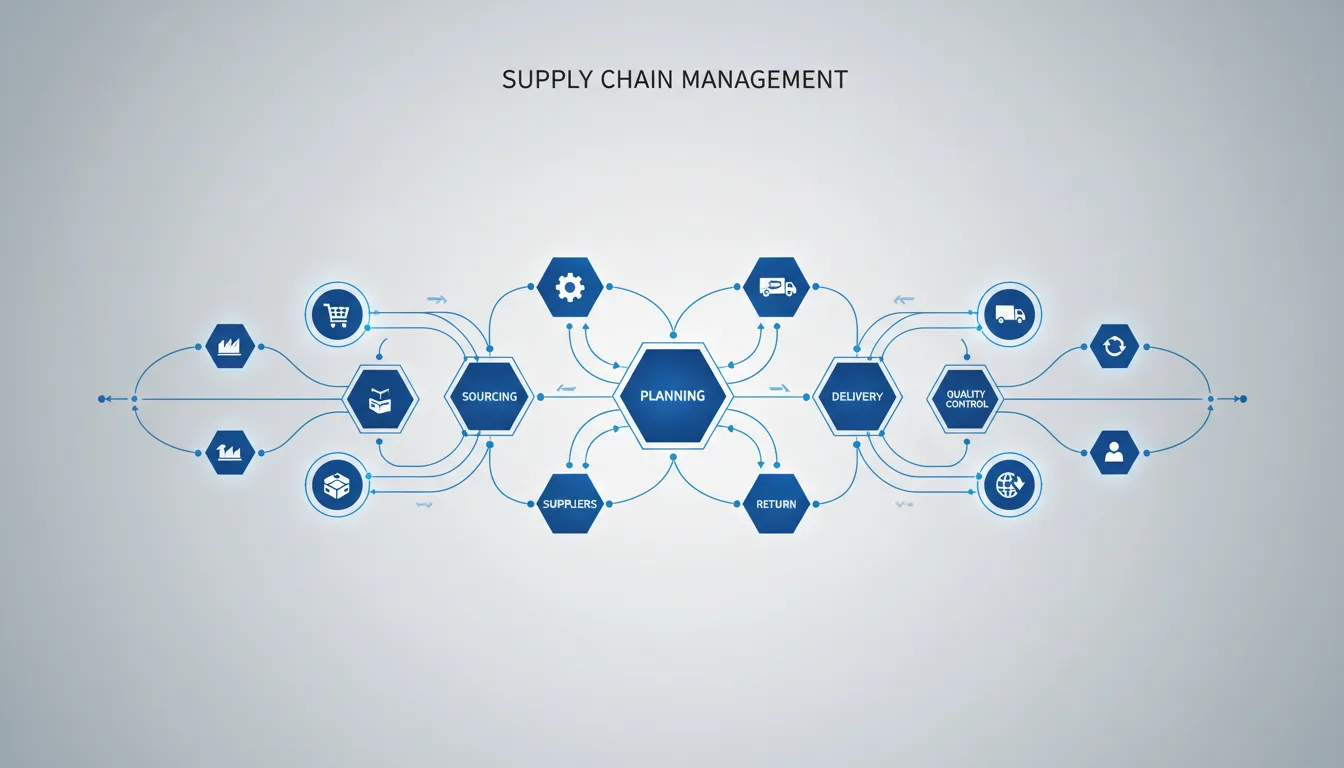
Supply Chain Management (SCM) refers to the coordination and management of a complex network of activities involved in delivering a product from suppliers to customers. This encompasses a wide range of functions including procurement, inventory management, transportation, and warehousing. The primary goal of SCM is to enhance customer value while improving overall efficiency and reducing costs across the supply chain, ensuring that the right product reaches the right place at the right time.
Etymology and Origins
The concept of managing interconnected processes across organizations has existed for centuries, but the term "supply chain" itself is relatively modern. The phrase "supply chain management" was first documented in the early 1980s by Keith Oliver, a consultant at Booz Allen Hamilton. Oliver coined the term in an interview with the Financial Times in 1982, describing it as a strategic approach to managing the flow of materials and information from suppliers to customers.
Prior to this formal coinage, related concepts such as "logistics," "operations management," and "physical distribution" were widely used. The shift to "supply chain" reflected a growing recognition that companies needed to manage not just their internal operations but the entire network of external partners, from raw material suppliers to end-consumers, to achieve competitive advantage. This evolution was driven by increasing global competition and the need for greater integration and efficiency across diverse business functions.
Historical Development
Supply chain management has a rich history that can be traced back to the early days of trade and commerce, evolving significantly over centuries to become the sophisticated discipline it is today. Some key milestones include:
- Pre-Industrial Era (Ancient Times - 1700s): Early forms of supply chains involved basic trade routes like the Silk Road, where merchants managed the movement of goods across vast distances. These systems were rudimentary but laid the groundwork for managing supply and demand across geographical boundaries.
- Industrial Revolution (Late 18th - 19th Century): The advent of mass production, particularly with the rise of factories and new transportation methods like railroads and steamships, necessitated more organized distribution networks. The focus was primarily on increasing production efficiency within individual factories.
- Early 20th Century (1900s-1940s): The principles of scientific management introduced by Frederick Winslow Taylor and innovations like Henry Ford's assembly line optimized internal production processes. The emphasis was on manufacturing efficiency and cost reduction within a single organization.
- Post-WWII & The Rise of Logistics (1950s-1960s): After World War II, businesses began to formalize the management of physical distribution, encompassing transportation, warehousing, and inventory. This period saw the emergence of "logistics" as a distinct management function. The 1960s also introduced Material Requirements Planning (MRP) as a computerized method for managing inventory and scheduling production, revolutionizing manufacturing planning.
- Globalization and Inter-organizational Focus (1970s-1980s): The oil crises of the 1970s and increasing global competition, particularly from Japanese manufacturing techniques like Just-in-Time (JIT) production at Toyota, pushed companies to look beyond their internal operations. JIT focused on minimizing inventory and maximizing efficiency through close supplier relationships. This era saw the evolution of MRP into Manufacturing Resource Planning (MRP II), integrating more business functions. The formal concept of "supply chain management" was coined by Keith Oliver in 1982, signaling a shift towards strategic integration of external partners.
- The Internet and ERP Era (1990s): The rise of the Internet enabled better communication and integration of supply chain processes across geographically dispersed entities. Enterprise Resource Planning (ERP) systems became prevalent, providing integrated management of core business processes, often in real-time, although a clear distinction between WMS and ERP remains crucial. The Supply Chain Council (SCC) developed the SCOR (Supply Chain Operations Reference) model, providing a standardized framework for supply chain processes.
- Digital Transformation and Resilience (2000s and Beyond): The 21st century brought about a digital transformation. Sophisticated software solutions, advancements in automation (like AI and IoT), big data analytics, and blockchain technology began to reshape SCM, fostering an interconnected landscape where real-time data sharing and end-to-end visibility became essential. Recent global disruptions have also highlighted the critical importance of supply chain resilience, driving a focus on risk management and adaptability.
Core Concepts
At its core, supply chain management involves several key components, which must be effectively integrated for optimal performance:
- Procurement: The strategic sourcing, purchasing, and management of goods and services necessary for production and operations. Effective purchase order management and vendor relationships are crucial here, often involving automated purchase quantity calculations.
- Production Planning: Involves strategizing the efficient transformation of raw materials into finished products. This includes demand forecasting, capacity planning, and scheduling to meet market needs.
- Inventory Management: Focuses on maintaining optimal inventory levels to meet demand without incurring excess costs. This involves balancing carrying costs with the risk of stockouts. Companies often use methods like cycle counting and visual inventory management systems to keep track of stock levels and ensure accuracy, managing various units of measure.
- Logistics and Transportation: Refers to the planning, execution, and management of the movement and storage of goods from the point of origin to the point of consumption. This includes inbound, outbound, and reverse logistics, often facilitated by advanced shipping and fulfillment software.
- Warehousing: The efficient storage and management of goods within a facility. Modern warehousing leverages tools like warehouse layout preview and robust mobile WMS for optimized operations like bin put-away and batch picking.
- Collaboration and Coordination: Effective SCM hinges on the seamless cooperation and communication between all stakeholders—suppliers, manufacturers, distributors, retailers, and logistics providers—to provide end-to-end visibility and improve responsiveness.
Types and Classifications
There are various types of supply chain strategies, tailored to different industry needs and market conditions:
- Efficient Supply Chains: These chains focus on minimizing operational costs and maximizing efficiency, often seen in industries with predictable demand and high volume, such as commodities or basic consumer goods. The emphasis is on lean operations and cost leadership.
- Responsive Supply Chains: Aim to respond quickly to unpredictable consumer demand and market fluctuations. Common in fashion, high-tech, or seasonal retail, they prioritize flexibility and speed over absolute cost minimization.
- Agile Supply Chains: Blend efficiency and responsiveness, allowing firms to adapt swiftly to changing market conditions and consumer preferences. Agility involves building flexibility into processes and fostering strong collaborative relationships across the chain, often seen in dynamic sectors.
- Sustainable Supply Chains: Integrate environmental, social, and economic considerations into all aspects of supply chain design and management. This includes reducing carbon footprint, ensuring ethical labor practices, and promoting circular economy principles.
Industry Applications
Supply chain management is applied across numerous sectors, proving indispensable for operational success:
- Retail: Companies use SCM to manage inventory effectively, optimize store replenishment, and fulfill customer orders efficiently, especially in e-commerce. Leveraging tools like order management systems and Shopify inventory management helps retailers ensure product availability and timely delivery.
- Manufacturing: SCM ensures that raw materials and components are available for production processes at the right time, minimizing delays and managing lead times and supplier relationships. It also optimizes the flow of finished goods to distributors and customers.
- Healthcare: Focuses on ensuring the timely availability of critical medical supplies, equipment, and pharmaceuticals for patient care, often dealing with complex regulations, cold chain requirements, and diverse distribution channels.
- Automotive: Manages the intricate network of suppliers for thousands of parts, assembly plants, and dealerships globally, requiring precise coordination to support just-in-time manufacturing and vehicle distribution.
Benefits and Advantages
Effective supply chain management results in numerous strategic and operational advantages, providing a competitive edge:
- Cost Reduction: Streamlined processes, optimized inventory levels, and efficient logistics lead to lower operational costs, warehousing expenses, and transportation expenditures.
- Improved Efficiency: Enhanced coordination and automation reduce delays, minimize waste, and improve resource utilization across the entire network, leading to faster order fulfillment and shorter lead times.
- Enhanced Customer Satisfaction: Meeting demand promptly and accurately, with reliable delivery and high-quality products, significantly increases customer loyalty and satisfaction.
- Increased Resilience: A well-managed supply chain can better anticipate, withstand, and recover from disruptions, maintaining business continuity.
- Better Data-Driven Decision Making: Integrated systems provide comprehensive data, enabling better forecasting, inventory optimization, and strategic planning.
Challenges and Limitations
Despite its benefits, SCM faces several inherent challenges and limitations:
- Supply Chain Disruptions: Events like natural disasters, geopolitical issues, pandemics, and cyberattacks can interrupt the flow of goods, leading to delays, shortages, and increased costs. Building resilience is a continuous effort.
- Increasing Global Competition: Companies must continuously innovate, adapt to changing market demands, and optimize their supply chains to maintain a competitive edge in an interconnected global marketplace.
- Data Management and Visibility: The reliance on vast amounts of data for decision-making necessitates robust analytics, real-time reporting systems, and sophisticated integration across disparate systems, which can be complex to implement and maintain.
- Sustainability and Ethical Concerns: Growing consumer and regulatory pressure demands sustainable practices, ethical sourcing, and transparent supply chains, adding complexity and requiring significant investment.
- Complexity and Integration: Managing a global network of diverse partners, technologies, and regulations requires sophisticated coordination and seamless integration, often across different IT platforms and organizational cultures.
Technology and Tools
Advancements in technology have revolutionized supply chain management, introducing powerful tools that enhance visibility, efficiency, and decision-making:
- Warehouse Management Systems (WMS): Facilitates efficient warehouse operations, from receiving and put-away to picking, packing, and shipping. SkuSavvy offers a comprehensive Mobile WMS Overview that supports optimized workflows like batch picking and cycle counting.
- Enterprise Resource Planning (ERP) Systems: Integrate various business functions—including finance, human resources, manufacturing, and supply chain—into a single, unified system, providing a holistic view of the enterprise.
- Predictive Analytics: Uses historical data, statistical algorithms, and machine learning techniques to forecast demand, optimize inventory levels, identify potential disruptions, and improve decision-making across the supply chain.
- Blockchain Technology: Enhances transparency and traceability within the supply chain by creating immutable, distributed ledgers that record every transaction, fostering trust among suppliers, consumers, and regulators. This helps verify product origin and authenticity.
- Internet of Things (IoT): Devices embedded with sensors collect real-time data on product location, environmental conditions (e.g., temperature, humidity), and equipment status, enabling proactive monitoring and management of goods in transit and storage.
- Robotics and Automation: Automated guided vehicles (AGVs), autonomous mobile robots (AMRs), and robotic arms are increasingly used in warehouses and manufacturing facilities to improve speed, accuracy, and safety in tasks like picking, sorting, and material handling.
- Control Towers: Centralized digital platforms that provide end-to-end visibility across the entire supply chain, offering real-time data, predictive insights, and collaborative tools to manage exceptions and optimize performance.
Future Trends
The landscape of supply chain management is continually evolving, driven by technological innovation and shifting global demands. Future trends are expected to include:
- Increased Adoption of AI and Machine Learning: To streamline operations, enhance demand forecasting, optimize routing, predict market trends more accurately, and automate complex decision-making processes.
- Sustainability Measures and Circular Economy: Companies will increasingly adopt sustainable practices, focusing on reducing environmental impact, ethical sourcing, waste reduction, and promoting closed-loop supply chains where products and materials are reused or recycled.
- Real-Time Monitoring and Digital Twin Technology: Enhanced visibility across the supply chain through IoT devices, advanced sensors, and digital twin simulations, allowing for proactive management, predictive maintenance, and rapid response to disruptions.
- Hyper-Personalization and Customer-Centricity: Supply chains will become even more tailored to individual customer needs, enabled by advanced data analytics and flexible fulfillment options, such as mobile order fulfillment.
- Resilience and Agility: Building robust, adaptable supply chains capable of navigating unforeseen disruptions will remain a top priority, moving beyond efficiency at all costs.
This ongoing evolution places supply chain management at the forefront of modern business strategies. As markets continue to change, effective SCM practices will be essential for companies seeking to enhance their logistical capabilities and ensure competitive advantage in an increasingly complex and dynamic global environment.
Sources
- Mobile WMS Overview
- WMS vs ERP Analysis
- Order Management System
- Stock Replenishment Guide
- Cycle Counting Guide
- Enterprise Fulfillment Best Practices
- Supply Chain Management: What It Is and Why It Matters
- In Memoriam: Keith Oliver, Father of Supply Chain Management
- The Silk Road
- The Rise and Fall of Scientific Management
- APICS CSCP Glossary: MRP
- APICS CSCP Glossary: MRP II
- APICS CSCP Glossary: SCOR
- Global Supply Chains Need to Be More Resilient, Not Just More Efficient
- Purchase Order Management
- Automated Purchase Quantity
- Visual Inventory Management System
- Unit of Measure Guide
- Shipping & Fulfillment Software
- Warehouse Layout Preview
- Bin Put-Away Criteria
- Batch Picking Guide
- Shopify Inventory Management
- Mobile Order Fulfillment