Strategic Management in Logistics
Explore the principles of strategic management in logistics, including its development, core concepts, applications, and best practices for logistics professionals.
Updated
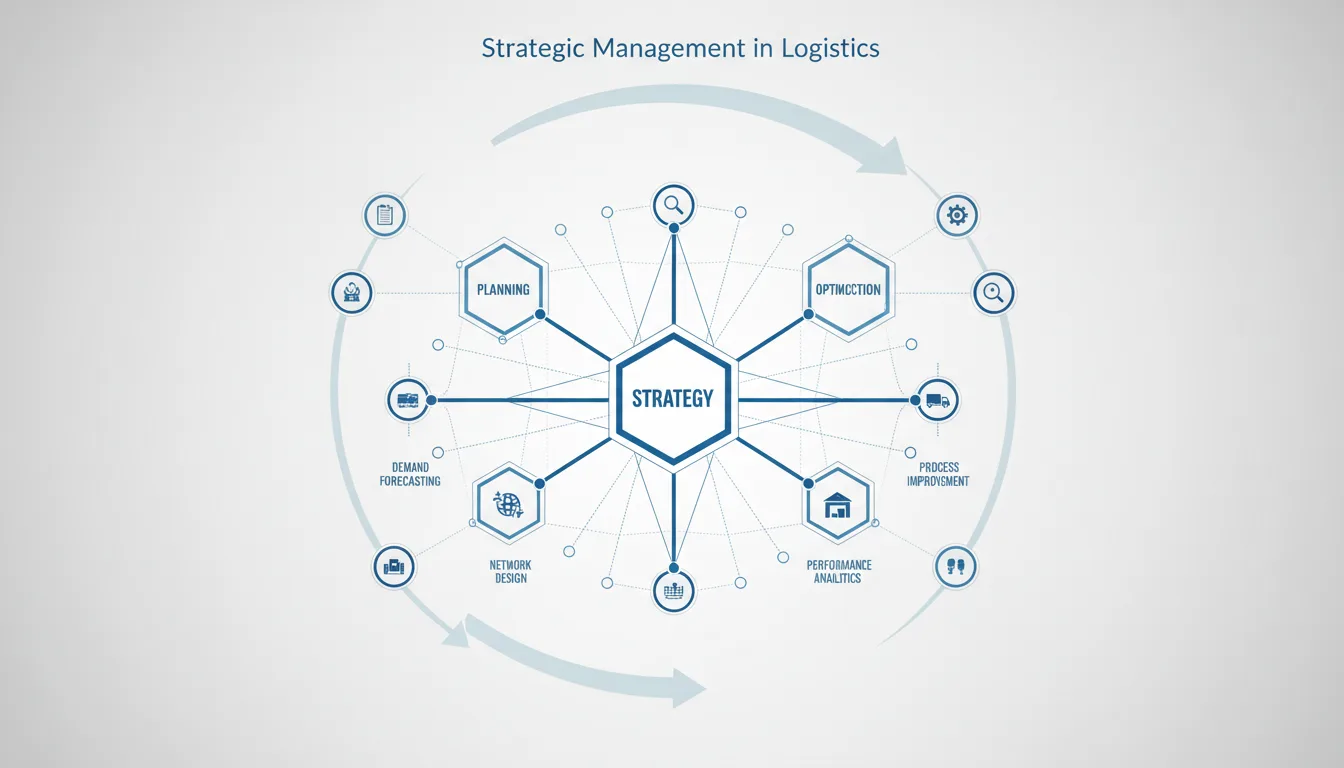
Strategic Management in Logistics
Overview
Strategic management is a comprehensive approach to formulating and implementing actions that enhance a company’s competitive advantage. In logistics, this involves the systematic planning, monitoring, analysis, and assessment of all that is necessary for an organization to meet its goals efficiently and effectively. Given the complexity and interconnectedness of global supply chains, effective strategic management is crucial for organizations looking to optimize their logistics operations and respond to market changes.
Etymology and Origins
The term strategic management emerged in the 1960s, evolving from previously established concepts in organizational theory and management practice. Initially, it focused on long-term planning and the development of competitive strategies. Over the decades, it has integrated various models and frameworks that account for the external environment, organizational capabilities, and resource allocation. This evolution reflects the growing complexity of marketplaces and logistics systems, particularly as globalization and technology have transformed supply chain dynamics. The formalization of strategic management principles, particularly in logistics, began in earnest during the late 20th century. For the first documented usage of the term, you can refer to this source.
Historical Development
The development of strategic management in logistics closely relates to advancements in technology and shifts in market demands. The late 1970s saw the introduction of Just-In-Time (JIT) inventory systems by companies like Toyota, which revolutionized supply chain efficiency. In the 1980s and 1990s, firms increasingly adopted these strategies, along with Total Quality Management (TQM) practices, to enhance operational performance and customer satisfaction.
Strategic planning in logistics became vital due to increased global competition, making it essential for companies to identify market opportunities and threats actively. Furthermore, the early 2000s marked a shift towards integrating technology through ERP (Enterprise Resource Planning) systems, which enabled comprehensive data management and real-time decision-making in logistics operations. Technologies such as the Mobile Warehouse Management System have modernized logistics management, providing streamlined processes and enhancing operational efficiency.
Recently, the emergence of digital supply chain management, artificial intelligence, and big data analytics has further transformed strategic management practices within the logistics sector, allowing for more adaptive and responsive supply chain networks. For instance, implementing Cross-Docking strategies can significantly reduce delivery times and optimize inventory handling, showcasing the importance of strategic management in modern logistics.