Stock Management
An in-depth overview of stock management, its importance, historical evolution, and its core concepts along with industry applications and best practices.
Updated
Stock Management
Overview
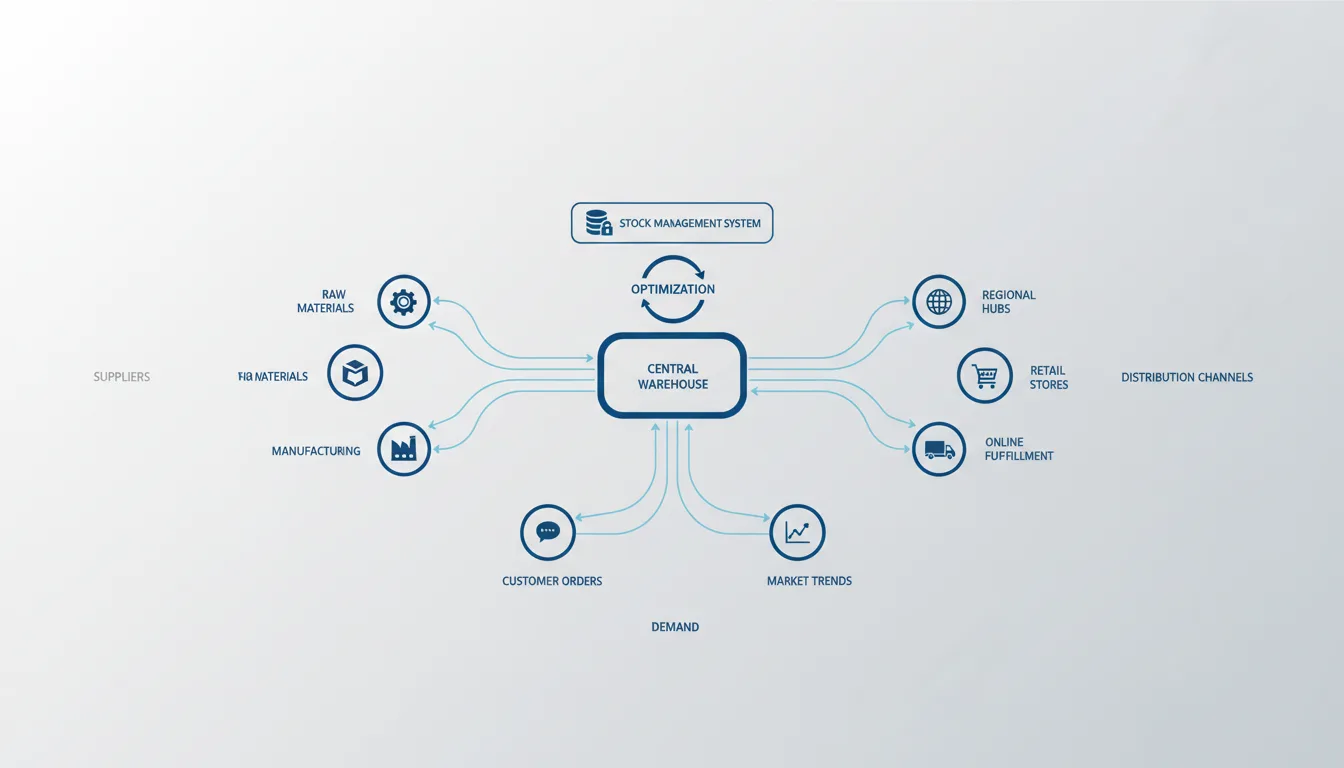
Stock management refers to the process of overseeing and controlling the flow of inventory in a business. This includes the management of stock levels, orders, and warehousing. Effective stock management is crucial for ensuring that a company can meet customer demand while minimizing costs associated with excess inventory and stockouts. Businesses that excel in stock management are often able to improve customer satisfaction and increase profitability.
Etymology and Origins
The term 'stock' has its roots in Middle English, deriving from the Old English word "stoc", meaning a trunk or land, which eventually evolved to refer to goods or inventory. The concept of stock management emerged as businesses expanded and recognized the importance of efficiently managing inventory. The earliest documented usage of the term in this context is believed to date back to the late 14th century during the rise of trade in Europe, particularly during the Renaissance period, when merchants began formalizing inventory practices.
Historical Development
The practice of stock management has evolved through several key milestones:
- 19th Century: The Industrial Revolution commenced around the 1760s and ushered in mass production, necessitating more sophisticated inventory management techniques. Pioneers like Henry Ford introduced methods such as assembly lines to streamline production, indirectly influencing inventory management practices.
- 1930s: During the Great Depression, companies sought to optimize their operations through advanced inventory management techniques like Economic Order Quantity (EOQ), which was developed by Ford W. Harris. These techniques focused on minimizing holding costs while maintaining adequate stock levels.
- 1950s: The introduction of Just-in-Time (JIT) manufacturing by Toyota in 1950 revolutionized stock management by significantly reducing waste and improving overall production efficiency.
- 1970s: The advent of MRP (Material Requirements Planning) systems shifted inventory management from manual calculations to computer-based systems, allowing for more precise forecasting and replenishment.
- Modern Era: The rise of digital technology and Warehouse Management Systems (WMS) in the late 20th century transformed stock management with real-time inventory tracking and automated replenishment processes. Technologies such as RFID and barcoding began to be integrated into inventory systems in the 1980s and 1990s, further enhancing efficiency and accuracy.
Core Concepts
Stock management encompasses various methodologies and systems aimed at optimizing inventory control:
- Stock Replenishment: The process of restocking inventory to maintain desired levels. Successful replenishment strategies can significantly impact a business's operations, as outlined in our Stock Replenishment Guide.
- Cycle Counting: A periodic review and counting of stock to ensure the accuracy of inventory records. This methodology is pivotal for minimizing discrepancies and improving stock accuracy, detailed in our Cycle Counting Guide.
- Inventory Valuation: Techniques for accounting for stock value, notably FIFO (First-In, First-Out) and LIFO (Last-In, First-Out). Accurate inventory valuation is essential for financial reporting and tax purposes.
Types and Classifications
Various stock management techniques cater to different industry needs:
- ABC Analysis: Segmentation of inventory into three categories (A, B, and C) based on revenue influence to prioritize management focus. This method was popularized by H.F. Dickie at General Electric in 1951.
- Dropshipping: A retail fulfillment method where a store doesn't keep the products it sells in stock, thereby minimizing inventory overhead.
- Consignment Stock: Inventory that is in the possession of the retailer but still owned by the supplier until sold.
Industry Applications
Stock management practices are pivotal across various industries:
- Retail: Stores utilize inventory systems to manage stock levels, forecast demand, and reduce carrying costs. For instance, Amazon employs sophisticated algorithms and systems that automate stock management and optimize distribution.
- Manufacturing: Companies like Toyota utilize JIT methodologies to align production schedules with stock replenishment, effectively reducing waste and inefficiencies.
- E-commerce: Firms leverage technology for real-time stock tracking and automated order management systems, as seen in order management systems. For instance, Shopify utilizes integrated inventory management to enhance operational efficiency for online merchants.
Benefits and Advantages
Effective stock management offers numerous benefits:
- Cost Efficiency: Reduces holding and warehousing costs by ensuring that the right quantities are maintained.
- Customer Satisfaction: Timely fulfillment of orders enhances customer loyalty and retention.
- Operational Efficiency: Streamlined processes improve productivity across the supply chain.
Challenges and Limitations
Despite its benefits, stock management faces challenges:
- Demand Variability: Fluctuations in customer demand can lead to overstock or stockouts, complicating inventory management. Retail giants often use predictive analytics to forecast demand to mitigate this risk.
- Technological Investment: The cost of implementing advanced stock management technologies can be prohibitive for smaller businesses, who may need to adopt cost-effective solutions like cloud-based inventory management.
- Complexity of Integration: Integrating stock management systems with existing IT infrastructure can pose significant hurdles; this requires thorough planning and often investment in new systems.
Best Practices
To optimize stock management, businesses can adopt several best practices:
- Regular Audits: Conduct frequent inventory audits to maintain accurate stock levels and prevent losses. Companies like Walmart perform daily audits using advanced inventory management systems.
- Utilization of Technology: Implement integrated inventory systems such as a Visual Inventory Management System to enhance tracking and forecasting. Vendors often leverage comprehensive dashboards to visualize stock levels and trends effectively.
- Supplier Collaboration: Work closely with suppliers to align inventory levels and reduce lead times. Building strong relationships with suppliers can lead to better pricing and terms, improving overall stock efficiency.
Future Trends
The future of stock management is likely to be shaped by several trends:
- Automation: Continued advancements in AI and robotics will further automate inventory processes, increasing efficiency and accuracy. Companies like Amazon are already using drones for inventory management in warehouses.
- Sustainability: There is a growing emphasis on sustainable stock management practices to reduce environmental impact. Businesses are beginning to adopt circular economy principles to minimize waste.
- Blockchain: The adoption of blockchain technology for enhanced transparency and traceability in supply chains is increasingly explored, offering potential for greater trust and accuracy in inventory data.
Related Concepts
Stock management intersects with various logistical concepts, such as supply chain management, demand forecasting, and quality control, each playing a vital role in ensuring efficient operations and customer satisfaction.