Slotting Optimization in Warehousing
An overview of slotting optimization, its importance in warehouse operations, and techniques for improving efficiency.
Updated
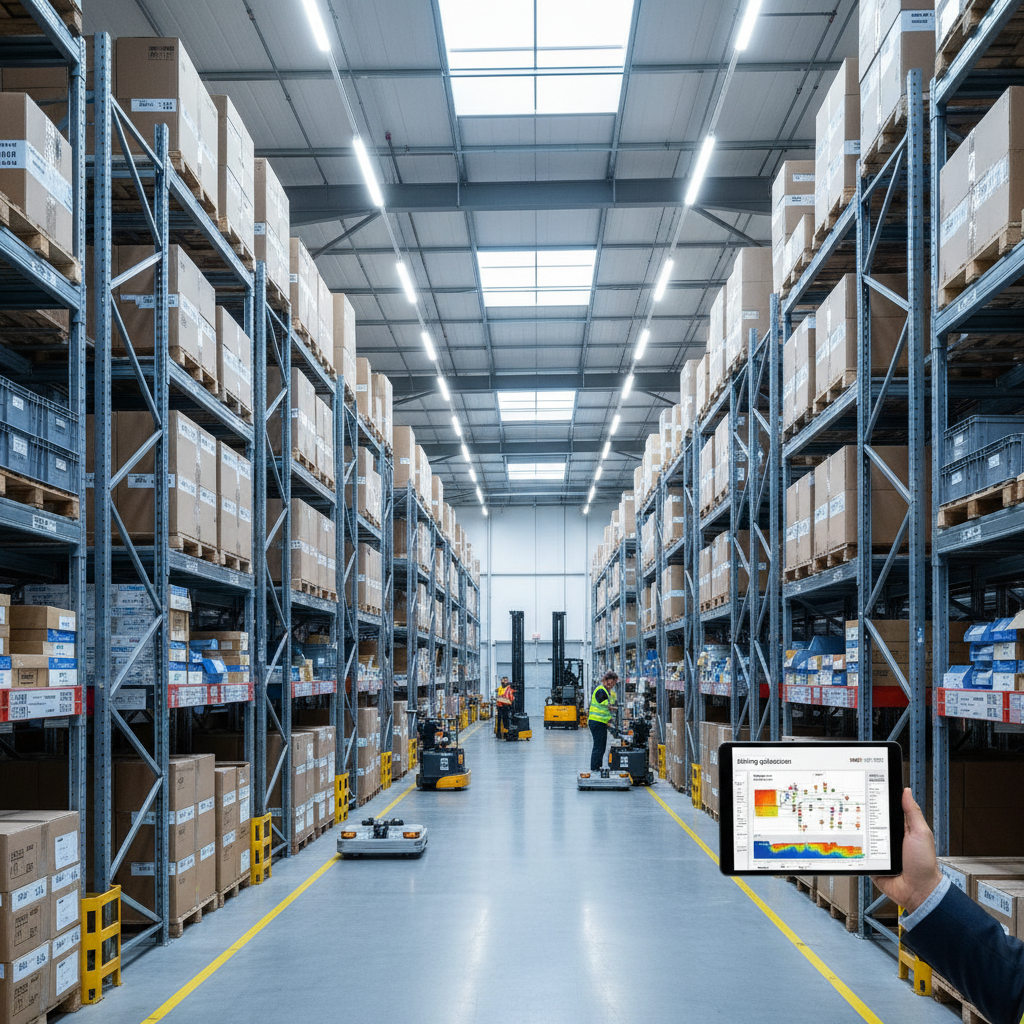
Slotting Optimization in Warehousing
Overview
Slotting optimization is a critical process in warehouse management that involves strategically placing products within a storage facility to maximize efficiency and minimize costs. The primary aim is to increase picking speed, reduce travel time, and ultimately improve overall operational productivity. This process is essential for businesses aiming to enhance inventory management and streamline order fulfillment.
Etymology and Origins
The term "slotting" derives from the practice of assigning specific storage locations (or slots) for items within a warehouse environment. While the fundamental concept of organized storage is ancient, the formal application of "slotting" as a distinct optimization strategy within logistics gained prominence in the mid-to-late 20th century. Its linguistic roots are straightforward, referring to the allocation of a "slot" or designated space for an item. The evolution of the term is closely tied to the rise of modern warehouse practices and advanced inventory control systems, where the need for structured product placement became paramount. Early discussions on efficient warehouse layout and material handling, often influenced by lean principles that prioritize efficiency, laid the groundwork for slotting as a recognized discipline [6].
Historical Development
The evolution of slotting optimization is deeply intertwined with the broader history of logistics and supply chain management, transitioning from manual guesswork to sophisticated algorithmic analysis. Key milestones include:
- Pre-1960s: Warehousing was largely manual, with product placement often based on manager's intuition, product size, or simple grouping. The concept of formal optimization was nascent.
- 1960s-1970s: The advent of Material Requirements Planning (MRP) systems in manufacturing highlighted the need for more accurate inventory tracking and efficient material flow. Early discussions on warehouse layout and space utilization began to emerge in academic and industry publications [8].
- 1980s: This decade saw growing interest in optimizing warehouse layouts and operations as distribution demands increased. The influence of Japanese manufacturing techniques, particularly Just-In-Time (JIT), emphasized waste reduction and efficiency, leading to a greater focus on warehouse productivity. Computerized inventory systems started becoming more accessible, enabling rudimentary data collection on product movement.
- 1990s: The introduction and widespread adoption of Warehouse Management Systems (WMS) revolutionized warehouse operations. These systems facilitated better data collection, analysis, and the ability to manage item locations more dynamically. Early WMS implementations began incorporating basic slotting rules, moving beyond fixed locations to more velocity-driven placements [9].
- 2000s: The rise of e-commerce and the associated demand for faster fulfillment cycles propelled slotting methodology to mature significantly. Advancements in technology led to specialized slotting software modules within WMS platforms, incorporating algorithm-driven analyses to determine optimal product placements based on demand patterns, dimensions, and handling characteristics.
- 2010s and Beyond: The era of big data and advanced AI technologies brought unprecedented precision to slotting. Machine learning algorithms can analyze vast datasets, including historical sales, promotional calendars, and even weather patterns, to predict demand and dynamically re-slot inventory. The integration of robotics and automated storage and retrieval systems (AS/RS) has further transformed slotting, allowing for highly flexible and efficient use of space [10].
Key figures in this development include logistics pioneers who championed scientific management principles in warehousing, such as James A. Tompkins with his work on facility planning, and academics who published seminal texts on warehouse design and operations. Organizations like APICS (now ASCM) and industry publications played a crucial role in disseminating best practices and formalizing the significance of slotting optimization in modern supply chains.
Core Concepts
Effective slotting optimization hinges on several core concepts:
- ABC Analysis (Pareto Principle): This foundational inventory management technique categorizes items based on their importance and sales velocity. Class 'A' items (high value, high velocity) are strategically placed in the most accessible locations (e.g., 'golden zone' near shipping docks), while 'B' and 'C' items (medium and low velocity/value) are placed further away or in less accessible storage. This dramatically reduces picker travel time for the majority of order lines.
- Product Family Grouping: Also known as co-mingling or adjacency, this involves storing similar or frequently co-purchased items together. This reduces travel time during picking by allowing a picker to collect multiple items for a single order from a concentrated area. For example, all variants of a popular shoe model or all components of a kit might be grouped.
- Dynamic Slotting: Unlike static placements, dynamic slotting considers fluctuations in demand, product life cycles, and seasonality. This method allows for the repositioning of inventory as needed, often based on real-time sales data and predictive analytics, ensuring that popular items are always in prime locations.
- Height and Accessibility (Ergonomics): Efficient use of vertical space in a warehouse is essential, but it must be balanced with ergonomic considerations. Fast-moving items should be placed in easily accessible locations within the 'golden zone' (typically between waist and shoulder height) to minimize bending, reaching, and the need for lift equipment, thereby improving picker comfort and speed.
- Cube Utilization: This concept focuses on maximizing the use of the available storage volume within a warehouse. Slotting optimization aims to assign products to locations that best fit their physical dimensions (length, width, height) to minimize wasted space, sometimes employing bin packing algorithms to achieve this.
Types and Classifications
There are various methods for executing slotting optimization, each suited for different warehouse profiles and operational needs:
- Fixed Slotting: In this traditional method, items are permanently assigned to specific slots regardless of demand changes. This approach is simple to manage and ideal for warehouses with stable inventory, very few SKUs, or highly specialized storage requirements. However, it can lead to inefficient space utilization and increased travel times if demand patterns shift.
- Dynamic Slotting: Items are assigned based on current or forecasted demand, often using weekly or monthly sales data, and can be relocated as needed to improve efficiency. This method is highly effective for environments with fluctuating demand, seasonal products, or a high number of SKUs. It leverages advanced algorithms and a robust Warehouse Management System (WMS) to manage inventory movements.
- Random Slotting: Products are placed in any available slot based on current demand without a predefined structure. While seemingly counter-intuitive, this method can be highly space-efficient for very high SKU counts and low-volume picks, especially when coupled with advanced WMS and automation. It requires precise inventory tracking and often relies on complex algorithms to guide putaway and picking, ensuring that pickers are directed to the correct random locations.
- Zone Slotting: The warehouse is divided into specific zones (e.g., fast-moving, slow-moving, temperature-controlled). Products are slotted into these zones based on their characteristics, and then within the zone, further optimization methods (fixed, dynamic, or random) can be applied. This is often used in conjunction with zone picking or wave picking strategies.
Industry Applications
Slotting optimization is a versatile strategy employed across a wide array of industries to enhance operational efficiency:
- Retail: In brick-and-mortar stores and their distribution centers, slotting is crucial for efficient replenishment of store shelves and for optimizing order picking for online sales. Effective slotting enhances customer satisfaction through efficient product retrieval and faster order fulfillment.
- E-commerce: This sector heavily relies on slotting to manage vast SKU counts and high order volumes. Techniques such as pick-to-tote systems, batch picking, and mobile order fulfillment benefit immensely from effective slotting strategies, especially during peak seasons like Black Friday or Cyber Monday.
- Food and Beverage: Managing perishable goods requires a keen understanding of turnover rates and expiration dates. Slotting is essential to implement FIFO (First-In, First-Out) or FEFO (First-Expired, First-Out) inventory rotation, reducing waste and ensuring product freshness.
- Pharmaceuticals: This industry demands stringent control over product storage conditions, lot numbers, and expiration dates. Slotting helps organize products for compliance, safety, and efficient recall management, often integrating with lots and expiration date tracking.
- Automotive Parts: With a vast number of diverse parts, slotting helps manage spare parts inventory, ensuring mechanics can quickly access needed components, reducing vehicle downtime.
- Manufacturing: Slotting optimization applies to raw materials, work-in-process (WIP), and finished goods. Efficient slotting of components can streamline production lines and reduce internal material handling costs.
Benefits and Advantages
Implementing effective slotting optimization leads to numerous benefits that directly impact a warehouse's bottom line and operational efficacy:
- Increased Picking Efficiency: By minimizing travel time and optimizing pick paths, workers can pick items significantly faster, leading to improved order throughput and fewer labor hours per order. Studies show slotting can reduce travel time by 10-30%.
- Cost Reduction: Enhanced efficiency translates into lower labor costs, reduced equipment wear and tear, and improved utilization of floor and vertical space, ultimately lowering overall operational expenses. It also reduces costs associated with product damage and obsolescence due to better organization and rotation.
- Improved Inventory Accuracy: Well-organized slots and clear item locations contribute to better control over stock levels, facilitating accurate cycle counting and reducing discrepancies between physical inventory and system records. This is critical for managing visual inventory.
- Enhanced Space Utilization: By analyzing product dimensions and movement, slotting ensures that each item occupies the most appropriate location and that the entire cube of the warehouse is effectively used, potentially delaying the need for warehouse expansion.
- Reduced Product Damage: Proper slotting considers product fragility and packaging, placing items in locations where they are less likely to be damaged by movement, stacking, or environmental factors.
- Improved Safety and Ergonomics: Placing frequently picked items within easy reach (the 'golden zone') reduces the need for strenuous lifting, bending, or reaching for high shelves, thereby decreasing the risk of workplace injuries and improving picker morale.
- Better Customer Satisfaction: Faster and more accurate order fulfillment, a direct result of optimized slotting, leads to happier customers and repeat business.
Challenges and Limitations
Despite its advantages, slotting optimization can present several challenges and limitations that must be addressed for successful implementation:
- Initial Setup Complexity and Cost: Developing an effective slotting system requires significant initial analysis, planning, and investment in technology (e.g., WMS with slotting modules) and expertise. Data collection and analysis can be time-consuming and expensive.
- Resistance to Change: Employees accustomed to established workflows and familiar product locations may resist changes to slot configurations. Proper communication, training, and involvement are crucial to overcome this.
- Data Dependence and Quality: Effective slotting relies heavily on accurate and timely data concerning product dimensions, sales velocity, order profiles, and inventory levels. Poor data quality can severely hamper optimization efforts, leading to suboptimal placements and operational inefficiencies.
- Continuous Maintenance and Re-slotting: Demand patterns, product mixes, and sales velocities are constantly changing. Slotting optimization is not a one-time project but an ongoing process that requires regular review and re-slotting, which can be resource-intensive.
- Integration with Existing Systems: Integrating new slotting software or modules with existing WMS, ERP, or other inventory systems can be complex and may require custom development.
- Balancing Conflicting Objectives: Optimal slotting often involves trade-offs. For example, minimizing travel time might conflict with maximizing space utilization or ensuring proper product rotation (e.g., FIFO). Finding the right balance requires careful analysis and strategic decision-making.
Best Practices
To achieve successful and sustainable slotting optimization, consider these best practices:
- Start with Data Analysis: Begin with a thorough analysis of historical sales data, order profiles, product dimensions, weight, and handling characteristics. Identify your 'A', 'B', and 'C' movers using ABC analysis and understand co-picking patterns.
- Define Clear Objectives: Clearly articulate what you aim to achieve (e.g., reduce picking time by X%, improve space utilization by Y%, decrease product damage). This guides the entire optimization process.
- Utilize Appropriate Technology: Leverage a robust Warehouse Management System (WMS) with dedicated slotting optimization modules. Tools like visual warehouse layout previews and bin put-away criteria can streamline the process. SkuSavvy's platform offers features that assist with these complex calculations.
- Implement Dynamic Re-slotting: Recognize that slotting is not static. Establish a regular schedule for re-evaluating and re-slotting products, especially for seasonal items or those with fluctuating demand. This might involve bin-to-bin inventory transfers.
- Engage and Train Staff: Involve warehouse staff in the slotting process from the beginning. Their practical insights are invaluable, and proper training ensures buy-in and correct execution of new slotting plans. Emphasize the benefits to them, such as reduced effort and improved safety.
- Pilot Programs: Before a full-scale implementation, conduct pilot programs in a small section of the warehouse. This allows for testing the new slotting strategy, identifying potential issues, and refining the approach without disrupting the entire operation.
- Monitor and Measure Performance: Continuously track key performance indicators (KPIs) such as picker travel time, lines picked per hour, space utilization rates, and inventory accuracy. Use these metrics to assess the effectiveness of your slotting strategy and identify areas for further improvement.
- Consider Product Characteristics Beyond Velocity: Factor in product characteristics like fragility, hazardous material status, expiration dates (especially important with lots and expiration date tracking), and special handling instructions when determining optimal locations.
Future Trends
As technology evolves and supply chains become increasingly complex, future trends in slotting optimization will focus on greater intelligence, automation, and adaptability:
- Advanced Algorithms and Predictive Analytics: Continued integration of machine learning and AI will move beyond descriptive and diagnostic analytics to highly accurate predictive and prescriptive analytics. AI will not only identify optimal slots but also recommend when and how to re-slot, considering external factors like weather, social media trends, and economic indicators.
- Robotics and Automation Integration: The proliferation of autonomous mobile robots (AMRs), automated storage and retrieval systems (AS/RS), and collaborative robots will fundamentally change traditional slotting methodologies. Slotting will increasingly focus on optimizing product placement for robotic efficiency, potentially allowing for extremely dense storage and dynamic item retrieval.
- Digital Twins: Creating a digital twin of the warehouse allows for real-time simulation and testing of slotting strategies in a virtual environment before physical implementation. This can predict the impact of changes, optimize layouts, and identify bottlenecks without disrupting live operations.
- Sustainability and Eco-Friendly Practices: Future slotting will consider environmental impact, aiming to reduce energy consumption by optimizing travel paths for forklifts and other equipment, and by potentially grouping items for cooler storage zones to minimize energy use.
- Hyper-Personalization and Micro-Fulfillment: As e-commerce demands faster delivery, slotting strategies will adapt to micro-fulfillment centers and urban logistics hubs, optimizing for very rapid, hyper-localized fulfillment, often influenced by individual customer purchasing habits.
In conclusion, slotting optimization is a fundamental component of modern warehouse operations that continually evolves. By embracing data-driven strategies, advanced technology, and best practices, businesses can significantly enhance efficiency, reduce costs, and ultimately lead to improved service levels in the competitive landscape of supply chain management.
Sources
- Mobile Warehouse Management System Overview
- Order Management System
- Shipping & Fulfillment Software
- Stock Replenishment Guide
- Pick-to-Tote Guide
- A Guide to Lean Logistics
- Facility Layout and Location: An Analytical Approach
- Material Requirements Planning (MRP)
- History of Warehouse Management Systems (WMS)
- How Artificial Intelligence (AI) and Machine Learning (ML) Improve Warehouse Operations
- Visual Inventory Management System
- Order Fulfillment Guide
- Bin Put-Away Criteria
- Bin-to-Bin Inventory Transfer Guide
- Bin Packing Visualizer
- What is Zone Picking in a Warehouse?
- Batch Picking Guide
- Lots & Expiration Dates
- First-In, First-Out (FIFO): What it Is, How it Works, and Example
- Slotting Optimization: Reduce Warehouse Travel by 10-30%
- Warehouse Layout Preview
- What is a Digital Twin?
- AI in Logistics: The Intelligent Supply Chain
- The Impact of Robotics and Automation on Logistics
- Just-In-Time (JIT) Manufacturing Explained: Principles and Examples
- ABC Analysis: A Time-Honored and Misunderstood Approach to Inventory Optimization
- Mobile Order Fulfillment Software