SkuSavvy: A Comprehensive Overview of Inventory and Warehouse Management Solutions
SkuSavvy is a cutting-edge platform providing inventory and warehouse management solutions tailored for modern logistics professionals.
Updated
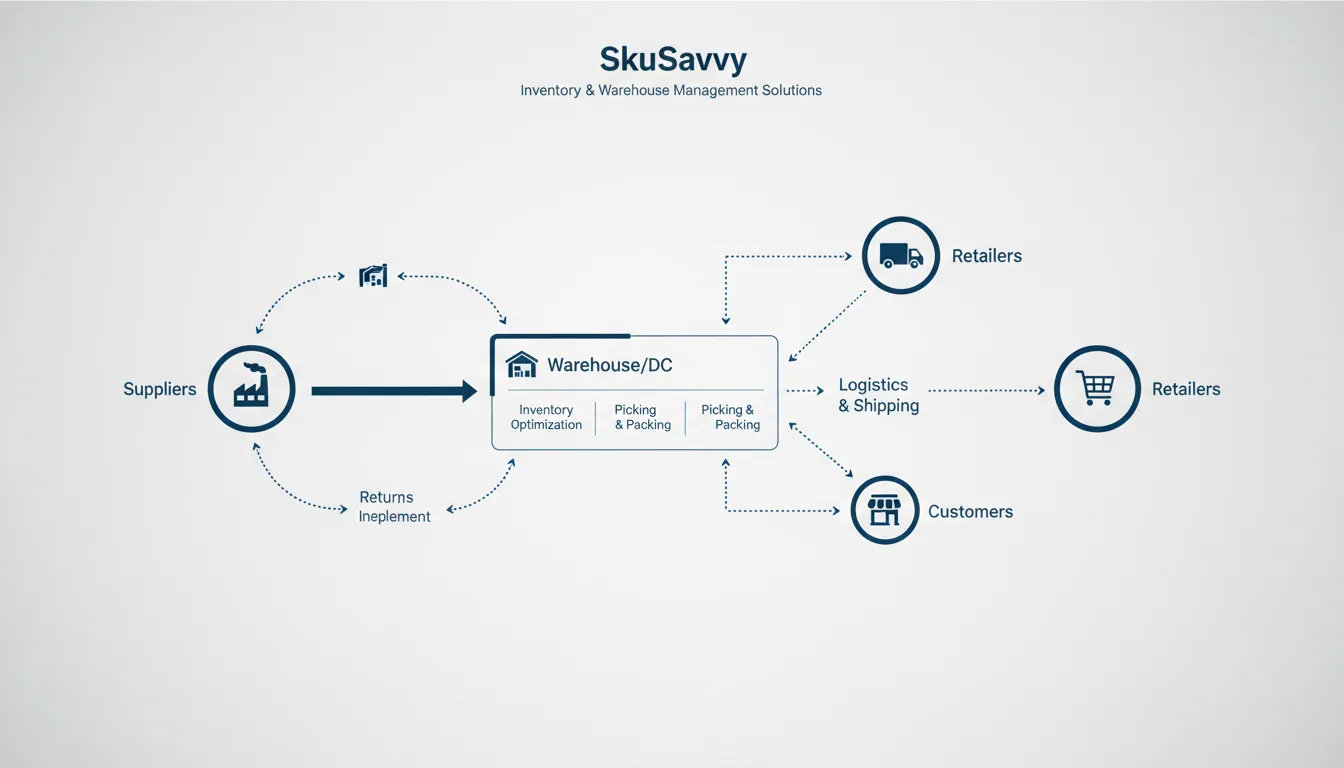
Title: SkuSavvy: A Comprehensive Overview of Inventory and Warehouse Management Solutions
Overview
SkuSavvy is a comprehensive inventory and warehouse management platform designed to streamline operations for logistics and supply chain professionals. It enables organizations to manage inventory levels, optimize warehouse layout, enhance order fulfillment, and integrate seamlessly with various e-commerce platforms. With its innovative features, SkuSavvy aims to improve efficiency, reduce errors, and facilitate better decision-making in inventory management, contributing to more agile and responsive supply chains.
Etymology and Origins
The name "SkuSavvy" derives from a combination of two concepts: "SKU," which stands for Stock Keeping Unit, a crucial element in inventory management, and "savvy," implying expertise or practical knowledge. The term reflects the product's intention to empower users with the knowledge necessary to manage their inventory effectively.
The concept of the Stock Keeping Unit (SKU) emerged as businesses began to standardize and categorize products for more efficient tracking and sales analysis. While often associated with modern retail, the need for unique product identifiers dates back to early inventory control systems. The first widespread adoption of formalized SKUs can be traced to the mid-20th century with the rise of mass production and catalog sales, solidified further with the introduction of universal product codes (UPC) in the 1970s. The term "SKU" itself gained prominence in the late 20th century as computer systems allowed for granular tracking of individual product variations, driving the evolution from simple product codes to complex inventory identifiers.
Historical Development
The journey of modern inventory and warehouse management systems (WMS) is rooted in decades of logistics evolution. Early inventory control relied on manual ledger systems, which were labor-intensive and prone to error. The 1960s and 1970s saw the advent of Material Requirements Planning (MRP) systems, pioneered by companies like IBM with their "Impact" system, which began to computerize production scheduling and raw material inventory. As supply chains grew in complexity and global reach, the need for dedicated WMS solutions became apparent in the 1980s and 1990s. These early WMS focused on optimizing storage locations and basic picking strategies, often running on mainframe computers.
The rise of e-commerce in the late 1990s and early 2000s created an urgent demand for more sophisticated, agile, and integrated inventory and warehouse solutions. This environment set the stage for platforms like SkuSavvy.
SkuSavvy's journey began in the 2010s amid this growing need for sophisticated inventory solutions. The following key milestones mark its evolution:
- 2014: Launch of SkuSavvy, aimed primarily at small to medium-sized enterprises looking for adaptable inventory solutions, offering a more visual and intuitive approach compared to traditional systems.
- 2016: Introduction of mobile capabilities with Mobile WMS Overview, allowing warehouse managers to conduct operations like bin-to-bin inventory transfers and cycle counts on-the-go, significantly improving operational fluidity and real-time data capture.
- 2018: Integration with Shopify and other e-commerce platforms elevated its functionality, addressing the critical need for seamless online sales channel synchronization. This led to the launch of the Shopify WMS Overview and features like Shopify Inventory Sync.
- 2020: Major updates enhanced order management capabilities, introducing advanced features like the Order Management System and Automated Purchase Quantity to support growing order volumes and supply chain complexities.
Core Concepts
SkuSavvy employs several core concepts that empower logistics managers, enabling them to transition from reactive to proactive inventory control:
- Inventory Visibility: Real-time tracking of stock levels across all locations, ensuring that supply chains remain responsive and agile. This is supported by the Visual Inventory System, which minimizes stockouts and overstock situations, directly impacting profitability.
- Warehouse Layout Optimization: Users can create and manage optimal warehouse layouts via the Visual Warehouse Layout, which includes tools for bin put-away criteria and bin packing visualization. This improves the efficiency of picking, packing, and replenishment operations, reducing travel time and labor costs.
- Order Fulfillment Process: Streamlining the entire process from order reception to shipment empowers organizations to meet customer demands swiftly and accurately, crucial for customer satisfaction in today's fast-paced e-commerce environment. This is detailed in their Order Fulfillment Guide and supported by features like batch picking and pick-to-tote.
Industry Applications
SkuSavvy is utilized across various sectors including retail, e-commerce, third-party logistics (3PLs), and manufacturing. For instance, a growing e-commerce fashion retailer might use SkuSavvy to sync inventory with online orders across multiple sales channels, ensuring that stock is maintained accurately across physical warehouses and digital storefronts. This prevents overselling and improves customer satisfaction by providing accurate product availability. They would leverage features like Shopify Plus Features for advanced e-commerce needs.
In manufacturing, SkuSavvy can manage raw material and finished goods inventory, integrating with purchase order management to ensure components are available for production schedules and finished products are ready for dispatch. Its kitting capabilities are particularly useful for assembling product bundles or sub-assemblies.
The solution is particularly beneficial for businesses wanting to automate their supply chain processes, as outlined in their guides, especially for automated rate selection for shipping.
Benefits and Advantages
The primary advantages of implementing SkuSavvy include:
- Increased Efficiency: Automation of tedious and repetitive tasks, such as data entry and stock updates, reduces human error and saves significant labor time. For example, mobile scanning for receiving and picking drastically speeds up warehouse operations.
- Cost Reduction: By providing accurate, real-time data, SkuSavvy aids in controlling stock costs, minimizing overstocking (reducing carrying costs), and preventing stockouts (avoiding lost sales). Optimized stock replenishment strategies ensure capital is not tied up in excess inventory.
- Scalability: Businesses can start with essential features and grow into more advanced functionalities as their needs evolve, without requiring a complete system overhaul. This flexibility supports rapid business expansion and seasonal demand fluctuations.
- Integration Flexibility: The ability to connect seamlessly with existing e-commerce systems, ERPs, and shipping carriers allows for smoother operations across multiple platforms, enhancing the overall supply chain ecosystem. The integrations hub showcases this capability, including specific integrations like ShipEngine.
Challenges and Limitations
Despite its advantages, users of SkuSavvy may face challenges such as:
- Initial Setup Complexity: The onboarding process can be intensive, requiring time and resources for staff training, data migration, and system configuration, as detailed in the Onboarding Guide. Mitigation often involves leveraging SkuSavvy's support team and utilizing comprehensive documentation and training modules.
- Dependency on Technology: Organizations must ensure they have the necessary technology infrastructure, including reliable internet connectivity, compatible hardware (e.g., scanners, printers), and trained personnel to utilize SkuSavvy fully. The Hardware Guide assists users in selecting and configuring essential equipment.
Best Practices
To maximize the benefits of SkuSavvy and ensure optimal performance, users should consider the following best practices:
- Data Accuracy: Regularly update inventory data to reflect accurate stock levels. This includes conducting frequent cycle counting and promptly recording all inbound and outbound movements. Inaccurate data can lead to inefficiencies and poor decision-making.
- Process Optimization: Implement workflows as described in the Workflows Overview to streamline operations such as receiving, put-away, picking, and packing. Utilizing features like bin put-away criteria can significantly improve warehouse organization and retrieval times.
- Staff Training: Ensure all staff members are adequately trained on SkuSavvy's features and best practices for their specific roles. Regular training updates can help maintain efficiency and adapt to new features.
- Utilize Reporting: Leverage SkuSavvy's reporting and analytics capabilities to identify bottlenecks, forecast demand, and make data-driven decisions for continuous improvement.
Future Trends
Looking ahead, SkuSavvy is positioned to leverage advancements in artificial intelligence (AI) and machine learning (ML) to enhance predictive analytics for inventory management. This evolution can potentially lead to more tailored supply chain solutions, making logistics more responsive and user-friendly.
Specific AI/ML applications in future SkuSavvy iterations could include:
- Enhanced Demand Forecasting: ML algorithms analyzing historical sales data, seasonality, and external factors to predict future demand with greater accuracy, optimizing stock replenishment.
- Dynamic Warehouse Slotting: AI-driven algorithms that continuously optimize warehouse layout and product placement based on real-time picking data, order frequency, and product dimensions.
- Automated Resource Allocation: ML models to predict labor needs and assign tasks more efficiently, further optimizing picking routes and reducing operational costs.
Related Concepts
Understanding SkuSavvy also involves exploring related concepts in supply chain management, including:
- Warehouse Management Systems (WMS): Software applications designed to support and optimize warehouse and distribution center management. SkuSavvy functions as a modern, cloud-based WMS.
- Enterprise Resource Planning (ERP): Integrated software solutions that manage a company's core business processes. While SkuSavvy focuses on inventory and warehouse, it often integrates with ERPs to provide a comprehensive business solution, offering a WMS vs ERP analysis.
- Cross-docking: A logistics procedure where products from a supplier or manufacturing plant are distributed directly to a customer or retail chain with minimal to no handling or storage time. SkuSavvy facilitates this with its Cross-Docking Guide, optimizing throughput.
- Purchase Order Management: The process of creating, tracking, and managing purchase orders to ensure timely and accurate procurement of goods. SkuSavvy's Purchase Order Management functionality is a key component of end-to-end supply chain visibility.
By staying informed about these relations, logistics professionals can better understand how SkuSavvy fits within the broader landscape of supply chain tools and technologies.
Sources
- Mobile WMS Overview
- Shopify WMS Overview
- Order Management System
- Visual Inventory System
- Visual Warehouse Layout
- Order Fulfillment Guide
- Automated Rate Selection
- Onboarding Guide
- Cycle Counting Guide
- Workflows Overview
- Cross-Docking Guide
- Stock Keeping Unit (SKU)
- Barcodes: Da Vinci of Data
- The Evolving Role of the SKU in Supply Chain Management
- The Evolution of Warehouse Management Systems
- Material requirements planning
- A Brief History of Warehouse Management Systems
- Bin-to-Bin Inventory Transfer Guide
- Shopify Inventory Sync
- Automated Purchase Quantity
- Bin Put-Away Criteria
- Bin Packing Visualizer
- Batch Picking Guide
- Pick-to-Tote Guide
- Shopify Global Inventory
- Shopify Plus Features
- Purchase Order Management
- Kitting Guide
- Stock Replenishment Guide
- Integrations Hub
- ShipEngine Integration
- Hardware Guide
- WMS vs ERP Analysis