Seminal Works in Logistics and Supply Chain Management
Exploring foundational texts and influential figures that shaped logistics and supply chain management practices.
Updated
Overview
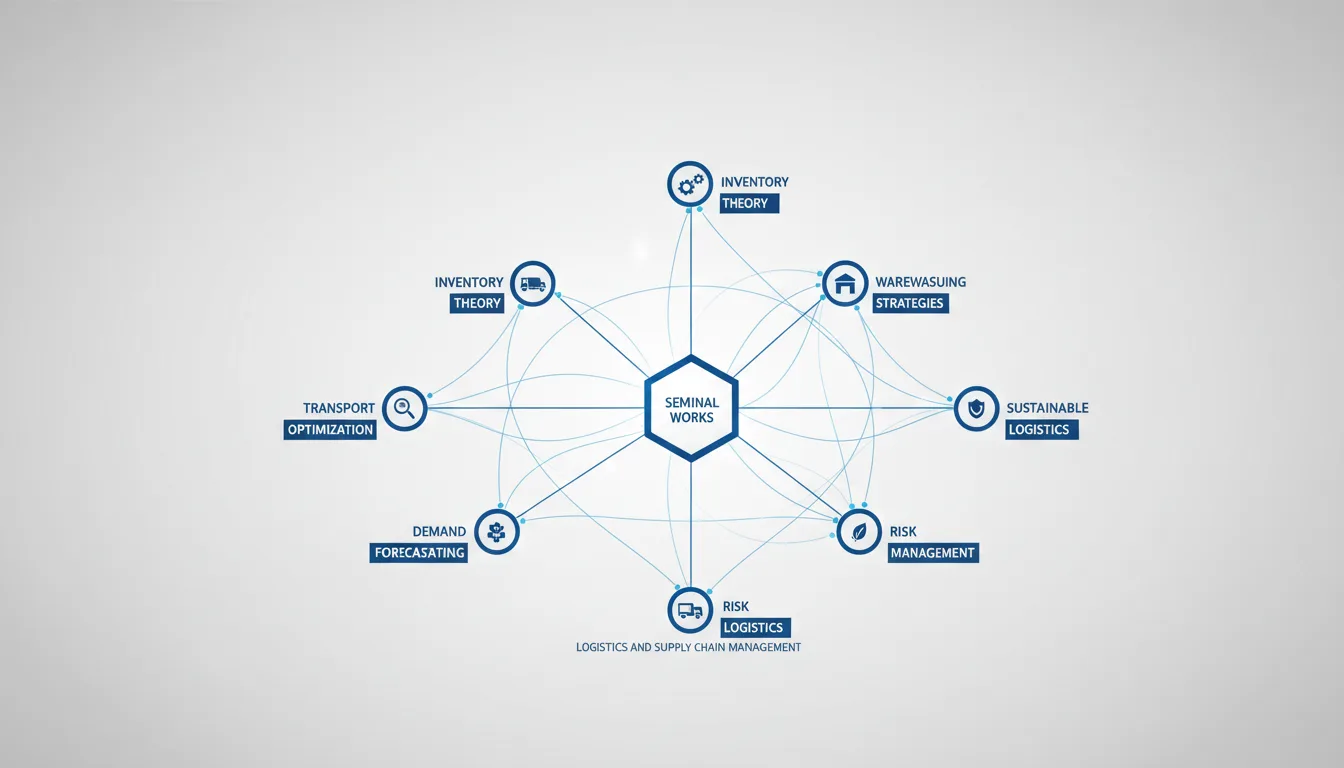
The term seminal works refers to foundational texts, theories, and practices in logistics and supply chain management that have significantly influenced the development and understanding of the field. These works often introduce new concepts, methodologies, or frameworks that guide logistics professionals and supply chain managers. Their importance lies in their capacity to shape best practices and drive innovation, making them essential for students and practitioners alike. These foundational contributions are critical for understanding the evolution of logistics and supply chain strategies over time.
Etymology and Origins
The word seminal originates from the Latin term semen, meaning 'seed'. Metaphorically, it refers to something that is original and strongly influences later developments, essentially planting the 'seeds' for future growth. Its use in academic discourse to describe foundational texts dates back to the 19th century, recognizing works that established new branches of knowledge or introduced paradigm-shifting ideas. In the context of logistics and supply chain management, a "seminal work" is one that laid the groundwork for a new understanding, a critical methodology, or a defining concept that continues to resonate and evolve within the industry, much like a core component within an inventory system.
Historical Development
Pre-World War II: Early Foundations of Efficiency
Long before logistics was formally recognized as a discipline, foundational ideas for optimizing production and distribution were emerging. Frederick Winslow Taylor's scientific management principles in the early 20th century focused on efficiency and standardization, laying conceptual groundwork. Henry Ford's assembly line revolutionized manufacturing and internal material flow, demonstrating the power of integrated processes. While not termed "logistics" at the time, these industrial innovations highlighted the importance of coordinated movement and resource utilization.
1940s–1950s: From Military Operations to Business Strategy
In the years following World War II, the logistical complexities of military campaigns provided fertile ground for the development of operations research and systems thinking. As businesses sought to replicate military efficiency, logistics began to gain recognition as a critical component in the civilian sector. Pioneers like Peter Drucker emphasized the importance of physical distribution as a significant, often overlooked, cost area for businesses, contributing to the shift towards viewing logistics as more than just transportation. This period also saw the emergence of the "total cost concept," advocating for considering all costs associated with logistics activities, not just individual components.
1960s: The Emergence of Physical Distribution Management
The 1960s marked the formalization of "physical distribution management" (PDM) as a distinct field. In 1961, “The Management of Business Logistics” by C. Donald J. Bowersox was published. This groundbreaking book is widely considered a classic in the industry, emphasizing the strategic importance of integrating logistics into overall business planning and strategy, moving beyond a purely operational view. It provided sophisticated methodologies for handling logistics effectively and introduced concepts like customer service in the context of logistics.
1970s: The Rise of Systems Thinking and Planning Tools
The 1970s brought significant advancements in planning and inventory control. The widespread adoption of Material Requirements Planning (MRP) systems, largely driven by companies like IBM, revolutionized manufacturing by allowing companies to plan component and raw material purchases based on production schedules. Simultaneously, the Toyota Production System pioneered the philosophy of Just-in-Time (JIT) manufacturing, emphasizing waste reduction and efficient inventory flow, which would profoundly influence supply chain practices globally.
1980s: Advancements in Technology and Lean Principles
The 1980s saw the advent of computer-aided logistics, with early forms of Warehouse Management Systems (WMS) and Transportation Management Systems (TMS) beginning to automate and optimize operations. Seminal works like “Logistics Management and Strategy” by Alan Rushton laid the groundwork for modern logistics strategies, focusing on optimizing supply chain processes through technology. This decade also saw the global spread of Lean Manufacturing principles, derived from JIT, further promoting efficiency and responsiveness across the entire supply chain.
1990s: The Birth of Supply Chain Management and Globalization
The term "Supply Chain Management (SCM)" was coined in the early 1980s by consultants Oliver & Webber, but it gained widespread recognition and theoretical development in the 1990s. Academics like Martin Christopher’s “Logistics and Supply Chain Management” provided comprehensive frameworks for managing the entire network of businesses involved in delivering products to customers. The rise of globalization and interconnected markets made the coordinated management of suppliers, manufacturers, distributors, and retailers a strategic imperative. Enterprise Resource Planning (ERP) systems became central to integrating disparate business functions, including logistics and supply chain operations.
2000s: E-commerce, Strategic Imperatives, and Resilience
With the rise of globalization and the dot-com boom, seminal works began to address the increasing complexity of global supply chains and the new demands of e-commerce. The focus shifted to viewing the supply chain as a source of competitive advantage. Seminal discussions centered on supply chain visibility, risk management, and building supply chain resilience in an increasingly volatile world. This era saw the continued evolution of tools like order management systems to handle complex fulfillment needs.
2010s-Present: Digital Transformation and Sustainability
The current decade is characterized by the rapid integration of advanced technologies and an intensified focus on ethical and environmental considerations. Seminal discussions now revolve around Industry 4.0, incorporating Big Data analytics, Artificial Intelligence and Machine Learning, the Internet of Things (IoT), and blockchain technology in supply chains. These technologies empower advanced capabilities such as real-time inventory tracking and predictive logistics. Furthermore, increasing consumer and regulatory pressure has made sustainability in logistics—including eco-friendly transportation, ethical sourcing, and circular economy principles—a central theme in new foundational works.
Core Concepts
Seminal works in logistics often explore several core concepts essential for effective supply chain management:
- Integration of Logistics: From early physical distribution management to modern supply chain orchestration, seminal texts have underscored the importance of synchronizing various logistical functions—such as transportation, warehousing, and inventory management—to minimize costs, enhance service quality, and achieve optimal end-to-end efficiency.
- Logistics as a Strategic Function: Moving beyond a transactional view, these works have progressively established that logistics is not merely a cost center but a vital area capable of driving profitability, customer satisfaction, and competitive advantage. This strategic perspective is crucial for modern supply chain design.
- Data-Driven Decision Making: The necessity of using data analytics and metrics to optimize logistics operations was first implied in early operations research and MRP systems. Modern seminal pieces further popularize this concept, highlighting the role of advanced analytics, real-time data, and predictive modeling for performance measurement and continuous improvement.
- Sustainability in Logistics: More recent seminal pieces have started to discuss sustainability in logistics practices, emphasizing eco-friendly transportation, responsible sourcing, and circular economy models. This concept has become increasingly relevant as environmental concerns and corporate social responsibility gain prominence.
- Supply Chain Resilience: The importance of designing supply chains that can withstand disruptions, recover quickly, and adapt to unforeseen challenges (e.g., natural disasters, geopolitical events, pandemics) has become a critical theme in contemporary seminal works, driving focus on risk management and business continuity.
Benefits and Advantages
Engaging with seminal works in logistics offers numerous advantages:
- Foundational Knowledge: Provides critical insights into the evolution and methodologies that shape modern practices, offering a robust understanding of logistics principles.
- Best Practices: Offers proven frameworks and strategies that can enhance supply chain efficiency, from warehouse layout optimization to inventory control.
- Innovation: Stimulates ideas for further research, revealing gaps and opportunities within the field, encouraging the development of new solutions and technologies.
- Strategic Perspective: Helps professionals understand the strategic role of logistics in achieving overall business objectives, fostering a holistic view of operations.
Challenges and Limitations
Despite their significance, seminal works also present challenges. Older theories may not fully adapt to the fast-paced technological advancements in logistics and supply chain management. For instance, concepts established before the digital age need revisiting and recalibrating to fit today's automated environments. Moreover, the reliance on historical data can lead to outdated practices that fail to address current market dynamics or emerging global challenges. The applicability of certain historical models must be critically evaluated in the context of today's dynamic supply chain environment.
Best Practices
To leverage the insights from seminal works effectively, logistics professionals should:
- Continuous Learning: Stay abreast of new studies and literature that build upon fundamental theories, ensuring continuity in understanding both foundational and contemporary challenges. Industry publications and academic journals are invaluable resources.
- Critical Adaptation: Encourage critical thinking to adapt frameworks outlined in seminal works to current practices and innovations, especially in a technology-driven landscape. For example, applying JIT principles in an era of global supply chain disruptions requires nuanced consideration.
- Collaborative Dialogue: Collaborate with peers and participate in industry forums to discuss and reflect on seminal texts, facilitating a deeper understanding and strategic application of logistics principles.
- Technology Integration: Understand how modern tools and technologies, such as advanced WMS and data analytics platforms, can implement and enhance the concepts originally introduced in seminal works.
Technology and Tools
Today’s logistics professionals benefit from tools and technologies that have evolved from insights gained through seminal works, enabling the practical application of theoretical frameworks:
- Warehouse Management Systems (WMS): Technologies like Mobile Warehouse Management Systems have transformed how businesses optimize storage, inventory control, and operational workflows, directly addressing efficiency challenges identified in early logistics studies. Visual warehouse layout tools further enhance space utilization and movement planning.
- Inventory Management Systems: Advanced systems provide visual inventory management, enabling real-time tracking, forecasting, and optimization. This directly supports the data-driven decision-making central to modern logistics. Tools for purchase order management also streamline the upstream supply chain.
- Data Analytics Solutions: These tools facilitate data-driven decision-making processes in logistics, allowing companies to draw insights from complex supply chain performance metrics. They support predictive analytics for demand forecasting and optimize order fulfillment processes.
- Order Fulfillment Software: Modern order management systems and pick, pack, ship software streamline the entire order lifecycle, from receiving to shipping, ensuring high customer service levels—a key theme from Bowersox's early work.
Conclusion
Seminal works in logistics and supply chain management remain a cornerstone for understanding the discipline. They provide vital frameworks for current and future professionals, clarify the evolution of strategies, and enhance the agility of modern logistics operations. As the industry continues to evolve, revisiting, understanding, and adapting these seminal texts, while integrating them with cutting-edge technologies, will be key to successful supply chain management in a fast-changing global marketplace and essential for building resilient and efficient supply chains.
Sources
- Mobile Warehouse Management System
- Definitions & Glossary
- Visual Inventory Management System
- Scientific management
- The Economy’s Dark Continent
- Total Cost Concept in Logistics
- Material Requirements Planning
- Just-in-Time (JIT)
- Lean Tools
- Logistics and Supply Chain Management
- ERP Systems: What Are They?
- How Information Gives You Competitive Advantage
- Supply Chain Visibility: The Missing Link?
- What is supply chain resilience?
- Order Management System
- Industry 4.0
- How AI and Machine Learning Are Reshaping Supply Chain Management
- Blockchain in Supply Chain: What's the Reality?
- Sustainable supply chains will be key to meeting ESG goals
- Pick, Pack, Ship Software
- Warehouse Layout Preview
- Purchase Order Management