Scalability Planning in Logistics
Scalability planning is vital for optimizing logistics operations, ensuring efficiency, and accommodating growth in the supply chain.
Updated
Overview
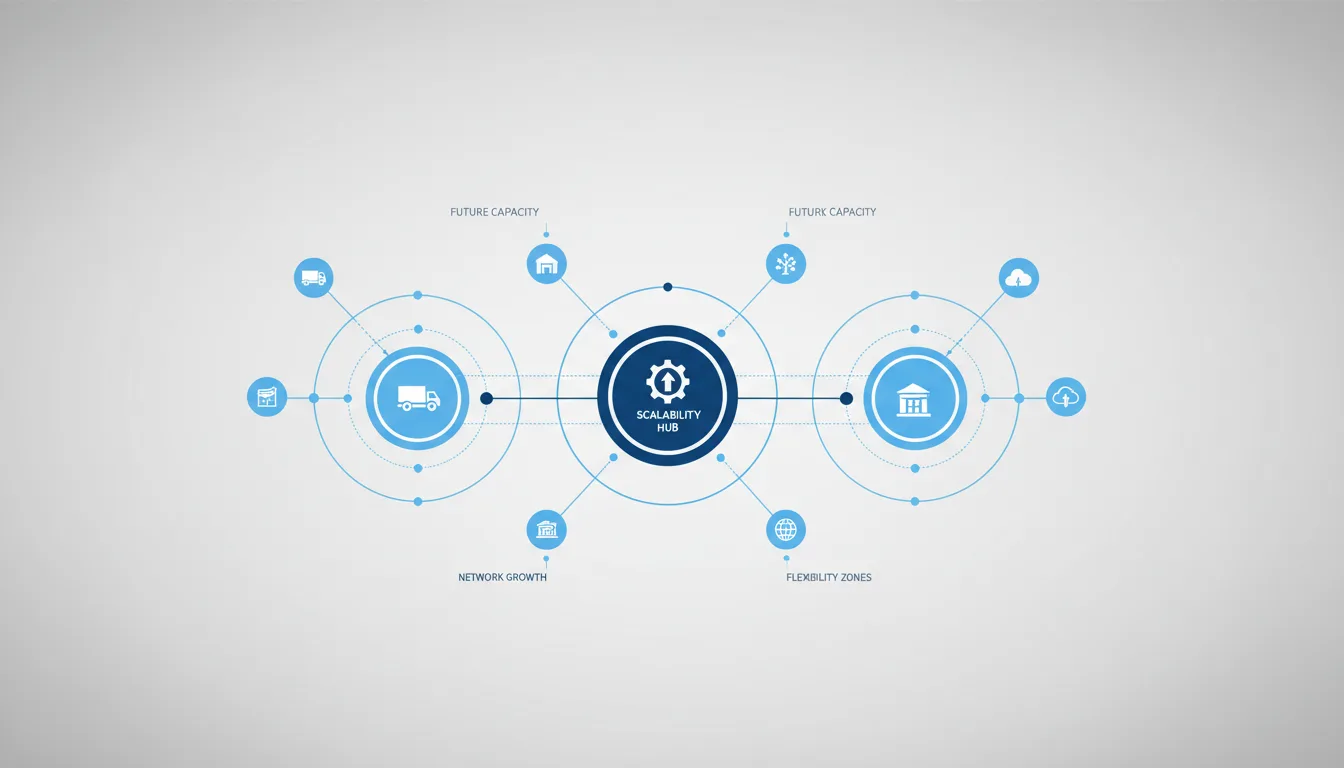
Scalability planning refers to the strategic approach used to design logistics and supply chain systems capable of adapting to changes in demand, market conditions, and company growth. It is crucial in maintaining operational efficiency while anticipating future requirements. Proper scalability enables companies to meet customer expectations without significantly increasing costs or reducing service quality. Companies like Amazon and Walmart exemplify successful scalability strategies in logistics by leveraging technology and robust infrastructure. In today's dynamic global market, the ability to scale operations quickly and efficiently is a competitive imperative, differentiating market leaders from those struggling to keep pace.
Etymology and Origins
The term "scalability" originates from the concept of scaling up or down, derived from the Latin word "scala," meaning stairs or ladder. While the concept of adapting capacity existed implicitly in engineering and business for centuries, its explicit articulation and application as "scalability" in a systems context emerged with the advent of computing. Early discussions around the ability of computer systems to handle increasing workloads appeared in the 1960s, particularly within discussions of operating systems and database architectures [5]. Pioneers like Grace Hopper, through her work on programming languages, indirectly addressed the need for systems to expand their capabilities and handle larger data volumes [6]. The term gained significant traction in the late 1990s and early 2000s within the technology sector, as businesses began to seek ways to efficiently manage increasing workloads in distributed systems and the nascent internet [7]. This era saw the widespread adoption of client-server architectures and the need for applications to handle a growing number of users and transactions. This concept has since been adapted into logistics and supply chain disciplines, reflecting the need for flexible and responsive systems to cope with globalization, e-commerce growth, and volatile demand.
Historical Development
The notion of scalability in logistics developed significantly from rudimentary practices to highly sophisticated, technology-driven approaches:
- Pre-20th Century (Early Logistics & Industrial Revolution): While not explicitly termed "scalability," early logistical efforts, such as military supply lines and the efficient movement of goods during the Industrial Revolution, inherently required systems that could expand or contract. Early factory layouts, canal systems, and railway networks were designed with future growth in mind, albeit through manual planning and intuitive capacity expansion.
- 1950s-1970s (Operations Research & Early Computerization): Following World War II, operations research techniques began to be applied to business problems, leading to models like the Economic Order Quantity (EOQ) for inventory management. Logistics operations were primarily manual, but companies started using rudimentary methods for efficient stock management. A significant milestone was the development of Material Requirements Planning (MRP) in the 1960s by Joseph Orlicky at IBM, which provided a computerized approach to production scheduling and inventory control, allowing manufacturers to better plan for fluctuating demand [8]. This marked a shift from reactive to proactive capacity planning, laying the groundwork for digital scalability.
- 1980s-1990s (Global Supply Chains & JIT): The introduction of personal computers and networking transformed logistics. Concepts such as Warehouse Management Systems (WMS) emerged, allowing for better resource allocation and responsiveness within a single facility. The rise of globalized supply chains emphasized the need for cross-border scalability. Just-in-Time (JIT) manufacturing, popularized by Toyota, revolutionized inventory practices by focusing on minimizing stock and improving flow, demanding highly responsive and scalable supplier networks [9]. Enterprise Resource Planning (ERP) systems also began to integrate various business functions, laying the groundwork for holistic supply chain management and the ability to scale an entire enterprise.
- 2000s-present (E-commerce, Automation & Digital Transformation): The rapid growth of e-commerce accelerated the demand for extreme scalability, requiring logistics systems to handle unprecedented volumes and velocity. Companies leveraged advanced technologies and automation, including robotics and Automated Storage and Retrieval Systems (AS/RS), to handle massive increases in order volumes. Significant milestones include the widespread adoption of cloud computing for scalable infrastructure and real-time data analytics for forecasting and demand planning. Modern WMS solutions like SkuSavvy offer mobile and cloud-native capabilities, enabling businesses to scale their operations with unprecedented flexibility and global reach.
Core Concepts
Scalability planning involves multiple key concepts that ensure a logistics system can grow or shrink effectively:
- Demand Forecasting & Planning: Accurate prediction of future product demand is essential for effective scalability. This moves beyond simple historical averages to incorporate predictive analytics, machine learning, and external factors (e.g., economic trends, weather, marketing campaigns). Tools such as visual inventory management systems and robust stock replenishment modules provide essential insights for proactive capacity adjustments across the supply chain.
- Modular Architecture & Infrastructure: Systems designed with flexibility in mind enable companies to add or reduce resources according to current needs without overhauling the entire setup. This applies to both physical infrastructure, like a flexible warehouse layout that can be reconfigured or expanded, and digital systems built on microservices architectures for software scalability.
- Automation & Technology Adoption: Implementing automation in processes such as order fulfillment, sorting, and storage can significantly enhance speed, reduce reliance on manual labor, and minimize errors, allowing for greater scalability in operations. This includes using technologies like Robotic Process Automation (RPA), Automated Guided Vehicles (AGVs), and Autonomous Mobile Robots (AMRs). Software like pick, pack, and ship systems supports these efforts by streamlining workflows and integrating with automated equipment.
- Data-Driven Decision Making: Leveraging real-time data and advanced analytics is critical for monitoring performance, identifying bottlenecks, and making informed decisions about scaling resources. This includes tracking key performance indicators (KPIs) like order volume, inventory turnover, labor utilization, and transportation costs to optimize capacity.
- Supplier Network Flexibility: A scalable logistics operation also depends on the ability of its supplier network to adapt. This involves having multiple suppliers, flexible contracts, and robust purchase order management systems to manage varying supply volumes and ensure resilience.
Types and Classifications
Scalability can be classified into several types in logistics, each addressing different aspects of growth:
- Horizontal Scalability (Scale-Out): Involves adding more units of the same type to distribute the workload (e.g., adding more warehouse locations, additional forklifts, more picking stations, or expanding your fleet of delivery vehicles) to manage increased demand efficiently. This is often achieved by duplicating infrastructure components.
- Example: Opening a new distribution center in a different region to serve a growing customer base, or deploying multiple instances of a software application across different servers to handle more requests.
- Vertical Scalability (Scale-Up): Focuses on enhancing existing resources to increase their capacity (e.g., upgrading a WMS to automate more functions, installing faster conveyor belts, or using larger capacity vehicles). This means making a single resource more powerful.
- Example: Upgrading a server's CPU or memory to handle more data processing, or implementing an advanced bin packing algorithm to optimize existing warehouse space more effectively without physical expansion.
- Elastic Scalability: Allows logistics providers to quickly and automatically adjust operations based on real-time needs, often through cloud-based infrastructure. Resources are provisioned and de-provisioned dynamically, enabling rapid response to fluctuating demand without manual intervention.
- Example: Cloud-based order management systems that automatically allocate more server resources during peak shopping seasons (like Black Friday) and scale down afterward, or leveraging on-demand freight services during unexpected spikes in shipping volume.
- Geographic Scalability: The ability to expand operations to new regions, countries, or even continents, requiring adaptable infrastructure, regulatory compliance, and a global supply chain strategy. This is particularly relevant for e-commerce companies expanding internationally.
- Example: A retailer using Shopify Global Inventory to manage stock across multiple international fulfillment centers and seamlessly route orders to the closest warehouse.
Industry Applications
Scalability planning is applicable across various sectors, demonstrating its universal importance:
- E-commerce: Companies like Shopify-powered businesses use scalable logistics strategies to accommodate fluctuating order volumes during peak seasons (e.g., holidays, promotional events). This often involves flexible fulfillment networks, dropshipping capabilities, and robust Shopify WMS integrations to manage inventory across multiple locations and fulfillment channels.
- Manufacturing: Manufacturers adopt scalable systems to align production rates with demand changes, optimizing their supply chains accordingly. This includes flexible production lines, modular factory designs, and responsive supplier management through purchase order management systems that can adjust to fluctuating raw material needs.
- Retail: Retailers implement scalable inventory management solutions that adapt to changing consumer preferences, seasonal trends, and the growth of omnichannel retailing. This involves technologies that can integrate online and in-store inventory, such as advanced inventory management systems capable of managing stock across a distributed network of stores and warehouses.
- Third-Party Logistics (3PLs): 3PL providers must offer highly scalable solutions to their clients, often managing diverse product portfolios and fluctuating demands for multiple businesses. Their ability to scale up or down infrastructure, labor, and technology is a core service offering and a key differentiator.
Benefits and Advantages
The advantages of effective scalability planning extend beyond simply handling growth:
- Cost Efficiency: By aligning capacity with demand, companies minimize unnecessary expenditures on underutilized assets (e.g., empty warehouse space, idle machinery) and avoid costly last-minute expansions or rush orders. This maximizes profit margins by optimizing resource allocation.
- Customer Satisfaction & Retention: Scalable operations improve responsiveness, enabling businesses to meet customer expectations reliably, even during peak times. This leads to faster delivery, fewer stockouts, and a more consistent customer experience, fostering loyalty.
- Risk Management & Resilience: Scalable systems allow companies to navigate market fluctuations, supply chain disruptions (e.g., natural disasters, geopolitical events), and economic downturns more effectively. The ability to quickly adapt prevents major operational bottlenecks and financial losses, enhancing overall supply chain resilience.
- Competitive Advantage: Businesses with robust scalability plans can enter new markets faster, launch new products more efficiently, and respond to competitive pressures with agility, gaining a significant edge over less adaptable competitors.
- Innovation & Growth Enablement: A scalable foundation allows companies to experiment with new business models, product lines, or geographic expansions without being constrained by their existing logistics capabilities, thus fueling business innovation and strategic growth.
Challenges and Limitations
Despite its benefits, challenges exist in scalability planning that require careful consideration:
- Initial Costs & Investment: Implementing scalable systems, particularly those involving advanced automation or cloud infrastructure, often requires substantial initial investment in technology, infrastructure, and training. Justifying the ROI of a WMS can be complex, and upfront capital can be a barrier.
- Complexity of Integration: Managing an increasingly large and complex logistics network, especially when integrating new technologies or expanding globally, can overwhelm existing processes and personnel if not planned properly. Data integration challenges across disparate systems (e.g., WMS, TMS, ERP, e-commerce platforms) are common.
- Talent & Change Management: Organizations may struggle with adapting to new technologies and processes. Skilled labor is required to operate and maintain advanced scalable systems, and resistance to change from employees can hinder effective implementation and optimization of scalability efforts.
- Forecasting Accuracy: While essential, achieving consistently accurate demand forecasts, especially for new products, volatile markets, or during unprecedented global events, remains a significant challenge. Inaccurate forecasts can lead to either overstocking (wasted resources) or understocking (lost sales and customer dissatisfaction).
- Vendor Lock-in: Relying too heavily on a single technology vendor for scalable solutions can lead to vendor lock-in, limiting flexibility, increasing dependency, and potentially raising costs in the long run if alternative solutions are not easily integrated.
Best Practices
To effectively implement and maintain scalability in logistics, organizations should consider these best practices:
- Strategic Technology Investment: Leverage cloud-based solutions, advanced analytics, and automation. Investing in adaptable technologies like a mobile-first WMS or a comprehensive order management system can streamline operations and provide the necessary agility for growth.
- Develop a Flexible & Agile Strategy: Craft adaptive strategies that account for market fluctuations, unforeseen disruptions, and evolving customer expectations. This includes scenario planning, building contingencies into operational models, and adopting an agile approach to supply chain design.
- Continuous Process Improvement (CPI): Regularly review and optimize logistics operations. Implement frameworks like Lean or Six Sigma to identify bottlenecks, eliminate waste, and continuously enhance efficiency and capacity, ensuring that processes can scale with demand.
- Data-Driven Decision Culture: Foster a culture that relies on data analytics for all planning and operational decisions. Utilize real-time insights from inventory levels, order patterns, fulfillment metrics, and external market data to make proactive adjustments and optimize resource allocation.
- Build Redundancy & Diversification: Establish backup plans for critical resources, suppliers, and transportation routes. Diversifying supplier bases, utilizing multiple distribution centers, and having alternative carriers can significantly mitigate risks and enhance scalability during disruptions.
- Invest in Talent Development: Train and upskill staff to manage and leverage new technologies effectively. A skilled workforce, proficient in data analytics, automation, and system management, is crucial for optimizing automated systems and adapting to new processes as the organization scales.
Future Trends
Looking ahead, scalability planning will increasingly integrate emerging technologies, enabling even greater agility and efficiency:
- Artificial Intelligence (AI) & Machine Learning (ML): AI-driven analytics will provide enhanced forecasting capabilities, optimize routing, automate decision-making in inventory management, and predict potential disruptions before they occur. AI in supply chain management is rapidly evolving, enabling predictive and prescriptive scalability.
- Internet of Things (IoT): IoT sensors will provide real-time visibility into inventory location, asset condition, and environmental factors, enabling dynamic adjustments to capacity and proactive maintenance. This enhances the responsiveness and efficiency of the entire logistics network, allowing for granular control over scaling.
- Blockchain Technology: Utilizing blockchain can improve transparency, traceability, and efficiency in supply chain operations, especially for verifying product origin and managing complex multi-party transactions. This facilitates trust and collaboration in highly distributed, scalable networks, streamlining cross-organizational processes.
- Digital Twins: Creating virtual replicas of physical supply chain assets (e.g., warehouses, vehicles) and processes will allow for simulation and optimization of various scaling scenarios without disrupting live operations, enabling better planning, risk assessment, and predictive maintenance for scalable infrastructure.
- Sustainability Practices: As companies strive for sustainability, scalable solutions will adapt to incorporate eco-friendly practices, such as optimizing routes to reduce emissions, utilizing renewable energy in warehouses, and managing reverse logistics for circular economy initiatives. Scalability will encompass not just economic growth but also environmental responsibility.
Conclusion
Scalability planning is indispensable in the logistics industry, enabling businesses to grow and adapt to dynamic market demands while maintaining profitability and customer satisfaction. By understanding its core principles, embracing advanced technologies, and adhering to best practices, logistics professionals can enhance their operations, build resilient supply chains, and drive long-term success in an ever-evolving global marketplace.
Sources
- Mobile Warehouse Management System
- Visual Inventory Management System
- Pick, Pack, Ship Software
- Order Management System
- A History of Computing in the Twentieth Century
- Grace Hopper and the Invention of the Information Age
- The History of Scalability
- Orlicky's Material Requirements Planning
- Toyota Production System: Beyond Large-Scale Production
- Stock Replenishment Guide
- Warehouse Layout Preview
- Purchase Order Management
- Bin Packing Preview
- Shopify Global Inventory
- Shopify WMS
- Supply Chain Resilience in a Changing World
- What is Predictive Analytics?
- The Rise of Robotics in the Warehouse
- What is cloud computing?
- Supply Chain Resilience
- Logistics providers face major data integration challenges
- Lean Manufacturing & Six Sigma
- AI's Impact on Supply Chain Logistics
- The Industrial Revolution
- History of OR/MS
- Understanding Supply Chain Resilience