Routing Optimization
Routing optimization is a crucial logistics strategy aimed at improving delivery efficiency and reducing costs.
Updated
Overview
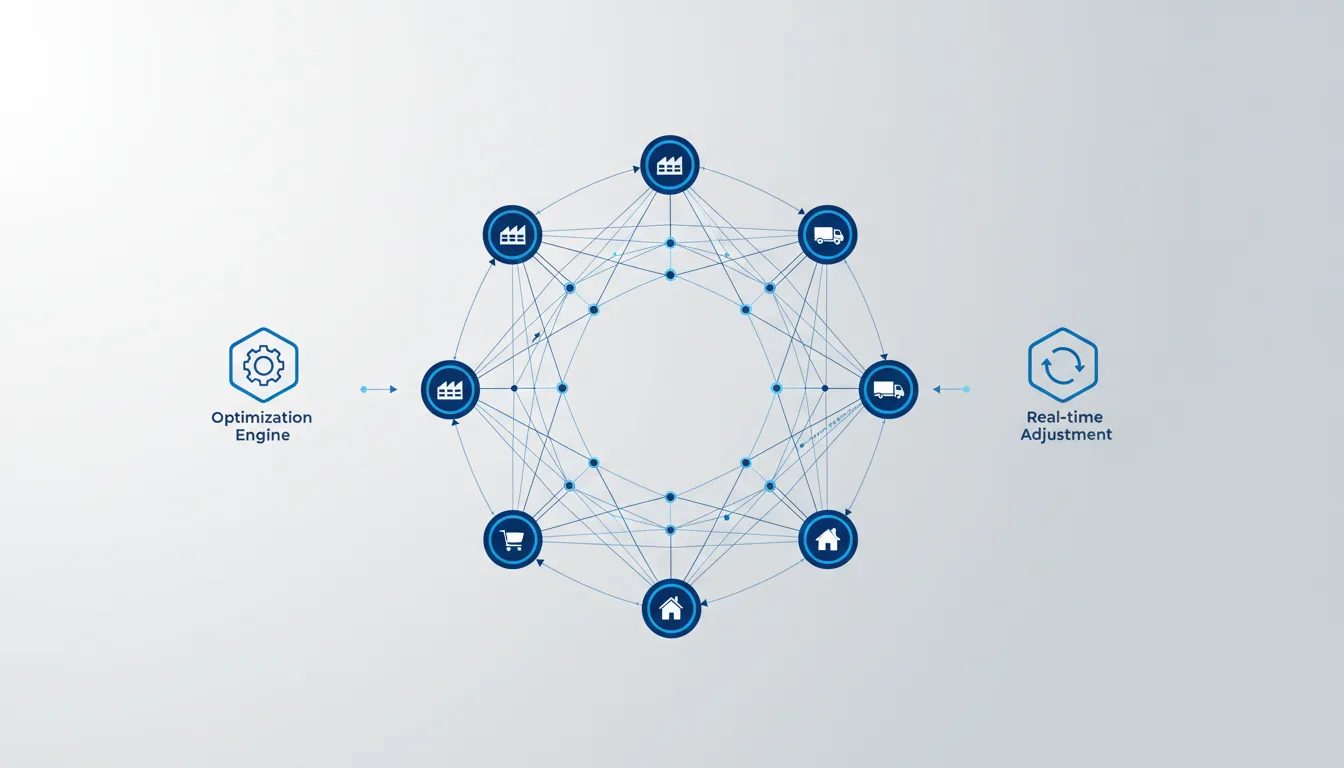
Routing optimization refers to the process of determining the most efficient route for transportation and delivery operations. It plays a vital role in logistics and supply chain management, as optimizing routes can lead to significant reductions in fuel costs, improved delivery times, enhanced customer satisfaction, and a lower environmental footprint. Companies utilize advanced algorithms and software tools to calculate the best routes, considering various factors such as traffic conditions, delivery windows, vehicle capacities, and driver availability, often addressing complex problems like the Vehicle Routing Problem (VRP).
Etymology and Origins
The term "routing" stems from the word "route," derived from the Old French "route" and ultimately from the Latin "rupta via," meaning a "broken way" or a "path". This foundational concept refers to a defined way or course taken in getting from a starting point to a destination [2]. The formal concept of optimizing these paths emerged alongside the proliferation of vehicle-based logistics in the mid-20th century. The intellectual groundwork for modern routing optimization was laid by pioneers in operations research and algorithm development, particularly following World War II. The formal study of routing problems can be traced back to the 1950s with the development of graph theory and its applications in logistics, explicitly defined by the introduction of the Traveling Salesman Problem (TSP) and subsequently the Vehicle Routing Problem.
Historical Development
Emergence of Routing Optimization
Routing optimization began gaining significant academic and industrial attention in the post-World War II era, driven by the need for more efficient resource allocation. A seminal moment was the formalization of the Traveling Salesman Problem (TSP) in 1954 by George Dantzig, Ray Fulkerson, and Selmer Johnson, asking how a salesman can plan a trip to visit a set of cities and return to the origin point with the least cost. This foundational work in linear programming and network optimization techniques became critical to all future routing methods. Building upon TSP, the more practical Vehicle Routing Problem (VRP) was formally introduced in 1959 by George Dantzig and John Ramser, specifically addressing the challenge of dispatching a fleet of trucks from a central depot to deliver to a set of customers.
Key Figures and Developments
Throughout the 1960s and 1970s, research focused on developing efficient algorithms to solve VRPs, which are known to be NP-hard problems, meaning that finding an optimal solution becomes computationally intractable as the number of stops increases. A significant breakthrough was the introduction of the Clarke and Wright Savings Algorithm in 1964, a powerful heuristic method that provided near-optimal solutions efficiently and became widely adopted in practice. The 1980s saw the rise of more sophisticated metaheuristics, such as simulated annealing and genetic algorithms, to tackle complex routing scenarios, leading to significant advances in the types of problems that could be addressed. With the advent of personal computing in the late 1980s and 1990s, logistics firms could implement these advanced mathematical techniques into more user-friendly, dedicated routing software applications. The integration of Geographic Information Systems (GIS) provided critical mapping capabilities.
Technological Evolution
Over the decades, routing technology has evolved dramatically. Early methods relied on manual map plotting and dispatcher experience. The introduction of mainframe computers in the 1960s allowed for the first complex mathematical optimization models. By the 1990s, the widespread adoption of desktop computers and GIS software, combined with commercial mapping data, made route planning more accessible and visual. The advent of GPS technology in the early 2000s further transformed routing optimization, enabling real-time vehicle tracking, dynamic re-routing based on live traffic conditions, and improved estimated times of arrival (ETAs). Today, modern solutions leverage big data, cloud computing, and advanced machine learning algorithms to continuously learn from historical and real-time data, predict traffic, optimize routes dynamically, and integrate with broader shipping and fulfillment software.
Core Concepts
Routing optimization involves using sophisticated algorithms to evaluate various factors that influence delivery routes. Understanding these elements is crucial for effective implementation:
- Distance and Travel Time: The fundamental goal is to calculate the shortest path, often utilizing algorithms like Dijkstra's algorithm or the A* algorithm. Modern systems also factor in historical and real-time speed data, road types, and predicted traffic patterns.
- Vehicle Capacities: Algorithms must consider not only the physical load (weight and volume) each vehicle can carry but also specific constraints like multi-compartment setups (e.g., for refrigerated and dry goods), maximum number of stops, and load distribution for safety and efficiency.
- Delivery Windows: Addressing time constraints, such as hard (must arrive by) or soft (preferred arrival) delivery windows, is critical for ensuring customer satisfaction and meeting service level agreements (SLAs). Penalties for early or late arrivals are often factored into the optimization model.
- Traffic Patterns: Beyond real-time data, historical traffic analysis helps predict congestion at different times of day or week. Predictive analytics can anticipate traffic based on events, weather, or holidays, allowing for proactive route adjustments.
- Driver Constraints: This includes factors such as Hours of Service (HOS) regulations to prevent fatigue and ensure safety, driver availability, and specific driver skill sets (e.g., hazmat certification).
- Road Restrictions and Geofencing: Accounting for bridge heights, weight limits, hazardous material routes, residential noise restrictions, and even specific customer site access requirements (e.g., no trucks over a certain size).
- Backhauls and Returns: Optimizing routes to pick up goods on return trips, significantly reducing empty mileage and improving asset utilization.
Industry Applications
Routing optimization finds applications across numerous industries, providing tangible benefits:
- Retail and E-commerce: Companies like Amazon leverage highly sophisticated routing algorithms to manage vast delivery networks, streamline last-mile delivery for express services, and optimize replenishment routes for brick-and-mortar stores. This also extends to integrating with order management systems for efficient order processing.
- Food Delivery: Businesses such as Uber Eats, DoorDash, and Grubhub employ advanced routing algorithms to minimize delivery times, maximize the number of orders per driver, and ensure food quality by optimizing for temperature-controlled transit, leading to higher customer satisfaction.
- Logistics Providers: Global carriers like FedEx and UPS utilize complex routing software for both line-haul (hub-to-hub) and local delivery operations. Their systems integrate package scanning data, weather, and traffic to dynamically optimize routes, often resulting in millions of dollars in annual savings.
- Field Service Management: Industries like HVAC repair, utility maintenance, pest control, and healthcare use routing optimization to efficiently schedule technicians, minimize travel time between appointments, and respond quickly to urgent service calls.
- Waste Management and Public Services: Municipalities and private contractors optimize routes for garbage collection, recycling, snow removal, and public transport to reduce costs, improve service frequency, and minimize environmental impact.
Benefits and Advantages
The advantages of efficient routing optimization are manifold and impact multiple facets of an organization:
- Cost Reduction: Directly impacts the bottom line by significantly reducing fuel consumption (often 10-30%), lowering labor costs (reduced overtime, more stops per shift), and decreasing vehicle maintenance expenses through optimized mileage.
- Time Savings: Enhances operational efficiency by minimizing travel times, allowing for more deliveries or service calls per day, and providing faster response times for critical services.
- Increased Customer Satisfaction: Reliable and accurate estimated times of arrival (ETAs), consistent on-time deliveries, and better communication capabilities build customer trust and loyalty.
- Environmental Sustainability: By reducing miles driven and fuel consumption, companies significantly lower their carbon emissions and environmental footprint, contributing to corporate social responsibility goals.
- Improved Resource Utilization: Maximizes the use of vehicle capacity and driver productivity, reducing the need for additional vehicles or staff.
- Enhanced Safety and Compliance: Ensures adherence to driver Hours of Service (HOS) regulations, avoids hazardous routes, and provides safer driving conditions, reducing accident risks.
Challenges and Limitations
Despite its benefits, routing optimization faces several inherent challenges:
- Complexity of Routing Problems: The NP-hard nature of most realistic routing problems means that finding a truly optimal solution becomes exponentially difficult with increasing scale. This necessitates the use of heuristic and metaheuristic algorithms that provide near-optimal, rather than absolute optimal, solutions within a reasonable computational time.
- Dynamic Environments: Real-time variables such as unexpected traffic congestion, adverse weather conditions, vehicle breakdowns, sudden order changes, or customer cancellations can quickly render even the best pre-planned routes suboptimal, requiring robust dynamic re-optimization capabilities.
- Data Quality and Integration: Inaccurate or outdated map data, imprecise customer addresses, or unreliable traffic information can lead to poor routing decisions. Effective optimization requires seamless integration with other systems like Order Management Systems (OMS), Warehouse Management Systems (WMS), and telematics platforms.
- Human Factor and Acceptance: Drivers may have established routines, local knowledge, or preferences that conflict with optimized routes. Ensuring driver buy-in and providing user-friendly mobile tools for navigation and communication is crucial for successful implementation.
- Infrastructure Limitations: Road closures, construction, varying road conditions, bridge limitations, and restricted access areas can all impact route feasibility and efficiency, requiring constant updates and adaptability.
Best Practices
To successfully implement and maximize the benefits of routing optimization, companies should adhere to several best practices:
- Utilize Real-Time Data: Integrate GPS tracking, telematics, and real-time traffic and weather feeds to enable dynamic re-routing and immediate response to unforeseen disruptions. This ensures routes are continuously updated for optimal efficiency.
- Employ Advanced Software Tools: Invest in robust Transport Management Systems (TMS) or dedicated routing optimization software that leverages AI, machine learning, and advanced algorithms. Solutions like automated rate selection should be integrated to streamline the shipping process further.
- Continuously Improve Systems: Implement a feedback loop that includes post-route analysis, driver debriefs, and performance metrics (e.g., on-time delivery rates, miles per stop). Regular updates and machine learning capabilities ensure that routing algorithms adapt to changing conditions and continuously improve efficiency.
- Integrate with Enterprise Systems: Ensure seamless data flow between routing software and other critical platforms, such as Order Management Systems (for order details), Warehouse Management Systems (for inventory and picking status), and customer relationship management (CRM) systems (for customer preferences and communication).
- Empower Drivers with Mobile Technology: Provide drivers with mobile applications that offer optimized navigation, real-time updates, proof-of-delivery capabilities, and communication tools. This could be part of a broader mobile order fulfillment software suite, helping ensure adherence to planned routes and improving their efficiency and job satisfaction.
- Focus on Measurable KPIs: Track key performance indicators such as fuel consumption, average delivery time, on-time delivery percentage, stops per hour, and driver productivity to quantify the impact of optimization efforts.
Future Trends
As technology advances, the future of routing optimization looks even more dynamic and sophisticated:
- Artificial Intelligence and Predictive Analytics: Machine learning algorithms will move beyond reactive re-routing to proactive, predictive optimization, anticipating demand surges, traffic patterns, and weather impacts to plan routes days or weeks in advance, constantly learning from new data inputs.
- Autonomous Delivery Vehicles and Drones: The adoption of self-driving trucks, last-mile delivery robots, and aerial drones will revolutionize routing, requiring new algorithms to manage 3D airspace routes for drones, charging station networks for EVs, and coordinated human-robot delivery operations.
- Hyper-personalization and Micro-fulfillment: Routing will increasingly cater to individual customer preferences, offering highly specific delivery windows, preferred drop-off locations, and dynamic re-routing for immediate gratification deliveries, often supported by hyper-local micro-fulfillment centers.
- Integration with Smart City Infrastructure: Future routing systems will communicate directly with urban infrastructure (e.g., smart traffic lights, connected road sensors) to optimize traffic flow for delivery fleets, reduce congestion, and enhance overall urban logistics efficiency.
- Blockchain for Transparency: Distributed ledger technology could provide immutable records of route execution, delivery confirmations, and supply chain events, enhancing trust, traceability, and accountability in logistics operations.
Conclusion
Routing optimization is a critical and evolving aspect of modern logistics management that significantly impacts operational efficiency, profitability, and customer satisfaction. By embracing advanced algorithms, leveraging real-time data, and integrating with cutting-edge technologies like AI and IoT, companies can develop highly resilient and efficient routing strategies. This not only reduces costs and delivery times but also contributes to environmental sustainability and strengthens a business's competitive advantage in a rapidly changing supply chain landscape.
Sources
- Automated Rate Selection
- Online Etymology Dictionary - Route
- Solution of a large-scale traveling-salesman problem
- The Truck Dispatching Problem
- Scheduling of vehicles from a central depot to a number of delivery points
- Shipping and Fulfillment Software
- Order Management System
- Mobile Order Fulfillment Software