Robust Warehouse Management
Explore the comprehensive framework of robust warehouse management, its history, applications, benefits, and modern practices.
Updated
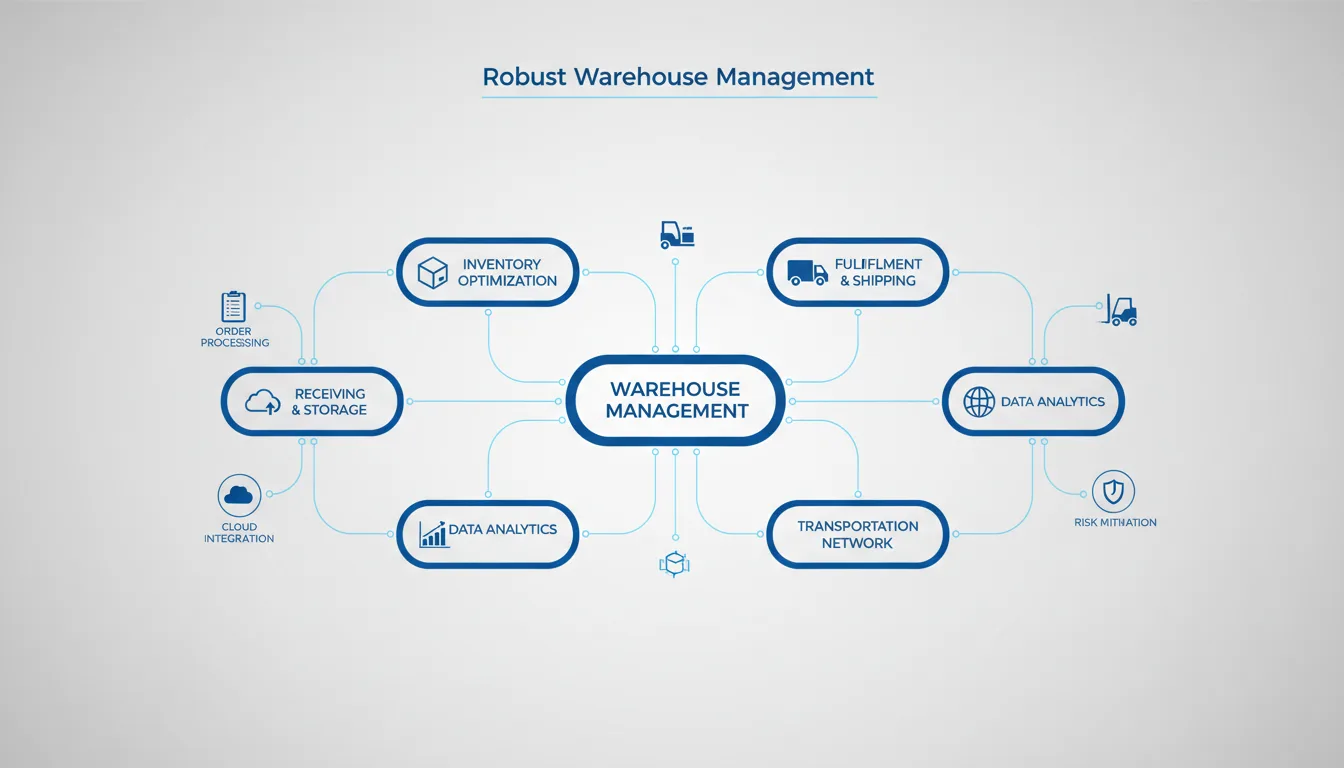
Robust Warehouse Management
Overview
Robust warehouse management is a systematic approach aimed at optimizing the storage and movement of goods within a warehouse or distribution center. It encompasses various methodologies, processes, and technologies designed to enhance efficiency, accuracy, and productivity in complex warehouse operations [6]. The significance of effective warehouse management is underscored by its direct impact on overall supply chain performance, operational costs, and ultimately, customer satisfaction [7]. It is a critical component of any well-functioning logistics network.
Etymology and Origins
The term "warehouse" itself dates back to the Old English 'warhūs', meaning a house for wares or goods, with concepts of organized storage existing for centuries. However, "warehouse management" as a distinct discipline, involving systematic planning and control, emerged primarily in the mid-20th century during the era of industrialization and the rise of modern logistics.
Before this, storage was largely static and less integrated with overall production or distribution. The increasing complexity of manufacturing, coupled with the need for efficient material flow, led to the development of structured approaches. Early concepts were often intertwined with inventory control practices and materials handling, becoming more formalized with the application of scientific management principles. The explicit term "warehouse management" began to gain prominence as specialized systems and software started to be conceptualized in the latter half of the 20th century, differentiating warehouse operations from broader supply chain or logistics management.
Historical Development
Warehouse management practices have undergone a profound evolution, mirroring advancements in technology and global trade:
-
Pre-1950s: Manual & Fragmented. Warehouses were largely manual operations, relying on physical records and tribal knowledge. Storage decisions were often ad-hoc, with little integration into broader supply chain planning. The focus was on simple storage rather than efficient flow.
-
1950s-1960s: Foundations of Systematization. This period saw the maiden implementations of systematic approaches, influenced by post-World War II industrial expansion. Pioneers like General Electric began applying principles of scientific management and operations research to factory and warehouse layouts. For instance, H.F. Dickie's implementation of cycle counting in 1951 for General Electric marked a significant step toward continuous inventory accuracy, moving beyond infrequent, disruptive physical inventories [8]. The emergence of the Just-In-Time (JIT) production concept, pioneered by Toyota in Japan during this period, emphasized minimizing inventory and streamlining material flow, laying groundwork for future warehouse efficiency.
-
1970s-1980s: Computerization and MRP. The introduction of mainframe computers began to change the landscape. Early computerized inventory management systems, often as part of larger Materials Requirements Planning (MRP) systems, enhanced data accuracy and speed, moving away from manual ledgers. Companies like IBM were instrumental in developing and popularizing MRP software, which helped manage production schedules and raw material procurement [9]. Barcoding technology also began to see initial adoption in retail and warehousing towards the late 70s and early 80s, enabling faster and more accurate data capture [10].
-
1990s: Emergence of WMS and ERP Integration. This decade was pivotal with the widespread development and commercialization of dedicated Warehouse Management Systems (WMS). These standalone software solutions allowed for real-time tracking of inventory, optimized storage locations (slotting), and guided picking processes. WMS began integrating with Enterprise Resource Planning (ERP) systems, providing a unified view across business functions and revolutionizing warehouse operations by linking inventory, orders, and financials [11]. Companies like Manhattan Associates and EXE Technologies (later Infor) were early leaders in this space.
-
2000s: E-commerce Boom and Automation. The rapid rise of e-commerce, spearheaded by companies like Amazon, exerted unprecedented demands on warehouse management efficiency. This led to a focus on faster order fulfillment, higher throughput, and more agile operations. Methodologies such as Cross-Docking became essential to reduce storage time. Automation also gained traction, with the deployment of early Automated Storage and Retrieval Systems (AS/RS) and Conveyor systems becoming more common to handle increased volumes.
-
2010s-Present: IoT, AI, and Robotics. The past decade has seen a dramatic acceleration in technology adoption. Internet of Things (IoT) devices, advanced robotics (e.g., Kitting robots, Autonomous Mobile Robots (AMRs)), and artificial intelligence (AI) are transforming warehouses into highly automated and intelligent hubs [12]. Cloud-based WMS solutions, mobile applications like a Mobile WMS, and predictive analytics are now standard, enabling unprecedented levels of optimization and responsiveness in global supply chains.
Core Concepts
Robust warehouse management relies on several interdependent core principles and practices:
-
Inventory Control: This is the bedrock, focusing on accurate management of goods to prevent costly overstocking and debilitating stockouts. Beyond simple tracking, it involves advanced techniques such as cycle counting for continuous accuracy, ABC analysis for prioritizing high-value items, and utilizing lots and expiration dates for perishable or time-sensitive goods. Effective inventory control minimizes carrying costs, reduces waste, and ensures product availability.
-
Optimal Layout Design & Slotting: This involves the strategic planning and utilization of warehouse space to maximize efficiency and capacity. A Visual Warehouse Layout is crucial for understanding flow. This extends to slotting, which is the practice of determining the most efficient storage location (bin) for each product based on factors like demand, size, weight, and pick frequency. Proper bin put-away criteria ensure products are stored optimally for quick retrieval and minimal travel time, improving overall material flow and safety.
-
Technology Integration: Modern robust warehouse management is inseparable from technology. This includes foundational tools like Barcodes and RFID for rapid and accurate data capture. More advanced systems include automated material handling equipment (MHE) such as conveyors, sortation systems, Automated Guided Vehicles (AGVs), and Autonomous Mobile Robots (AMRs). The integration of these technologies into a comprehensive Warehouse Management System (WMS) creates a cohesive, high-performing operation.
-
Process Optimization: Continuously refining warehouse workflows to eliminate waste, reduce errors, and improve speed. This includes optimizing picking paths (e.g., batch picking, zone picking), streamlining receiving and put-away processes, and enhancing packing and shipping efficiencies. Implementing well-defined workflows is key to consistent and efficient operations.
Industry Applications
Robust warehouse management finds critical applications across diverse sectors, each with unique demands:
-
E-commerce: Essential for handling high volumes of small, individual orders with rapid fulfillment requirements. Integrated WMS solutions provide real-time inventory visibility, enable efficient pick, pack, and ship operations, and manage returns efficiently. The pressure for same-day or next-day delivery makes robust, automated systems indispensable.
-
Manufacturing: Manages the flow of raw materials into production lines, work-in-progress (WIP) inventory, and finished goods warehousing. Efficient stock replenishment and kitting processes (Kitting Guide) are vital to synchronize with production schedules, reduce line stoppages, and enhance overall manufacturing productivity.
-
Retail: Focuses on managing stock levels across multiple stores and distribution centers to synchronize with fluctuating customer demand. This mitigates the risk of stockouts on shelves and ensures timely product availability, often involving dynamic replenishment strategies and efficient bin-to-bin inventory transfers.
-
Third-Party Logistics (3PL): For 3PL providers, robust WMS capabilities are their core offering. They manage diverse inventory types and fulfillment requirements for multiple clients simultaneously. High levels of flexibility, scalability, and integration capabilities (e.g., integrations hub) are paramount to meet varied service level agreements.
Benefits and Advantages
Implementing robust warehouse management yields significant strategic advantages:
-
Increased Efficiency & Throughput: Streamlined operations, optimized layouts, and automated processes drastically reduce turnaround times for receiving, put-away, picking, and shipping. This leads to higher order fulfillment rates and better utilization of labor and equipment.
-
Cost Reduction: Effective inventory management minimizes holding costs, reduces waste from spoilage or obsolescence, and optimizes labor expenditure through efficient task assignment. Reduced errors also cut down on rework and returns, leading to significant savings.
-
Enhanced Accuracy: Technologies like barcodes, RFID, and advanced picking methodologies such as pick-to-tote drastically improve order fulfillment precision, leading to fewer shipping errors and improved customer satisfaction. Accurate inventory records also improve planning and forecasting.
-
Improved Customer Satisfaction: Faster, more accurate, and reliable order fulfillment directly translates to happier customers. This builds brand loyalty and can be a significant competitive differentiator, particularly in e-commerce.
-
Better Space Utilization: Strategic layout design, effective slotting, and precise inventory tracking maximize the use of available warehouse space, potentially delaying or eliminating the need for costly expansions. Tools like the Bin Packing Visualizer can further optimize storage density.
Challenges and Limitations
Despite its many benefits, implementing and maintaining robust warehouse management systems present several challenges:
-
Inventory Accuracy: Even with advanced systems, maintaining 100% inventory accuracy remains a persistent challenge due to human error, damages, theft, or system discrepancies. Regular audits, cycle counting, and strict process adherence are crucial.
-
Technology Adoption & Integration: Resistance to adopting new technologies by staff can impede progress. Furthermore, integrating disparate systems (WMS, ERP, TMS, e-commerce platforms) can be complex and costly, requiring significant IT resources and expertise. Choosing a WMS that offers a comprehensive integrations hub can mitigate this.
-
Cost of Implementation & Maintenance: The initial expenses involved in installing robust WMS software, purchasing hardware (Hardware Guide), setting up automation, and training personnel can be substantial. Ongoing maintenance, upgrades, and IT support also contribute to operational costs.
-
Data Quality & Analytics: The effectiveness of a robust WMS heavily relies on the quality of data input. Poor data can lead to inaccurate forecasts, suboptimal picking routes, and incorrect inventory levels. Interpreting complex data and leveraging advanced analytics requires skilled personnel.
-
Scalability & Flexibility: As businesses grow or market demands shift, warehouse systems must be able to scale efficiently. Ensuring the WMS can adapt to new product lines, increased order volumes, or changes in fulfillment strategies requires careful planning and a flexible system architecture.
Best Practices
To achieve optimal effectiveness in warehouse management, organizations can adopt several best practices:
-
Process Standardization and Optimization: Documenting and standardizing all warehouse processes, from receiving to shipping, using tools like Workflows Overview. Continuously identifying bottlenecks and implementing lean principles to eliminate waste (e.g., unnecessary movement, waiting times).
-
Regular Training & Skill Development: Continuous skill upgrades and training for staff on modern warehouse management technology, safety protocols, and efficient operational procedures are essential. Empowering employees with tools like a Mobile WMS requires thorough training.
-
Utilizing Advanced Tools & Automation: Employing state-of-the-art systems and equipment, including a comprehensive WMS, automated material handling equipment, and robotics where economically viable. Leveraging functionalities like Automated Purchase Quantity and Automated Rate Selection for efficiency.
-
Data-Driven Decision Making: Leveraging analytics to forecast demand, optimize inventory levels, identify performance gaps, and continuously improve operations. Key Performance Indicators (KPIs) like order accuracy, fulfillment time, and space utilization should be regularly monitored and analyzed to drive improvements in productivity.
-
Focus on Employee Engagement & Safety: Fostering a positive work environment, involving employees in improvement initiatives, and prioritizing safety protocols. A well-trained and motivated workforce is critical for the success of any warehouse operation.
Technology and Tools
Modern warehouse management is heavily reliant on an integrated suite of technologies:
-
Warehouse Management Systems (WMS): These software solutions are the central nervous system of a robust warehouse, coordinating complex operations from receiving to shipping. They manage inventory, optimize storage, direct picking tasks, and integrate with other systems like Order Management Systems and ERPs. Advanced WMS often include features for labor management, slotting, and yard management.
-
Automated Systems & Robotics: This category includes a range of equipment such as Automated Guided Vehicles (AGVs), Autonomous Mobile Robots (AMRs), Automated Storage and Retrieval Systems (AS/RS), sortation systems, and robotic picking arms. These improve efficiency, accuracy, and throughput, particularly in high-volume operations.
-
Data Capture Technologies: Barcodes and Radio-Frequency Identification (RFID) systems are fundamental for accurate and real-time tracking of inventory movements. Handheld scanners, fixed readers, and smart labels streamline processes like receiving, put-away, and picking, reducing manual errors.
-
Internet of Things (IoT): IoT sensors can monitor environmental conditions (temperature, humidity), track equipment usage for predictive maintenance, and provide real-time location data for assets and inventory within the warehouse, enhancing visibility and operational control.
-
Cloud Integration: Cloud-based WMS platforms offer scalability, flexibility, and facilitate real-time data access and collaboration across distributed teams and global supply chains. This reduces the need for extensive on-premise IT infrastructure and allows for easier updates and integrations.
Future Trends
As technology continues to advance and supply chains become more complex, the future of warehouse management looks promising and transformative:
-
Artificial Intelligence (AI) and Machine Learning (ML): Expect AI-driven systems to further enhance predictive analytics for demand forecasting, optimize inventory placement (dynamic slotting), and create highly efficient picking paths. AI will enable autonomous decision-making in warehouse operations, such as dynamic stock replenishment and automated problem-solving [13].
-
Advanced Robotics and Human-Robot Collaboration: The deployment of more sophisticated and collaborative robots (cobots) will become mainstream. These robots will work alongside human employees, taking over repetitive or strenuous tasks, thereby improving safety, efficiency, and allowing human workers to focus on more complex, value-added activities.
-
Sustainability Practices: Increased emphasis on reducing the carbon footprint within warehouse operations. This includes optimizing energy consumption through smart lighting and climate control, implementing efficient waste management and recycling programs, and optimizing delivery routes to reduce fuel usage. Sustainable packaging and reverse logistics will also play a larger role [14].
-
Blockchain Integration: Potential for increased transparency and traceability in goods movement through secure, decentralized record-keeping technologies. Blockchain can enhance supply chain security, verify product authenticity, and streamline international trade documentation, reducing fraud and improving trust [15].
-
Digital Twin Technology: Creating virtual replicas of physical warehouses allows for real-time monitoring, simulation of operational changes, and predictive analysis without disrupting live operations. This enables better layout planning, process optimization, and proactive problem identification.
Conclusion
Robust warehouse management is not merely about storage; it is a dynamic and continuously evolving discipline critical for modern supply chains. By understanding its historical context, embracing core concepts, leveraging cutting-edge technology, and adopting best practices, organizations can transform their warehouses into strategic assets. This not only enhances operational efficiency and reduces costs but also significantly contributes to customer satisfaction and overall business success in today's highly competitive global market.
Sources
- Visual Warehouse Layout
- Mobile WMS Overview
- Cycle Counting Guide
- Cross-Docking Guide
- Order Management System
- What is Warehouse Management?
- Supply Chain Management: Strategy, Planning, and Operation
- H.F. Dickie, 1951, Cycle Counting. A Method of Inventory Accuracy.
- Materials Requirements Planning (MRP)
- The History of the Barcode
- Warehouse Management Systems: A Comprehensive Guide
- The Rise of Autonomous Mobile Robots in Warehouses
- Artificial Intelligence in Logistics and Supply Chain Management
- Green Warehousing: The Future of Sustainable Logistics
- Blockchain in Supply Chain Management: A Review
- Visual Inventory Management System
- Lots & Expiration Dates
- Bin Put-Away Criteria
- Barcodes Guide
- Workflows Overview
- Pick, Pack, Ship Software
- Shopify Inventory Management
- Stock Replenishment Guide
- Kitting Guide
- Bin-to-Bin Transfers
- Integrations Hub
- Bin Packing Visualizer
- Hardware Guide
- Automated Purchase Quantity
- Automated Rate Selection
- Productivity Tracking
- Batch Picking Guide