Robust Quality Management in Logistics
Explore the significance, history, and best practices of Robust Quality Management in logistics and supply chain management.
Updated
Overview
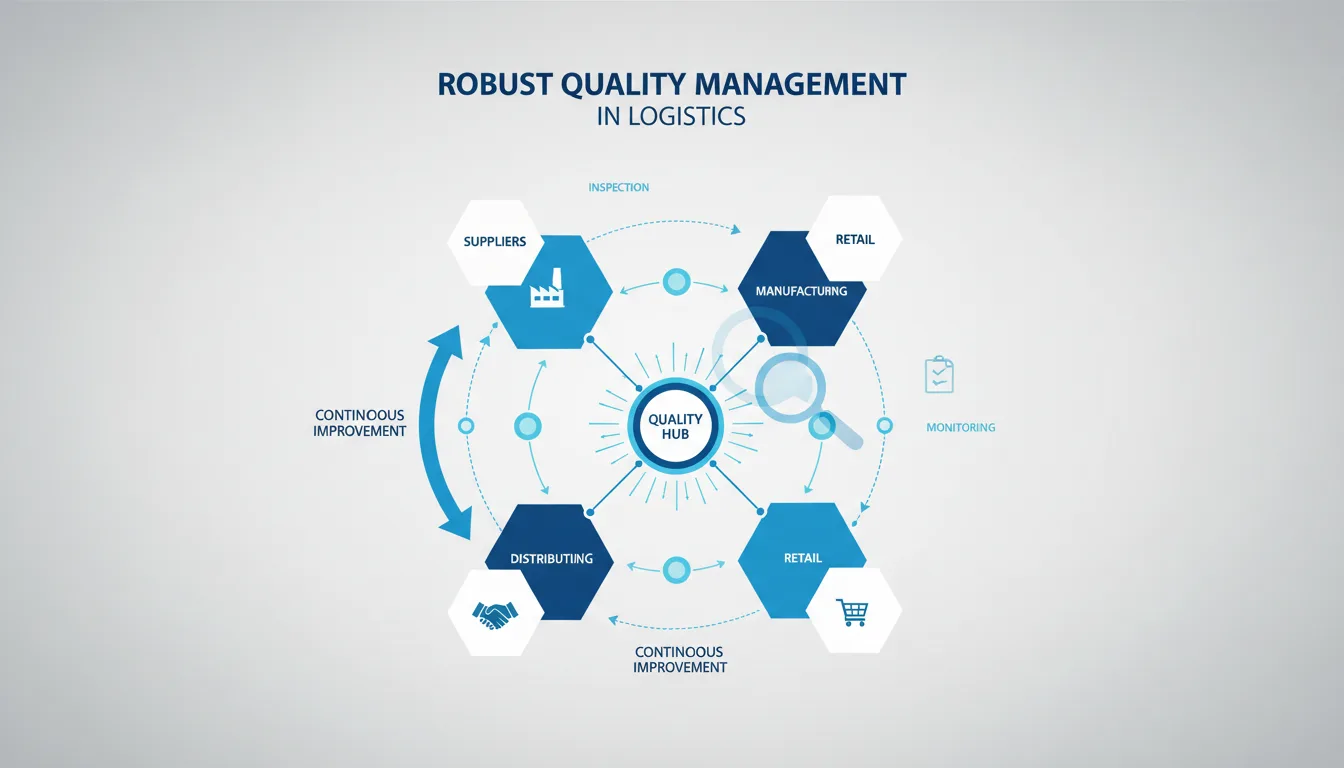
Robust Quality Management (RQM) refers to a strategic and holistic approach that emphasizes consistent excellence in products and services throughout the entire logistics and supply chain processes. Unlike traditional quality control which often focuses on inspection, RQM proactively designs systems and processes to be inherently resilient to variations and potential defects. The purpose of RQM is to ensure that every stage of delivery meets the highest quality standards, thereby minimizing errors, reducing costs, enhancing customer satisfaction, and fostering operational resilience. Implementing a robust quality management system is essential for businesses in the logistics sector, as it ultimately fosters operational efficiency and builds long-term client relationships.
Etymology and Origins
The concept of "quality" itself derives from the Latin qualitas, meaning "of what kind" or "nature," while "management" traces its roots to the Latin manus (hand) and agere (to act), implying handling or directing. The term "quality management" has its roots in the early 20th century, specifically the 1920s and 1930s, when manufacturers began to recognize that product quality directly impacted customer satisfaction and production efficiency. Early efforts focused primarily on inspection to identify defects after production.
The critical modifier "Robust" in Robust Quality Management is largely attributed to the work of Japanese quality expert Genichi Taguchi in the mid-20th century. Taguchi's philosophy, known as Robust Design, emphasizes designing products and processes so that they are insensitive, or robust, to uncontrollable factors (often termed "noise factors") that can cause variation in quality. This approach moved beyond simply controlling variations to designing systems that inherently perform consistently despite variations, making products less sensitive to environmental conditions or manufacturing inconsistencies. This proactive stance is central to the modern understanding of RQM.
Historical Development
1920s-1930s: Foundations of Statistical Quality Control
Quality control in the early 20th century began as a practice among U.S. manufacturers, mainly to address defects during manufacturing processes. A pivotal development was the work of Walter A. Shewhart at Bell Telephone Laboratories in the 1920s. Shewhart introduced the concept of Statistical Process Control (SPC) charts in 1924, providing a methodology to distinguish between common-cause variation (inherent in the system) and special-cause variation (attributable to specific, identifiable factors) [6]. This marked a significant shift from mere inspection to using statistical methods for process improvement.
1940s-1950s: Pioneers of Modern Quality Management
The devastation of World War II spurred a critical need for efficient production and quality in manufacturing. The introduction of statistical quality control and broader quality management principles was notably advanced by American statisticians W. Edwards Deming and Joseph Juran. While their ideas initially found limited traction in the US, they were eagerly adopted in post-war Japan. Deming's 14 Points for Management and Juran's Quality Trilogy (Quality Planning, Quality Control, Quality Improvement) shaped the foundations of modern quality management systems by emphasizing management responsibility, customer focus, and continuous improvement over mere inspection [7, 8].
1960s-1970s: Global Expansion and New Methodologies
During these decades, quality concepts gained further traction globally. Philip B. Crosby introduced the concept of "Zero Defects" in the 1960s, advocating for error prevention rather than correction [9]. The aerospace industry also saw the development and adoption of Failure Mode and Effects Analysis (FMEA), a systematic, proactive method for identifying potential failure modes in a system, product, or process. This period also saw the rise of "Quality Circles," small groups of employees who voluntarily met to identify, analyze, and solve work-related problems.
1980s: Rise of TQM and Robust Design
Japan distinguished itself during this decade with the successful implementation of Total Quality Management (TQM) frameworks, heavily influenced by Deming and Juran's teachings. TQM promoted a company-wide commitment to continuous improvement, customer satisfaction, and employee involvement, leading to significant competitive advantages for Japanese industries, particularly in automotive and electronics. This led to the global acceptance and adoption of these principles. Crucially, it was also during this period that Genichi Taguchi's methods for Robust Design gained widespread recognition, providing a systematic approach to engineer quality into products and processes to make them resistant to variation [10].
1990s to Present: Evolution, Standardization & Technology Integration
The 1990s saw the widespread adoption of the ISO 9000 series of international standards for quality management systems, providing a common framework for organizations worldwide [11]. Methodologies like Six Sigma (pioneered at Motorola and popularized by General Electric) emerged, combining statistical analysis with project management to reduce defects to near-perfection levels. Lean Manufacturing, focused on waste reduction, also saw broader application beyond manufacturing into logistics and services. With the advent of advanced technology, systems such as Enterprise Resource Planning (ERP) and various Warehouse Management Systems (WMS) have integrated robust quality management capabilities. Continuous monitoring through advanced tools, including IoT sensors, artificial intelligence, and machine learning, has become a standard in modern quality assurance, enabling proactive and predictive quality management.
Core Concepts
Robust Quality Management involves four primary pillars, often adapted from ISO 9000 principles, but with an emphasis on proactive design for resilience:
- Customer Focus: Understanding and consistently meeting, if not exceeding, customer needs and expectations is paramount. This includes understanding their stated and unstated quality requirements and designing processes to reliably deliver on them.
- Leadership: Strong, committed leadership is crucial to establish unity of purpose and direction, ensuring that quality management principles are embedded throughout the organizational culture and adhered to at every level.
- Engagement of People: Empowering and involving all employees in quality initiatives fosters a sense of ownership and leverages collective intelligence. Collaboration among all employees enhances the quality process through training, clear responsibilities, and performance feedback, often supported by employee productivity tracking.
- Process Approach: Focusing on managing activities as interconnected processes rather than only outcomes allows organizations to enhance performance and efficiency continuously. Implementing well-defined workflows helps standardize quality and reduce variation.
Tools and Techniques
Several tools and techniques are integral to a robust quality management system:
- Six Sigma: A data-driven methodology used to eliminate defects by improving processes. It uses a set of quality management methods, mainly empirical, statistical methods, and creates a special infrastructure of people within the organization.
- Kaizen: A Japanese philosophy focusing on continuous improvement through small, incremental changes involving all employees.
- Failure Mode and Effects Analysis (FMEA): A systematic, proactive method to identify potential failure modes in a system, process, or product, assess their risk, and mitigate them.
- Statistical Process Control (SPC): Uses statistical methods to monitor and control a process, ensuring it operates at its full potential by keeping it in a state of statistical control.
- Quality Function Deployment (QFD): A structured approach to translate customer requirements (the "voice of the customer") into appropriate technical requirements for each stage of product development and production.
- Design of Experiments (DoE): A systematic method to determine the relationship between factors affecting a process and its output, crucial for Taguchi's Robust Design to identify optimal process settings that minimize variation.
Industry Applications
Robust Quality Management is critical across various logistics sectors, integrating quality principles at every touchpoint:
- Manufacturing: Ensuring products meet stringent quality standards before they even enter the supply chain. This involves using SPC on production lines, FMEA during product design, and DFM (Design for Manufacturability) to build quality in from the outset. For instance, an automotive manufacturer might implement RQM to ensure zero defects in engine components, reducing warranty claims down the line.
- Warehousing: Implementing quality checks during various stages like receiving inventory (inspection against purchase orders, damage assessment), stock replenishment, putaway (correct storage location, handling), and order fulfillment (accurate picking, packing, and quality of packaging). Quality assurance here can prevent picking errors, damage during storage, and ensure compliance with lots and expiration dates. A modern Warehouse Management System (WMS) with visual inventory management can significantly aid in these checks.
- Transportation: Tracking and ensuring the quality and integrity of goods in transit. This includes proper loading procedures, monitoring environmental conditions (temperature, humidity, shock) for sensitive goods using IoT sensors, ensuring secure packaging, and verifying delivery at the destination. For example, a pharmaceutical logistics provider uses RQM to maintain strict cold chain integrity, ensuring vaccines remain viable from production to point of use.
- Supplier Quality Management: RQM extends to evaluating and managing suppliers to ensure the quality of incoming materials and components. This often involves rigorous supplier audits, clear quality agreements, and integration with purchase order management systems to track supplier performance.
Benefits and Advantages
Implementing Robust Quality Management yields significant benefits beyond mere compliance:
- Improved Efficiency: By proactively identifying and eliminating potential problems, processes are streamlined, leading to faster turnaround times, reduced cycle times, and more productive use of resources. This directly contributes to operational excellence.
- Cost Reduction: Decreased waste, rework, product recalls, and warranty claims result in significantly lower operating costs. Prevention is always cheaper than correction. For example, preventing a single incorrect shipment can save costs associated with returns, re-shipping, and customer service.
- Enhanced Customer Satisfaction and Loyalty: Consistently meeting or exceeding customer expectations through reliable product and service quality builds trust, fosters loyalty, and strengthens brand reputation. This can lead to repeat business and positive word-of-mouth.
- Competitive Advantage: Organizations with robust quality systems often stand out in the marketplace, attracting new customers and retaining existing ones due to their superior reliability and performance.
- Risk Mitigation and Regulatory Compliance: RQM helps identify and mitigate potential risks early in the process, ensuring compliance with industry regulations, safety standards, and environmental requirements.
Challenges and Limitations
Successful implementation of robust quality management can face several significant issues:
- Resistance to Change: Employees may resist adopting new processes or systems due to fear of the unknown, perceived increased workload, or lack of understanding regarding the benefits. A strong change management strategy is essential.
- Resource Allocation: Insufficient financial, technological, or human resources can lead to inadequate training, delayed implementation of quality initiatives, and a failure to sustain improvements.
- Complexity of Global Supply Chains: Managing quality across diverse geographies, multiple suppliers, varying regulations, and different cultural expectations presents considerable complexity.
- Data Integration and Analysis: Effectively collecting, integrating, and analyzing vast amounts of quality data from disparate systems (e.g., ERP, WMS, IoT sensors) can be challenging, hindering data-driven decision-making.
- Initial Investment Costs: The upfront costs for implementing new quality systems, training, and technology can be substantial, requiring clear justification and executive buy-in.
Best Practices
Organizations can enhance their quality management processes by adopting several key best practices:
- Foster a Culture of Quality: Embed quality as a core value across the entire organization, promoting accountability and continuous improvement from top management to frontline staff.
- Data-Driven Decision Making: Utilize real-time data and analytics to monitor key quality metrics, identify trends, and make informed decisions. This includes leveraging insights from visual inventory management systems.
- Supplier Quality Management: Establish strong partnerships with suppliers, implement rigorous qualification processes, and continuously monitor their performance to ensure the quality of incoming materials.
- Regular Training and Education: Conduct regular training sessions for employees to keep them updated on quality standards, new methodologies, and the use of quality tools. This ensures competency and commitment.
- Process Standardization and Automation: Develop clear, documented processes and leverage modern tools and software like Mobile Warehouse Management Systems to automate quality checks, data capture, and workflow management, reducing human error and improving efficiency. Utilizing workflows for quality gates (e.g., during receiving or packing) is crucial.
- Continuous Improvement Cycles: Implement formal continuous improvement programs such as Kaizen events or Six Sigma projects to systematically identify and address quality issues.
- Leverage Technology: Embrace advanced technologies like IoT for real-time monitoring of product conditions, AI/ML for predictive quality analytics, and blockchain for enhanced supply chain transparency and traceability.
Future Trends
As businesses continue to focus on quality and resilience, several trends are shaping the future of Robust Quality Management:
- Predictive Quality Analytics with AI/ML: The integration of artificial intelligence and machine learning will move quality management from reactive to predictive. AI algorithms can analyze vast datasets to anticipate potential defects or failures before they occur, enabling proactive intervention and maintenance.
- Real-time Monitoring with IoT: Increasing reliance on advanced IoT sensors will provide real-time data on environmental conditions (temperature, humidity, vibration), asset performance, and product integrity throughout the supply chain, enabling immediate alerts and actions if quality parameters are breached.
- Blockchain for Transparency and Traceability: Blockchain technology offers immutable and transparent record-keeping, providing end-to-end traceability of products, materials, and quality checks across complex supply chains. This enhances accountability and trust.
- Sustainability Integration: A growing shift toward integrating sustainability goals into quality management practices, aligning environmental considerations (e.g., waste reduction, eco-friendly packaging) with traditional quality goals.
- Digital Twins for Quality Simulation: Creating digital replicas of physical products, processes, or supply chains allows organizations to simulate various scenarios, predict quality outcomes, and optimize designs for robustness without physical prototyping.
Related Concepts
Robust Quality Management is intricately interlinked with various complementary concepts, all aimed at optimizing operational excellence and product/service delivery:
- Lean Manufacturing: Focuses on eliminating waste (Muda) in all forms, streamlining processes, and improving efficiency. RQM complements Lean by ensuring that the streamlined processes also deliver consistent, high-quality output.
- Supply Chain Optimization: Aims to improve the efficiency and performance of the entire supply chain. RQM contributes by ensuring quality at every node, from supplier to customer, reducing disruptions and improving overall flow.
- Total Quality Management (TQM): A management philosophy centered on customer focus, continuous improvement, and the involvement of all employees in quality efforts. RQM can be seen as a specific approach within the broader TQM framework, emphasizing design for robustness.
- ISO 9000 Series: International standards for quality management systems that provide a framework for organizations to ensure they consistently meet customer and regulatory requirements. RQM principles align with and often enhance ISO 9000 compliance by focusing on proactive quality design.
- Six Sigma: A highly disciplined, data-driven approach and methodology for eliminating defects (driving towards six standard deviations between the mean and the nearest specification limit) in any process – from manufacturing to transactional and from product to service. RQM utilizes many of the statistical tools and rigorous analysis inherent in Six Sigma.
Sources
- Mobile Warehouse Management System Overview
- Stock Replenishment Guide
- Order Fulfillment Guide
- WMS vs ERP Analysis
- Enterprise Fulfillment Best Practices
- Statistical Process Control (SPC)
- Juran's Quality Trilogy
- Deming's 14 Points for Management
- Philip B. Crosby - Quality Without Tears
- Taguchi Methods for Robust Design
- ISO 9001 Quality management
- Visual Inventory Management System
- Workflows Overview
- Employee Productivity Tracking
- Add Inventory Guide
- Bin Put-Away Criteria
- Lots & Expiration Dates
- Purchase Order Management