Robust Performance Management in Logistics
This article explores robust performance management, focusing on its definition, historical development, core concepts, and its application in logistics.
Updated
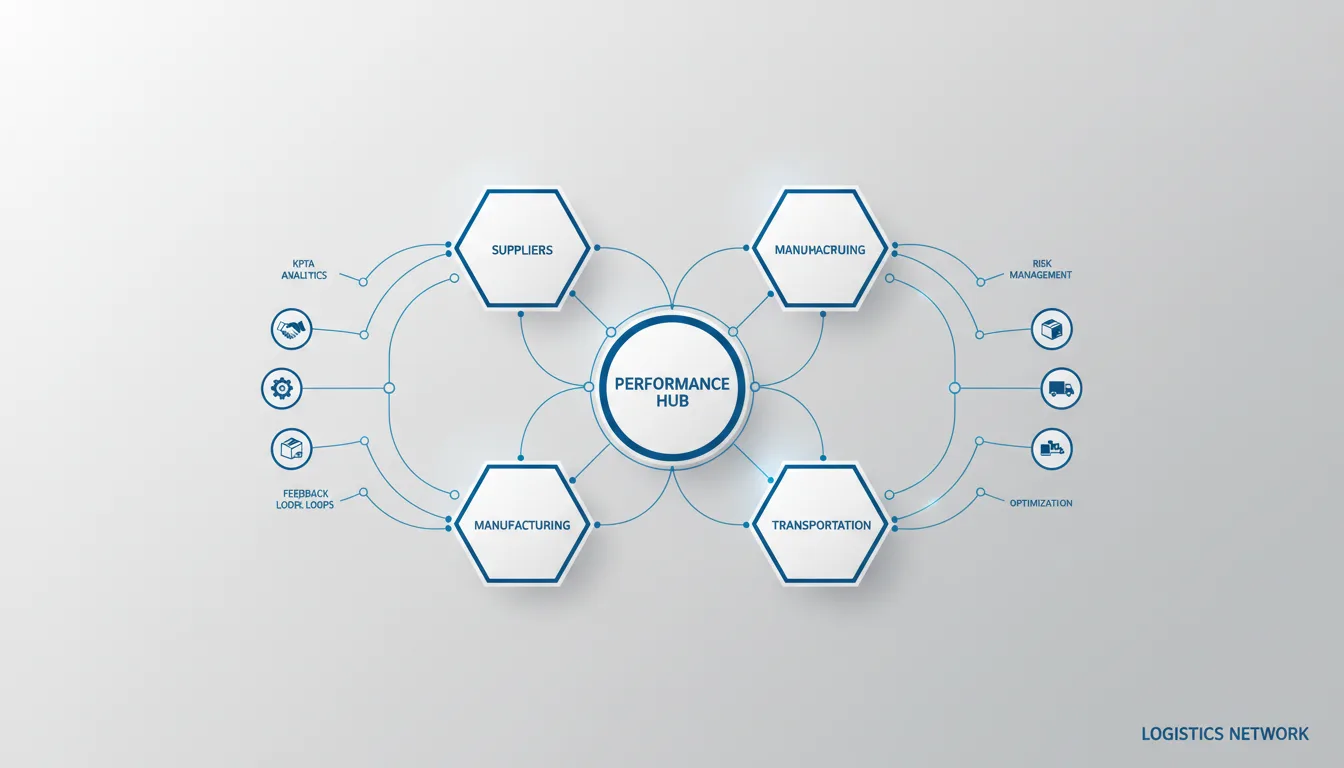
Overview
Robust performance management in logistics refers to a systematic approach to measuring, monitoring, and improving performance efficiency across the supply chain. Its primary purpose is to ensure that logistics operations consistently meet or exceed key performance indicators (KPIs) while optimizing costs, enhancing customer satisfaction, and building resilience. The importance of robust performance management cannot be overstated, as it fosters strategic alignment within organizations, enhances data-driven decision-making capabilities, supports continuous improvement efforts, and drives competitive advantage.
Etymology and Origins
The concept of "performance management" evolved from earlier management philosophies focused on efficiency and measurement. Its intellectual roots can be traced to:
- Scientific Management (early 20th century): Pioneers like Frederick Winslow Taylor and Frank and Lillian Gilbreth introduced time-and-motion studies, laying the groundwork for systematic measurement of work processes and individual output, a foundational element for logistics efficiency.
- Management by Objectives (MBO, 1950s): Introduced by Peter Drucker, MBO emphasized setting clear, measurable goals and regularly reviewing progress. While initially focused on individual employee performance, its principles of goal-setting and performance appraisal were later adapted for organizational and departmental levels, including operational logistics.
- Performance Appraisal (1960s-1970s): This formal assessment of employee performance was a precursor. However, the term "performance management" began to gain prominence in the late 1970s and early 1980s, shifting from a one-time assessment to a continuous, cyclical process of planning, monitoring, developing, appraising, and rewarding performance. Michael Beer's work at Harvard Business School significantly contributed to this evolution, advocating for performance management as an integrated system rather than just an appraisal event.
In logistics, this evolution meant moving beyond simple cost tracking to a more holistic view of operational effectiveness, integrating metrics related to speed, accuracy, and customer service. The rise of sophisticated frameworks like the Balanced Scorecard in the 1990s cemented the idea of multi-dimensional performance assessment, extending beyond purely financial metrics to include customer, internal process, and learning and growth perspectives, which are highly relevant for modern supply chain operations.
Historical Development
The practice of performance management in logistics has evolved significantly, mirroring broader advancements in management science and technology:
- 1950s-1960s: Foundations in Operations Research and Early Computerization. The post-World War II era saw the rise of Operations Research (OR), applying mathematical modeling and analytical methods to complex logistical problems like inventory control and transportation routing. Early mainframe computers were introduced to manage basic inventory records and order processing, laying the technical foundation for data-driven logistics decisions. Peter Drucker's emphasis on Management by Objectives (MBO) further highlighted the importance of measurable goals.
- 1970s: Material Requirements Planning (MRP) and Lean Beginnings. The development and adoption of Material Requirements Planning (MRP) systems, notably championed by pioneers like Oliver Wight, revolutionized manufacturing planning by calculating component needs based on a master production schedule. Simultaneously, the Toyota Production System (TPS), with its focus on waste reduction and continuous improvement (Kaizen), began to influence global manufacturing and logistics, emphasizing performance through efficiency rather than just output.
- 1980s: Just-In-Time (JIT), Total Quality Management (TQM), and MRP II. The 1980s saw widespread adoption of Just-In-Time (JIT) inventory systems inspired by Toyota, which required precise timing and coordination, necessitating robust performance tracking for suppliers and internal operations. Total Quality Management (TQM) principles became pervasive, emphasizing continuous improvement of all processes. MRP evolved into Manufacturing Resource Planning (MRP II), integrating more business functions beyond just materials.
- 1990s: Emergence of Supply Chain Management (SCM) and ERP Systems. The decade saw the formalization of the Supply Chain Management (SCM) concept, recognizing the interconnectedness of various entities from raw material suppliers to end consumers. Enterprise Resource Planning (ERP) systems emerged as integrated software solutions, providing a single view of business operations, including logistics. Kaplan and Norton's seminal work, The Balanced Scorecard: Measures That Drive Performance (1992), popularized a multi-dimensional approach to performance measurement, influencing how logistics KPIs were developed.
- 2000s-Present: E-commerce Boom, Real-time Data, and Advanced Analytics. The rise of e-commerce transformed logistics, demanding faster, more accurate, and more transparent operations. This era saw the widespread adoption of advanced technologies like Warehouse Management Systems (WMS), Transportation Management Systems (TMS), and the increasing use of RFID for inventory tracking. The focus shifted towards real-time data capture and analytics, allowing for dynamic performance monitoring and predictive insights. Modern solutions like a Mobile Warehouse Management System now empower staff with immediate access to performance data and operational guidance on the go.
- 2010s-Present: Digitalization, AI, IoT, and Resilience. The current era is characterized by pervasive digitalization. Technologies such as Big Data, Artificial Intelligence (AI) and Machine Learning (ML), the Internet of Things (IoT), and robotics have further revolutionized performance management. Predictive analytics optimize routes and inventory, while IoT devices provide real-time visibility into asset location and condition. Blockchain technology offers enhanced transparency and traceability. The emphasis has expanded beyond efficiency to include supply chain resilience, sustainability, and agility, requiring even more sophisticated performance frameworks to manage complex, global networks.
Core Concepts
Robust performance management encompasses several interconnected core concepts:
- Key Performance Indicators (KPIs): These are quantifiable metrics used to evaluate the success of an organization or a particular activity. In logistics, KPIs measure performance against predetermined strategic goals. Examples include order fulfillment rate, inventory turnover, perfect order rate, on-time delivery, and logistics cost per unit. Effective KPIs are SMART (Specific, Measurable, Achievable, Relevant, Time-bound) and provide actionable insights for decision-makers. Tools like a Visual Inventory Management System can provide immediate visual feedback on these critical metrics.
- Continuous Improvement: This involves an ongoing, systematic effort to enhance products, services, or processes. Methodologies such as Lean (focused on eliminating waste) and Six Sigma (focused on reducing variation and defects) are widely utilized within logistics to systematically improve performance and achieve higher quality. Implementing structured Workflows within a WMS can standardize processes and facilitate continuous optimization.
- Benchmarking: The process of comparing an organization's performance metrics or practices to industry best practices or those of leading competitors. Benchmarking helps identify areas where an organization excels or lags, providing targets for improvement and fostering competitive advantage. This can involve internal benchmarking (comparing different departments) or external benchmarking (comparing with industry leaders).
- Feedback Loops and Corrective Actions: A crucial element where performance data is collected, analyzed, and fed back to relevant stakeholders to inform decision-making. This feedback identifies deviations from targets, enabling prompt corrective actions and adjustments to operational strategies. This iterative process ensures that performance management is dynamic and responsive.
Industry Applications
Performance management is critical across various sectors, enabling tailored optimization strategies:
- Retail: Companies utilize performance management to optimize their entire logistics networks, from inbound supply to last-mile delivery. This includes optimizing inventory levels to meet fluctuating customer demand, improving order fulfillment speed, and managing returns efficiently. For example, Pick, Pack, Ship Software can drastically enhance order fulfillment efficiency, while a Shopify Inventory Management system tracks sales velocity against stock levels to prevent stockouts and overstock. Tracking KPIs like perfect order rate and delivery time are crucial for customer satisfaction in e-commerce.
- Manufacturing: Robust performance management systems facilitate timely stock replenishment, optimize production schedules, and reduce waste through methodologies outlined in the Stock Replenishment Guide. KPIs such as production lead time, raw material inventory turns, and supplier on-time delivery are vital. Purchase Order Management systems integrate with performance metrics to ensure efficient procurement and supplier adherence to quality and delivery standards.
- Third-Party Logistics (3PLs): For 3PL providers, performance management is paramount for meeting Service Level Agreements (SLAs) with diverse clients. They track KPIs like order accuracy, damage rates, transit times, and cost per shipment to demonstrate value and optimize their multi-client operations. This often involves detailed reporting and analysis to ensure client satisfaction and operational profitability. Leveraging a comprehensive Order Management System allows 3PLs to maintain visibility and control across varied client requirements.
Benefits and Advantages
Implementing robust performance management yields significant benefits for logistics organizations:
- Enhanced Operational Efficiency: By identifying bottlenecks and inefficiencies through KPI tracking, organizations can streamline processes, reduce unnecessary costs, and optimize resource allocation. This leads to higher productivity and lower operational expenses.
- Improved Customer Satisfaction: Meeting or exceeding delivery targets, ensuring order accuracy, and providing transparent communication all contribute to a superior customer experience. Performance management helps pinpoint areas for improvement in service delivery, directly impacting customer loyalty and retention.
- Data-Driven Decision Making: Access to real-time, accurate performance data empowers organizations to make informed, proactive decisions rather than reactive ones. This allows for better forecasting, resource planning, and strategic adjustments to market changes or operational challenges.
- Increased Agility and Resilience: Continuous monitoring and feedback loops enable logistics operations to quickly adapt to disruptions, market fluctuations, or changes in customer demand, building a more resilient and agile supply chain.
- Cost Reduction: By optimizing inventory levels, reducing transportation waste, and improving warehouse efficiency, performance management directly contributes to significant cost savings across the supply chain.
Challenges and Limitations
While beneficial, robust performance management also presents challenges that must be addressed:
- Data Quality Issues: Ensuring the accuracy, completeness, and reliability of data from disparate systems can be a significant hurdle. Inaccurate data leads to flawed insights and potentially misinformed decisions. Regular cycle counting and robust data validation processes are essential to mitigate this.
- Resistance to Change: Employees may resist new performance management systems if they perceive them as overly burdensome, intrusive, or threatening to their job security. Effective communication, training, and involving employees in the design and implementation phases are critical to foster acceptance.
- Complexity of Supply Chains: Modern supply chains are increasingly global and complex, involving numerous partners, technologies, and regulations. Managing performance across such a vast and interconnected network can be challenging, requiring advanced integration and visibility tools.
- Technology Integration Hurdles: Integrating various systems (WMS, TMS, ERP, CRM) to create a unified view of performance can be technically complex and costly. Legacy systems may not easily communicate with newer platforms, creating data silos. Solutions that offer comprehensive integration capabilities, such as those within the SkuSavvy ecosystem for Shopify WMS or integrations with ShipEngine, help overcome these challenges.
Best Practices
To implement effective and sustainable performance management in logistics, companies should consider the following best practices:
- Establish Clear, Aligned KPIs: Define KPIs that are directly linked to strategic business objectives and cover all critical areas of logistics (cost, service, quality, speed). Ensure these KPIs are understood and embraced by all stakeholders.
- Leverage Integrated Technology: Implement robust, integrated systems such as a Mobile Warehouse Management System, Order Management System, and predictive analytics platforms for real-time performance tracking, data aggregation, and informed decision-making. Tools that offer visual inventory management can significantly improve data comprehension.
- Foster a Culture of Performance: Encourage continuous improvement, accountability, and transparency throughout the organization. This involves regular training, clear communication of goals, and celebrating successes.
- Implement Regular Review and Feedback Cycles: Conduct frequent performance reviews, not just annual appraisals, to provide timely feedback and make necessary adjustments. This iterative process ensures that performance remains on track.
- Invest in Employee Training and Development: Equip employees with the skills and knowledge needed to utilize performance management tools and understand their role in achieving organizational goals. This reduces resistance and improves data accuracy.
- Strategic Alignment: Ensure that logistics performance management initiatives are fully integrated with overall business strategy, contributing directly to organizational success rather than operating in isolation.
Future Trends
The future of robust performance management in logistics is expected to be heavily influenced by emerging technologies and evolving market demands:
- Artificial Intelligence (AI) and Machine Learning (ML): AI algorithms will increasingly automate data analysis, provide deeper insights into performance metrics, predict trends, optimize routes, and even enable autonomous decision-making in areas like inventory management and demand forecasting. Predictive analytics will shift performance management from reactive to highly proactive.
- Blockchain Technology: This technology promises to enhance transparency, traceability, and accountability across complex supply chains. By creating immutable records of transactions and movements, blockchain can facilitate more accurate performance tracking, reduce fraud, and streamline compliance, particularly for tracking origin and quality.
- Internet of Things (IoT): IoT sensors embedded in assets, vehicles, and warehouses will provide real-time data on location, temperature, condition, and usage. This granular visibility will enable unprecedented levels of performance monitoring and optimization, for instance, in cold chain management or asset utilization.
- Robotics and Automation: The increasing deployment of robotics in warehouses and automated vehicles in transport will require advanced performance management systems to monitor robot efficiency, collaboration with human workers, and overall automated process flow. This includes tracking robot uptime, task completion rates, and error rates.
- Sustainability Metrics: As environmental concerns grow, performance management will increasingly incorporate sustainability KPIs, such as carbon footprint, waste reduction, and ethical sourcing, influencing logistics network design and operational choices.
Conclusion
Robust performance management is not merely a reporting function but a strategic imperative for logistics organizations striving to optimize their operations in an increasingly complex and dynamic global marketplace. By leveraging advanced data analytics, embracing integrated technology solutions (like those offered by SkuSavvy), adhering to best practices, and adapting to future trends, businesses can not only enhance their performance but also build resilient, customer-centric supply chains that exceed expectations and drive sustainable growth.
Sources
- Pick, Pack, Ship Software
- Stock Replenishment Guide
- Mobile Warehouse Management System
- WMS ROI Calculator
- Best Enterprise Fulfillment Practices
- Performance Management for Supply Chains
- Frederick Winslow Taylor and Scientific Management
- What You Can Learn From Peter Drucker
- Michael Beer - Harvard Business School Faculty Profile
- A Brief History of OR
- The MRP II Saga
- Just-in-time system
- Supply chain management (SCM)
- What is ERP?
- Visual Inventory Management System
- Order Management System
- Workflows Overview
- Shopify Inventory Management
- Purchase Order Management
- Cycle Counting Guide
- Shopify WMS Overview
- ShipEngine Integration