Robust Order Management
A thorough exploration of robust order management, its significance, historical development, and best practices in logistics and supply chain management.
Updated
Overview
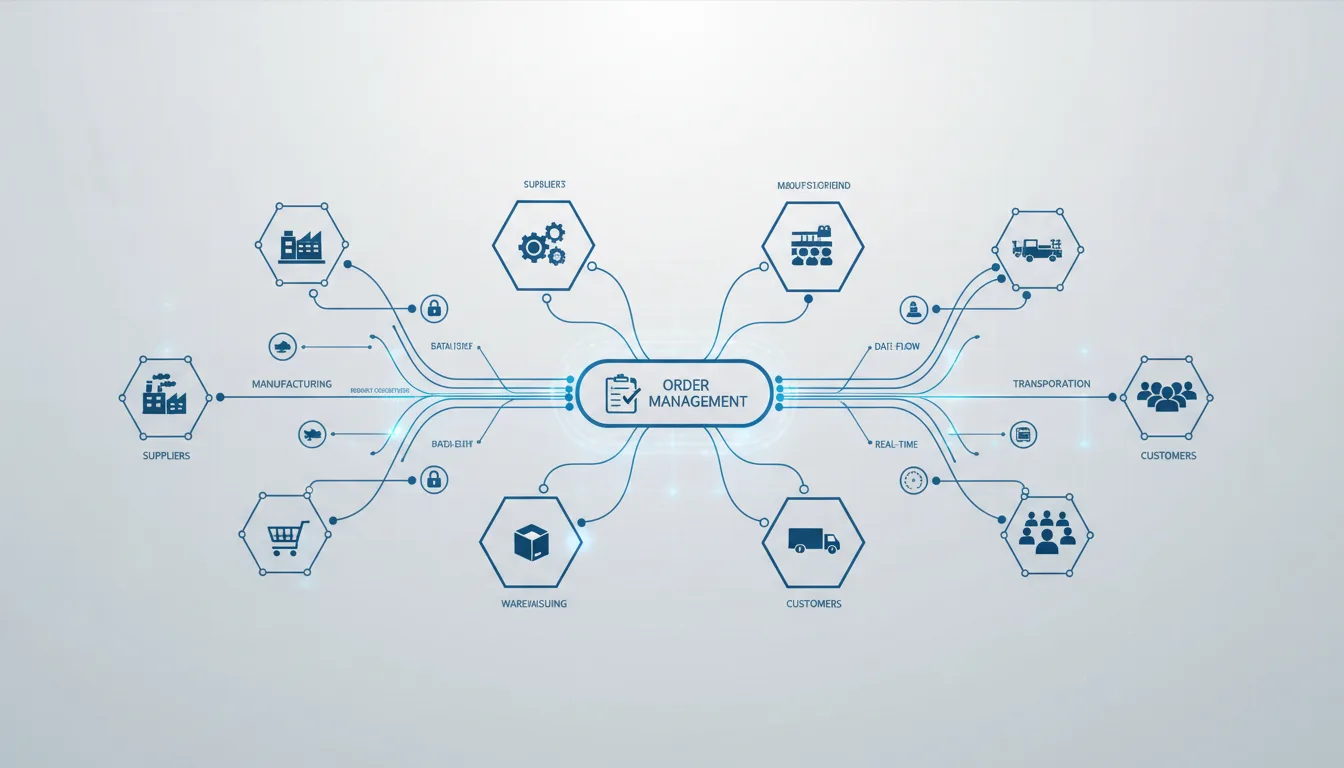
Robust order management refers to the comprehensive process of overseeing and executing customer orders from initiation to fulfillment. It is a critical component of supply chain management, designed to ensure that customer demands are met efficiently, accurately, and profitably. This system is vital for enhancing operational efficiency, minimizing errors, and ensuring customer satisfaction in an increasingly competitive marketplace. Businesses utilize order management systems (OMS) to centralize order processing, automate workflows, and provide real-time visibility into inventory, order status, and fulfillment progress.
Etymology and Origins
The concept of managing customer orders has existed as long as commerce itself. However, the formal term "order management" as a distinct discipline within logistics and supply chain management began to coalesce in the late 1980s and early 1990s. Prior to this, activities related to orders were often fragmented, falling under "order entry," "sales processing," or "customer service" departments [6].
The linguistic shift from "order processing" to "order management" signified a move from a purely transactional, administrative function to a more strategic, integrated, and end-to-end approach [7]. This evolution was driven by several factors: the increasing complexity of global supply chains, the imperative for faster and more accurate order fulfillment, and the nascent integration of enterprise-wide information systems. The rise of sophisticated software platforms, particularly in conjunction with the burgeoning internet and e-commerce, solidified order management as a central pillar of modern logistics [8].
Historical Development
The evolution of order management systems mirrors the broader advancements in logistics and information technology:
-
Pre-1970s: Manual & Decentralized Era
Order processing was predominantly a manual, paper-based activity. Sales orders were typically taken by phone or mail, recorded in ledgers, and fulfilled from local stock. Coordination between sales, inventory, and shipping departments was often ad-hoc and communication-intensive. -
1970s-1980s: Early Computerization & MRP/ERP Beginnings
The advent of mainframe computers introduced basic automation. Material Requirements Planning (MRP) systems emerged in manufacturing, allowing for computerized planning of raw materials and production schedules. By the 1980s, MRP evolved into Manufacturing Resource Planning (MRP II), which began to integrate more business functions, laying the groundwork for enterprise resource planning (ERP) systems. During this period, Electronic Data Interchange (EDI) also gained traction, enabling standardized digital exchange of documents like purchase orders and invoices between trading partners, significantly speeding up inter-company transactions [9]. -
1990s: Dedicated OMS & Internet's Influence
The 1990s saw the commercialization of the internet and the rise of client-server architectures. ERP systems, like SAP R/3 and Oracle Applications, became more prevalent, integrating financial, manufacturing, and basic order processing functions. Crucially, this decade also witnessed the emergence of dedicated order management software solutions, which went beyond basic order entry to include real-time inventory tracking, customer service capabilities, and rudimentary fulfillment logic. The growth of early e-commerce platforms underscored the need for more robust, automated systems to handle direct-to-consumer orders at scale. -
2000s: E-commerce Boom & Multi-channel Imperative
The explosion of e-commerce, championed by companies like Amazon, fundamentally transformed customer expectations for order fulfillment speed and transparency. Businesses were forced to adopt more sophisticated order management systems capable of managing orders from multiple channels (web, brick-and-mortar, call centers). The focus shifted to optimizing the entire order-to-delivery cycle, including inventory visibility across disparate locations and basic returns management. -
2010s and Beyond: Omnichannel, Cloud, AI & Hyper-Automation
This era is characterized by the drive towards omnichannel retail, where customers expect a seamless experience across all touchpoints. Cloud-based OMS solutions became mainstream, offering greater scalability, flexibility, and accessibility. Innovations such as artificial intelligence (AI) and machine learning (ML) have been integrated into order management to enhance demand forecasting, optimize inventory placement, and personalize customer interactions. Mobile solutions, IoT for real-time tracking, and blockchain for supply chain transparency are also increasingly influencing OMS capabilities, pushing towards hyper-automation and predictive analytics [10].
Key publications, such as "Supply Chain Management: Strategy, Planning, and Operation" by Sunil Chopra and Peter Meindl, and "Logistics and Supply Chain Management" by Martin Christopher, have informed industry standards and best practices, solidifying the academic and practical framework for robust order management.
Core Concepts
Robust order management encompasses several core functionalities that span the entire order lifecycle, from initial customer interaction to final delivery and post-sales support:
-
Order Lifecycle Management: This involves tracking orders from the moment they are placed until they are delivered and sometimes even through returns. A robust OMS ensures seamless flow through order entry, credit checks, inventory allocation, picking, packing, shipping, and invoicing. It can handle various order types, including standard sales orders, backorders, pre-orders, and custom configurations. SkuSavvy's order management system provides tools for managing the complete lifecycle, including handling order cancellations and modifications.
-
Inventory Management: A cornerstone of effective order management, this function synchronizes inventory levels with demand to prevent stockouts (which lead to lost sales and customer dissatisfaction) and overstock situations (which tie up capital). Advanced systems leverage real-time data, often through a visual inventory management system, to provide accurate available-to-promise (ATP) figures, manage safety stock, and facilitate stock replenishment. This is crucial for avoiding overselling and ensuring fulfillment capabilities.
-
Fulfillment Optimization: This refers to streamlining the processes of picking, packing, and shipping goods to customers. It aims to maximize efficiency, reduce costs, and accelerate delivery times. Techniques include batch picking, pick-to-tote, zone picking, and utilizing efficient warehouse layouts visualized through tools like a warehouse layout preview. SkuSavvy's pick, pack, and ship software helps optimize these workflows.
-
Shipping and Logistics Management: This involves selecting the most appropriate shipping carriers and services, generating shipping labels, tracking shipments, and managing freight costs. Integration with various carriers and the use of tools for automated rate selection are key for cost-effective and timely deliveries. Shipping and fulfillment software plays a critical role here, especially for multi-box shipments and complex logistics.
-
Customer Service & Returns Management: A robust OMS provides customer service representatives with real-time access to order status, tracking information, and purchase history, enabling them to provide accurate and timely support. It also facilitates efficient processing of returns, exchanges, and refunds, which is increasingly important for customer loyalty and managing reverse logistics.
Types and Classifications
Order management systems can be classified based on their scope, integration capabilities, and deployment models:
-
Basic OMS (Standalone): These systems primarily focus on core order processing and tracking functionalities, often suitable for smaller businesses or those with simpler operational needs. They may handle orders from a single sales channel and have limited integration capabilities.
-
Multi-channel / Omnichannel OMS: Designed for businesses selling through various channels (e-commerce, retail stores, marketplaces, call centers). These systems centralize order data from all sources, provide a unified view of inventory across locations, and enable flexible fulfillment options like buy online, pick up in-store (BOPIS) or ship-from-store. SkuSavvy's Shopify WMS and Shopify Inventory Management features exemplify multi-channel capabilities.
-
Integrated ERP Modules: Many large ERP systems (e.g., SAP, Oracle) include robust order management modules as part of their comprehensive suite. These offer deep integration with other business functions like finance, manufacturing, and HR, providing a holistic view of operations. However, they can be complex and costly to implement and customize.
-
Cloud-based vs. On-premise: Modern OMS solutions are predominantly cloud-based (SaaS), offering flexibility, scalability, and lower upfront costs. On-premise solutions, while offering greater control and customization, require significant IT infrastructure and maintenance.
Industry Applications
Robust order management is pivotal across various industries, serving as the central nervous system for commercial operations:
-
E-commerce: Essential for rapid order intake, accurate inventory allocation, and expedited fulfillment to meet consumer demand for speed and convenience. It manages complex rules for promotions, payment gateways, and shipping options.
-
Retail: Streamlines in-store, online, and mobile order processing. Enables omnichannel capabilities such as click-and-collect, ship-from-store, and personalized shopping experiences, enhancing overall customer journey.
-
Manufacturing: Helps manage complex make-to-order or configure-to-order processes, ensuring raw materials are available and production schedules align with customer delivery dates. Often integrated with purchase order management systems for supplier coordination.
-
Wholesale & Distribution: Manages high volumes of B2B orders, often with complex pricing, bulk discounts, and specific delivery requirements. Ensures efficient warehousing, transportation, and inventory rotation for multiple clients.
-
Third-Party Logistics (3PL): Enables logistics providers to offer efficient order fulfillment services to their clients, often requiring multi-client inventory management, customized picking logic, and seamless integration with client sales channels.
Benefits and Advantages
Implementing a robust order management system delivers significant strategic and operational advantages:
-
Improved Accuracy & Reduced Errors: Automates data entry and validation, significantly reducing human errors in order processing, inventory allocation, and shipping. This leads to fewer mis-shipments, returns, and customer complaints, ultimately boosting customer satisfaction.
-
Increased Operational Efficiency: Automates manual processes, such as order entry, inventory updates, and shipping label generation, shortening order cycle times. This frees up staff to focus on more strategic tasks and enhances overall productivity, enabling faster pick, pack, and ship operations.
-
Enhanced Visibility & Control: Provides real-time, end-to-end visibility into order status, inventory levels across all locations, and fulfillment metrics. This enables proactive problem-solving, better decision-making, and improved accountability throughout the supply chain. Businesses can leverage SkuSavvy's workflows to gain granular control over processes.
-
Scalability & Agility: Supports business growth by easily adapting to increased order volumes, new sales channels, and expanding product lines without proportional increases in operational overhead. This agility allows businesses to respond quickly to market changes and seasonal demands.
-
Better Customer Experience: Faster, more accurate fulfillment, transparent order tracking, and efficient returns processing directly translate to higher customer satisfaction and loyalty. Personalized fulfillment options also contribute to a superior customer journey.
-
Cost Reduction: Optimizes inventory levels, reduces carrying costs, minimizes shipping errors, and streamlines labor-intensive tasks, leading to overall cost savings in logistics and operations.
Challenges and Limitations
Despite its advantages, robust order management implementations can face several hurdles:
-
Integration Complexities: Merging a new OMS with existing legacy systems (e.g., ERP, WMS, CRM, e-commerce platforms) can be technically challenging, time-consuming, and expensive, especially if APIs are not standardized or well-documented. This often requires significant development or middleware solutions.
-
Cost Factors: The initial setup, licensing fees, customization, data migration, and ongoing maintenance costs for a comprehensive OMS can be substantial, particularly for complex enterprises. While cloud-based solutions offer lower upfront costs, subscription fees can accumulate.
-
Data Quality and Consistency: An OMS relies heavily on accurate and consistent data across the entire ecosystem. Poor data quality (e.g., inaccurate inventory counts, incorrect product information) can undermine the system's effectiveness and lead to fulfillment errors.
-
Changing Consumer Expectations & Market Dynamics: The rapidly evolving e-commerce landscape, characterized by demands for faster delivery, free shipping, and personalized experiences, necessitates continuous updates and adaptation of the order management strategy and technology.
-
User Adoption and Training: Successful implementation requires strong user adoption. Resistance to change and inadequate training can hinder the system's potential benefits.
Best Practices
To effectively implement and leverage robust order management, businesses should adopt the following best practices:
-
Automate Where Possible: Identify repetitive, rule-based tasks and automate them using the OMS. This includes order routing, inventory allocation, and generating shipping documentation. Tools for automated rate selection and workflows are prime examples of efficiency gains.
-
Maintain Real-Time Inventory Visibility: Implement systems that provide accurate, up-to-the-minute stock levels across all storage locations. This enables accurate available-to-promise (ATP) information, prevents overselling, and informs intelligent order routing and stock replenishment decisions.
-
Standardize Processes: Develop clear, documented standard operating procedures (SOPs) for all order management activities, from order entry to returns. This reduces variability, improves efficiency, and simplifies training.
-
Integrate Key Systems: Ensure seamless integration between the OMS and other critical business systems, including ERP, WMS, CRM, e-commerce platforms, and shipping carriers. This eliminates data silos and ensures a unified flow of information.
-
Monitor and Analyze Performance: Regularly track key performance indicators (KPIs) such as order cycle time, order accuracy rates, fill rates, on-time delivery percentages, and return rates. Use this data to identify bottlenecks, optimize processes, and drive continuous improvement.
-
Prioritize Customer Experience: Design order management processes with the customer at the forefront. Provide clear communication, transparent tracking, and flexible delivery and return options.
Technology and Tools
A variety of technologies and tools are employed to enhance order management capabilities:
-
OMS Software: Dedicated platforms like SkuSavvy's Order Management System centralize order processing, automate workflows, and provide critical analytics and reporting features. They often include modules for inventory allocation, order routing, and customer service.
-
Enterprise Resource Planning (ERP) Systems: Comprehensive suites that integrate OMS functionality with finance, manufacturing, HR, and other core business processes. Examples include SAP, Oracle, and Microsoft Dynamics.
-
E-commerce Platforms: Platforms like Shopify, Magento, and WooCommerce offer built-in basic order management capabilities, which can often be extended with plugins and integrations for more advanced features. SkuSavvy offers robust Shopify integrations to enhance these capabilities.
-
Warehouse Management Systems (WMS): While distinct from an OMS, WMS systems are crucial for executing the physical fulfillment aspects of order management within the warehouse. They optimize picking, packing, putaway, and shipping. Many modern solutions offer mobile WMS capabilities.
-
Mobile Solutions: Tools such as mobile order fulfillment software allow warehouse staff to manage picking, packing, and shipping tasks on handheld devices, improving efficiency and accuracy on the warehouse floor.
-
Business Intelligence (BI) & Analytics Tools: Used to analyze order data, identify trends, forecast demand, and measure performance against KPIs, supporting data-driven decision-making.
Future Trends
The future of robust order management is dynamic, driven by technological advancements and evolving consumer expectations:
-
Artificial Intelligence (AI) & Machine Learning (ML): AI-driven analytics will enable highly predictive insights for demand forecasting, inventory optimization (e.g., dynamic safety stock levels), personalized recommendations, and automated customer service (chatbots). ML can optimize order routing based on real-time factors like weather, traffic, and inventory availability [11].
-
Blockchain Technology: Could provide enhanced transparency and traceability across complex supply chains. By creating an immutable record of transactions and product movements, blockchain can improve trust, reduce fraud, and streamline customs processes, offering greater visibility into order fulfillment from origin to delivery [12].
-
Hyper-Personalization & Customer-Centric Strategies: Future systems will prioritize individualized customer experiences, adapting to unique preferences in delivery options, communication, and even product configuration. This includes dynamic pricing and real-time order modifications.
-
Increased Automation (RPA & Robotics): Robotic Process Automation (RPA) will continue to automate repetitive digital tasks, while physical robotics (e.g., autonomous mobile robots for picking) will further streamline warehouse operations, leading to faster and more accurate fulfillment. This will integrate closely with mobile WMS and fulfillment software.
-
Sustainability & Ethical Sourcing: Order management systems will increasingly incorporate features to track and report on environmental impact (e.g., carbon footprint of shipping), support ethical sourcing, and optimize packaging to reduce waste, driven by both consumer demand and regulatory pressure.
-
Internet of Things (IoT): IoT devices will provide real-time data on inventory location, environmental conditions during transit, and equipment status, enabling proactive management and greater visibility throughout the order journey.
Related Concepts
Robust order management is deeply intertwined with various other critical supply chain concepts, forming an integrated ecosystem:
-
Inventory Management: Absolutely critical for ensuring stock levels align with order demands. Effective inventory management, supported by systems like SkuSavvy's visual inventory system, prevents stockouts and overstocks, which are detrimental to order fulfillment.
-
Warehouse Management Systems (WMS): Manages the physical movement and storage of goods within a warehouse. A WMS, often integrating with mobile WMS capabilities, executes the picking, packing, and shipping instructions generated by the OMS.
-
Transportation Management Systems (TMS): Optimizes the planning, execution, and tracking of goods movement. A TMS works in conjunction with an OMS to ensure cost-effective and timely delivery of orders.
-
Fulfillment Strategies: Encompasses various methods for processing and delivering orders, such as cross-docking (for rapid transfer of goods), direct shipping, and dropshipping. These strategies are often orchestrated by the OMS.
-
Customer Relationship Management (CRM): While an OMS focuses on the order itself, a CRM system manages customer interactions and data, providing context for personalized order experiences and complaint resolution.
-
Supply Chain Planning (SCP): Involves demand forecasting, production planning, and strategic sourcing. The data generated by robust order management systems feeds into SCP to improve future planning accuracy.
References
[6] The Evolution of Supply Chain Management: A Review - https://www.tandfonline.com/doi/full/10.1080/00207543.2014.991081
[7] AI in Supply Chain: A Comprehensive Guide - https://www.inboundlogistics.com/articles/artificial-intelligence-in-the-supply-chain-the-ultimate-guide/
[8] Supply Chain Management: An Introduction - https://books.google.com/books?id=011qDwAAQBAJ
[9] Electronic Data Interchange (EDI) - https://www.ibm.com/docs/en/ztpf/2019?topic=concepts-electronic-data-interchange-edi
[10] Cloud-based OMS: Advantages and disadvantages - https://www.supplychaindive.com/news/cloud-based-oms-advantages-disadvantages/628045
[11] Blockchain in Supply Chain: A Guide for Businesses - https://www.investopedia.com/articles/markets/101315/how-blockchain-can-revolutionize-supply-chain-management.asp
[12] Logistics & Supply Chain Management: Creating Value Through Operations and Networks - https://www.routledge.com/Logistics-and-Supply-Chain-Management-Sixth-Edition-Creating-Value-Through/Harrison-Van-Hoek-Christopher/p/book/9781138719232
Sources
- Order Management System
- Visual Inventory System
- Batch Picking Guide
- Automated Rate Selection
- WMS vs ERP Analysis
- Logistics & Supply Chain Management: Creating Value Through Operations and Networks
- The Evolution of Supply Chain Management: A Review
- Supply Chain Management: An Introduction
- Electronic Data Interchange (EDI)
- Cloud-based OMS: Advantages and disadvantages
- AI in Supply Chain: A Comprehensive Guide
- Blockchain in Supply Chain: A Guide for Businesses