Robust Inventory Management
An exploration of robust inventory management, which emphasizes accuracy, efficiency, and technology in logistics.
Updated
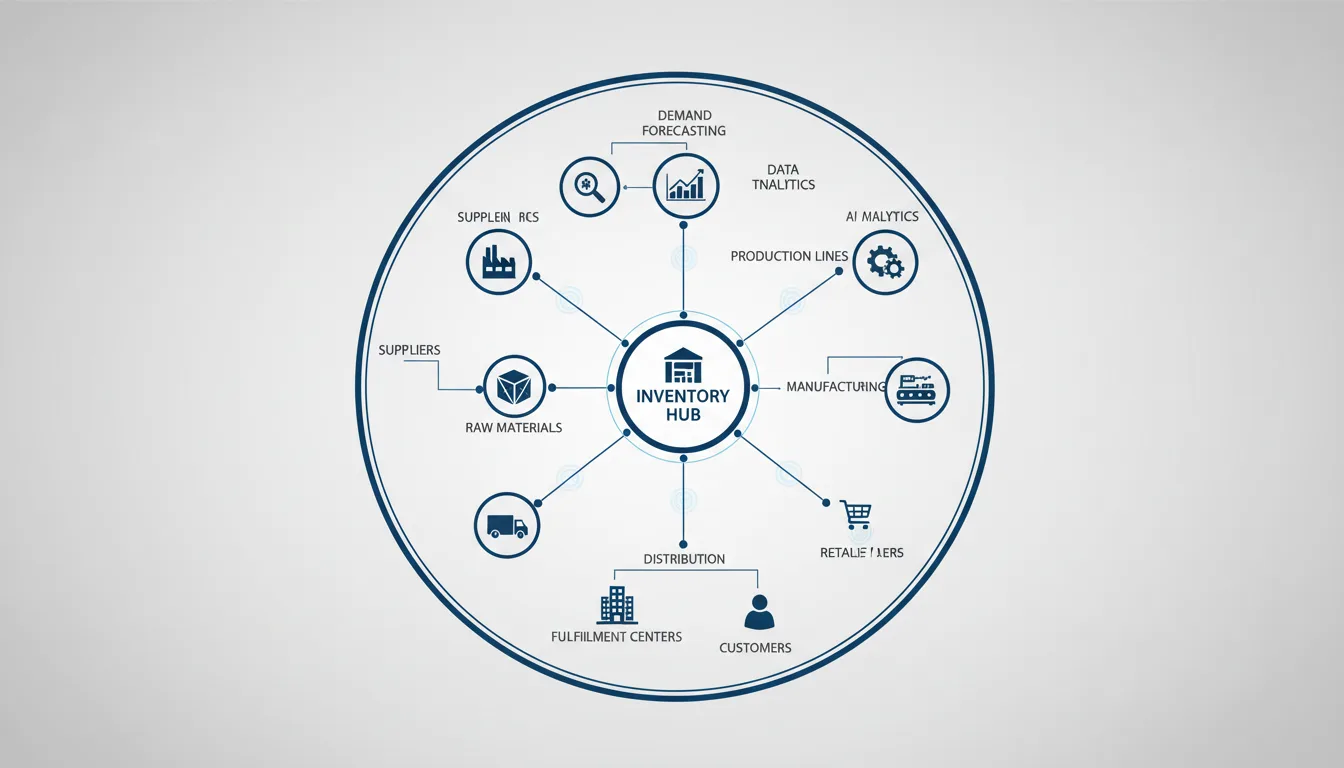
Robust Inventory Management
Overview
Robust inventory management refers to a systematic approach to overseeing the flow of goods and materials in a supply chain, from raw materials to finished products. This comprehensive process includes the coordination of order fulfillment, stock replenishment, and inventory accuracy across various stages. Effective inventory management is crucial for minimizing operational costs, improving customer service levels, and ensuring that businesses can respond swiftly and flexibly to evolving market demands and supply chain disruptions. According to industry studies, organizations implementing robust inventory practices can see improvements of up to 30% in productivity and a decrease of 25% in stock-outs, directly impacting profitability and customer satisfaction. It is a cornerstone of modern supply chain efficiency and competitive advantage.
Etymology and Origins
The term "inventory" traces its linguistic roots back to the Latin word inventarium, meaning a list or register of things found, derived from invenire, "to find." Initially, it referred simply to a detailed list of possessions or goods. The concept of "inventory management" as a formalized business practice began to emerge prominently in the mid-20th century, particularly after World War II, when manufacturing and logistics became more complex and scaled. The earliest documented usage of phrases related to managing stock efficiently appeared in the business literature of the 1950s, evolving from basic stock-keeping to a more strategic function. This transformation mirrored the recognition of inventory not just as a static asset, but as a dynamic resource that, if managed poorly, could incur significant costs (e.g., holding costs, obsolescence) or, if managed effectively, could be a pivotal driver for operational efficiency and market competitiveness.
Historical Development
The evolution of inventory management can be traced through several key developments, deeply intertwined with technological advancements and evolving economic philosophies:
-
Pre-20th Century: Ancient Practices & Early Commerce: For millennia, merchants and empires managed stock through manual ledger systems and physical counts. Early forms of inventory control were essential for trade, military logistics, and ensuring food supplies, often relying on simple physical organization and rudimentary record-keeping. The industrial revolution in the 18th and 19th centuries increased the scale of manufacturing, but inventory practices remained largely reactive and decentralized.
-
Early 20th Century: Scientific Management & Basic Stock Control (1900s-1940s): Frederick Taylor's principles of scientific management began to professionalize factory operations, indirectly influencing how inventory was viewed. Simple economic order quantity (EOQ) models, first formalized by Ford W. Harris in 1913, provided a mathematical approach to optimize order sizes, though widespread adoption was limited until later decades. Practices were still largely informal, focusing on manual tracking methods and personal oversight by foremen or stock clerks.
-
Mid-20th Century: Formalization and Methodologies (1950s-1960s):
- 1950s: The introduction of modern inventory management principles truly began. H.F. Dickie's seminal 1951 article in Operations Research introduced ABC analysis, a classification method categorizing inventory based on value or importance. This concept revolutionized how businesses prioritized stock management efforts, moving beyond a one-size-fits-all approach and laying the groundwork for subsequent methodologies.
- 1950s-1960s: The development of Material Requirements Planning (MRP) systems started, pioneered by companies like IBM and implemented in manufacturing, especially within the defense industry. MRP was designed to manage raw materials and component inventories based on production schedules, marking a shift towards proactive planning rather than reactive stock control.
-
1970s: Technological Adoption and Japanese Innovations: The decade saw the significant adoption of barcoding technology (UPC introduced in 1974) and early automated systems, enabling more precise tracking and control. Simultaneously, the manufacturing philosophy developed by Toyota in Japan, particularly the Just-In-Time (JIT) production system, gained prominence. JIT, championed by Taiichi Ohno, aimed to minimize waste and reduce holding costs by synchronizing production with actual demand, profoundly changing the landscape of inventory management by emphasizing lean principles and rapid turnover.
-
1980s-1990s: Computerization and Integrated Systems: The proliferation of personal computers and more powerful mainframe systems led to the widespread adoption of computerized inventory systems. MRP evolved into MRP II (Manufacturing Resource Planning), integrating more functions like finance and marketing. The rise of supply chain management (SCM) as a discipline began to connect inventory decisions across the entire chain. Companies like SAP emerged, developing comprehensive enterprise solutions.
-
2000s: ERP Dominance and Globalization: The turn of the millennium saw the widespread adoption of Enterprise Resource Planning (ERP) systems, which integrated various business functions—including inventory, finance, human resources, and customer relations—into a single, comprehensive software suite. Major players like SAP, Oracle, and Microsoft Dynamics began to dominate the landscape, providing organizations with tools for comprehensive supply chain management and global visibility. This era also highlighted the challenges of managing global supply chains and coordinating inventory across distributed networks.
-
22010s-Present: Digital Transformation and Advanced Analytics: This period is characterized by the acceleration of digital technologies. Cloud-based inventory solutions, mobile warehouse management systems, and the integration of advanced analytics, AI, and machine learning have become standard. Technologies like RFID, IoT sensors, and blockchain offer unprecedented levels of real-time visibility and traceability. Predictive analytics, driven by big data, now enhance forecasting reliability, allowing for more proactive and data-driven inventory decisions, marking a significant leap forward in strategic planning. Modern warehouse management systems (WMS) are central to this transformation, providing tools for optimization and automation.
Core Concepts
Robust inventory management encompasses several core concepts essential for its successful implementation:
- Ordering Systems: This involves establishing efficient processes for determining when and how much to order to maintain appropriate stock levels. Effective stock replenishment systems, such as reorder points or periodic review, significantly impact lead times, holding costs, and the ability to meet demand. Advanced systems can automate these processes based on demand forecasts and current stock levels.
- Inventory Accuracy: The bedrock of effective inventory management. Regular stock audits, such as cycle counting (auditing small sections of inventory frequently) or periodic physical counts, ensure that digital records align with physical inventory levels. High accuracy reduces discrepancies, minimizes losses from shrinkage or obsolescence, and prevents costly stock-outs or overstock situations. Technologies like RFID and barcode scanning are critical enablers.
- Data Analytics and Forecasting: Utilizing technology to analyze historical sales data, market trends, seasonal fluctuations, and promotional impacts to predict future demand. Sophisticated data analytics can provide insights into product life cycles, vendor performance, and customer behavior, driving operational decisions and improving forecasting accuracy. This enables businesses to optimize inventory levels, reduce carrying costs, and improve service levels.
- Inventory Optimization: The process of balancing conflicting objectives—minimizing inventory costs (holding, ordering, shortage) against maximizing customer service levels. This often involves using mathematical models and software to determine optimal stock levels for each SKU across various locations, considering factors like lead times, demand variability, and service level targets.
Types and Classifications
Several inventory management methods can be employed, often in combination, to suit different business needs and product characteristics:
- Just-In-Time (JIT): A lean manufacturing strategy where materials are ordered and received only when needed for production, or goods are produced only when there is a customer order. This approach minimizes inventory holding costs and waste by synchronizing orders with production schedules. Pioneered famously by companies like Toyota, JIT leads to drastic improvements in operational efficiency and responsiveness, though it requires highly reliable suppliers and predictable demand.
- ABC Analysis: A technique for categorizing inventory items based on their value or importance. 'A' items are high-value, fast-moving, or critical items that require tight control; 'B' items are medium-value; and 'C' items are low-value, high-volume items with less stringent control. This enables businesses to apply targeted management strategies, allocating resources where they have the greatest impact.
- Perpetual Inventory System: A method that continuously updates inventory records in real-time with each transaction (receipts, sales, transfers). This provides constant, real-time visibility and control over stock levels, which is crucial for managing dynamic environments and enabling automated replenishment. Modern WMS systems are built upon perpetual inventory principles.
- Periodic Inventory System: In contrast to perpetual, this system involves physical counts of inventory at regular intervals (e.g., monthly, quarterly) to determine stock levels and cost of goods sold. It is simpler to implement but provides less accurate, less timely information.
- Consignment Inventory: An agreement where the supplier (consignor) retains ownership of the goods until the product is sold by the retailer (consignee). This minimizes financial burdens on retailers while allowing for flexible inventory management and reducing the risk of obsolescence for the retailer.
- Cross-Docking: A logistics practice that involves unloading materials from an incoming truck and directly loading them onto outbound trucks or other modes of transport with little or no storage time in between. This streamlines the supply chain, reduces handling, and significantly cuts warehousing costs and lead times.
- Dropshipping: A fulfillment method where the retailer does not keep goods in stock. Instead, when a customer places an order, the retailer purchases the item from a third party (a manufacturer, wholesaler, or another retailer) who then ships it directly to the customer. This eliminates the need for the retailer to manage physical inventory.
Benefits and Advantages
The advantages of robust inventory management are extensive and far-reaching, impacting financial performance, operational efficiency, and customer loyalty:
- Increased Operational Efficiency and Productivity: Streamlined inventory processes lead to reduced manual labor, less rework, and faster throughput. This translates to lower labor costs and improved overall operations. Case studies have shown a 20% reduction in operational costs and a significant increase in employee productivity through effective inventory management, highlighting the substantial financial benefits.
- Better Customer Satisfaction: Accurate inventory information and timely order fulfillment directly contribute to meeting customer expectations. Reducing stock-outs and ensuring prompt deliveries significantly impacts customer loyalty and retention rates. Companies reporting high inventory accuracy can see a marked increase in customer satisfaction scores and repeat business.
- Reduced Carrying Costs: Effective stock management minimizes excess or obsolete inventory, resulting in lower holding costs (e.g., warehousing, insurance, spoilage, depreciation) and improved cash flow. Organizations can utilize these savings to invest in other areas of the business, fostering growth and innovation.
- Optimized Cash Flow: By avoiding overstocking, capital is not tied up in slow-moving inventory, allowing funds to be allocated more strategically. This improves working capital management and overall financial health.
- Enhanced Decision-Making: Access to accurate, real-time inventory data empowers managers to make informed decisions regarding purchasing, production scheduling, pricing, and promotions, leading to more agile and responsive operations.
- Minimized Shrinkage and Waste: Improved tracking and control reduce losses due to theft, damage, obsolescence, or errors, preserving asset value.
Challenges and Limitations
Despite its advantages, inventory management poses unique and significant challenges that businesses must continually address:
- Data Quality Issues and Accuracy: Poor data integrity is a pervasive problem. Inaccurate stock counts, incorrect product information, or inconsistent data entry can result in stock inaccuracies, leading to costly stock-outs or surplus inventory. This significantly affects operations, forecasting reliability, and revenue. Regular data reviews, robust validation processes, and technologies like barcode scanning are crucial to mitigate these risks.
- Technology Adoption and Integration Complexities: Smaller enterprises or those with legacy systems may struggle with the initial costs, technical complexities, and change management associated with implementing advanced inventory management systems (WMS, ERP). This often leads them to rely on outdated, manual practices. Training, support, and a phased implementation approach are essential for smooth transitions to new technologies. Integrating disparate systems (e.g., WMS with ERP, e-commerce platforms) can also be technically challenging and time-consuming.
- Supply Chain Disruptions and Volatility: Market fluctuations, geopolitical events, natural disasters, or raw material shortages (as profoundly illustrated by the COVID-19 pandemic) can severely challenge inventory management processes. Such disruptions often lead to widespread inventory shortages, inflated costs, and inefficiencies, demanding greater supply chain resilience and flexibility in inventory strategies.
- Demand Variability and Forecasting Accuracy: Predicting future demand is inherently difficult due to unpredictable consumer behavior, seasonal peaks, promotional impacts, and external economic factors. Inaccurate forecasts can lead to either excessive inventory (and high holding costs) or insufficient inventory (resulting in lost sales and customer dissatisfaction).
- Balancing Competing Objectives: Striking the right balance between minimizing inventory costs (holding, ordering, shortage) and maximizing customer service levels is a constant challenge. Aggressively reducing inventory might save costs but could lead to stock-outs and lost sales, while overstocking provides high service but incurs high costs.
Best Practices
Professionals in logistics and supply chain management should implement the following best practices for robust inventory management to ensure efficiency, accuracy, and strategic alignment:
- Regular Stock Audits and Cycle Counting: Implement a systematic program of frequent inventory checks, rather than annual physical counts. Cycle counting, where small segments of inventory are counted daily or weekly, helps maintain accurate records, identifies discrepancies promptly, and reduces the need for disruptive full shutdowns. Aim for a high level of accuracy (e.g., 98-99%) to ensure reliable data.
- Utilizing Advanced Technology: Employing a modern visual inventory management system or a full-fledged mobile warehouse management system can enhance tracking, automate processes, and provide real-time data for better decision-making. These tools enable businesses to manage stock levels more effectively, improve order fulfillment, and optimize warehouse layouts. Consider solutions that integrate with e-commerce platforms like Shopify Inventory Management.
- Collaborative Planning with Suppliers: Engage suppliers in forecasting and demand planning processes. Sharing sales data, production plans, and market insights helps mitigate risks associated with stock shortages and excess, improves lead times, and can lead to more favorable terms. Integrating supply chain partners into planning processes ensures better alignment and responsiveness to market changes, fostering a more resilient supply chain.
- Implement Robust Forecasting Methodologies: Utilize a combination of qualitative and quantitative forecasting methods. Leverage historical sales data, market intelligence, economic indicators, and advanced analytics (including AI/ML) to improve demand predictions. Continuously review and adjust forecasts based on actual sales data and evolving market conditions.
- Optimize Warehouse Layout and Organization: A well-organized warehouse, perhaps planned with a visual warehouse layout tool, facilitates efficient movement of goods, reduces picking errors, and improves inventory accessibility. Implement clear bin locations, proper labeling, and logical storage strategies (e.g., fast-movers near shipping).
- Establish Clear Key Performance Indicators (KPIs): Monitor metrics such as inventory turnover rate, stock-to-sales ratio, order fulfillment rate, stock-out rate, and inventory accuracy. Regularly reviewing these KPIs provides insights into performance and highlights areas for improvement.
Technology and Tools
Recent advances in technology have revolutionized inventory management, transforming it from a manual task to a highly automated and data-driven process:
- Warehouse Management Systems (WMS): These sophisticated software solutions are the backbone of modern inventory control. A mobile WMS provides real-time inventory tracking, optimizes storage locations, streamlines picking and packing, and automates processes such as order fulfillment and stock replenishment. Automation can lead to significant reductions in labor costs, errors, and processing times.
- RFID (Radio-Frequency Identification) and Barcoding: These data capture technologies are fundamental for accurate and efficient inventory tracking. Barcodes offer a cost-effective way to scan items, while RFID tags enable faster, more automated inventory counts without direct line-of-sight. Studies indicate a 30% reduction in errors and significant time savings with RFID adoption, especially in large-scale operations.
- AI (Artificial Intelligence) and Machine Learning (ML): These advanced technologies are increasingly being utilized for predictive analytics, enhancing forecasting reliability. AI/ML algorithms can analyze vast datasets (sales history, weather, economic indicators, social media trends) to identify complex patterns and predict demand with greater accuracy than traditional statistical methods. This influences buying decisions, optimizes safety stock levels, and enables proactive rather than reactive adjustments in inventory management.
- ERP (Enterprise Resource Planning) Systems: While WMS focuses specifically on warehouse operations, ERP systems integrate inventory management with other critical business functions like finance, purchasing (purchase order management), sales, and manufacturing. This provides a holistic view of the business, facilitating better cross-functional decision-making and data consistency. For a deeper dive, consider the WMS vs ERP analysis.
- IoT (Internet of Things) Sensors: IoT devices, such as smart shelves or environmental sensors, can provide real-time data on inventory levels, location, temperature, and humidity, which is crucial for managing perishable goods or sensitive materials. This continuous monitoring improves visibility and reduces waste.
Future Trends
Looking ahead, robust inventory management is expected to integrate even more advanced technologies and adapt to evolving global challenges:
- Increased Automation and Robotics: We anticipate that more tasks, from picking and packing to inventory counting and transport, will be automated through robotics and automated guided vehicles (AGVs). This will further reduce human error, increase processing speed, and enhance efficiency, with predictions that companies may automate up to 40% of inventory tasks by 2030. The rise of lights-out warehouses exemplifies this trend.
- Greater Supply Chain Visibility and Transparency: Technologies like blockchain will offer enhanced traceability of goods from origin to consumption, improving trust and enabling better management of recalls or quality issues. Increased data sharing across supply chain partners will lead to better collaboration and reduced bullwhip effect.
- Hyper-Personalization and Customer-Centric Models: The shift towards highly personalized customer experiences will require more agile inventory strategies, supporting direct-to-consumer (D2C) models and micro-fulfillment centers. This will demand greater inventory visibility for all stakeholders, fostering transparency and trust within the supply chain and allowing for customized order fulfillment like pick-to-tote methods.
- Sustainability and Circular Economy Practices: There will be an increasing emphasis on eco-friendly practices influencing inventory policies through waste reduction, recycling, and reverse logistics. Inventory management systems will need to support the tracking and handling of returned goods, repairable items, and materials for reuse, as organizations strive to meet corporate social responsibility goals and regulatory requirements.
- Resilience and Agility: Building resilient supply chains capable of withstanding disruptions will be paramount. Inventory strategies will evolve to include multi-sourcing, regionalization, and dynamic buffer stock management to mitigate risks, moving away from purely lean approaches in certain contexts.
Related Concepts
Robust inventory management intersects with various broader logistics and supply chain concepts:
- Supply Chain Management: The holistic approach to managing the flow of goods, information, and finances from suppliers to customers. Inventory management is a critical sub-function of SCM.
- Logistics Management: The detailed coordination of the movement of goods and services, including transportation, warehousing, and inventory control. Inventory decisions heavily influence logistics network design and operational efficiency.
- Warehouse Management: The optimization of warehouse operations, encompassing storage, picking, packing, and shipping. Effective warehouse management, often facilitated by a WMS, is essential for accurate inventory records and efficient flow.
- Order Management: The process of taking, processing, and fulfilling customer orders. Integrated order management systems rely on accurate inventory data to ensure order promising and fulfillment accuracy.
Understanding these interconnections enhances the efficacy of inventory management practices, allowing businesses to optimize their entire operational ecosystem.
Sources
- Stock Replenishment Guide
- Cycle Counting Guide
- Visual Inventory Management System
- Order Fulfillment Guide
- WMS vs ERP Analysis
- The Evolution of Inventory Management Practices
- AI and Machine Learning in Inventory Management
- Best Practices for Inventory Management
- Impact of Technology on Inventory Management
- History of Inventory Management and Techniques
- Understanding Just-In-Time Manufacturing
- ERP Evolution and Impact
- A History of Logistics and Supply Chain Management
- The Impact of the Industrial Revolution on Business
- Principles of Scientific Management
- Big Data Analytics for Inventory Management Optimization
- Mobile Warehouse Management System
- Shopify Inventory Management
- Warehouse Layout Preview
- Purchase Order Management
- Pick-to-Tote Guide
- Order Management System
- The History of Barcodes: From Groceries to Supply Chains
- The Benefits of RFID in Warehouse Management
- The Future of Logistics: Automation and AI
- Employee Productivity Tracking
- Barcodes Guide