Robotics Integration in Logistics
This article explores the integration of robotics in logistics, highlighting its evolution, applications, and benefits for supply chain management.
Updated
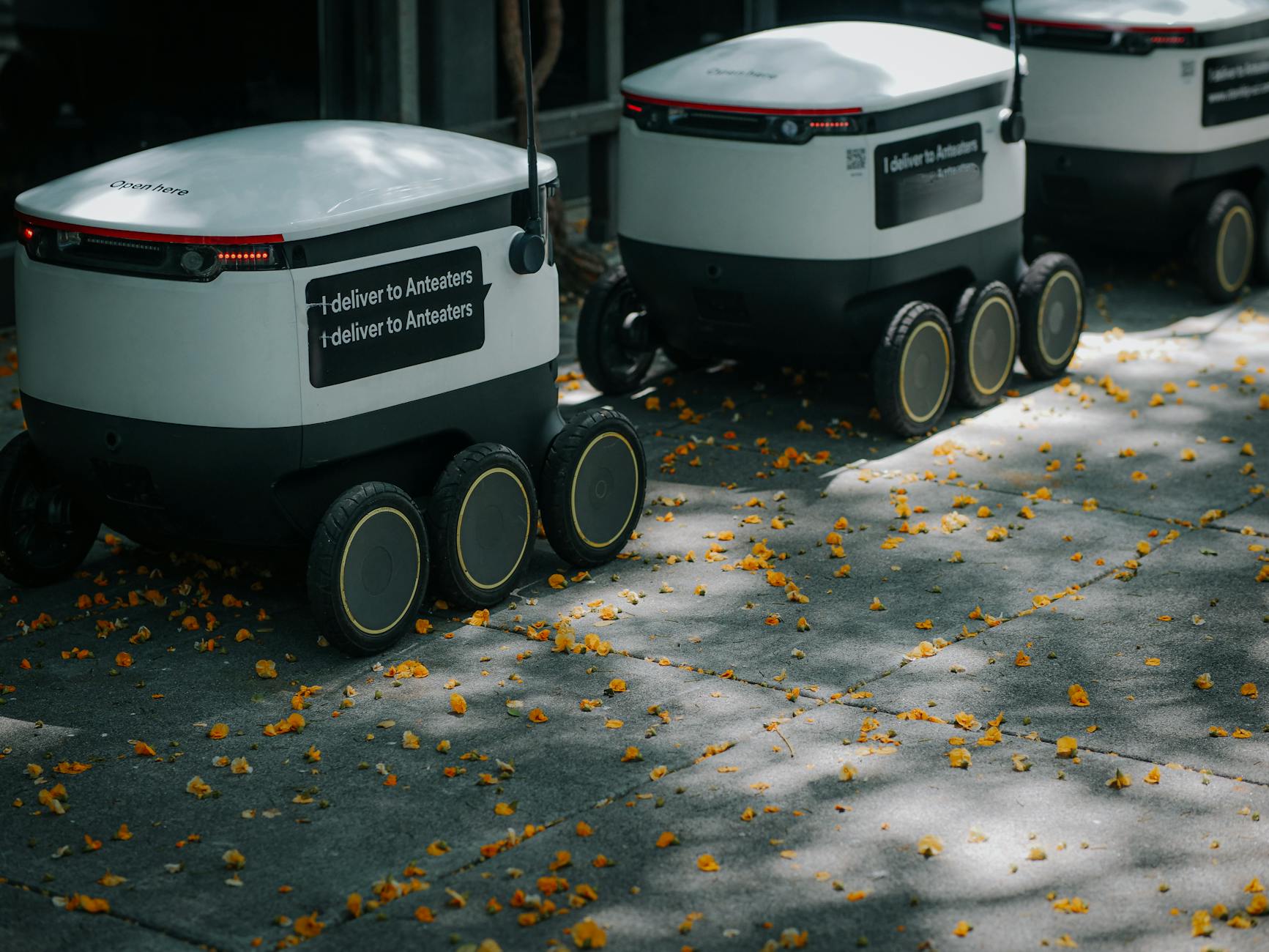
Overview
Robotics integration in logistics refers to the utilization of robotic systems to automate and augment processes within supply chain management, aiming to enhance operational efficiency, accuracy, and overall resilience [6]. As global supply chains face increasing demand for rapid, accurate, and cost-effective service delivery, driven by factors like e-commerce growth and labor shortages, integrating robotics helps streamline workflows, reduce manual labor costs, and significantly improve accuracy in inventory management and order fulfillment [7]. This technological shift is a cornerstone of Industry 4.0 within the logistics sector.
Etymology and Origins
The term "robot" originates from the Czech word "robota," meaning forced labor or work, first introduced by Czech writer Karel Čapek in his influential 1920 science fiction play, R.U.R. (Rossum's Universal Robots) [8]. In Čapek's narrative, robots were artificial beings designed to serve humanity, ultimately leading to unforeseen consequences. Initially, robotics was a concept limited to the realm of science fiction and philosophical discussion. However, technological advancements over the decades transformed it into a significant multidisciplinary field encompassing engineering, computer science, and artificial intelligence.
The idea of automating manual tasks and creating self-operating machines has roots that trace back to ancient automata and the mechanical marvels of the Industrial Revolution, such as the Jacquard loom (1801) which used punch cards to automate textile patterns. The term "robotics" itself was coined much later by science fiction author Isaac Asimov in his 1941 short story "Liar!" published in Astounding Science Fiction, where he also articulated his famous Three Laws of Robotics [9]. These foundational concepts set the stage for the ethical and practical considerations that would later define the field of robotics.
Historical Development
The integration of robotics in logistics is a relatively recent phenomenon, evolving from earlier industrial automation. While early forms of automation existed, true robotic integration began gaining traction in manufacturing before transitioning to logistics.
-
Mid-20th Century: Industrial Robotics Emerges (1950s-1960s)
- 1954: George Devol invents the first programmable robotic arm, later patented as "Programmed Article Transfer" [10].
- 1956: Devol and Joseph Engelberger form Unimation, the world's first robotics company.
- 1961: The Unimate, based on Devol's design, becomes the first industrial robot deployed on a General Motors assembly line in Trenton, New Jersey. It performed repetitive, dangerous tasks like die casting and spot welding, marking the dawn of modern industrial automation [11]. This period focused on fixed-base manipulators in controlled environments.
-
1970s-1980s: Expansion into Manufacturing & Early Material Handling
- Robotics spread rapidly in the automotive industry, with Japan and Europe becoming major adopters. Robots were used for painting, assembly, and rudimentary material handling within factories.
- 1980s: The widespread adoption of Automated Guided Vehicles (AGVs) began in warehouses and manufacturing facilities. These early AGVs followed fixed paths, often guided by wires or magnetic strips embedded in the floor, transporting pallets and heavy loads without human drivers [12].
-
1990s: Computing Power & Early System Integration
- Advances in microprocessors and sensor technology made robots more precise and capable. Integration with early Warehouse Management Systems (WMS) became possible, though still rudimentary.
- The concept of flexible manufacturing systems, incorporating robotics and automation, matured during this decade.
-
2000s: The Rise of Mobile Robotics for Logistics
- 2003: Kiva Systems (later acquired by Amazon in 2012 and rebranded as Amazon Robotics) was founded, pioneering Autonomous Mobile Robots (AMRs) designed specifically for order fulfillment in e-commerce warehouses. These robots could navigate complex environments autonomously, bringing shelves to human pickers, dramatically increasing efficiency [13].
- This period saw the advent of more sophisticated mobile robots that could navigate complex environments, moving beyond fixed-path AGVs.
-
2010s-Present: AI, Collaboration, and Hyperautomation
- The rise of advanced robotics powered by Artificial Intelligence (AI) and machine learning enabled more sophisticated tasks such as dynamic picking, precise packing, and adaptive navigation.
- Collaborative Robots (Cobots) emerged, designed to work safely alongside humans, fostering human-robot collaboration in tasks requiring both precision and human dexterity.
- Computer vision and advanced sensors allowed robots to handle unstructured environments and varied product types. This era also saw the expansion into drone technology for inventory checks and last-mile delivery concepts.
- The continuous development in areas like cloud computing, big data analytics, and the Internet of Things (IoT) further enhanced robotic capabilities, enabling smarter, more connected logistics operations.
Core Concepts
The core of robotics integration in logistics lies in its design to perform repetitive, hazardous, or high-volume tasks, significantly enhancing productivity, precision, and safety. This integration usually involves a suite of interconnected technologies:
- Automated Guided Vehicles (AGVs): These programmable vehicles transport goods along predetermined routes within a facility, using navigation methods like magnetic tape, lasers, or vision systems [12]. They are ideal for high-volume, repetitive transport tasks.
- Autonomous Mobile Robots (AMRs): Unlike AGVs, AMRs navigate dynamically without fixed infrastructure, using sensors, cameras, and onboard intelligence to map their environment and avoid obstacles. They offer greater flexibility for tasks like goods-to-person picking, inventory scanning, and dynamic routing in warehouses [13].
- Robotic Arm Systems: These multi-jointed manipulators are used for precise tasks such as sorting, picking (often with suction cups or grippers), packing, palletizing, and depalletizing items. They are crucial for enhancing order fulfillment efficiency and reducing ergonomic strain on human workers.
- Collaborative Robots (Cobots): Designed with safety features that allow them to work directly alongside humans without fencing, cobots handle lighter, often repetitive, tasks. They are particularly valuable in co-packing, assembly, and quality control, allowing for seamless human-robot collaboration [14].
- Automated Storage and Retrieval Systems (AS/RS): These sophisticated systems use robots or other automated equipment to automatically place and retrieve loads from storage locations with high density and speed. They can include shuttles, cranes, and robotic movers, significantly optimizing storage space and retrieval times.
- Drones (Unmanned Aerial Vehicles - UAVs): Primarily used for inventory management within large warehouses, performing rapid cycle counts and locating items. Emerging applications include outdoor last-mile delivery in specific contexts.
- Artificial Intelligence (AI) & Machine Learning (ML): AI enhances robotics functionality, enabling systems to learn, adapt, and optimize operations based on historical data and real-time patterns. This includes path optimization, predictive maintenance, dynamic task allocation, and advanced vision systems for item recognition, as seen in Workflows Overview.
Industry Applications
Robotics integration has significant applications across various sectors of the supply chain, transforming traditional labor-intensive processes:
- E-commerce Fulfillment: This is perhaps the most visible application. Companies like Amazon utilize extensive fleets of AMRs (e.g., Kiva-like robots) to bring shelves of products to human pickers, significantly reducing processing time, improving pick accuracy, and increasing throughput to meet demanding customer expectations. Robotic arms are also used for automated singulation, picking, and packing of individual items [13]. These systems often integrate with robust Order Management Systems to ensure seamless processing.
- Manufacturing: Robotics has long been extensively used in assembly lines, where precision, speed, and consistency are crucial. Automotive manufacturers, for example, rely heavily on robotic arms for repetitive tasks such as welding, painting, and component placement, improving quality and worker safety [11].
- Healthcare & Pharmaceuticals: Robotics aids in inventory management within pharmacies and hospitals, ensuring efficient stock replenishment, tracking of controlled substances, and sterile handling. Robotic systems can also automate medication dispensing and laboratory processes, reducing human error and contamination risks.
- Retail & Grocery: Beyond e-commerce warehouses, robots are increasingly deployed in retail backrooms for inventory sorting, shelf replenishment, and even in-store navigation for customers. Automated micro-fulfillment centers powered by robots are becoming critical for rapid online grocery delivery [15].
- Food & Beverage: Robotics handles palletizing, depalletizing, sorting, and packaging in food processing and distribution centers. This is particularly valuable in cold chain logistics, where robots can operate efficiently in harsh, temperature-controlled environments, reducing the need for human exposure and enhancing food safety.
Benefits and Advantages
The integration of robotics in logistics brings forth several compelling advantages that contribute to a more efficient, resilient, and competitive supply chain:
- Increased Efficiency & Throughput: Robots can operate 24/7 without breaks, illness, or fatigue, leading to quicker turnaround times in warehouses and distribution centers. They can perform tasks like batch picking and stock replenishment at speeds unattainable by human workers, significantly increasing overall throughput.
- Accuracy Improvement: Robotics drastically reduces human error in tasks such as picking, sorting, and inventory counting. This leads to higher inventory accuracy, fewer mis-shipments, and improved customer satisfaction, which can be managed with a Visual Inventory Management System.
- Cost Reduction: While the initial capital investment for robotic systems can be substantial, the long-term savings from reduced labor costs, decreased product damage, optimized space utilization, and increased productivity often provide a compelling return on investment [16].
- Enhanced Safety: Robots can perform dangerous, repetitive, or ergonomically challenging tasks, such as heavy lifting, working in extreme temperatures, or handling hazardous materials, thereby reducing workplace injuries and improving worker safety.
- Scalability & Flexibility: Robotic systems can be scaled up or down more easily to meet fluctuating demand, such as during peak seasons. Modern AMRs offer flexible configurations that can adapt to changing warehouse layouts or product mixes, often optimized by dynamic Warehouse Layout planning.
- Improved Employee Morale & Focus: By automating mundane or dangerous tasks, human workers can be redeployed to higher-value, more strategic roles that require problem-solving, creativity, or direct customer interaction.
Challenges and Limitations
Despite the significant benefits, companies face several challenges and limitations during robotics integration, requiring careful planning and execution:
- High Initial Costs & ROI Justification: The upfront investment for purchasing, installing, and configuring robotic systems can be prohibitively expensive, especially for small and medium-sized businesses. Calculating a clear Return on Investment (ROI) can be complex, often requiring consideration of long-term benefits beyond immediate labor savings.
- Job Displacement Concerns & Workforce Transition: The shift towards automation raises concerns regarding job losses among manual labor positions. This necessitates robust strategies for workforce reskilling, upskilling, and redeployment to new roles that involve managing, maintaining, or collaborating with robots.
- Integration Complexity: Incorporating robotic systems into existing infrastructure, IT systems (WMS, ERP), and workflows can be highly complex. It requires significant changes to current processes, potential facility modifications, and seamless data exchange, often requiring expertise in areas like system integration via an Integrations Hub.
- Maintenance & Downtime: Robotic systems require specialized maintenance, parts, and technical support. Unexpected breakdowns or system failures can lead to significant downtime, disrupting operations and incurring costs.
- Lack of Flexibility for Unstructured Tasks: While excelling at repetitive, predictable tasks, robots still struggle with variability, highly unstructured environments, or tasks requiring nuanced human judgment, dexterity, and problem-solving skills [17].
- Cybersecurity Risks: As robotic systems become more connected and reliant on network communication and cloud services, they become potential targets for cyberattacks, posing risks to operational continuity and data security.
- Regulatory & Ethical Considerations: Navigating evolving safety standards, data privacy regulations, and ethical implications of widespread automation requires careful attention.
Best Practices
To effectively and successfully integrate robotics into logistics operations, organizations should adopt a strategic, phased, and human-centric approach:
- Thorough Assessment and Planning: Conduct detailed analyses of existing workflows, pain points, and processes to identify specific areas that would most benefit from automation. Understand the current Warehouse Layout and how it can be optimized for robotic movement. Prioritize tasks that are repetitive, dangerous, high-volume, or require high precision.
- Start with Pilot Programs: Implement robotics on a small, controlled scale or in a specific area of the warehouse before a full rollout. This allows for testing, fine-tuning, and gathering data to prove ROI and address unforeseen challenges with minimal disruption.
- Phased Implementation: Rather than a 'big bang' approach, integrate robotics incrementally. Start with simpler automation (e.g., AGVs for transport) and gradually move to more complex systems (e.g., robotic picking, AS/RS) as expertise and infrastructure mature.
- Data Integration and Interoperability: Ensure seamless data flow between robotic systems, Warehouse Management Systems (WMS), Order Management Systems (OMS), and Enterprise Resource Planning (ERP) systems. This enables real-time decision-making, predictive analytics, and optimized Workflows.
- Workforce Development & Training: Invest in comprehensive training programs for employees. This should go beyond just operating robots to include maintenance, supervision, troubleshooting, and new roles that leverage human cognitive abilities alongside robotic strength. Foster a culture of human-robot collaboration.
- Vendor Selection & Partnership: Choose reputable robotics vendors with proven track records, robust support, and scalable solutions. Consider long-term partnership opportunities for maintenance, upgrades, and future innovations.
- Flexibility and Scalability: Design robotic solutions that can adapt to future changes in demand, product mix, and warehouse configurations. Opt for modular and configurable systems where possible.
Technology and Tools
Effective robotics integration relies on a sophisticated ecosystem of interconnected technologies and software solutions:
- Warehouse Management Systems (WMS): Modern WMS platforms, such as a Mobile Warehouse Management System, are critical for orchestrating and optimizing warehouse operations in conjunction with robotic systems. They provide task assignment, route optimization, inventory tracking (including Bin Put-Away Criteria), and overall control over robotic fleets. They manage the flow of goods to and from robotic workstations.
- Order Management Systems (OMS): These systems manage the entire order lifecycle from placement to fulfillment. Integrated with robotics, an OMS can efficiently direct robotic picking and packing processes, optimizing for speed and accuracy in pick, pack, and ship software.
- Artificial Intelligence (AI) & Machine Learning (ML): These technologies are the brains behind advanced robotics. AI enables robots to learn from experience, make real-time decisions, optimize paths, predict maintenance needs, and interpret complex visual data for tasks like object recognition and quality control, leveraging Data-Driven Insights.
- Cloud Computing: Facilitates real-time data sharing, remote monitoring, and centralized control for large fleets of robots. It enables scalable processing power for AI algorithms and allows for 'Robot-as-a-Service' models by handling complex computations off-robot.
- Internet of Things (IoT): A network of sensors and devices provides robots with real-time environmental data, item locations, and equipment status. This connectivity is vital for dynamic navigation, inventory accuracy, and predictive maintenance.
- Computer Vision & Sensors: High-resolution cameras, 3D scanners, and various sensors (LiDAR, ultrasonic) enable robots to perceive their environment, identify objects, detect obstacles, and perform precise manipulation tasks required for picking and quality inspection.
- Digital Twin Technology: Creates virtual replicas of physical warehouse environments and robotic systems, allowing for simulation, optimization, and predictive analysis of robot performance and warehouse layouts before physical deployment.
Future Trends
The future of robotics integration in logistics is dynamic and promising, driven by continuous innovation:
- Increased Autonomy and Intelligence: Robots will become even more capable of complex decision-making, adapting to unexpected situations, and learning new tasks with minimal human intervention, powered by advanced AI and generative models.
- Enhanced Human-Robot Collaboration (HRC): The evolution of cobots will lead to more intuitive and seamless collaboration, where robots and humans work together on shared tasks, each contributing their strengths to maximize efficiency and safety [14].
- Swarm Robotics & Fleet Management: Instead of single, large robots, fleets of smaller, highly coordinated robots will optimize tasks like sorting, transportation, and inventory management, offering greater scalability and resilience.
- Robot-as-a-Service (RaaS): This subscription-based model will lower the entry barrier for businesses, allowing them to deploy robotic solutions without significant upfront capital investment, making advanced automation accessible to a wider range of companies.
- Drones for Expanded Applications: Beyond inventory, drones may see increased use for intra-facility transport of small items, security monitoring, and specialized last-mile delivery in urban or remote areas.
- Sustainable Robotics: Future developments will focus on energy-efficient robots, eco-friendly manufacturing processes, and robots designed for easier recycling, aligning with broader sustainability goals in logistics [18].
- Hyperautomation & End-to-End Orchestration: The combination of robotics with other automation technologies (RPA, AI, IoT) will create hyperautomated workflows, enabling end-to-end autonomous supply chain operations, managed through sophisticated platforms like an Integrations Hub.
Conclusion
Robotics integration is not merely a trend but a fundamental transformation of logistics and supply chain management. It brings forth numerous benefits regarding efficiency, accuracy, safety, and scalability, positioning organizations to meet the escalating demands of modern commerce. While presenting unique challenges related to initial investment, integration complexity, and workforce adaptation, the strategic adoption of robotic technologies, supported by robust WMS and OMS platforms, is essential. As technology continues to evolve, organizations that successfully adapt and strategically invest in these innovations will not only overcome current logistical hurdles but will also position themselves competitively for future success in the fast-paced, ever-changing global logistics landscape.
Sources
- Stock Replenishment Guide
- Mobile Warehouse Management System
- Warehouse Layout Preview
- Order Management System
- SkuSavvy Integrations Hub
- The Logistics and Supply Chain Toolkit: Over 100 Tools for Operational Excellence
- Robotics in Logistics: A Comprehensive Guide
- R.U.R. (Rossum's Universal Robots) by Karel Capek
- Isaac Asimov, The History of Robotics
- George Devol, the Father of Robotics
- Unimate: The first industrial robot
- Automated Guided Vehicles (AGVs): History and Evolution
- Kiva Systems: How Amazon Revolutionized Warehouse Robotics
- Human-Robot Collaboration in Logistics
- How automation can help grocery retailers meet online demand
- Return on Investment (ROI) for Warehouse Automation
- The Limitations of Robotics and Automation
- Sustainable Robotics: Addressing the Environmental Impact
- Visual Inventory Management System
- Batch Picking Guide
- Bin Put-Away Criteria
- Pick, Pack, Ship Software
- Integrations Hub