Robotics in Logistics: AMRs vs AGVs
This article examines the differences and applications of Autonomous Mobile Robots (AMRs) and Automated Guided Vehicles (AGVs) in logistics.
Updated
Overview
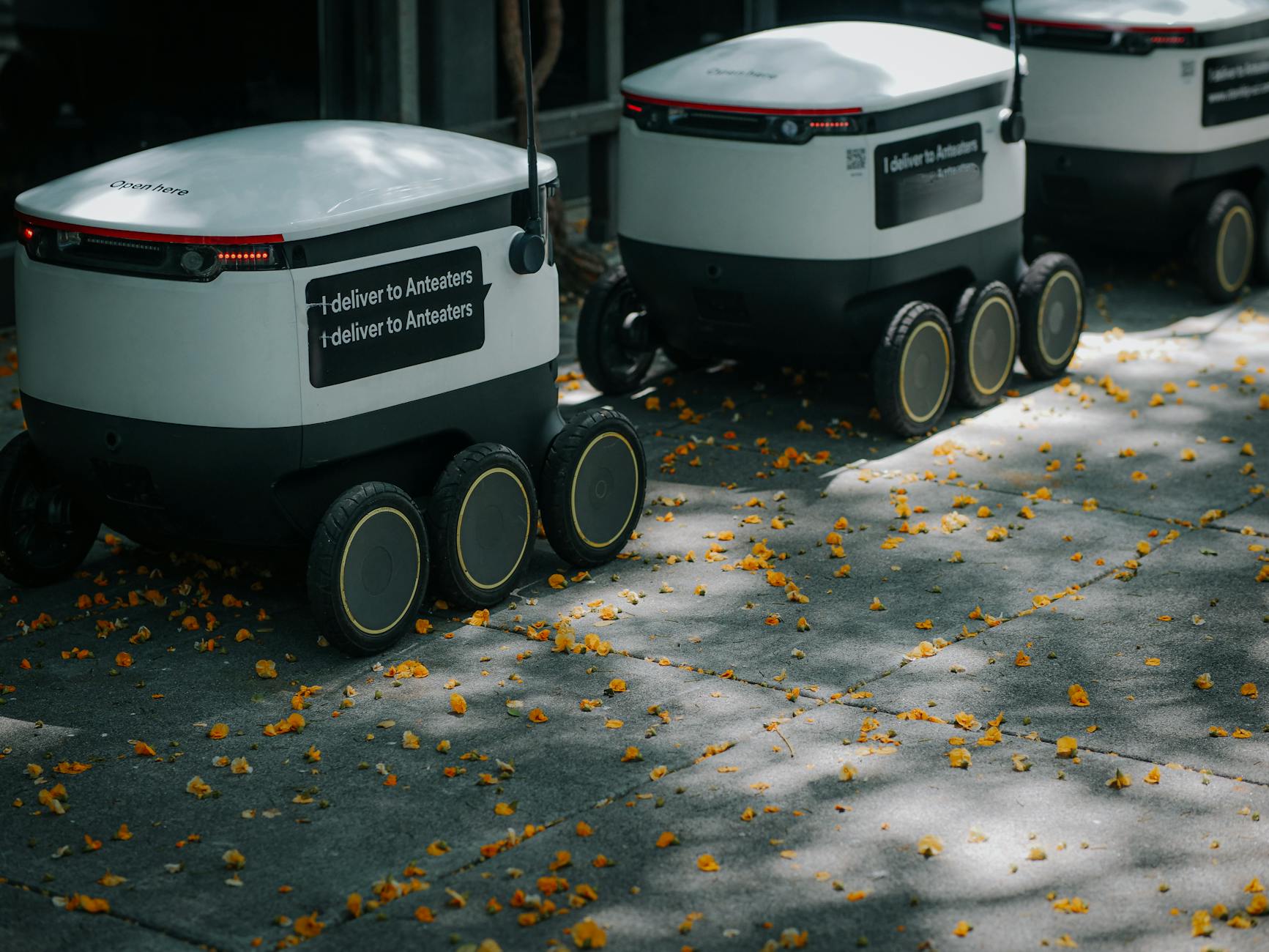
Robotics has increasingly become an integral component of modern logistics operations. Autonomous Mobile Robots (AMRs) and Automated Guided Vehicles (AGVs) are the two primary types of robots utilized in supply chain environments. Both technologies aim to optimize workflows and improve efficiency in warehouse operations, playing a crucial role in the broader logistics ecosystem by automating material handling and information flow. They operate on fundamentally different principles that suit varying logistical needs.
Etymology and Origins
The term "robot" originates from the Czech word "robota," meaning forced labor or drudgery, first introduced by Karel Čapek in his 1920 play, R.U.R. (Rossum's Universal Robots) 9. The concepts of AMRs and AGVs evolved from early mechanized assistance in material handling. The earliest precursor to AGVs can be traced to the mid-20th century with the development of the "Guide-O-Matic" by Barrett Electronics in 1953 10, initially designed as an automatically guided tow truck for industrial use. While the term "Automated Guided Vehicle" became commonplace as the technology matured, the underlying principle of guided, automated transport was established.
Autonomous Mobile Robots (AMRs), on the other hand, represent a more recent evolution. The conceptual foundation for AMRs emerged with advancements in artificial intelligence, sensor technology (such as LiDAR and computer vision), and simultaneous localization and mapping (SLAM) in the late 20th and early 21st centuries. The term AMR gained prominence as these robots became capable of more dynamic and independent navigation, distinguishing them from their fixed-path AGV predecessors. This shift reflects a move from programmed automation to intelligent, adaptive automation 11.
Historical Development
- 1950s-1960s: The Dawn of AGVs: The first AGVs were developed in the 1950s by Barrett Electronics, with the introduction of the Guide-O-Matic in 1953, designed for repetitive tasks like transporting materials in manufacturing plants and warehouses 10. These early systems typically followed wires embedded in the floor or relied on magnetic tape guidance. Leading manufacturers, including Toyota (which later implemented sophisticated production systems like the Toyota Production System, influencing logistics globally 12), contributed to the early adoption of automated systems to improve productivity across factories. Initial applications focused on automating trailer trains to move heavy loads.
- 1970s-1980s: AGV Expansion and Refinement: By the late 1970s, AGVs became more widely used in distribution centers and automotive manufacturing, equipped with more sophisticated guidance systems. Key innovations included laser-based navigation, which offered greater flexibility than embedded wires, and improved onboard controls 13. These decades saw AGVs evolve from simple tow vehicles to unit load carriers and pallet trucks, capable of managing more diverse material handling tasks.
- 1990s: Emergence of Flexible Automation Concepts: The introduction of low-cost sensors, microcontrollers, and early developments in computer vision and artificial intelligence laid the groundwork for AMRs. While true AMRs were still nascent, the concept of more flexible, non-fixed path automation began to take shape. Academic research into mobile robotics started exploring more complex navigation algorithms 11.
- 2000s-Present: The Rise of AMRs and Advanced Robotics: Technologies like LiDAR, advanced computer vision, and more powerful onboard computing propelled the development of AMRs, allowing them to navigate complex environments independently without predefined paths. A pivotal moment was Amazon's 2012 acquisition of Kiva Systems (now Amazon Robotics), which popularized AMRs for e-commerce fulfillment, showcasing their potential for agile order fulfillment and inventory management 14. As of 2020, the global market for AMRs is projected to reach several billion dollars, reflecting their growing prevalence in logistics, complementing or replacing traditional AGVs.
Core Concepts
AMRs are capable of autonomously navigating complex environments using various navigation methods such as visual tracking via cameras, LiDAR, and simultaneous localization and mapping (SLAM) algorithms. This allows them to adapt to changes in their environment, reroute around obstacles, and optimize their paths in real-time. In contrast, AGVs operate on predefined paths, often utilizing sensors to detect guide wires, magnetic strips, or reflective tapes to maintain their routes. While AGVs are highly reliable for consistent, repetitive movements, AMRs excel in dynamic environments needing flexibility and the ability to make intelligent decisions, such as those found in modern e-commerce warehouses or cross-docking operations 15. Implementing workflows, such as those managed by SkuSavvy Workflows, can help orchestrate tasks for both types of robots within a unified system.
Types and Classifications
Both AMRs and AGVs can be classified into various types depending on their functionality and the materials they handle:
- Automated Guided Vehicles (AGVs):
- Tow Vehicles: Pull carts or trailers with goods, ideal for high-volume, long-distance transport on fixed routes.
- Unit Load Carriers: Carry single unit loads (pallets, containers) on their decks.
- Forklift AGVs: Automated versions of traditional forklifts, used for lifting and moving pallets to and from racks.
- Assembly Line AGVs: Used in manufacturing to move products between workstations.
- Autonomous Mobile Robots (AMRs):
- Goods-to-Person (G2P) Robots: Bring shelves or racks of inventory directly to human pickers, significantly improving batch picking and pick-to-tote efficiency in fulfillment centers.
- Inventory Robots: Perform tasks like cycle counting and visual inspections to maintain accurate stock levels.
- Pallet Movers/Forklift AMRs: Similar to AGV forklifts but with greater navigational freedom, used for autonomous pallet transport and staging.
- Sorting Robots: Used in parcel hubs for automated sorting of packages to various destinations.
Industry Applications
The application of AMRs and AGVs spans numerous sectors, revolutionizing operational efficiency:
- E-commerce & Retail: Companies utilize AMRs extensively for efficient order picking, bin put-away, and inventory management, enhancing operational speed and accuracy, especially with surges in demand 16. AGVs are used for bulk movement of goods between receiving and shipping docks.
- Manufacturing & Automotive: AGVs are primarily used to transport materials and components between workstations to streamline assembly lines, delivering parts just-in-time (JIT) to reduce inventory holding costs. AMRs are increasingly used for flexible sub-assembly delivery and tool transport within dynamic production environments.
- Healthcare: Hospitals employ AMRs to deliver medications, lab samples, and supplies between departments, improving efficiency in patient care environments and reducing the burden on staff. AGVs handle larger-scale linen or waste transport.
- Food & Beverage: Both AMRs and AGVs are used in temperature-controlled warehouses for moving raw materials, work-in-progress, and finished goods, optimizing storage and retrieval processes.
Benefits and Advantages
Integrating robotics into logistics delivers several significant advantages:
- Increased Efficiency & Throughput: Both AMRs and AGVs significantly reduce the time spent on manual handling, accelerating material flow and increasing overall operational throughput. This directly translates to cost savings and faster delivery times.
- Enhanced Safety: By automating repetitive and strenuous tasks, robots reduce the risk of human injury from lifting, carrying, and repetitive motion 17. They can also operate in environments that are hazardous or uncomfortable for humans.
- Improved Accuracy & Reliability: Robots perform tasks with high precision and consistency, minimizing errors in picking, sorting, and placement, which contributes to better inventory control and reduced product damage.
- Labor Optimization: While not always replacing human workers, robots free up employees from mundane tasks, allowing them to focus on more complex, value-added activities, thereby optimizing labor utilization.
- Versatility & Flexibility: AMRs provide unparalleled flexibility to adjust routes based on real-time needs, adapting to layout changes or fluctuating demand. AGVs ensure consistent throughput for high-volume, predictable tasks.
Challenges and Limitations
While robotics enhance logistics, challenges remain that require careful consideration:
- Initial Investment & ROI: The capital burden of implementing robotic systems can be substantial, necessitating a thorough return on investment (ROI) analysis to justify the expenditure. Costs include not just the robots but also infrastructure modifications, software, and training.
- Integration Complexity: Incorporating these technologies within existing Warehouse Management Systems (WMS) or Enterprise Resource Planning (ERP) systems requires careful planning, robust APIs, and often substantial change management within the organization 18. Compatibility with existing hardware and software can be a significant hurdle.
- Maintenance & Downtime: Like all machinery, robots require regular maintenance. Breakdowns can lead to costly downtime if not addressed promptly. Specialized technical expertise is often needed for troubleshooting and repairs.
- Infrastructure Requirements: AGVs typically require dedicated pathways (magnetic tape, wire, painted lines), which can limit flexibility and require floor modifications. While AMRs are more flexible, they still require a clear operating environment and may need charging stations and communication infrastructure (Wi-Fi).
- Cybersecurity Risks: As robots become more connected, they introduce potential cybersecurity vulnerabilities that must be managed to protect operational data and prevent unauthorized access or manipulation 19.
Best Practices
To achieve success with AMR and AGV implementations, companies should adopt a strategic approach:
- Conduct a Comprehensive Needs Assessment: Thoroughly analyze current operations, identify bottlenecks, and determine specific operational requirements (e.g., throughput, flexibility, space constraints) to select the appropriate robotic type and quantity. Utilizing warehouse layout preview tools can aid in this planning.
- Phased Implementation: Start with a pilot project in a confined area to test the system, gather data, and refine processes before scaling up. This allows for learning and minimizes disruption.
- Invest in Workforce Training & Collaboration: Ensure staff are trained not only on how to operate and interact with robots but also on how to work alongside them effectively. Foster a culture of human-robot collaboration, redefining employee roles and productivity metrics 20.
- Robust Integration with WMS/OMS: Seamlessly integrate robot control systems with your Warehouse Management System and Order Management System to ensure coordinated operations, accurate data flow, and optimal workflow execution. Leveraging platform integrations is key.
- Define Clear Safety Protocols: Implement strict safety guidelines, including robot-free zones, emergency stop procedures, and regular safety audits, to ensure a secure working environment for both humans and machines.
- Continuous Monitoring and Optimization: Utilize data analytics from robot operations to continuously monitor performance, identify areas for improvement, and optimize routes, charging schedules, and task assignments to maximize ROI.
Future Trends
The robotics market continues to evolve rapidly with several key trends shaping its future:
- Enhanced AI and Machine Learning: Future robots will integrate more advanced AI for better decision-making capabilities, predictive maintenance, and enhanced machine learning models for navigation, object recognition, and task optimization 21. This will enable robots to handle increasingly complex and unstructured tasks.
- Human-Robot Collaboration (Cobots): The development of collaborative robots (cobots) that can safely work side-by-side with humans without protective caging will become more prevalent, fostering more efficient human-robot teams in warehouses 22.
- Fleet Management & Swarm Robotics: More sophisticated fleet management systems will enable large numbers of robots to coordinate and communicate seamlessly, optimizing collective performance and resilience. Swarm robotics, where simple robots work together to achieve complex goals, will gain traction.
- Standardization and Interoperability: As the market matures, there will be a greater push for industry standards, allowing different robotic systems and vendors to integrate more easily with existing logistics infrastructure and software platforms, such as through robust developer APIs.
- Robotics-as-a-Service (RaaS): The adoption of subscription-based models for robotics, making advanced automation more accessible to businesses of all sizes by reducing upfront capital expenditure.
Predictions suggest that as technology matures, both AMRs and AGVs will become even more autonomous, capable of performing increasingly complex tasks, and more deeply integrated into the entire supply chain, transforming logistics operations from end-to-end.
Related Concepts
Robotics in logistics is interlinked with concepts such as warehouse management and inventory control, illustrating how the integration of robots can transform operations within the supply chain. Advanced robotic systems often rely on precise barcode tracking and robust bin-to-bin inventory transfer capabilities, which are core functionalities of modern WMS solutions.
By understanding the distinctions and capabilities of AMRs and AGVs, logistics professionals can better leverage robotic technologies to enhance efficiency and effectiveness within their operations.
Sources
- Autonomous Mobile Robots Overview
- Automated Guided Vehicles Overview
- Cycle Counting Guide
- Mobile Warehouse Management System Overview
- Stock Replenishment Guide
- Bin Put-Away Criteria
- Visual Inventory Management System
- Order Management System Overview
- Karel Čapek - R.U.R. (Rossum's Universal Robots)
- History of Automated Guided Vehicles (AGVs)
- Autonomous Mobile Robots: From Research to Market
- The Toyota Production System (TPS): A Complete Guide
- Automated Guided Vehicles - A Review
- Amazon's Kiva acquisition: A game-changer for warehouse automation
- AGVs vs AMRs: What's the difference and which is right for your warehouse?
- E-commerce order fulfillment: How to optimize for peak season
- The Impact of Robotics on Workplace Safety and Health
- Integrating Robotics into your Supply Chain: Challenges and Solutions
- Cybersecurity for Industrial Control Systems (ICS) and Operational Technology (OT)
- Human-Robot Collaboration in Industry: A Systematic Review
- AI in Robotics: The Future of Automation
- What are Collaborative Robots (Cobots)?
- The Impact of Robotics on Workplace Safety and Health
- Integrating Robotics into your Supply Chain: Challenges and Solutions
- AI in Robotics: The Future of Automation
- What are Collaborative Robots (Cobots)?