RFID in Warehousing
This article explores the role of RFID technology in warehousing, detailing its benefits, applications, and future trends.
Updated
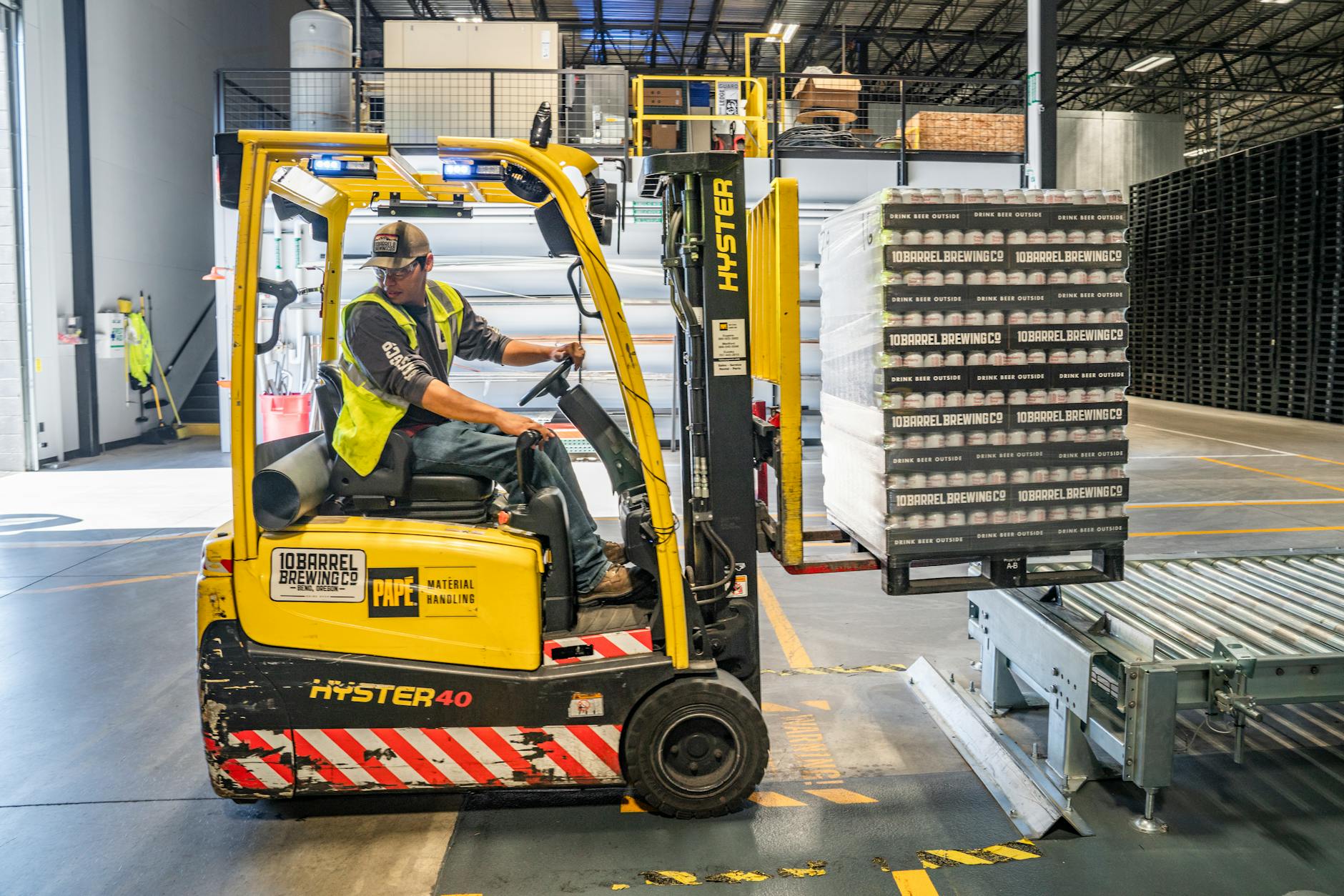
RFID in Warehousing
Overview
Radio-Frequency Identification (RFID) technology has significantly transformed warehousing by enhancing the efficiency of inventory management and providing real-time tracking capabilities. RFID uses electromagnetic fields to automatically identify and track tags attached to objects, making it an essential tool for warehouse operations that demand high accuracy and speed. The importance of RFID in warehousing cannot be overstated, as it minimizes manual labor, reduces errors, and improves overall productivity.
Etymology and Origins
The term "Radio-Frequency Identification" emerged in the mid-20th century. The earliest known applications can be traced back to World War II when the military deployed RFID-like technology for aircraft identification, which was termed "Identification Friend or Foe" (IFF). The academic community began documenting the technology's potential during the 1970s, when researchers like Los Alamos Scientific Laboratory began to explore its use in tracking inventory and other applications. As related technology developed, RFID options expanded significantly through the 1980s and 1990s, leading to its widespread adoption in logistics and supply chain management. This evolution reflects the growing need for efficiency and transparency in these processes throughout various industries (ISO RFID Standards).
Historical Development
The evolution of RFID technology in warehousing can be segmented into several key phases:
- 1960s-1970s: The initial development of the technology focused on passive RFID tags that could be read by a fixed reader. This included research such as that by the Massachusetts Institute of Technology in developing electromagnetic tag reading technologies.
- 1980: The first commercial RFID systems were implemented in the automotive industry, revolutionizing how manufacturers tracked components during the assembly process.
- 1999: The Auto-ID Labs at MIT released the EPC (Electronic Product Code) standard, which significantly advanced RFID applications in supply chains. This set a foundation for standardized data formats in product identification, allowing interoperable systems.
- 2003: Major retail giants like Walmart began mandating that suppliers use RFID tags in their products, driving widespread adoption of the technology. This is often cited as a watershed moment in RFID history due to its impact on collective supply chain management practices.
- 2005 onwards: The technology has continued to evolve, with the introduction of advanced features such as RFID chips that can be read at greater distances and the integration of RFID with Internet-based systems for real-time data analytics. From this point forward, RFID also integrated more deeply with cloud computing and IoT systems, allowing greater flexibility and data accessibility.
This historical progression underscores how RFID technology has transitioned from a niche application in defense to a vital logistics and inventory management tool across industries.
Core Concepts
RFID systems consist of three primary components: the RFID tags, the RFID readers, and the software that processes the data. RFID tags can be passive (powered by the reader's signal), active (battery-powered), or semi-passive. The main processes involve attaching tags to products, scanning them with RFID readers, and using software to manage inventory levels, monitor stock movements, and generate reports. For detailed integration within existing workflows, companies often refer to guides such as the Order Fulfillment Guide.
Types and Classifications
RFID systems can be classified based on several factors:
- Passive RFID: Cost-effective and widely used, these tags do not have their power source and work within a limited range, typically from 10 to 20 feet.
- Active RFID: Featuring an internal power source, these tags can communicate over much longer distances, exceeding 300 feet, and are suitable for tracking larger assets.
- Semi-Passive RFID: These combine features of both types and are often used in industries where battery life must be optimized.
The choice of RFID type significantly impacts the application's scalability and cost-effectiveness. Companies must carefully assess their operational needs when choosing RFID systems to maximize their investment in this technology.
Industry Applications
RFID technology has found applications across various sectors in warehousing, including:
- Inventory Management: RFID systems allow real-time inventory tracking, which increases accuracy and reduces shrinkage. According to a study by NIST, implementing RFID solutions led to significant inventory accuracy improvements in pilot projects.
- Shipping and Receiving: With RFID, loading and unloading processes can be expedited, enhancing overall throughput. For comprehensive integration into these processes, refer to the Mobile Warehouse Management System.
- Asset Tracking: RFID enables organizations to efficiently track high-value assets within the warehouse, addressing challenges in loss prevention and resource management.
Benefits and Advantages
The integration of RFID into warehouse operations provides numerous advantages:
- Improved Accuracy: RFID reduces human errors in data entry, which translates to more reliable inventory records, with studies showing accuracy improvements of up to 99% (GS1).
- Enhanced Efficiency: By automating inventory counts and tracking, warehouses can significantly reduce labor costs and processing time, allowing for faster order fulfillment.
- Real-time Data Access: With RFID, managers can access inventory data in real time, allowing for quick and informed decision-making. This capability is crucial in fast-paced environments where timely reactions to inventory changes can make or break customer satisfaction levels.
Challenges and Limitations
Despite its benefits, RFID adoption comes with challenges:
- Cost: Initial setup and tag costs can be high, particularly for small to medium-sized operations. While prices for RFID tags have decreased over time, full system integration still requires a sizable capital investment.
- Compatibility: Integrating RFID systems with existing warehouse management systems requires careful planning and implementation, often necessitating a custom solution tailored to specific processes (McKinsey & Company).
- Environmental Factors: RFID signals can be hindered by materials like water and metal, necessitating careful placement of readers and antennas to avoid signal degradation and communication gaps.
Future Trends
The future of RFID in warehousing looks promising with advancements in technology, including:
- AI Integration: Smart algorithms are being developed to analyze RFID data for optimizing storage and retrieval processes. This integration allows for predictive analytics that can further streamline operations.
- Increased Automation: Robotics integrated with RFID for autonomous inventory management is becoming more commonplace. Several new start-ups have started focusing on automating warehouse processes through the combination of these technologies. The growing dependence on real-time data will drive continued innovation in RFID technology. Industry leaders are investing in expanded use cases, from automated inventory reporting to enhanced supply chain visibility that supports quick decision-making.
Related Concepts
Understanding RFID in warehousing also involves concepts like cycle counting, stock replenishment, and automated rate selection as these are critical to efficient operations.