Resilience Planning in Logistics
Resilience planning in logistics is essential for mitigating risks and ensuring continuity amid disruptions. This article explores its importance, historical context, and best practices.
Updated
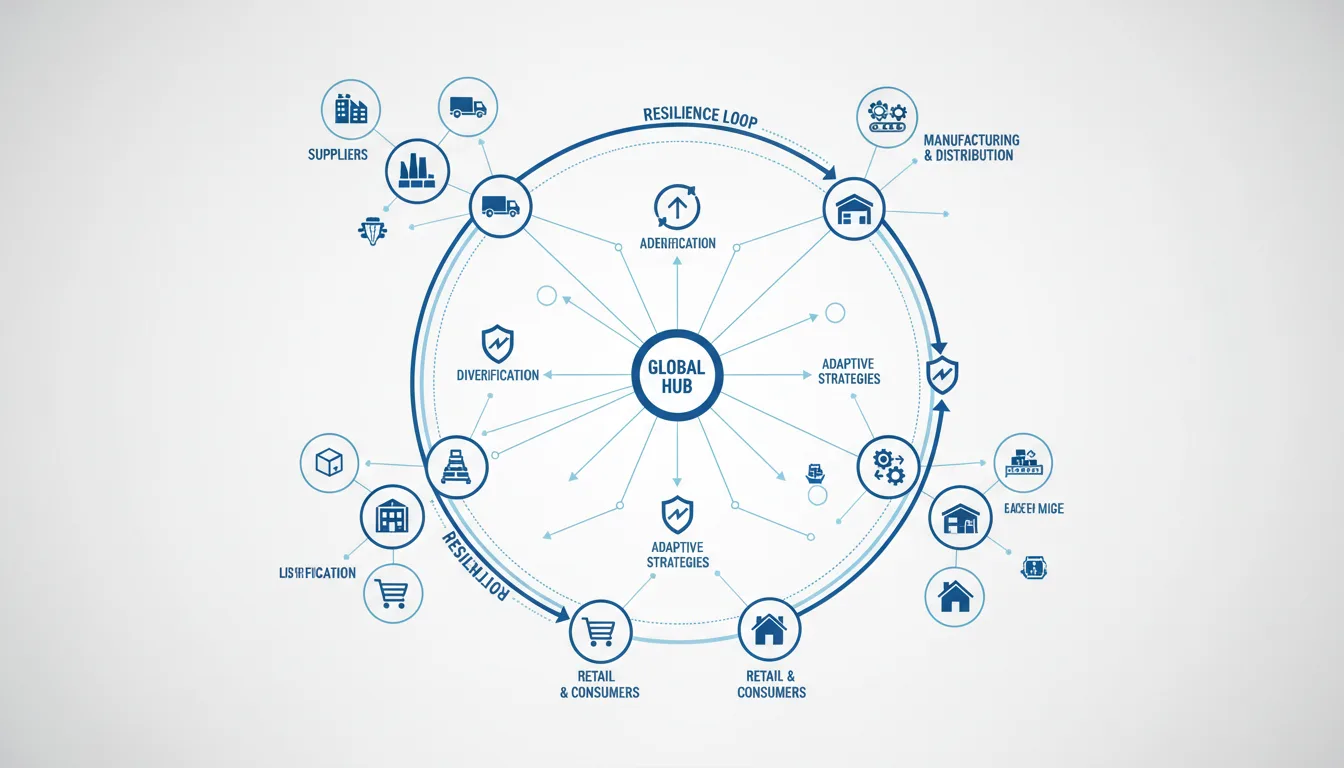
Overview
Resilience planning in logistics refers to the proactive strategies and practices implemented to prepare for, respond to, and recover from disruptions in the supply chain [5]. These disruptions can originate from various sources including natural disasters, geopolitical instability, economic fluctuations, cyberattacks, and pandemics [6]. The importance of resilience planning cannot be overstated; it helps organizations maintain operational continuity, minimize financial losses, and protect brand reputation during emergencies, allowing for quicker recovery and reduced downtime [7]. Effective resilience planning shifts the focus from merely reacting to disruptions to proactively building an adaptive and robust supply chain capable of withstanding unforeseen challenges.
Etymology and Origins
The term "resilience" originates from the Latin word resiliens, the present participle of resilire, meaning "to leap back" or "recoil" [8]. Its earliest scientific usage was in material science in the early 19th century, describing a material's ability to absorb energy when deformed elastically and to spring back to its original shape [9].
By the mid-20th century, the concept broadened, particularly within psychology and ecology. In psychology, it referred to an individual's capacity to cope with and recover from adversity [10]. In ecology, resilience described an ecosystem's ability to absorb disturbances and still retain its basic structure and functions [11].
The application of resilience to organizational and business contexts began to emerge in the late 20th century. This shift was largely influenced by the increasing complexity and interconnectedness of global systems. The concept of resilience planning specifically entered the logistics and supply chain lexicon prominently in the 1990s, particularly in response to increased awareness of supply chain vulnerabilities due to burgeoning globalization, lean manufacturing practices, and environmental challenges [12]. It represented a move beyond traditional risk management, which often focused on preventing specific events, towards building systemic robustness and adaptive capacity.
Historical Development
The practice of resilience planning in logistics has evolved significantly over the decades, mirroring the increasing complexity and interdependence of global supply chains:
- Pre-1990s: While the term "resilience planning" was not yet common, foundational elements of risk management and business continuity were present, often rooted in military logistics, disaster preparedness, and early industrial safety protocols. The rise of Just-In-Time (JIT) manufacturing and lean principles in the 1970s and 1980s, pioneered by companies like Toyota, optimized efficiency but inadvertently created new vulnerabilities due to reduced buffer inventories and single-sourcing strategies [13].
- 1990s: The concept began gaining traction as enterprises recognized inherent vulnerabilities in their increasingly globalized supply chains. Events like the 1995 Kobe earthquake in Japan and disruptions caused by the El Niño phenomenon highlighted the fragility of extended supply networks [12]. Academic and industry discussions started to shift from pure efficiency to balancing efficiency with robustness, leading to early frameworks for supply chain risk management.
- 2001: The September 11 terrorist attacks served as a global wake-up call, emphasizing the need for robust business continuity planning and supply chain security [14]. Many organizations, particularly those in critical infrastructure sectors, began to develop more formal resilience frameworks to address unexpected, high-impact events.
- 2005: Hurricane Katrina devastated the U.S. Gulf Coast, exposing significant weaknesses in national and commercial logistics infrastructure and disaster response [15]. This event spurred the development of formal resilience strategies driven by comprehensive risk assessments, scenario planning, and detailed recovery plans within the logistics and supply chain industries.
- 2010s: The integration of advanced technologies such as Artificial Intelligence (AI) and big data analytics began playing a crucial role in resilience planning [16]. These technologies allowed for better forecasting, real-time visibility, predictive modeling of disruptions, and more agile response strategies.
- 2020s: The COVID-19 pandemic exposed the extreme fragility of global supply chains, leading to unprecedented disruptions across almost all industries [17]. This event accelerated the adoption of advanced resilience strategies, including multi-sourcing, regionalization (reshoring/nearshoring), digital supply chain twins, and a renewed focus on end-to-end supply chain visibility and collaboration [18].
Key figures in this field include Dr. David E. Simchi-Levi, a pioneer in supply chain resilience research. His work, particularly the seminal publication "Managing Supply Chain Risk: Using the Power of Advanced Analytics to Create a Competitive Advantage" (2011), set foundational theories for understanding, quantifying, and mitigating risks in complex supply chains through analytical approaches [3]. Other influential scholars include Prof. Christopher Tang and Prof. Yossi Sheffi, whose research on risk management and resilient supply chains has significantly shaped industry best practices.
Core Concepts
Resilience planning in logistics encompasses various core concepts aimed at building adaptable and robust supply chains:
- Risk Assessment and Mapping: This involves systematically identifying, analyzing, and prioritizing potential risks that could disrupt supply chain operations [19]. Techniques include qualitative assessments (e.g., FMEA - Failure Mode and Effects Analysis) and quantitative modeling to evaluate the likelihood and impact of events like natural disasters, supplier failures, geopolitical shifts, or logistical errors. Supply chain mapping is crucial for visualizing dependencies and vulnerabilities across the entire network.
- Business Continuity Plans (BCPs): Developing pre-defined strategies and protocols to ensure that essential business functions can continue or quickly resume during and after disruptions [20]. This includes creating backup suppliers, identifying alternative transport routes, establishing crisis management teams, and defining clear communication plans. Key metrics often include Recovery Time Objectives (RTOs) and Recovery Point Objectives (RPOs).
- Agility and Flexibility: Implementing processes that allow organizations to adapt quickly to changing circumstances and unexpected events [21]. This involves flexible warehousing solutions (e.g., adaptable layouts, temporary storage options, cross-docking capabilities), multi-modal transport options, and the ability to quickly re-route or re-allocate resources. Mobile order fulfillment software and Visual Warehouse Layout tools can significantly enhance operational flexibility and responsiveness during disruptions. Buffer inventory and strategic stockpiling for critical components also contribute to agility.
- Collaboration and Visibility: Building strong partnerships with stakeholders across the supply chain—from suppliers to customers and logistics providers—to strengthen collective resilience through shared resources, real-time information exchange, and joint planning [22]. Enhanced supply chain visibility is paramount, allowing all parties to track goods, anticipate issues, and coordinate responses effectively.
- Redundancy and Diversification: Deliberately incorporating backup options and multiple sources for critical resources (e.g., suppliers, production sites, transport modes) to prevent single points of failure [23]. This moves away from pure lean efficiency towards a balanced approach that includes strategic redundancy for critical nodes or materials.
Benefits and Advantages
Implementing effective resilience planning offers significant benefits beyond merely surviving disruptions:
- Improved Operational Continuity: Organizations can maintain essential operations during crises, minimizing financial losses from downtime, lost sales, and production delays [24]. This proactive approach safeguards revenue streams.
- Enhanced Customer Service and Loyalty: The ability to consistently meet customer demands and delivery expectations, even amidst disruptions, significantly enhances brand reputation and customer satisfaction [7]. Reliable service builds trust and loyalty, which can be a key differentiator.
- Competitive Advantage: Companies with strong resilience frameworks are often more adaptable and responsive than competitors during crises [25]. This allows them to capture market share, build stronger supplier relationships, and emerge stronger from disruptive events.
- Cost Savings in the Long Run: While initial investments may be required, avoiding major disruptions, mitigating their impact, and accelerating recovery can lead to substantial cost savings by preventing catastrophic losses, regulatory fines, and reputational damage.
- Better Decision-Making: Resilience planning encourages a deeper understanding of the supply chain, leading to more informed strategic and operational decisions on inventory levels, supplier selection, and logistics network design.
Challenges and Limitations
Despite its critical importance, several challenges can impede the effective implementation of resilience planning:
- Resource Constraints: Implementing comprehensive resilience strategies can require significant upfront investments in technology, infrastructure, training, and strategic inventory holdings [26]. Small and medium-sized enterprises (SMEs) often find this particularly challenging.
- Complexity of Global Supply Chains: Modern global supply chains are exceedingly complex, multi-tiered, and interconnected, making it difficult to identify all potential risks, map dependencies, and ensure end-to-end visibility [27]. The sheer volume of data and interdependencies can be overwhelming.
- Resistance to Change: Employees and management may resist adopting new processes, investing in new technologies, or incurring additional costs (e.g., for redundant suppliers or buffer stock) if the immediate benefits are not clearly perceived or if it conflicts with existing efficiency-focused KPIs [28].
- Unpredictability of Disruptions: While risk assessment helps, some disruptions (e.g., 'black swan' events) are inherently difficult to predict in terms of their nature, timing, or scale [29]. This can make precise planning challenging.
- Data Silos and Lack of Visibility: Many organizations struggle with fragmented data across different departments or supply chain partners, hindering real-time visibility and effective risk sensing [22].
Best Practices
To enhance supply chain resilience, organizations should adopt a holistic and continuous approach incorporating the following best practices:
- Conduct Regular, Comprehensive Risk Assessments: Continuously analyze supply chain vulnerabilities, including geopolitical, environmental, economic, and operational risks [19]. Utilize advanced analytics and scenario planning to model potential impacts and identify critical nodes and dependencies. Implement supply chain mapping to visualize the entire network.
- Leverage Advanced Technology: Utilize tools such as Visual Inventory Management Systems for real-time data and greater forecast accuracy. Implement Order Management Systems to centralize order processing and improve fulfillment visibility, and Purchase Order Management to streamline procurement and manage supplier relationships effectively. Technologies like AI, IoT, and blockchain can enhance predictive capabilities, real-time tracking, and data integrity across the supply chain [16].
- Develop a Culture of Resilience: Foster an organizational culture that prioritizes resilience, adaptability, and continuous learning among all employees [28]. This includes cross-functional training, encouraging proactive risk identification, and rewarding innovation in problem-solving during disruptions.
- Simulate Disruptions and Conduct Drills: Regularly practice response strategies through tabletop exercises and live simulations to test business continuity plans, identify weaknesses, and ensure preparedness for actual disruptions [20]. This helps refine protocols and improves team coordination.
- Diversify Supply Base and Build Redundancy: Move away from single-sourcing for critical components by identifying and qualifying multiple suppliers across different geographies. Strategically hold buffer stock or safety stock for high-risk, high-impact items [23]. Consider regionalizing or nearshoring parts of the supply chain to reduce lead times and geopolitical exposure.
- Enhance Collaboration and Information Sharing: Establish strong, transparent relationships with all supply chain partners. Implement shared digital platforms for real-time data exchange, collaborative forecasting, and joint risk mitigation efforts [22].
Future Trends
Looking ahead, resilience planning is expected to evolve further, driven by technological advancements and increasingly volatile global conditions:
- Digital Twins for Supply Chains: The creation of virtual replicas of physical supply chains will allow for real-time monitoring, predictive analytics, and simulation of various disruption scenarios [30]. This enables organizations to test resilience strategies virtually before implementation.
- Increased Automation and Robotics: Expanding the use of automated systems and robotics in warehouses and transportation will improve operational efficiency and responsiveness, particularly in labor-constrained environments or during crises [31]. SkuSavvy's tools like mobile WMS are foundational in enabling this digital transformation.
- Sustainability as a Core Resilience Factor: Addressing climate change and environmental regulations will become an even more significant factor in resilience planning [32]. Companies will devise more sustainable logistics practices, such as optimizing routes to reduce emissions and sourcing from environmentally responsible suppliers, as these also reduce long-term operational risks.
- Advanced Prescriptive Analytics: Moving beyond predictive analytics, future systems will use prescriptive analytics to not only forecast disruptions but also recommend optimal actions and mitigation strategies in real-time [16].
- Blockchain for Transparency and Traceability: Enhanced use of blockchain technology to create immutable and transparent records of transactions and movements across the supply chain, significantly improving traceability and trust, especially for high-value or sensitive goods [33].
- Regulatory Compliance and Geopolitical Risk: Keeping pace with new regulations that necessitate resilient strategies, particularly in sectors like food, pharmaceuticals, and defense, will be critical [34]. Geopolitical risk will continue to drive decisions around supply chain diversification and localization.
Conclusion
Resilience planning is an indispensable capability for logistics professionals aiming to navigate the inherent uncertainties and complexities of today’s global supply chain landscape. By understanding its historical evolution, core concepts, benefits, and best practices, organizations can proactively build adaptable, robust, and responsive supply chains. Embracing continuous risk assessment, technological innovation, and strong collaborative partnerships is crucial for ensuring operational continuity, protecting profitability, and maintaining a competitive edge in an increasingly turbulent world. The journey towards a truly resilient supply chain is ongoing, requiring constant vigilance, investment, and a commitment to perpetual improvement.
Sources
- Mobile WMS Overview
- Visual Inventory Management System
- Managing Supply Chain Risk
- Disruption management in logistics: A systematic review
- Supply Chain Resilience: What It Is, Why It Matters, and How to Achieve It
- Types of Supply Chain Disruptions
- The Resilient Supply Chain: What It Is and How to Build One
- Etymology of 'Resilience'
- Engineering Resilience: A Concept of Material Science
- What is Psychological Resilience?
- Panarchy: Understanding Transformations in Human and Natural Systems
- The resilient supply chain: What is it, and what are the implications?
- Just-in-Time (JIT) Manufacturing
- Lessons Learned from 9/11 for Supply Chain Security
- Logistics and Supply Chain Management in the Aftermath of Hurricane Katrina
- How Artificial Intelligence Can Help You Future-Proof Your Supply Chain
- COVID-19 and the Supply Chain: A Global Disruptor
- Building supply chain resilience in a post-pandemic world
- Supply Chain Risk Management: A Comprehensive Guide
- Business Continuity Planning: An Overview
- Supply Chain Agility: Key to Resilience
- The Power of Collaboration in Supply Chain Resilience
- Redundancy vs. Resilience in Supply Chains
- Why Supply Chain Resilience Matters
- Building a Resilient Supply Chain for Competitive Advantage
- Cost of Supply Chain Resilience
- Complexity in Global Supply Chains
- Culture and Change Management in Supply Chain Resilience
- The Black Swan: The Impact of the Highly Improbable
- Digital Twins for Supply Chain Resilience
- Robotics and Automation in Logistics
- Sustainable Supply Chains Are More Resilient
- Blockchain in Supply Chain: A Guide
- Supply Chain Regulations and Compliance
- Mobile Order Fulfillment Software
- Warehouse Layout Preview
- Order Management System
- Purchase Order Management
- Supply Chain Mapping: What's Next?
- Achieving Supply Chain Visibility
- The Value of Mapping Your Supply Chain
- What is Big Data?