Relationship Management in Logistics
An comprehensive overview of relationship management in logistics, covering definitions, historical development, core concepts, and its importance to supply chains.
Updated
Relationship Management in Logistics
Overview
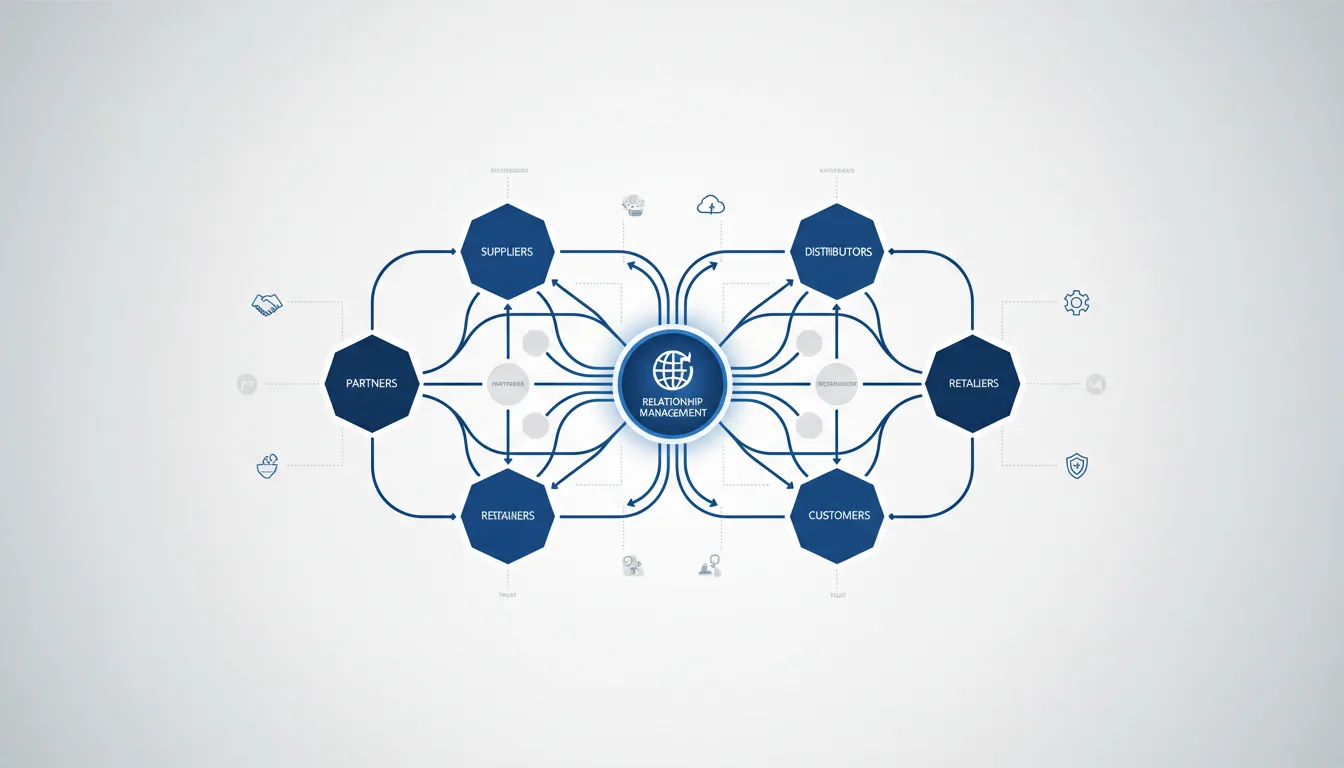
Relationship management within the logistics sector refers to the strategic approach of managing relationships with various stakeholders, including suppliers, customers, and logistics partners. This approach aims to ensure effective communication, collaboration, and operational efficiency throughout the supply chain. Its significance lies in fostering partnerships that lead to improved service delivery, cost efficiencies, and customer satisfaction, which can consequently enhance overall business performance. By focusing on long-term engagement rather than transactional exchanges, companies can build resilient supply chains.
Etymology and Origins
The concept of "relationship management" has roots in various disciplines, but its formalized application in business, particularly in marketing, began to gain prominence in the late 1980s and early 1990s. The term 'relationship management' itself emerged as businesses recognized the critical importance of nurturing sustained interactions beyond individual transactions [5]. This shift was partly fueled by the academic development of relationship marketing, which advocated for attracting, maintaining, and enhancing customer relationships, rather than solely focusing on customer acquisition [6].
Linguistically, the word 'management' denotes the act of overseeing or controlling resources and processes, deriving from the Old French 'ménagement' meaning 'housekeeping.' The term 'relationship' stems from the Latin 'relatio,' meaning 'a bringing back' or 'connection,' emphasizing the link or bond between entities. This evolution in terminology reflects the growing complexity and interconnectedness inherent in modern supply chains, where effective linkages are paramount.
Historical Development
Early Beginnings: From Transactional to Relational
The foundation of modern logistics relationship management can be traced back to the post-World War II era, primarily focusing on efficient distribution and physical movement of goods. During the 1950s and 1960s, traditional marketing concepts emphasized customer satisfaction, yet the approach to supplier and partner interactions remained largely transactional and often adversarial, driven by cost minimization and arm's-length contracts.
The Rise of Supply Chain Partnerships (1970s-1980s)
Significant shifts occurred in the 1970s and 1980s with the adoption of lean manufacturing philosophies like Just-in-Time (JIT) and Total Quality Management (TQM), notably pioneered by Japanese automotive manufacturers like Toyota. These approaches necessitated unprecedented levels of collaboration and trust with suppliers to ensure timely delivery of high-quality components, fundamentally changing the supplier-buyer dynamic [7].
Academically, the concept of Transaction Cost Economics, developed by Oliver E. Williamson in the late 1970s, provided a framework for understanding why firms might choose long-term contracts and partnerships over market-based spot transactions to minimize costs associated with uncertainty and asset specificity [8]. Simultaneously, the broader concept of Supply Chain Management (SCM) began to emerge, advocating for the integration of key business processes across the supply chain to create value for customers and stakeholders [9]. Early forms of Electronic Data Interchange (EDI) also began to facilitate structured information exchange between trading partners, laying groundwork for digital collaboration [10].
Formalization and Technological Integration (1990s-2000s)
The 1990s witnessed the formalization of "relationship marketing" and subsequently "relationship management" as distinct strategic imperatives. Scholars like Philip Kotler advocated for prioritizing customer relationships, while E. J. Oliva and A. K. Kachru published seminal works that underscored the value of long-term partnerships in business-to-business markets [11]. The focus shifted from mere transactions to strategic alliances and value co-creation between interdependent partners [12].
The introduction of Customer Relationship Management (CRM) systems in the late 1990s provided organizations with sophisticated tools to manage customer interactions, analyze data, and enhance service, which then diffused into broader logistics relationship management practices. Simultaneously, Enterprise Resource Planning (ERP) systems integrated internal business processes, providing a single source of truth for planning and execution, crucial for collaborative partnerships. The proliferation of the internet further enabled real-time communication and data sharing across supply chain partners, enhancing visibility through tools like visual inventory management systems [13].
Modern Era: Digital Transformation and Resilience (2010s-Present)
In the 2000s and beyond, global supply chains, e-commerce growth, and increasing complexity have intensified the need for robust relationship management. Advanced technologies, such as sophisticated data analytics, real-time visibility platforms, and mobile warehouse management systems, have transformed how companies manage their relationships. These innovations allow for better tracking of interactions, predictive forecasting of needs, and proactive problem-solving, leading to enhanced service levels and stronger partnerships [14].
Core Concepts
At the heart of relationship management in logistics lies the alignment of goals among various parties involved in the supply chain. Key elements extend beyond simple interaction:
- Collaboration: Actively working together with suppliers, logistics providers, and customers to share resources, insights, and risks. This includes joint planning, forecasting, and replenishment (CPFR) efforts, fostering a culture of mutual support and teamwork.
- Communication: Establishing open, transparent, and multi-directional channels of contact to resolve issues swiftly, share critical information, and maintain visibility across processes. This can range from formal quarterly business reviews to informal daily operational updates.
- Trust: Building trust through consistent reliability, integrity, and demonstrated competence. Trust is crucial for fostering long-term partnerships, enabling partners to depend on each other, especially for critical functions like order fulfillment.
- Value Creation: Focusing on generating shared value and 'win-win' outcomes for all stakeholders, rather than merely transactional or zero-sum interactions. This often involves joint innovation, cost-sharing, and service enhancements that benefit the entire ecosystem.
- Commitment: A long-term orientation and dedication to the relationship, even when facing short-term difficulties. This implies a willingness to invest resources and adapt strategies to support mutual success.
- Interdependency: Recognizing and leveraging the mutual reliance between parties. Acknowledging that the success of one partner often depends on the performance and health of others in the network.
Benefits and Advantages
Successful relationship management in logistics yields numerous benefits, moving beyond simple cost savings:
- Enhanced Customer Loyalty and Retention: Better service delivery, tailored solutions, and proactive communication lead to higher customer satisfaction and repeat business.
- Optimized Supply Chain Operations: Through collaborative practices, such as shared inventory data or joint route planning, companies can achieve reduced lead times, improved forecasting accuracy, and better resource utilization.
- Improved Negotiation Outcomes: Strong relationships built on trust can lead to more favorable terms, shared risks, and flexible contracts with suppliers and partners.
- Increased Agility and Resilience: Established relationships allow for quicker responses to market changes, supply disruptions, and customer demands, as partners are more willing to cooperate during crises [15].
- Innovation and Competitive Advantage: Collaborative partners are more likely to share knowledge, co-develop new solutions, and invest in joint initiatives, leading to differentiation in the marketplace.
Challenges and Limitations
Despite its advantages, relationship management can face several significant challenges:
- Complex Interdependencies: Managing a vast network of suppliers, carriers, 3PLs, and customers, each with their own systems and processes, can create substantial complexity and administrative overhead.
- Mismatched Objectives: Different stakeholders often have conflicting goals (e.g., a supplier focused on volume vs. a customer focused on customization), making alignment and consensus difficult.
- Cultural Differences: In global supply chains, navigating varying business cultures, communication styles, and legal frameworks can hinder trust-building and effective collaboration.
- Power Imbalances: A dominant partner in a relationship can exploit its position, leading to inequitable terms and potential resentment, undermining long-term trust.
- Information Asymmetry: Unequal access to or sharing of critical data can lead to mistrust and inefficient decision-making.
- Cost of Relationship Building: Developing and maintaining strong relationships requires significant investment in time, resources, and communication tools, which may not always show immediate returns.
To address these challenges, logistics professionals should invest in robust communication technologies, standardized protocols, and relationship-building activities that encourage alignment and cooperation among all stakeholders.
Best Practices
Logistics organizations can adopt several best practices to optimize their relationship management strategies:
- Leverage Technology for Visibility and Collaboration: Implement advanced systems to enhance data sharing and streamline operations. For instance, mobile warehouse management systems can improve real-time inventory accuracy and order fulfillment communication. Similarly, dedicated Vendor Portals and robust Purchase Order Management systems can facilitate seamless communication and transaction management with suppliers [16, 17].
- Establish Clear Communication Protocols: Define formal and informal communication channels, regular meeting schedules, and feedback mechanisms. This includes Service Level Agreements (SLAs) with clear metrics for performance.
- Conduct Regular Performance Reviews: Implement structured feedback sessions and joint performance evaluations with suppliers and partners to discuss KPIs, identify areas for improvement, and celebrate successes. This fosters continuous improvement and mutual accountability.
- Invest in Joint Training and Development: Develop workshops or shared training programs that encourage collaboration, knowledge transfer, and a deeper understanding of each other's operations and challenges.
- Foster a Culture of Trust and Transparency: Encourage open information sharing (where appropriate), honest dialogue about challenges, and a commitment to fair dealings to build a foundation of trust.
- Define Shared KPIs and Incentives: Jointly develop Key Performance Indicators (KPIs) that reflect mutual goals and consider incentive structures that reward collaborative behavior and shared success.
Future Trends
Emerging trends in relationship management are heavily influenced by digital transformation and the increasing need for resilient and sustainable supply chains:
- Increased Automation and Artificial Intelligence (AI): AI and machine learning will drive predictive analytics for demand forecasting, supplier risk assessment, and automated communication, allowing for more proactive relationship management and less manual intervention [18].
- Blockchain Technology: Offers immutable and transparent record-keeping across multi-party networks, enhancing trust and traceability in complex supply chains, particularly for compliance and ethical sourcing [19].
- Internet of Things (IoT): Real-time data from IoT sensors on goods and vehicles provides unprecedented visibility into supply chain operations, enabling partners to react instantly to issues and optimize processes collaboratively.
- Sustainability and Ethical Sourcing: Growing consumer and regulatory pressure for environmentally and socially responsible practices requires deep collaboration with supply chain partners to ensure compliance and transparency regarding ESG (Environmental, Social, and Governance) factors [20].
- Focus on Resilience and Agility: Post-pandemic, organizations are prioritizing relationships that contribute to supply chain resilience, enabling rapid adaptation to disruptions and fostering diversified, flexible partner networks.
Conclusion
In conclusion, relationship management is an essential and evolving component of logistics and supply chain management. By effectively fostering strong, long-term relationships with all stakeholders, logistics professionals can significantly enhance operational efficiency, reduce costs, improve customer satisfaction, and build more resilient and innovative supply chains. The continuous evolution of technology, combined with global challenges, will further shape the strategies and tools utilized in relationship management, emphasizing the need for logistics professionals to stay adaptable, informed, and committed to collaborative partnerships.
Sources
- Warehouse Management System Overview
- Order Management System
- WMS ROI Calculator
- WMS vs ERP Analysis
- Relationship marketing: strategic and tactical implications
- Relationship marketing of services—growing interest, emerging perspectives
- Just-in-Time system
- Transaction-Cost Economics: The Governance of Contractual Relations
- Defining supply chain management
- A History of EDI
- Business Market Management: Understanding, Creating, and Delivering Value
- Strategic Alliances in Logistics: The Partnering Imperative
- Visual Inventory Management System
- Global Supply Chain Resilience Report 2023
- CPFR (Collaborative Planning, Forecasting, and Replenishment) Success
- Vendor Portal
- Purchase Order Management
- Artificial Intelligence in Supply Chain: A Guide to the Future
- Blockchain in Supply Chain: Opportunities and Challenges
- Sustainable Supply Chain Management: A Definitive Guide