Related Concepts in Shipping
Explore the interconnected concepts that form the foundation of effective shipping and logistics management.
Updated
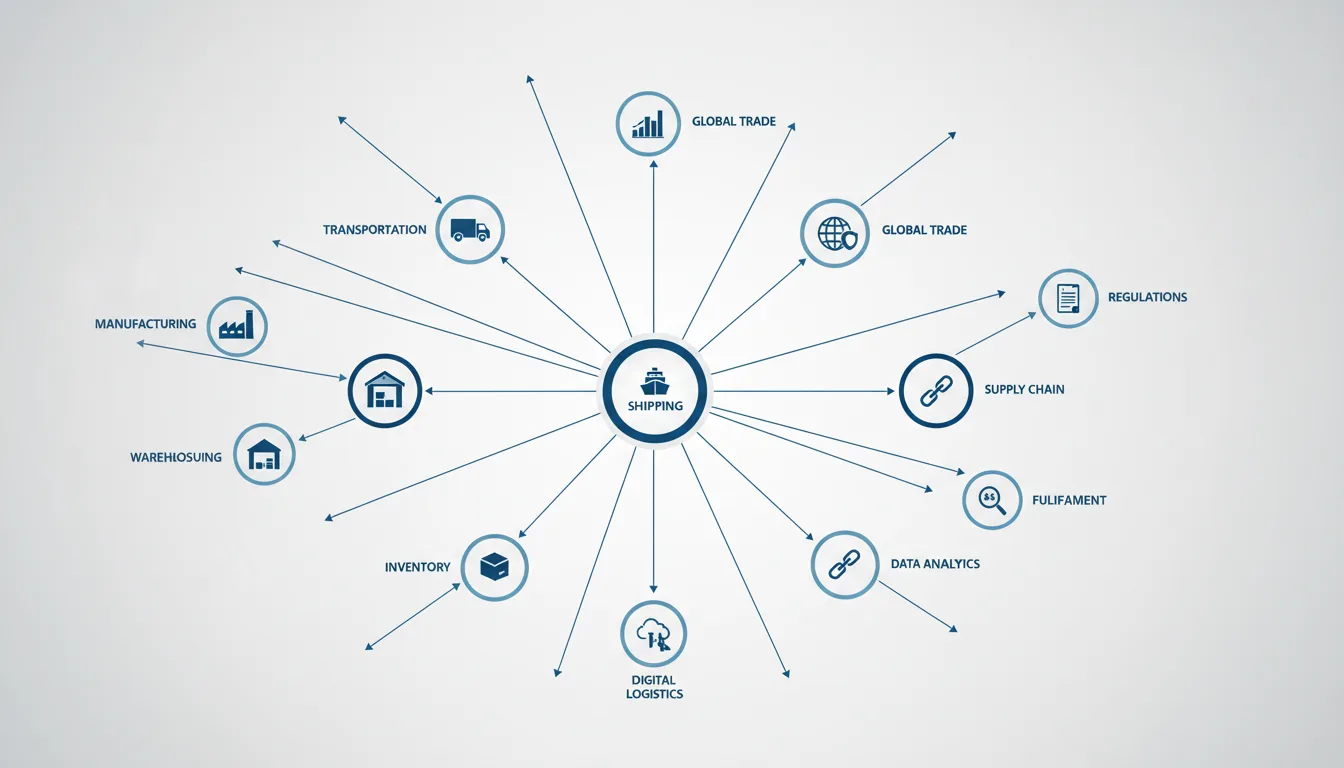
Overview
Shipping is a crucial aspect of logistics management, involving the physical transportation of goods from one location to another, facilitating trade and commerce across various sectors. More than just movement, it encompasses the entire process of preparing goods for transport, selecting modes and carriers, managing documentation, and ensuring timely delivery. The importance of efficient shipping is underscored by its pivotal role in supply chain dynamics, directly impacting customer satisfaction, inventory management, and overall operational efficiency. As global trade continues to expand and consumer expectations for speed and transparency rise, understanding related concepts in shipping becomes essential for logistics professionals, supply chain managers, and e-commerce businesses alike.
Etymology and Origins
The term "shipping" has deep historical roots, originating from the Old English word "scip" (also "scipu" or "scypu" for vessels), meaning to convey or transport goods by sea. This linguistic heritage reflects a time when waterborne transport was the primary means of moving goods over long distances. Its modern usage has evolved significantly since the 16th century, expanding beyond solely maritime activities to encompass a broad array of transport methods, including air freight, land (rail and road) haulage, and sophisticated intermodal transport solutions. Early shipments primarily relied on sailing vessels for coastal and international trade, but the advent of steam-powered ships and the expansion of railroad networks in the 19th century revolutionized the transportation landscape, laying the groundwork for the complex, integrated logistics frameworks seen today.
Historical Development
Early Eras (Pre-19th Century)
For millennia, shipping was synonymous with maritime and overland trade routes, such as the Silk Road and various spice routes. Goods were moved by rudimentary sailing vessels, animal-drawn carts, and human porterage. The Age of Exploration from the 15th to 17th centuries dramatically expanded global trade routes, linking continents and driving demand for more reliable and larger-capacity ships, though transport remained slow and susceptible to weather and piracy. Port cities became crucial hubs, and early forms of customs and trade regulations began to emerge.
The Industrial Revolution (19th Century)
- Steam Power and Railroads: The 19th century marked a profound transformation. The introduction of steamships in the early 1800s, exemplified by Robert Fulton's Clermont in 1807, offered faster and more reliable transport, independent of wind. Concurrently, the rapid expansion of railroads, particularly in North America and Europe, created efficient overland networks that could move bulk goods and connect inland regions to ports. This enabled industrialization by allowing raw materials to be transported to factories and finished goods to markets with unprecedented speed and volume. The construction of canals, such as the Erie Canal in 1825 and the Suez Canal in 1869, further integrated water-based shipping, drastically reducing travel times and costs.
Early 20th Century and World Wars
- Standardization and Logistics Development: The first half of the 20th century saw incremental improvements in shipping technology, but it was the demands of two World Wars that truly spurred innovation in logistics. The need to supply vast armies across continents led to significant advancements in inventory management, coordinated transport, and standardized packaging. Military logistics during World War II provided a blueprint for modern supply chain practices, emphasizing efficiency, speed, and massive scale.
The Container Revolution (Mid-20th Century)
- Containerization: The most significant paradigm shift in shipping came in the mid-20th century with containerization. In 1956, American entrepreneur Malcolm McLean pioneered the concept of intermodal shipping containers, using the converted tanker Ideal X to transport standardized metal boxes. This innovation dramatically reduced loading and unloading times from days to hours, slashed labor costs, minimized theft and damage, and facilitated seamless transfers between ships, trains, and trucks. The adoption of International Organization for Standardization (ISO) container standards in the 1960s ensured global compatibility, turning shipping into a truly interconnected global network and fundamentally transforming international trade. Marc Levinson's book, The Box: How the Shipping Container Made the World Smaller and the World Economy Bigger, vividly details this revolution.
Late 20th Century (IT Integration)
- Information Technology: The late 20th century witnessed the integration of information technology into shipping. The widespread adoption of Electronic Data Interchange (EDI) enabled automated exchange of business documents, speeding up customs, invoicing, and tracking. Early Warehouse Management Systems (WMS) and rudimentary barcoding systems began to optimize internal logistics. This period laid the groundwork for today's digitally driven supply chains.
21st Century (Digitalization and Automation)
- Digitalization and Automation: The 21st century has been characterized by rapid technological advancement. The advent of sophisticated software for automated rate selection and real-time tracking systems has further enhanced shipping efficiency and transparency. Technologies like the Internet of Things (IoT) for cargo monitoring, Artificial Intelligence (AI) for route optimization and predictive analytics, and blockchain for supply chain visibility are now integral. Modern WMS systems and mobile order fulfillment software are transforming warehouse operations, while discussions around autonomous vehicles and drone deliveries point to the future of transportation.
Core Concepts
Shipping involves several core concepts that facilitate successful logistics operations, extending beyond mere transportation:
- Freight Forwarding: A freight forwarder acts as an intermediary, organizing and coordinating the shipment of goods from one place to another via a single or multiple carriers. They handle complex logistics such as documentation, customs clearance, warehousing, and often offer cargo insurance. This service is particularly valuable for international shipping, where regulatory complexities and multimodal arrangements are common.
- Intermodal Transport: This refers to the utilization of multiple modes of transportation (e.g., trucks, trains, ships, air freight) for a single shipment, using a single freight unit (like a container) that can be easily transferred between modes without rehandling the goods themselves. It offers significant advantages in terms of cost efficiency, reduced transit times, and environmental impact compared to using a single mode for the entire journey.
- Customs Clearance: A critical process for international shipping, customs clearance involves obtaining official permission to import or export goods across national borders. This requires accurate documentation (e.g., commercial invoices, packing lists, bills of lading), payment of duties and taxes, and compliance with import/export regulations of both the origin and destination countries. Delays or errors in customs clearance can lead to significant costs and supply chain disruptions.
- Warehousing and Storage: While often considered separate, warehousing is intrinsically linked to shipping. Goods are stored in warehouses or distribution centers before shipment, during transit (e.g., cross-docking facilities), and upon arrival at their destination. Efficient warehouse layout and management practices, including bin put-away criteria and cross-docking, are essential to streamline the flow of goods into and out of the shipping process.
The effectiveness of shipping strategies can be optimized with order management systems, which streamline the entire order-to-delivery process, from initial order placement to final shipment tracking.
Industry Applications
Shipping is an indispensable function across virtually all industries, adapting to their specific requirements:
- E-commerce: This sector heavily relies on efficient, fast, and often last-mile delivery services. Companies like Amazon have set high benchmarks for rapid delivery times, often leveraging advanced shipping and fulfillment software and extensive logistics networks. The rise of e-commerce has also driven the growth of reverse logistics, managing product returns efficiently.
- Manufacturing: Shipping of raw materials from suppliers, components between manufacturing stages, and finished goods to distributors or customers is integral to production cycles. The adoption of Just-in-Time (JIT) manufacturing principles has made precise and reliable inbound shipping crucial to avoid production halts.
- Pharmaceuticals: This industry requires highly specialized shipping solutions due to strict regulations, temperature control requirements (cold chain logistics), and the critical nature of timely delivery for life-saving medicines. Security and traceability are paramount.
- Retail: Beyond e-commerce, traditional brick-and-mortar retail relies on efficient shipping for store replenishment, ensuring shelves are stocked. This involves coordinating shipments from distribution centers to thousands of store locations, often on tight schedules.
- Agriculture & Perishables: The transportation of fresh produce, flowers, and other time-sensitive goods demands expedited shipping, often with climate-controlled environments and precise route planning to minimize spoilage and maximize freshness upon arrival.
Benefits and Advantages
The successful implementation of efficient shipping strategies can offer numerous strategic and operational benefits:
- Cost Savings: Optimizing shipping routes, consolidating loads, negotiating favorable rates with multiple carriers (often facilitated by integrations like ShipEngine), and choosing the most cost-effective modes of transport can significantly lower overall logistics expenditures. Efficient processes reduce demurrage and detention fees.
- Improved Customer Satisfaction: Timely, reliable, and transparent delivery—including proactive communication and easy tracking—significantly enhances customer trust and loyalty. Offering flexible shipping options (e.g., expedited, standard, local pickup) further caters to diverse customer needs.
- Inventory Management: Efficient shipping practices work hand-in-hand with effective inventory management. By ensuring timely delivery of inbound goods and rapid dispatch of outbound orders, businesses can reduce the need for excess safety stock, minimize holding costs, and improve cash flow. Stock replenishment guides are vital for managing these efficiencies, ensuring inventory is available when needed without being overstocked.
- Expanded Market Reach: Effective shipping capabilities enable businesses to serve customers in wider geographic areas, both domestically and internationally, opening new markets and revenue streams.
- Competitive Advantage: Companies known for superior shipping speed, reliability, and cost-effectiveness often gain a significant competitive edge, allowing them to differentiate themselves in crowded markets.
Challenges and Limitations
Despite its critical importance, shipping faces several persistent and evolving challenges:
- Regulatory Compliance: Navigating the complex and ever-changing landscape of international regulations, trade agreements (e.g., Incoterms), customs duties, tariffs, and environmental mandates can be daunting, requiring specialized expertise and robust compliance systems.
- Supply Chain Disruptions: Global events such as natural disasters (e.g., hurricanes, earthquakes), geopolitical tensions (e.g., trade wars, regional conflicts), pandemics (e.g., COVID-19), and infrastructure failures (e.g., the Suez Canal blockage) can severely impact shipping routes, cause delays, and escalate costs.
- Technological Integration: While technology offers immense benefits, integrating new systems (e.g., AI, IoT, blockchain) with legacy IT infrastructure can be complex, costly, and disruptive for many organizations. Ensuring interoperability and data security are major concerns.
- Sustainability Pressures: Growing environmental concerns are pushing the industry to adopt more eco-friendly practices. This includes reducing carbon emissions, managing waste, and exploring alternative fuels and electric vehicles, often requiring significant investment and operational adjustments.
- Labor Shortages: The shipping and logistics sector frequently grapples with shortages of qualified personnel, including truck drivers, warehouse staff, and maritime crew members, leading to increased labor costs and operational bottlenecks.
- Rising Fuel Costs: Fluctuations in global oil prices directly impact transportation costs, making fuel efficiency and hedging strategies crucial for maintaining profitability.
Best Practices
Implementing best practices in shipping can help organizations achieve better outcomes, enhance resilience, and drive profitability:
- Comprehensive Assessment of Shipping Needs: Thoroughly understand shipment characteristics (size, weight, fragility, value, urgency) to select the optimal shipping method, carrier, and packaging. This involves evaluating total cost of ownership, not just freight rates, and considering service level agreements (SLAs).
- Leveraging Advanced Technology: Utilize modern solutions like mobile warehouse management systems for real-time inventory visibility and efficient picking, pick, pack, ship software for streamlined fulfillment, and advanced analytics for route optimization and demand forecasting. Automation of tasks like batch picking can significantly improve throughput.
- Strategic Carrier Relationships: Establish strong, diversified partnerships with multiple shipping providers. This involves negotiating favorable rates, setting clear performance metrics, and having backup carriers to mitigate risks and ensure service continuity during disruptions.
- Robust Risk Management and Contingency Planning: Develop detailed plans for potential disruptions, including alternative routes, emergency inventory protocols, and comprehensive insurance coverage. This proactive approach minimizes the impact of unforeseen events.
- Continuous Improvement and Data Analysis: Regularly analyze shipping data (transit times, costs, damages, on-time delivery rates) to identify bottlenecks, opportunities for optimization, and areas for process improvement. Implement feedback loops from customers and carriers.
Future Trends
Looking forward, the shipping industry is undergoing rapid transformation driven by technological advancements and global imperatives:
- Sustainability Initiatives: The drive towards a greener supply chain is accelerating. Companies are increasingly adopting eco-friendly shipping practices, such as optimizing routes to reduce fuel consumption, investing in electric and hydrogen-powered vehicles, exploring sustainable packaging materials, and participating in carbon offsetting programs to minimize environmental impact.
- Increased Automation and AI: The rise of drones and automated delivery systems (e.g., autonomous trucks, last-mile delivery robots) sets a new frontier for logistics. Within warehouses, robotics and AI are enhancing efficiency through automated sorting, picking, and packing. AI-driven predictive analytics will further optimize routes, anticipate delays, and manage inventory more effectively.
- Blockchain for Transparency: Distributed ledger technology, or blockchain, is gaining traction for enhancing transparency and traceability across complex supply chains. It can provide immutable records of cargo movement, ownership transfers, and compliance data, improving trust and reducing fraud.
- Hyper-personalization and Last-Mile Innovation: Consumer demand for faster, more flexible, and highly personalized delivery options (e.g., scheduled delivery windows, real-time rerouting) is pushing innovation in last-mile logistics, including micro-fulfillment centers and alternative delivery models.
- Reshoring and Regionalization: Geopolitical shifts and lessons learned from recent supply chain disruptions are prompting some companies to reconsider globalized production. This trend towards reshoring or nearshoring production could lead to more regionalized shipping networks and a reduced emphasis on long-haul international freight for certain goods.
Related Concepts
Understanding shipping also involves grasping several closely integrated logistics concepts that collectively shape efficient supply chain operations:
- Inventory Management: An essential pillar for effective shipping, inventory management ensures that the right products are available for shipment at the right time and in the right quantities. Poor inventory management can lead to stockouts (unable to ship) or excess inventory (increased holding costs). Explore more about visual inventory management systems for optimizing stock levels and locations.
- Order Fulfillment: This is the comprehensive process that encompasses receiving, processing, and delivering orders to customers, intrinsically linked with shipping practices. It includes everything from order entry, picking (e.g., pick-to-tote), packing, and ultimately, shipping. See the order fulfillment guide for more insights into streamlining this critical process.
- Warehouse Management: Encompassing all operations within a warehouse, from receiving and putaway to storage, picking, packing, and shipping. Efficient warehouse management is crucial for seamless shipping operations. Technologies like mobile warehouse management systems facilitate efficient material handling and order preparation, directly impacting shipping speed and accuracy. Understanding warehouse layout is fundamental to optimizing these flows.
- Supply Chain Management: The overarching discipline that integrates all activities involved in the sourcing, procurement, conversion, and logistics management of goods and services. Shipping is a vital component of supply chain management, acting as the physical link that connects different stages and partners within the chain.
The interplay between these concepts shapes the landscape of shipping today, providing a comprehensive framework for logistics professionals to optimize their operations and respond to evolving market demands.
Sources
- Shipping and Fulfillment Software
- Order Management System
- Mobile Order Fulfillment Software
- Visual Inventory Management System
- Stock Replenishment Guide
- Order Fulfillment Guide
- Automated Rate Selection
- Online Etymology Dictionary - Ship
- The Box: How the Shipping Container Made the World Smaller and the World Economy Bigger
- International Organization for Standardization (ISO) - ISO 668:2020
- Mobile Warehouse Management System
- Warehouse Layout Preview
- Pick, Pack, Ship Software
- Bin Put-Away Criteria Guide
- Cross-Docking Guide
- Batch Picking Guide
- ShipEngine Integration
- Pick-to-Tote Guide
- The Importance of Supply Chain Dynamics
- Intermodal Freight Transport
- Silk Road
- Steamboat
- Erie Canal
- World War II Military Logistics
- Electronic Data Interchange (EDI)
- Cargo Insurance
- Just-in-Time (JIT) Manufacturing
- Cold Chain Logistics
- Incoterms
- Sustainable Packaging