Related Concepts in Logistics
This article explores essential related concepts in logistics, highlighting their definitions, historical context, and interconnections within the supply chain.
Updated
Overview
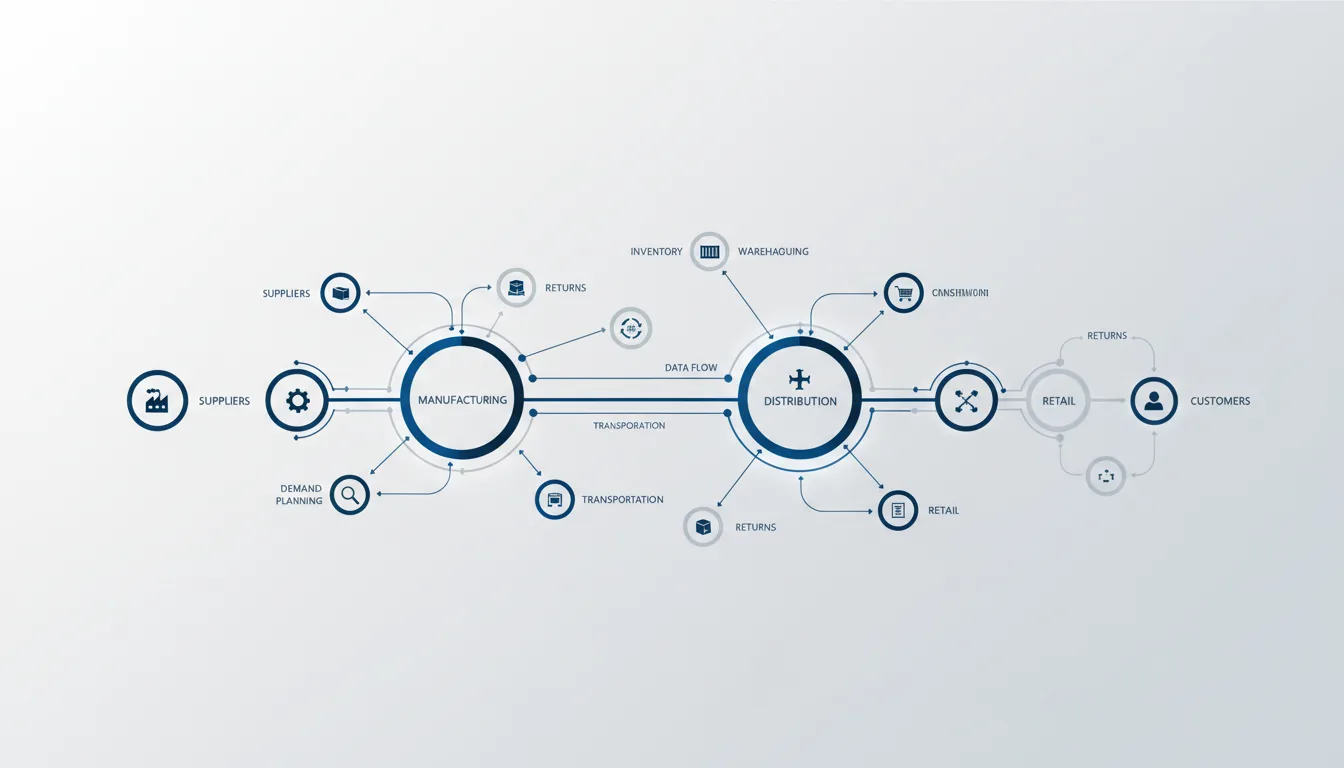
Logistics involves the detailed planning and execution of goods, services, and information movement from origin to consumption. It's a critical function that requires a comprehensive understanding of various interconnected concepts to ensure the efficient flow of resources. These include supply chain management, inventory management, procurement, and transportation. Recognizing these interconnected domains enhances overall operational efficiency and effectiveness in logistical operations, providing organizations with the capabilities to meet customer demands promptly, reduce costs, and gain a competitive advantage.
Etymology and Origins
The term "logistics" has its roots in the ancient Greek word "logistikos", which translates to "skilled in calculating" or "pertaining to reason and calculation." Initially, its prominence was in military contexts, with historical records indicating sophisticated supply chain management by armies as early as the Roman Empire. Napoleon Bonaparte's campaigns in the 19th century further cemented the importance of military logistics, where the movement, quartering, and provisioning of troops were crucial for strategic success. Antoine-Henri Jomini, a Swiss military theorist, is often credited with coining the term "logistics" in his 1838 work, The Art of War, defining it as "the practical art of moving armies."
Its evolution to encompass commercial operations began in the early 20th century, spurred by the Industrial Revolution and mass production, which necessitated efficient material flow. The importance of logistics expanded significantly as businesses recognized the strategic value of optimized supply chains. For instance, the advent of the concept of just-in-time manufacturing (JIT) in the 1970s, pioneered by Toyota, emphasized the integration of various logistics aspects to minimize waste and optimize inventory levels by aligning production with actual demand, fundamentally transforming how inventory and supply chains were viewed.
Historical Development
The evolution of logistics is a testament to humanity's continuous quest for efficiency in moving resources. Key milestones include:
- Ancient Civilizations (Pre-18th Century): Early forms of logistics were vital for empires like the Romans and Persians, focusing on building extensive road networks and organized supply lines for armies and trade. Quartermasters managed supplies and transportation for military campaigns, laying rudimentary foundations for future logistical practices.
- 18th-19th Century: Industrial Revolution & Military Science: The advent of the Industrial Revolution brought mass production and the need for organized distribution systems. Concurrently, military thinkers like Jomini formalized the concept of logistics within military strategy, distinguishing it from tactics and strategy. The expansion of railroads and steamships further enabled large-scale movement of goods.
- Early 20th Century: Scientific Management & World Wars: Frederick Taylor's principles of scientific management influenced factory layout and efficiency, impacting internal logistics. Both World War I and World War II were logistical marvels, showcasing the critical importance of supply chain resilience and coordination, leading to advancements in operations research to optimize resource allocation.
- 1950s: The Container Revolution: The introduction of the containerization concept by Malcom McLean revolutionized shipping. Standardized shipping containers drastically reduced handling time, minimized damage, and significantly lowered transportation costs, paving the way for globalized trade. This period also saw the rise of the "total cost concept" in distribution, advocating for optimizing the entire system rather than individual components.
- 1960s-1970s: Material Requirements Planning (MRP): The development of Material Requirements Planning (MRP) systems in the 1960s, heavily influenced by IBM, marked a significant technological leap. These systems enabled companies to plan and manage raw material and component inventories based on production schedules, reducing stockouts and excess inventory. This period also saw distribution management emerge as a recognized business function.
- 1980s: Just-In-Time (JIT) & Supply Chain Management (SCM): Inspired by Toyota's production system, the Just-In-Time (JIT) philosophy gained traction, emphasizing minimal inventory and continuous flow. Concurrently, the broader concept of Supply Chain Management (SCM) began to emerge, shifting focus from individual logistics functions to the integrated management of the entire network of businesses involved in delivering a product.
- 1990s: Enterprise Resource Planning (ERP) & Globalization: The widespread adoption of Enterprise Resource Planning (ERP) systems like SAP and Oracle integrated various business functions, including logistics, finance, and manufacturing, into a single system. The rise of globalization and e-commerce further underscored the need for sophisticated and interconnected logistical networks.
- 2000s-Present: Digitalization, Automation & Sustainability: The 21st century has seen rapid advancements in technology, leading to innovations in Warehouse Management Systems (WMS), Transportation Management Systems (TMS), and advanced analytics. Automation through robotics, the Internet of Things (IoT) for real-time tracking, and artificial intelligence (AI) for predictive analytics have transformed operations. Increased focus on sustainability, circular economy models, and resilient supply chains in the face of global disruptions have also become paramount.
Core Concepts
Understanding the following core concepts within logistics helps to grasp their immense importance and interdependencies:
- Supply Chain Management (SCM): SCM is the overarching discipline that considers the entire flow of goods, services, information, and finances from raw material suppliers to end customers. It encompasses the strategic planning, procurement, production, logistics, and distribution activities across multiple organizations to maximize customer value and achieve sustainable competitive advantage.
- Inventory Management: This involves the careful management of stock levels to balance supply and demand, ensuring the appropriate amount of products are available to fulfill demand while minimizing holding costs, preventing obsolescence, and avoiding stockouts. Techniques include Economic Order Quantity (EOQ), ABC analysis, and demand forecasting. Advanced systems, such as a Visual Inventory Management System, are employed for precision in tracking inventory, managing lots and expiration dates, and ensuring stock accuracy through methods like cycle counting.
- Transportation Management: Effective transportation solutions are critical for logistics, focusing on optimizing routes, managing carrier selections, negotiating freight rates, and ensuring timely, cost-effective, and safe delivery of goods. This includes managing various modes of transport (road, rail, air, sea) and leveraging Transportation Management Systems (TMS) for planning and execution.
- Warehouse Management: This critical component focuses on optimizing the storage, handling, and movement of goods within a warehouse or distribution center. It includes processes such as receiving, putaway, picking, packing, and shipping. Modern Warehouse Management Systems (WMS) are essential for efficient operations, providing capabilities like warehouse layout optimization and directed putaway criteria.
Types and Classifications
Logistics systems can be classified into several types based on their specific functions and direction of flow:
- Inbound Logistics: Refers to the movement of goods, raw materials, and supplies from suppliers into a business's facilities (e.g., manufacturing plant, warehouse). Key activities include procurement, supplier management, receiving, and managing raw material inventory.
- Outbound Logistics: Involves the processes required to move finished products out of a business and deliver them to customers, distributors, or retailers. This includes order fulfillment, packaging, shipping, and last-mile delivery.
- Reverse Logistics: This deals with processes related to returning merchandise from the customer back to the seller or manufacturer. It encompasses returns management, recycling, refurbishment, repair, and disposal of products, aiming to recapture value or ensure proper environmental handling.
- Third-Party Logistics (3PL): Involves outsourcing logistical operations to external providers. These 3PLs offer specialized services such as transportation, warehousing, cross-docking, inventory management, packaging, and freight forwarding, allowing businesses to focus on their core competencies.
Industry Applications
Logistics functions across virtually all industries, each with unique requirements and complexities. Here are a few examples:
- Retail & E-commerce: Companies utilize advanced order fulfillment systems and pick, pack, ship software to efficiently manage incoming orders, streamline distribution, and handle returns. Shopify WMS solutions, for instance, are tailored to integrate with e-commerce platforms for seamless inventory and order management.
- Healthcare & Pharmaceuticals: This sector depends on precise inventory management systems to guarantee that critical medical supplies, drugs, and equipment are on hand when needed, often requiring cold chain logistics and strict regulatory compliance for temperature-sensitive products.
- Manufacturing: Logistics ensures the timely flow of raw materials to production lines (inbound logistics), efficient movement within the factory, and distribution of finished goods to customers (outbound logistics). Just-in-Time (JIT) and lean manufacturing principles are heavily reliant on robust logistics.
- Automotive: Manages the global supply chain for parts, components, and finished vehicles, often involving complex international shipping, sequenced delivery to assembly lines, and vast distribution networks for dealerships.
- Humanitarian Logistics: Focuses on delivering aid, relief supplies, and personnel to affected areas during natural disasters or crises, often under challenging conditions and with immense time pressure.
Benefits and Advantages
Integrating logistics with related concepts yields numerous benefits that directly impact a company's bottom line and customer satisfaction:
- Enhanced Operational Efficiency: Streamlined processes, optimized routes, and effective inventory management reduce wasted resources, time, and effort, leading to smoother operations and higher throughput.
- Cost Reduction: By minimizing excess inventory, optimizing transportation spend, reducing handling costs, and improving warehouse utilization, companies can significantly lower their overall operational expenses.
- Improved Customer Satisfaction: Timely and accurate deliveries, reduced lead times, and efficient returns processes lead to higher customer satisfaction and loyalty. Customers increasingly expect fast and reliable delivery, making logistics a key differentiator.
- Better Inventory Management: Helps in minimizing overstock and stockouts, optimizing working capital, and reducing carrying costs, leading to improved cash flow and profitability. Techniques like stock replenishment ensure optimal stock levels.
- Increased Competitive Advantage: Companies with superior logistical capabilities can offer faster delivery, better service, and more competitive pricing, thereby gaining a significant edge over rivals.
- Greater Supply Chain Resilience: A well-managed logistics network can better withstand disruptions (e.g., natural disasters, geopolitical events) through diversified sourcing, flexible transportation options, and robust inventory strategies.
Challenges and Limitations
Despite the clear advantages, logistics also faces several complex challenges:
- Complexity in Supply Chains: Modern global supply chains are inherently intricate, involving multiple suppliers, manufacturers, distributors, and transportation modes across various geographical regions, leading to potential inefficiencies and increased operational costs.
- Demand Fluctuations and Volatility: Unpredictable shifts in customer demand can create difficulties in inventory forecasting, production planning, and logistics management, leading to either costly overstocking or missed sales due to stockouts.
- Regulatory Compliance: Ensuring compliance with diverse national and international regulations, customs requirements, environmental standards, and labor laws across different regions can introduce significant complexities and costs, especially for global operations.
- Labor Shortages and Skills Gap: The logistics industry often grapples with shortages of skilled labor, from truck drivers to warehouse personnel and logistics analysts, which can impact operational capacity and efficiency.
- Infrastructure Limitations: Inadequate transportation infrastructure (e.g., congested roads, outdated ports) in certain regions can severely impede the efficient movement of goods.
- Geopolitical Risks and Disruptions: Wars, trade disputes, pandemics, and natural disasters can cause sudden and severe disruptions to global supply chains, impacting lead times, costs, and availability of goods.
- Sustainability Pressures: Growing environmental concerns and consumer demand for eco-friendly practices necessitate significant investment in green logistics, which can be costly to implement in the short term.
Best Practices
To mitigate challenges and enhance logistics efficiency, employing best practices is essential:
- Implement Robust Technology: Utilize advanced Warehouse Management Systems (WMS), Transportation Management Systems (TMS), and Purchase Order Management software for automation, optimization, and real-time visibility across the supply chain.
- Optimize Inventory Control: Employ techniques like cycle counting for regular inventory checks to maintain accuracy, implement demand forecasting, and manage bin put-away criteria to ensure efficient storage and retrieval.
- Leverage Data Analytics: Implement data analytics for informed decision-making regarding inventory levels, transportation routes, supplier performance, and demand patterns. Predictive analytics can anticipate issues before they arise.
- Foster Strong Partnerships: Develop solid relationships with suppliers, carriers, and distributors to aid collaboration, improve responsiveness, and build a more resilient and integrated supply chain.
- Embrace Lean Principles: Continuously seek to eliminate waste in all logistical processes, from transportation to warehousing, inventory, and waiting times. This includes adopting JIT principles where appropriate.
- Focus on Sustainability: Integrate environmentally friendly practices, such as optimizing routes to reduce fuel consumption, using electric vehicles, sustainable packaging, and promoting reverse logistics for recycling and reuse.
- Invest in Workforce Training: Address labor shortages and skills gaps by investing in training and development programs for logistics professionals and warehouse staff, ensuring they are proficient with new technologies and best practices.
Future Trends
Looking ahead, several transformative trends are shaping the logistics landscape:
- Artificial Intelligence (AI) & Machine Learning (ML): Increased adoption of AI and ML for predictive analytics (e.g., demand forecasting, predictive maintenance), route optimization, automated decision-making, and robotic process automation in warehouses.
- Sustainability & Green Logistics: A growing emphasis on environmentally friendly practices, including optimizing routes to reduce carbon emissions, using alternative fuels and electric vehicles, sustainable packaging, and developing circular economy models through effective reverse logistics.
- Internet of Things (IoT): Growing integration of IoT devices for real-time tracking and monitoring of goods (e.g., location, temperature, humidity) across supply chains, enhancing visibility, security, and quality control.
- Blockchain Technology: Application of blockchain for enhanced transparency, traceability, and security within supply chains, particularly for managing contracts, verifying product authenticity, and tracking complex international shipments.
- Automation & Robotics: Further deployment of autonomous robots (AGVs, AMRs) in warehouses for picking, packing, and sorting, as well as the potential for autonomous vehicles and drones in last-mile delivery, addressing labor challenges and increasing efficiency.
- Hyperlocalization & Micro-fulfillment Centers: The rise of smaller, urban fulfillment centers closer to customers to enable faster, often same-day, delivery, driven by e-commerce demands.
Related Concepts
Understanding logistics necessitates familiarity with other key areas that often overlap or are integrated:
- Procurement: The acquisition of goods and services essential for operations, from raw materials to office supplies. Effective purchase order management is intrinsically linked to inbound logistics.
- Warehouse Management: Specifically concerns the effective administration of storage space, efficient order processing (picking, packing, shipping), and precise inventory management within a physical facility. Goals align directly with the effectiveness of logistical flow, supported by tools like a mobile WMS.
- Fulfillment: Encompasses the complete process from the moment an order is received to its delivery to the customer. This includes order processing, picking, packing, shipping, and handling returns, often managed by pick, pack, ship software.
- Demand Planning: The process of forecasting future customer demand to inform inventory, production, and procurement decisions. Accurate demand planning is crucial for optimizing logistical flows.
- Manufacturing Operations: The processes involved in transforming raw materials into finished goods. Logistics provides the raw materials to manufacturing and distributes the finished products.
By recognizing and integrating these related concepts, logistics professionals can enhance their strategies and improve overall supply chain performance, ultimately contributing to business success in a dynamic global marketplace.
Sources
- Just-in-Time Manufacturing History
- Containerization
- WMS vs ERP Analysis
- Visual Inventory Management System
- Order Management System
- Cycle Counting Guide
- Logistics Management: A Strategic Perspective
- How Information Gives You Competitive Advantage
- The Art of War
- Industrial Revolution
- Scientific Management
- Mainframe Computing and the Birth of ERP
- The Definitive Guide to Supply Chain Management (SCM)
- Mobile Warehouse Management System
- Lots & Expiration Dates
- Warehouse Layout Preview
- Pick, Pack, Ship Software
- Shopify WMS Overview
- Stock Replenishment Guide
- Purchase Order Management
- Bin Put-Away Criteria