Related Concepts in Fulfillment
This article explores the various concepts related to fulfillment in logistics, including definitions, historical development, and best practices.
Updated
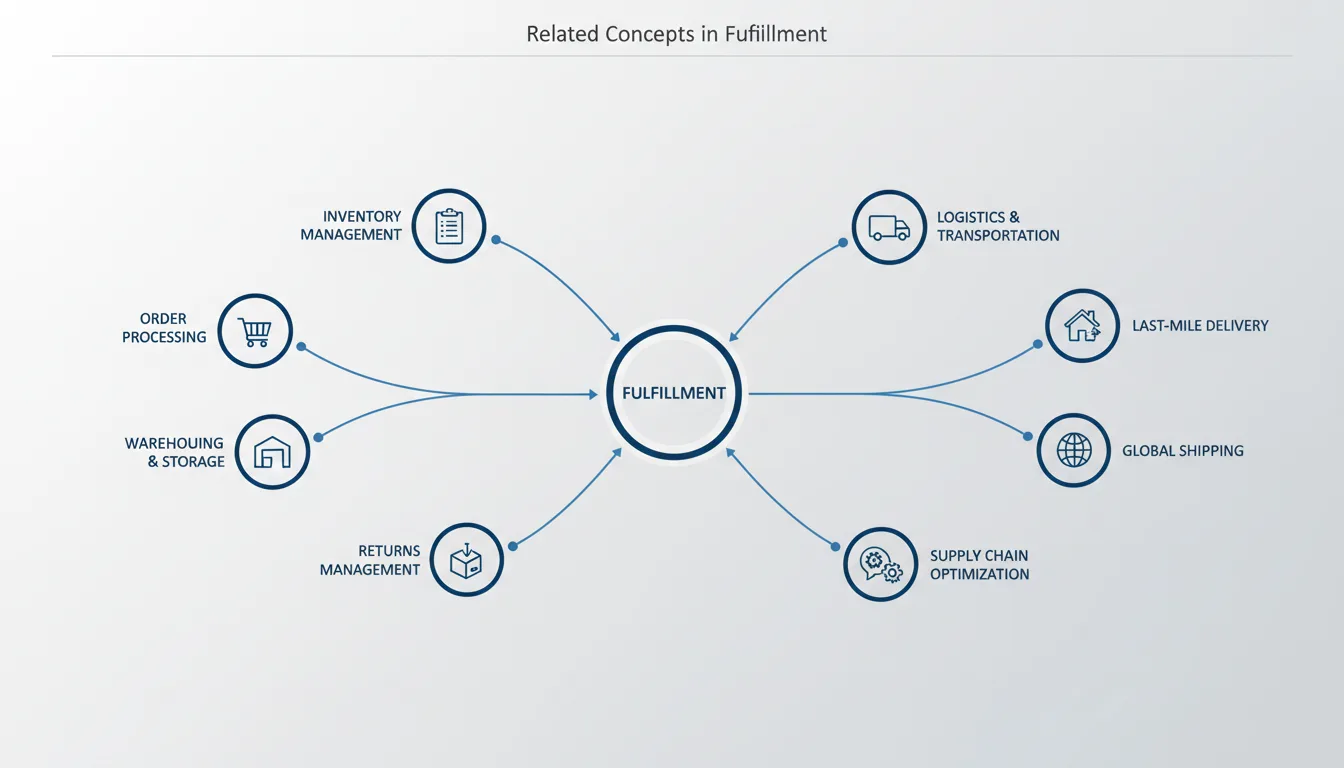
Related Concepts in Fulfillment
Overview
Fulfillment in logistics refers to the comprehensive process of receiving, processing, and delivering customer orders. It encompasses a wide array of activities, from the moment an order is placed to its final delivery, including inventory management, order processing, picking, packing, shipping, and often returns management. The importance of efficient fulfillment cannot be overstated, as it directly impacts customer satisfaction, brand reputation, and operational profitability. In today's hyper-competitive e-commerce landscape, where rapid and accurate delivery is a baseline expectation, a deep understanding of fulfillment and its related concepts is absolutely vital for logistics professionals, supply chain managers, and businesses aiming for sustained growth.
Etymology and Origins
The term "fulfillment" has ancient linguistic roots, stemming from the Old English word "fullfyllan," which means "to fill full," "to complete," or "to perform." Its initial usage was broad, referring to the completion of tasks, prophecies, or desires. In a commercial context, the concept of completing an order has existed for centuries with early forms of trade and commerce. However, the specific application of "fulfillment" to the entire process of order fulfillment as a distinct logistical function began to gain prominence much later.
While the underlying activities of receiving, storing, and shipping goods are as old as commerce itself, the integrated term "order fulfillment" emerged more distinctly with the rise of mail-order businesses in the late 19th and early 20th centuries (e.g., Sears, Roebuck and Co.). These companies established sophisticated systems to process vast numbers of orders received by mail, pick items from large warehouses, package them, and arrange for their delivery across vast geographical areas. This marked an early, organized approach to the complete order cycle, setting the precedent for modern fulfillment operations and solidifying the term's commercial application [11].
Historical Development
Fulfillment practices have undergone a dramatic evolution, driven by technological advancements, shifting consumer expectations, and global economic changes. The progression can be broadly categorized:
-
Pre-Industrial Era (Pre-18th Century): Fulfillment was largely manual, localized, and bespoke. Goods were produced and exchanged in local markets, with simple inventory systems and direct transactions. Large-scale 'fulfillment' was limited to specialized trades or royal supply chains.
-
Industrial Revolution & Early 20th Century (18th - early 20th C.): The advent of mass production necessitated more organized warehousing and distribution. Mail-order catalogs, like those from Sears, Roebuck and Co., pioneered centralized distribution centers and intricate order processing systems. These early operations often involved paper-based order forms, manual picking, and reliance on postal services or rail for distribution [11].
-
Post-WWII & Modern Logistics (Mid-20th Century): The discipline of logistics began to formalize. Operations research, born from wartime efforts, introduced scientific methods to optimize inventory, warehousing, and transportation. The development of Material Requirements Planning (MRP) systems in the 1960s and 70s (often pioneered by companies like IBM) laid the groundwork for computerized inventory control and production planning, which are integral to modern fulfillment. The focus shifted to cost reduction and efficiency within the supply chain.
-
Just-In-Time (JIT) & Lean Principles (1980s): Inspired by Toyota's production system, the Just-in-Time philosophy emphasized minimizing inventory and waste, directly impacting how companies managed their stock for fulfillment. The rise of Electronic Data Interchange (EDI) began to automate document exchange between trading partners, streamlining order processing and shipping information.
-
E-commerce Explosion (1990s - 2000s): This era marked a pivotal moment. The launch of online retailers like Amazon in 1995 revolutionized customer expectations, demanding speed, accuracy, and visibility in fulfillment. The term "order fulfillment" became central to business strategy. The 2000s saw the widespread adoption of advanced Warehouse Management Systems (WMS), which dramatically optimized inventory tracking, slotting, picking routes, and overall warehouse efficiency. Enterprise Resource Planning (ERP) systems began to integrate sales, finance, and logistics functions, offering a more holistic view.
-
Automation & Digital Transformation (2010s - Present): The 2010s brought significant advancements in automation, including robotics, automated guided vehicles (AGVs), and sophisticated sortation systems, improving efficiency and accuracy in logistics operations [12]. The focus expanded to real-time data, predictive analytics, and the integration of IoT devices. Seminal publications, such as Logistics and Supply Chain Management by Martin Christopher, became essential texts, highlighting the strategic importance of effective fulfillment in competitive markets.
Core Concepts
Fulfillment involves several interconnected core activities that must be seamlessly integrated for optimal performance. These include:
- Inventory Management: The process of tracking and controlling goods to meet customer demand without excess stock. This includes receiving goods, putaway (using guidelines like Bin Put-Away Criteria), stock replenishment, and cycle counting to maintain accuracy (Cycle Counting Guide). Advanced systems like a Visual Inventory Management System provide real-time visibility.
- Order Processing: Receiving customer orders (often through an Order Management System), validating them, and routing them to the appropriate warehouse for picking.
- Picking: Retrieving items from warehouse storage. This can involve various strategies such as Batch Picking, Pick-to-Tote, or zone picking, optimized by Visual Warehouse Layout and efficient Workflows Overview.
- Packing: Securing items for shipment, often involving specialized packaging for protection, branding, and adherence to carrier requirements. Tools like a Bin Packing Visualizer can help optimize package size and contents.
- Shipping: Preparing packages for dispatch, including labeling, documentation, and handover to carriers. Automated Rate Selection and Multi-Box Shipping features streamline this process.
- Reverse Logistics: Managing returns efficiently, including inspection, restocking, or disposal, which is an increasingly critical component of customer satisfaction.
Proper order fulfillment requires a seamless integration of these processes. Additionally, technology plays a crucial role, with systems such as Shipping & Fulfillment Software enabling real-time tracking, automated operations, and data analytics to enhance efficiency and decision-making.
Industry Applications
Fulfillment concepts are critical across nearly all sectors that deal with physical goods. Each industry has unique demands:
- E-commerce: Requires high-speed, accurate, and often personalized fulfillment, catering to direct-to-consumer (DTC) models. Mobile order fulfillment solutions (Mobile Order Fulfillment) are crucial for empowering warehouse staff and ensuring swift processing.
- Retail: Omnichannel fulfillment (online orders fulfilled from stores, ship-from-store, buy online pickup in store - BOPIS) adds complexity. Strategic Visual Warehouse Layouts are essential for optimizing picking efficiency, whether for replenishing shelves or fulfilling online orders.
- Manufacturing: Often involves fulfillment of raw materials for production (inbound logistics) and finished goods distribution (outbound logistics). Purchase Order Management and precise inventory control are paramount to prevent production delays.
- Healthcare/Pharmaceuticals: Demands stringent regulatory compliance, temperature-controlled storage, and meticulous lot and expiration date tracking (Lots & Expiration Dates) for safety and traceability.
- Food & Beverage: Requires fast turnover, cold chain management, and adherence to freshness dates, often utilizing practices like Cross-Docking to minimize storage time.
Case Study: Shopify Plus Merchant Optimizing Fulfillment Consider a growing Shopify Plus merchant (Shopify Plus) specializing in custom-bundled products. To manage complex configurations and high order volumes, they implement a WMS with Kitting capabilities. By linking their Shopify WMS to an advanced fulfillment system, they can pre-assemble popular bundles, enabling faster picking and packing. They utilize Shopify Inventory Sync to ensure real-time stock accuracy across all sales channels, and rely on Enterprise Fulfillment Best Practices to scale their operations efficiently and manage peak season demand without overwhelming their staff or systems [13].
Benefits and Advantages
A well-structured and optimized fulfillment process yields numerous strategic advantages:
- Enhanced Customer Satisfaction & Loyalty: Timely, accurate, and transparent deliveries boost customer trust, leading to repeat business and positive reviews. A smooth Order Cancellation Guide or Pickup Orders Guide experience also contributes significantly.
- Reduced Operational Costs: Efficient processes minimize wastage, reduce labor hours through optimized picking paths and automation, and lower carrying costs associated with excess inventory. Tools for Automated Purchase Quantity can further optimize purchasing.
- Increased Scalability & Flexibility: Businesses can adapt quickly to changing market demands, seasonal spikes, or unexpected disruptions by having agile and robust fulfillment systems. This resilience is crucial in volatile markets.
- Improved Inventory Accuracy & Control: Real-time visibility into stock levels across all locations (Shopify Global Inventory) minimizes stockouts and overstocking, preventing lost sales and reducing capital tied up in inventory.
- Competitive Advantage: Superior fulfillment can differentiate a business from competitors, allowing for faster shipping options, better pricing, or enhanced customer experiences.
Challenges and Limitations
Despite its advantages, fulfillment operations present several complex challenges:
- Inventory Management Complexity: Balancing stock levels to meet fluctuating customer demands without incurring excessive carrying costs or stockouts is a perpetual challenge. This requires sophisticated forecasting and constant optimization, exacerbated by the need to track specific Unit of Measure and variations.
- Technology Integration & Cost: Implementing and integrating modern order management systems, WMS, and automation can be a significant investment, requiring substantial capital, technical expertise, and staff training. Overcoming these hurdles often requires a structured Onboarding Guide and understanding potential ROI (WMS ROI Calculator).
- Labor Shortages & Retention: Finding, training, and retaining skilled warehouse and logistics personnel is an ongoing challenge, especially during peak seasons. Solutions often involve optimizing Employee Management and tracking Productivity Tracking.
- Last-Mile Delivery Costs & Expectations: The final leg of delivery to the customer's door is often the most expensive and complex, with increasing consumer demands for faster, cheaper, and more convenient options (e.g., same-day, scheduled delivery).
- Global Supply Chain Volatility: Geopolitical events, natural disasters, and pandemics can severely disrupt supply chains, impacting lead times, costs, and product availability, necessitating adaptable fulfillment strategies.
To overcome these issues, companies can adopt strategies outlined in the Automated Rate Selection guide to streamline shipping costs and decisions, and continuously monitor inventory performance.
Best Practices
To optimize fulfillment efficiency and effectiveness, organizations should consider the following best practices:
- Implement Robust WMS/OMS Systems: Utilize integrated Pick, Pack, Ship Software and a comprehensive Mobile WMS Overview to automate, track, and manage all aspects of warehouse and order operations. This includes effective Bin-to-Bin Inventory Transfer for optimal storage.
- Leverage Data Analytics for Forecasting: Utilize historical data and predictive analytics to accurately forecast inventory needs, optimize stock levels, and anticipate demand fluctuations. This informs strategies like Stock Replenishment Guide.
- Optimize Warehouse Layout & Picking Strategies: Design an efficient Visual Warehouse Layout and implement suitable picking methodologies (e.g., Batch Picking, zone picking, wave picking) to minimize travel time and maximize throughput.
- Prioritize Employee Training & Engagement: Continuously train staff on new technologies, processes, and safety protocols. Engaged employees are more productive and contribute to operational cohesion. Utilize tools for Productivity Tracking to identify areas for improvement and recognize high performance.
- Automate Where Possible: Invest in appropriate automation, from robotics for repetitive tasks to automated data capture (e.g., Barcodes Guide and scanners), to reduce human error and increase speed.
- Streamline Shipping & Last-Mile: Negotiate favorable rates with multiple carriers, use Automated Rate Selection, and explore options for faster last-mile delivery, such as local carriers or micro-fulfillment centers.
- Implement Strong Reverse Logistics: Have a clear, efficient process for handling returns, as this significantly impacts customer satisfaction and can turn a negative experience into a positive one.
Future Trends
Looking ahead, fulfillment will increasingly rely on advanced technologies and evolving strategies to meet ever-growing consumer and business demands:
- Artificial Intelligence (AI) & Machine Learning (ML): AI will power more sophisticated demand forecasting, optimize inventory placement, dynamic pricing, and autonomous decision-making in warehouse operations and transportation routing [14].
- Robotics & Automation: Wider adoption of collaborative robots (cobots), autonomous mobile robots (AMRs), and advanced picking robots will enhance speed, precision, and labor efficiency in warehouses and fulfillment centers [12].
- Internet of Things (IoT): Sensors and connected devices will provide real-time visibility into inventory location, environmental conditions (e.g., temperature for cold chain), and asset tracking throughout the supply chain, feeding into advanced analytics for Inventory Management.
- Sustainable Fulfillment: Growing consumer and regulatory pressure will drive greener practices, including optimized routing to reduce emissions, use of eco-friendly packaging, and circular economy initiatives (e.g., easier returns, refurbishment).
- Micro-fulfillment Centers (MFCs) & Dark Stores: To address last-mile challenges, smaller, highly automated fulfillment centers located closer to urban populations will become more common, enabling ultra-fast delivery options.
- Blockchain for Transparency: Blockchain technology may enhance traceability and transparency across the supply chain, verifying product origins and ensuring ethical sourcing, though its widespread adoption in fulfillment is still nascent [15].
Related Concepts
Understanding related concepts is crucial for logistics professionals aiming for comprehensive supply chain efficiency. These practices underpin effective fulfillment operations:
- Cross-Docking: A logistics procedure where products from a supplier or manufacturing plant are distributed directly to a customer or retail chain with minimal or no handling or storage time.
- Kitting: The process of assembling separate, but related, items into a single, ready-to-ship package or kit, often performed in advance to speed up order fulfillment.
- Batch Picking: A picking method where an order picker collects items for multiple orders simultaneously in a single pass through the warehouse, improving efficiency by reducing travel time.
- Dropshipping: A retail fulfillment method where the store doesn't keep the products it sells in stock. Instead, when a store sells a product, it purchases the item from a third party and has it shipped directly to the customer. The merchant never sees or handles the product.
- Third-Party Logistics (3PL): The outsourcing of logistics functions (like warehousing, transportation, and fulfillment) to a third-party service provider. This allows businesses to leverage specialized expertise and infrastructure without significant upfront investment.
- Omnichannel Fulfillment: A strategy that integrates all available sales channels (online, brick-and-mortar, mobile) to create a seamless customer experience, allowing customers to buy, return, or pick up products through any channel. This often involves complex inventory synchronization, such as Shopify Location Sync.
Sources
- Order Fulfillment Guide
- Shipping & Fulfillment Software
- Mobile Order Fulfillment Software
- Visual Warehouse Layout
- Pick, Pack, Ship Software
- Automated Rate Selection
- Visual Inventory Management System
- Kitting Guide
- Batch Picking Guide
- Cross-Docking Guide
- History of the Mail-Order Business
- Robotics in Logistics and Supply Chain Management
- 8 Enterprise Fulfillment Best Practices for Shopify Plus Merchants
- AI in Supply Chain: A Guide to the Future of Logistics
- Blockchain in Supply Chain: Enhancing Transparency and Traceability
- Automation in Warehousing