Real-time Inventory Management
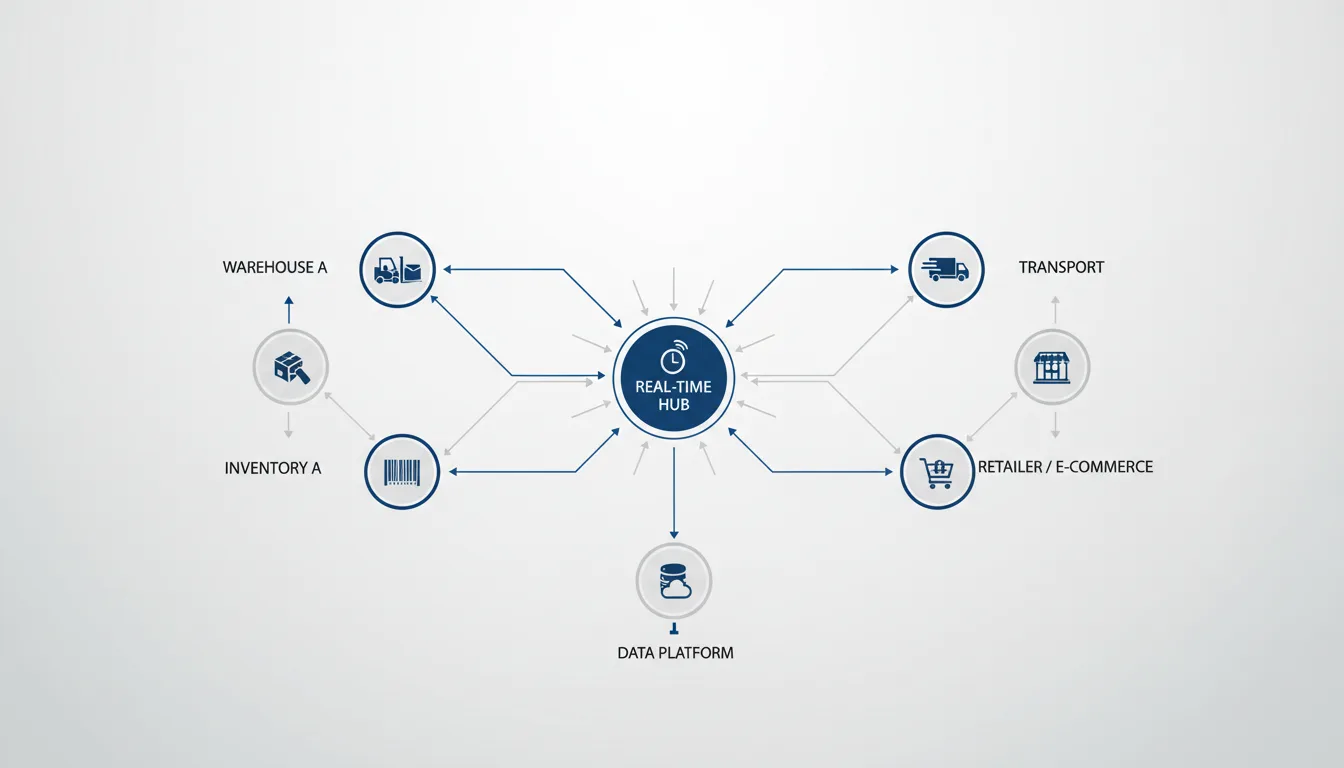
Real-time inventory management enhances supply chain visibility and efficiency through accurate tracking and timely updates.
Updated
Real-time Inventory Management
Overview
Real-time inventory management refers to the practice of continuously tracking inventory levels, orders, sales, and deliveries across a supply chain. The primary purpose is to ensure that businesses have accurate, up-to-date information about their inventory, facilitating better decision-making and improved operational efficiency. This approach is crucial in today’s fast-paced retail and logistics environments where optimization of stock levels and immediate response to market demands can significantly enhance customer satisfaction, reduce operational costs, and improve overall supply chain resilience.
Etymology and Origins
The term "real-time" originated in the field of computing, signifying systems that could process data instantaneously and respond within strict time constraints, often critical for control systems or immediate feedback. Its application to "inventory management" evolved as information technology became integral to business operations. Early inventory management was largely manual, relying on physical counts and ledger books.
The first documented usage of real-time concepts applied to inventory systems can be traced back to the late 20th century as businesses began to integrate early computer technology into their inventory practices. The foundational principles of managing inventory using automated systems emerged alongside the development of Material Requirements Planning (MRP) systems in the 1960s, though these were initially batch-oriented rather than truly real-time. The text "Inventory Control Systems: Theory and Practice" published in 1988 explored the early adoption of computer systems in inventory tracking, marking a significant evolution in terminology and practice towards more immediate data availability. The conceptual shift towards "real-time inventory management" became more pronounced with the increasing capability of computer networks and databases to provide instant updates on stock levels, moving away from periodic, historical data analysis towards continuous, live visibility.
Historical Development
Real-time inventory management's journey from manual ledgers to AI-driven systems is marked by several technological leaps and industry paradigm shifts.
Early Computerization (1950s-1970s)
Prior to computerized systems, inventory was managed manually, relying on physical counts, paper records, and cumbersome card systems like the perpetual inventory system. The 1950s and 1960s saw the introduction of early mainframe computers, primarily for administrative tasks like payroll. The application of these powerful, albeit slow, machines to inventory control began with batch processing systems. These systems would process large sets of data periodically (e.g., overnight) to update inventory records. Key developments include the emergence of Material Requirements Planning (MRP) in the 1960s, pioneered by companies like IBM, which helped manufacturers plan production schedules and raw material procurement based on forecasted demand and bill of materials. These early systems laid the groundwork for integrating planning with stock levels, but lacked the immediate feedback characteristic of true real-time management.
Barcode and WMS Adoption (1970s-1990s)
The 1970s brought significant advancements with the widespread adoption of the Universal Product Code (UPC) barcode, dramatically improving data capture speed and accuracy at points of sale. This marked a pivotal moment, enabling faster, more granular data entry for inventory movements. The 1980s saw the rise of personal computers and more sophisticated software, leading to the development and greater adoption of Warehouse Management Systems (WMS). These systems moved beyond simple record-keeping to manage complex warehouse operations like receiving, putaway, picking, and shipping. During this decade, the Just-In-Time (JIT) philosophy, pioneered by the Toyota Production System, also gained global recognition, emphasizing minimal inventory and demanding highly accurate, timely inventory information.
- Wal-Mart, a key innovator, implemented an early retail information system in the 1980s, leveraging satellite communications to connect stores and distribution centers. This groundbreaking system provided near real-time sales and inventory data, giving Wal-Mart a significant competitive edge.
RFID and Integrated Systems (2000s-2010s)
The 1990s continued the push towards greater automation with more advanced WMS, enhanced barcode scanning technologies, and the growth of Electronic Data Interchange (EDI) for supply chain communication. The 2000s truly ushered in the era of integrated and ubiquitous real-time capabilities. The introduction of RFID (Radio-Frequency Identification) technology in commercial applications further revolutionized inventory management, offering greater accuracy, automated data capture without line-of-sight, and coverage compared to barcode systems. This decade also saw the rapid expansion of e-commerce, which created an unprecedented demand for immediate inventory visibility across multiple sales channels and fulfillment centers. Cloud computing began to emerge, promising more flexible and scalable solutions.
AI, IoT, and Advanced Analytics (2010s-Present)
The 2010s to the present day have seen the integration of advanced technologies like cloud-based Enterprise Resource Planning (ERP) and WMS, Internet of Things (IoT) sensors, Artificial Intelligence (AI), and Machine Learning (ML). These innovations enable predictive analytics for demand forecasting, dynamic stock optimization, and highly automated data capture from various touchpoints across the supply chain. Mobile computing has made inventory data accessible from anywhere, fostering greater agility in inventory operations, further enabled by tools like mobile order fulfillment software.
Core Concepts
Real-time inventory management operates on several core principles, integrating technology and process to provide an immediate and accurate picture of stock.
- Continuous Tracking: This involves utilizing various technologies such as RFID tags, barcode scanners, and increasingly, IoT sensors (e.g., smart shelves, automated weighing systems) to update inventory counts immediately as stock is received, moved, picked, packed, or sold. This eliminates manual data entry delays and reduces human error.
- Data Integration: A crucial element is connecting all relevant aspects of inventory management—including purchasing, warehousing, sales, and supply chain logistics—into a unified system. This often involves integrating Warehouse Management Systems (WMS), Order Management Systems (OMS), and Enterprise Resource Planning (ERP) systems to provide a holistic, single source of truth for stock levels across various locations and channels.
- Demand Forecasting: Implementing advanced analytics and increasingly AI/ML tools to predict inventory needs based on historical sales trends, seasonality, promotional activities, and external factors. Accurate forecasting is essential for proactive stock replenishment, reducing both stockouts and costly overstock situations.
- Visibility and Transparency: Providing end-to-end visibility across the entire supply chain, from raw materials to finished goods and customer delivery. This transparency allows stakeholders to track goods at every stage, identify bottlenecks, and react quickly to disruptions.
Effective real-time inventory management can be significantly facilitated using robust platforms such as a visual inventory management system, which provides an intuitive and comprehensive view of stock across various locations and simplifies complex inventory movements.
Industry Applications
Real-time inventory management is extensively used and critical across a diverse range of industries, each leveraging its capabilities for specific operational advantages:
- Retail: Retailers leverage real-time systems to manage stock levels efficiently across physical stores, online channels, and distribution centers. This ensures popular products are always available, minimizing lost sales due to stockouts, while also reducing the costs associated with excess inventory. For omnichannel retailers, it's vital for services like buy online, pick up in-store (BOPIS) and ship-from-store. Shopify inventory management solutions are a prime example of real-time needs in modern retail.
- E-commerce: Online platforms utilize real-time data to synchronize stock levels instantly across multiple sales channels (e.g., website, marketplaces) and warehouses. This enhances customer experience by preventing order cancellations due to inaccurate stock information and supports efficient order fulfillment processes like pick, pack, and ship operations. It also enables agile responses to fluctuating online demand.
- Manufacturing: Manufacturers apply real-time inventory management to track raw materials, components, and work-in-progress (WIP) on the production floor. This supports Just-In-Time (JIT) production principles, streamlines production schedules, minimizes downtime due to material shortages, and optimizes processes like kitting for assembly lines.
- Healthcare & Pharmaceuticals: Critical for tracking expiry-sensitive goods, medical supplies, and controlled substances. Real-time data ensures compliance with regulations, minimizes waste from expired products, and guarantees availability of essential items in hospitals and pharmacies.
- Food & Beverage: Essential for managing perishable goods, ensuring compliance with food safety regulations, and minimizing spoilage. Real-time tracking of batch and lot numbers enables rapid recall if necessary and optimizes freshness.
- Automotive: Used for tracking thousands of parts in assembly plants and aftermarket service centers. Real-time visibility ensures the right parts are available at the right time, minimizing production line stoppages and improving service efficiency.
Benefits and Advantages
Implementing real-time inventory management systems provides numerous profound advantages that impact profitability, efficiency, and customer satisfaction:
- Increased Accuracy: Automated tracking and continuous updates significantly reduce human error and eliminate discrepancies common in manual or batch-processed systems. This ensures data reliability and integrity, forming a trustworthy foundation for all operational decisions.
- Enhanced Efficiency: Quick and instant access to current inventory data facilitates faster decision-making across all functions, from procurement to sales. Streamlined workflows, automated updates, and reduced manual tasks lead to more efficient operational processes, including faster order processing and reduced cycle times.
- Cost Reduction: Optimization of inventory levels minimizes holding costs (storage, insurance, obsolescence) and significantly reduces losses due to overstocking (excess inventory, spoilage) or stockouts (lost sales, expedited shipping). By preventing both scenarios, businesses realize substantial savings. For instance, companies utilizing advanced inventory management systems can see a significant return on investment (ROI).
- Improved Customer Satisfaction: Accurate stock information prevents overselling and enables reliable order fulfillment, leading to fewer backorders, faster deliveries, and a consistent positive customer experience. Meeting customer expectations consistently builds brand loyalty.
- Better Strategic Planning: With real-time insights into inventory performance, demand fluctuations, and supply chain trends, businesses can make more informed strategic decisions regarding purchasing, production, pricing, and expansion.
- Enhanced Supply Chain Resilience: Immediate visibility into stock levels and movements allows businesses to react quickly to disruptions (e.g., supplier delays, sudden demand spikes), mitigating their impact and maintaining continuity of operations.
Challenges and Limitations
Despite its numerous benefits, adopting and maintaining real-time inventory management presents several notable challenges:
- Implementation Costs: The initial investment in technology (hardware like scanners, RFID readers, IoT sensors; software like WMS, ERP, OMS), infrastructure upgrades (network, data storage), and comprehensive staff training can be substantial. This can be a significant barrier for small and medium-sized businesses.
- System Integration Complexity: Ensuring seamless integration with existing legacy systems, various e-commerce platforms, third-party logistics (3PL) providers, and other supply chain partners can be complex, time-consuming, and require significant technical expertise. Data mapping, API development, and maintaining compatibility are ongoing efforts.
- Data Quality and Integrity: Real-time systems are only as good as the data they receive. Poor data input, equipment malfunctions, or inconsistent processes can lead to inaccurate information, undermining the system's value. Maintaining high data quality requires continuous vigilance and robust data validation protocols.
- Data Security and Privacy: As reliance on interconnected systems and cloud platforms grows, so does the risk of cyber threats (data breaches, hacking, ransomware). Protecting sensitive inventory and sales data is paramount and requires robust cybersecurity measures, compliance with data privacy regulations, and regular audits.
- Resistance to Change and Training: Implementing new systems often faces resistance from employees accustomed to older methods. Adequate training, change management strategies, and demonstrating the benefits to staff are crucial for successful adoption and minimizing errors.
- Infrastructure Requirements: Maintaining real-time data flow requires reliable internet connectivity, robust servers, and often, extensive Wi-Fi coverage across large warehouses or multiple locations. Downtime or network issues can severely disrupt operations.
Best Practices
To maximize the effectiveness of real-time inventory management and overcome potential challenges, businesses should adhere to several key best practices:
- Implement Robust WMS/ERP Systems: Invest in modern, scalable Warehouse Management Systems (WMS) or Enterprise Resource Planning (ERP) solutions that offer strong real-time capabilities, comprehensive reporting, and seamless integration options. Consider SkuSavvy's WMS for an integrated approach.
- Leverage Automated Data Capture: Maximize the use of automated technologies like barcode scanning, RFID, and IoT sensors. This reduces manual errors, increases data input speed, and ensures continuous, accurate updates to inventory records.
- Utilize Workflow Automation: Implement automation for routine inventory tasks such as stock replenishment, purchase order generation (purchase order management), and even complex processes like bin putaway criteria. This streamlines operations, reduces labor costs, and improves consistency.
- Conduct Regular Cycle Counting: Instead of disruptive annual physical inventories, implement cycle counting to continuously verify inventory accuracy without halting operations. This practice helps identify and correct discrepancies promptly, maintaining high data integrity.
- Prioritize Data Integration: Ensure that all systems involved in the supply chain—from Point of Sale (POS) and e-commerce platforms to WMS, OMS, and shipping carriers—are seamlessly integrated. This creates a unified data flow, providing a single, accurate view of inventory across all channels.
- Regular Training and Continuous Improvement: Provide continuous, comprehensive training for staff on new technologies and processes. Foster a culture of continuous improvement, regularly reviewing performance metrics, identifying bottlenecks, and adapting strategies to optimize inventory flow and accuracy.
- Establish Clear KPIs: Define key performance indicators (KPIs) such as inventory turnover rate, stockout rate, order accuracy, and carrying costs. Regularly monitor these KPIs to measure the effectiveness of real-time inventory management and identify areas for improvement.
Future Trends
As technology continues its rapid advancement, real-time inventory management is expected to evolve even further, becoming more intelligent, integrated, and autonomous:
- AI and Machine Learning (AI/ML): The incorporation of AI and ML in inventory management systems will move beyond basic predictive analytics to enable more sophisticated capabilities. This includes highly accurate demand forecasting that adapts to market changes in real-time, dynamic pricing, intelligent stock replenishment recommendations, automated identification of slow-moving or obsolete inventory, and optimized warehouse slotting and picking paths.
- Blockchain Technology: Blockchain holds the potential to significantly enhance transparency, traceability, and security in the supply chain. By creating immutable and decentralized ledgers, it can provide verifiable, real-time data flow for inventory movements, origins, and conditions across multiple parties, fostering trust and reducing fraud. This is particularly valuable for high-value goods, pharmaceuticals, and food products requiring end-to-end traceability.
- Increased Mobile Access and Augmented Reality (AR): More robust features will become available on mobile platforms, allowing real-time data access, input, and management from anywhere on the warehouse floor or in the field. Augmented Reality (AR) tools are emerging to guide warehouse workers in picking, putaway, and sorting tasks, overlaying digital information onto the physical environment for enhanced accuracy and efficiency.
- Internet of Things (IoT) Integration: The proliferation of IoT devices—such as smart shelves that automatically detect stock levels, environmental sensors for perishables, and connected forklifts—will enable even more granular and automated data collection. This creates a hyper-connected inventory ecosystem that updates itself autonomously.
- Robotics and Automation: Advanced robotics, including autonomous mobile robots (AMRs) for material handling and automated storage and retrieval systems (AS/RS), will work in conjunction with real-time inventory systems to automate physical movement and storage of goods, further reducing human intervention and increasing speed and accuracy.
- Digital Twins: Creating a digital twin of the entire supply chain or warehouse allows for real-time simulation and optimization. This virtual replica can be used to test strategies, predict outcomes, and identify efficiencies before implementing changes in the physical world, all based on live inventory data.
Related Concepts
Real-time inventory management is inextricably linked to other critical logistics and supply chain concepts, forming the backbone of efficient operations:
- Supply Chain Management (SCM): An effective real-time inventory system is fundamental for optimal supply chain performance. It provides the crucial visibility needed to synchronize operations, mitigate risks, and ensure a smooth flow of goods from suppliers to customers across the entire supply chain. It enables proactive decision-making that benefits the entire network.
- Warehouse Management Systems (WMS): Real-time inventory management is a core function within modern WMS. Integration of inventory management within a mobile warehouse management system ensures efficient resource allocation, optimized warehouse layout, accurate stock movements, and efficient picking and putaway processes. WMS provides the operational framework for real-time inventory execution.
- Order Fulfillment Processes: Accurate and real-time inventory data is absolutely critical for reliable order processing and fulfillment. It enables businesses to promise accurate delivery times, avoid overselling, and efficiently execute pick, pack, and ship operations, directly impacting customer satisfaction and operational costs.
- Just-In-Time (JIT) Inventory: This manufacturing strategy, which aims to reduce inventory holding costs by receiving goods only as they are needed, is highly dependent on precise, real-time inventory data. Without immediate and accurate stock visibility, JIT principles cannot be effectively implemented.
- Material Requirements Planning (MRP) / Enterprise Resource Planning (ERP): RTIM integrates deeply with these planning systems. MRP uses real-time inventory data to calculate material needs for production, while ERP systems consolidate inventory, sales, purchasing, and financial data to provide an enterprise-wide real-time view, enabling integrated business management.
- Purchase Order Management: Real-time inventory levels directly inform purchase order management systems, ensuring that reorders are placed at optimal times to prevent stockouts while avoiding overstocking, thus maintaining efficient stock flow and vendor relationships.
In conclusion, real-time inventory management is an indispensable component of modern logistics operations. By providing instant, accurate, and comprehensive data, it equips businesses with the tools necessary to respond effectively to dynamic market demands, optimize resource utilization, reduce costs, and significantly enhance overall operational efficiency and customer satisfaction. The ongoing evolution of technology promises even more sophisticated and autonomous inventory management capabilities in the future.
Sources
- Visual Inventory Management System
- Mobile Warehouse Management System
- Mobile Order Fulfillment Software
- Order Management System
- Warehouse Layout Preview
- Inventory Management
- Integrated Inventory Management
- Importance of Real-Time Data in Inventory Management
- Risks and Challenges of Real-Time Inventory Management
- Real-time Computing
- History of Inventory Management
- Material requirements planning
- Perpetual Inventory System - AccountingTools
- Universal Product Code
- Just-in-time (JIT) inventory - Investopedia
- RFID technology and global standards
- Blockchain in Supply Chain - Deloitte
- Augmented Reality in Warehousing - Zebra Technologies
- Robotics in Logistics and Warehousing - McKinsey & Company
- How to Calculate ROI on Shopify Inventory Management App
- Barcodes Guide
- Order Management System
- Stock Replenishment Guide
- Shopify Inventory Management
- Kitting Guide
- Pick, Pack, Ship Software
- Cycle Counting Guide
- Purchase Order Management
- Bin Put-Away Criteria
- Order Fulfillment Guide
- Warehouse Layout Preview