Project Management in Logistics
This article explores the principles, history, and applications of project management within the logistics sector, offering insights for professionals and students.
Updated
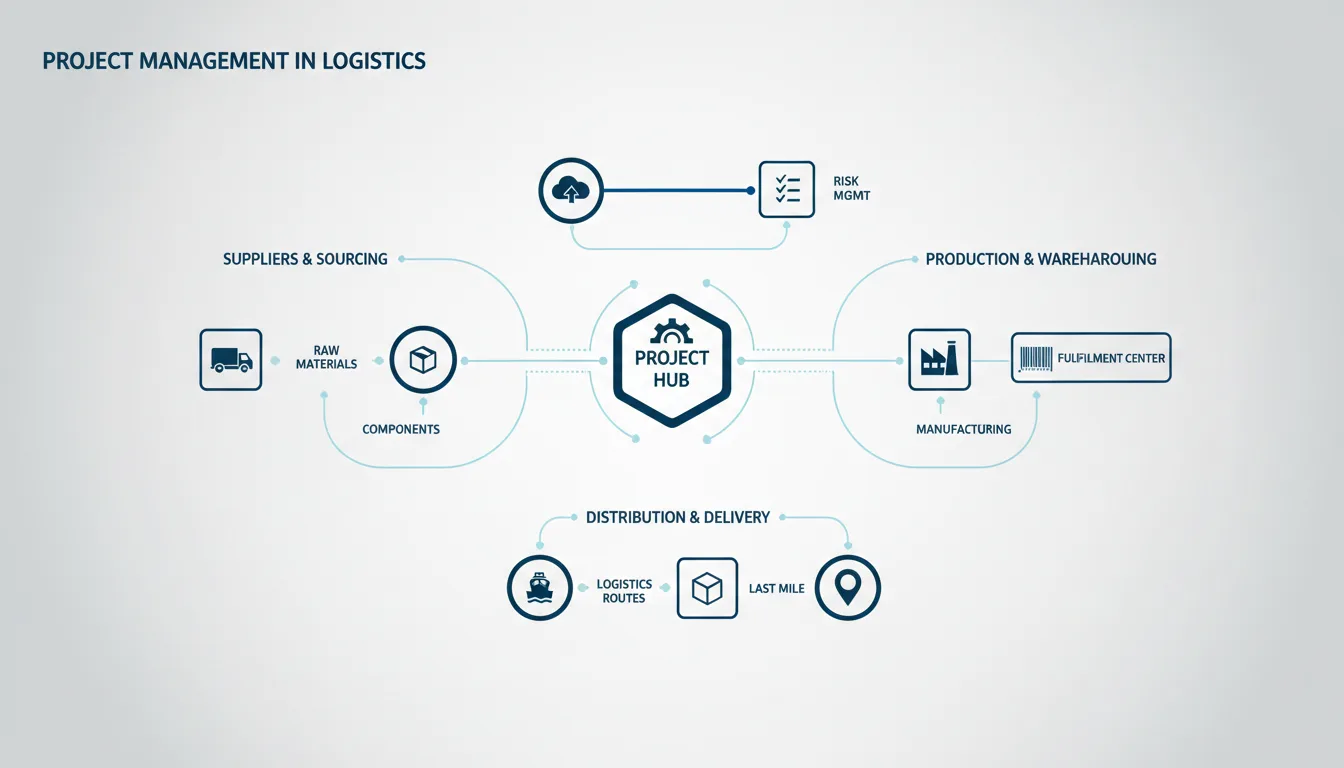
Project Management in Logistics
Overview
Project management refers to the process of planning, executing, and closing projects. In the logistics sector, effective project management is crucial for ensuring timely delivery, optimizing operations, and managing costs. It encompasses a variety of methodologies and tools that facilitate the execution of project objectives within the defined scope, time, and budget constraints.
Effective project management in logistics not only enhances operational efficiency but also ensures compliance with industry standards and regulatory requirements. As logistics operations become increasingly complex, the need for skilled project managers grows, making this an essential area of focus for organizations.
Etymology and Origins
The term "project management" originates from the concept of managing a temporary, unique endeavor—a project—from its inception through its completion. The word "project" comes from the Latin root proiectus, meaning to throw something forward, which typifies the focus on forward planning and execution.
The first documented use of project management as a formal practice emerged in the 1950s, drawing from various engineering and operational management disciplines. Early methodologies, such as the Critical Path Method (CPM) and Program Evaluation Review Technique (PERT), were developed to assist in managing large-scale projects, especially in the defense and construction sectors. The term's evolution reflects the increasing sophistication of project approaches over decades, incorporating more strategic frameworks and methodologies.
Historical Development
The evolution of project management can be segmented into several key phases:
- 1950s: The development of project management methodologies began to gain traction, particularly in engineering and construction industries, with notable contributions from military projects. The Critical Path Method (CPM) and PERT became foundational elements, established by pioneers like Morgan R. Walker and James E. Kelley.
- 1960s: The emergence of project management as a distinct field led to the establishment of related professional organizations, including the Project Management Institute (PMI) in 1969. This decade also saw the publication of seminal works, such as Project Management: A Systems Approach to Planning, Scheduling, and Controlling by Harold Kerzner, which helped formalize methodologies.
- 1970s: The introduction of computer technologies began revolutionizing project management, leading to significantly more complex project structures and execution strategies.
- 1980s to 1990s: Tools became more sophisticated with the introduction of software solutions, enabling more effective scheduling and tracking of project tasks. Notable software included Microsoft Project, introduced in 1984, which democratized project management tools for businesses of all sizes.
- 2000s to Present: The rise of Agile project management methodologies reflects the need for flexibility in diverse environments, especially in logistics and supply chain management. Additionally, the introduction of standards such as ISO 21500 provides guidelines for project management, further legitimizing the discipline.
Prominent figures in project management include Henry Gantt, known for the Gantt chart—a visual representation of project timelines. His work in the early 1900s has influenced countless management practices today, establishing essential frameworks that still resonate in modern project management strategies.
Core Concepts
Project management within logistics involves the integration of various elements that contribute to successful project delivery:
- Scope: Clearly defining the objectives and deliverables of the project to avoid scope creep. Techniques such as the Work Breakdown Structure (WBS) are frequently employed to enhance clarity.
- Time: Establishing timelines for each phase and task, often represented visually using Gantt charts.
- Cost: Monitoring expenses and resources allocated to ensure the project adheres to budget constraints. This may involve employing Agile budgeting techniques to adapt with evolving project needs.
- Quality: Ensuring the project outcome meets predefined quality standards, which is critical in logistics operations.
- Risk Management: Identifying potential risks and developing mitigation strategies to minimize their impact on project objectives. Tools like SWOT analysis and the Risk Breakdown Structure are commonly used.
- Communication: Maintaining transparency among stakeholders through regular updates and reports, which can be optimized by communication platforms integrated within project management software.
Industry Applications
Project management methodologies have significant applications across various logistics sectors:
Supply Chain Management
Logistics often involves managing complex supply chains where project management helps coordinate activities across different stakeholders, ensuring materials are delivered on time and within budget. Integrated project management software plays an essential role in enhancing communication and tracking throughout this process.
Warehouse Management
Effective project management can optimize warehouse operations, including layout efficiency and inventory turnover. Resources can be managed using tools like the Mobile Warehouse Management System.
Transportation Planning
Project management frameworks are utilized to streamline transportation logistics, including route optimization and fleet management, to enhance delivery performance and reduce costs.
Benefits and Advantages
The advantages of project management in logistics include:
- Increased Efficiency: Streamlined processes lead to faster project completion, exemplified in successful cross-docking initiatives.
- Improved Communication: Clear roles and responsibilities enhance collaboration among teams, often augmented by using visual tools for project management.
- Enhanced Customer Satisfaction: Timely and quality project outcomes increase client trust and loyalty.
Challenges and Limitations
Despite its benefits, there are challenges in implementing project management within logistics:
- Complexity: The dynamic nature of logistics operations can complicate project management, requiring flexibility and adaptability. Companies may adopt a hybrid approach of traditional and Agile methods to navigate this.
- Resource Constraints: Limited resources may hinder the successful execution of projects, necessitating prioritization and effective resource allocation, especially in times of economic downturns.
- Stakeholder Engagement: Maintaining alignment among various stakeholders can be challenging, especially in multi-organizational projects where interests may diverge.
Best Practices
To effectively implement project management in logistics, organizations should:
- Utilize integrated project management software to keep track of tasks and resources, enhancing visibility and accountability.
- Foster strong communication channels among teams and stakeholders to ensure project alignment and maintain engagement through regular meetings and updates.
- Regularly review project goals and performance metrics to adjust plans as necessary to adapt to changing environments and objectives.
By adopting these best practices, logistics professionals can significantly enhance project outcomes and drive operational excellence.
Technology and Tools
The advancement of technology has transformed project management practices in logistics, facilitating:
- Software Solutions: Tools like the Order Management System provide visibility across project elements, including inventory and order tracking, and support multi-faceted project management tasks, optimizing logistics operations significantly.
- Automation: Automation tools enhance efficiency by reducing manual tasks in project execution, allowing for faster decision-making and improved resource allocation.
- Data Analytics: Leveraging data analytics can provide insights into project performance and inform better planning. The use of software tools that integrate such features allows logistics teams to respond more effectively to market demands.
Future Trends
As the logistics industry continues to evolve, project management will likely see:
- Increased reliance on Agile methodologies to accommodate rapid changes in market demands, particularly as e-commerce accelerates.
- Greater integration of AI and machine learning to predict project risks and automate decision processes, enhancing proactive management capabilities.
- Enhanced emphasis on sustainability, where project management also encompasses environmental considerations within logistics projects, emphasizing the need for companies to adopt green logistics practices.
Related Concepts
Understanding project management is essential for logistics professionals, as it intersects with various logistics concepts such as supply chain management, operations management, and integrated logistics solutions.
Sources
- Mobile Warehouse Management System
- Order Management System
- Workflows Overview
- The Evolution of Project Management Standards
- Agile Project Management in Logistics
- Tools for Modern Project Management
- Implementing Best Practices in Logistics
- History of Project Management
- Agile Project Management
- Project Management Tools