Product Information Management
A comprehensive guide on Product Information Management, focusing on its definition, historical development, core concepts, and industry applications.
Updated
Product Information Management
Overview
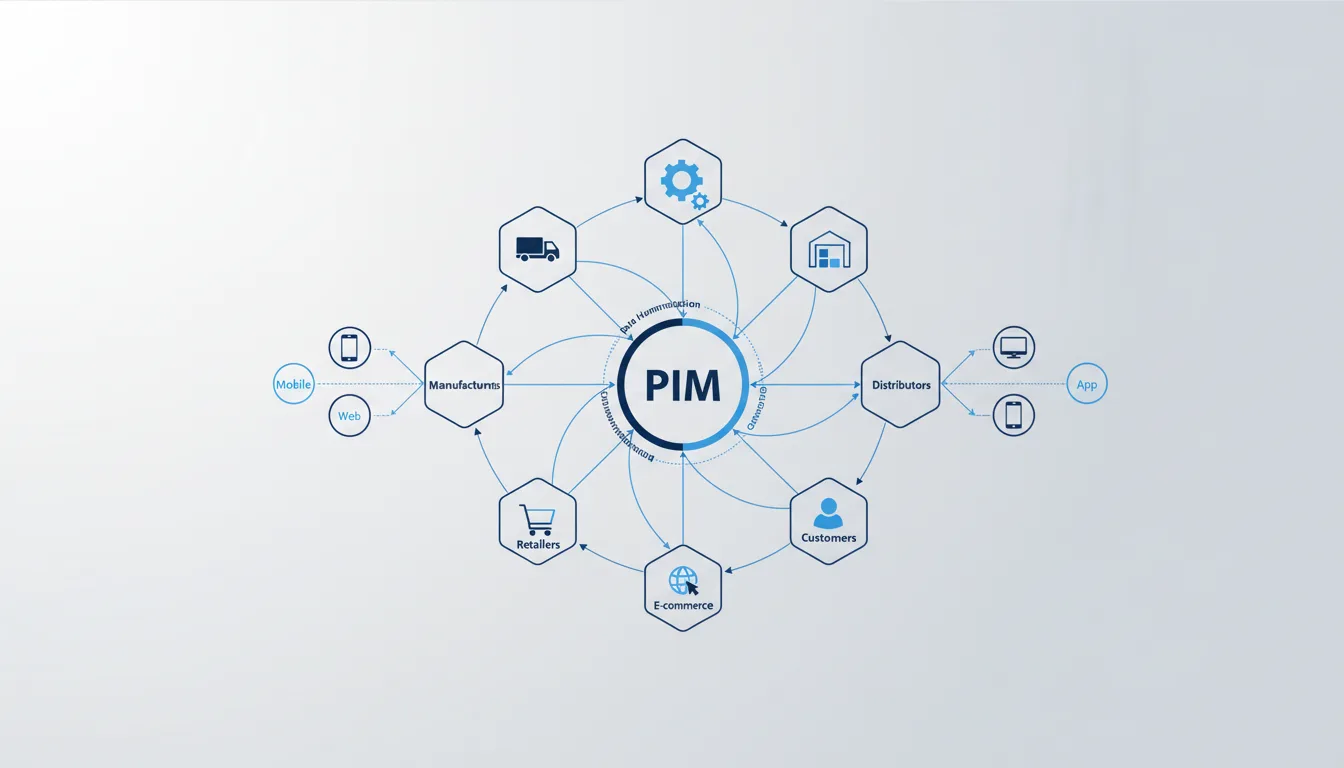
Product Information Management (PIM) refers to the processes, technologies, and systems used to centralize, enrich, and manage comprehensive product data, ensuring that accurate, consistent, and up-to-date information is available across all sales and marketing channels. The primary purpose of PIM is to improve the quality of product information and enhance the consistency of brand messaging, ultimately supporting better customer experiences and increased sales [5]. By acting as a single source of truth for all product-related data, PIM solutions significantly streamline operations, reduce manual errors, and accelerate time-to-market for new products.
As companies continue to expand their digital footprint, engage in omnichannel strategies, and navigate complex global supply chains, the importance of robust PIM solutions grows significantly, making it a crucial component of modern supply chain management and digital commerce strategies [6]. It bridges the gap between various internal departments—such as marketing, sales, product development, and IT—by providing a unified platform for product content.
Etymology and Origins
The term "Product Information Management" first gained significant traction and widespread usage in the early 2000s [7], primarily driven by the explosion of e-commerce and the increasing complexity of multichannel retail. While the exact first documented usage is difficult to pinpoint to a single instance, industry analysts and software vendors began defining and popularizing PIM as a distinct software category around 2002-2005.
Linguistically, the term is descriptive, combining "Product" (the goods or services being sold), "Information" (the data describing these products for various purposes), and "Management" (the processes and systems for handling this information). Its roots are closely tied to earlier concepts:
- Product Data Management (PDM): Emerging in the 1980s and 1990s, PDM primarily focused on managing engineering-centric data, such as CAD files, bills of materials (BOMs), and technical specifications, often within manufacturing environments [8]. PDM was internal and production-oriented.
- Master Data Management (MDM): A broader discipline that began to formalize in the late 1990s and early 2000s, MDM aims to create a single, authoritative source of truth for all critical business data entities, including customers, suppliers, locations, and products. PIM can be seen as a specialized domain within MDM, focusing specifically on product master data, but with a strong emphasis on marketing, sales, and distribution needs.
The evolution of the term reflected a shift from purely technical product data to a broader scope encompassing marketing attributes, digital assets, translations, and channel-specific information. The need for this dedicated focus became undeniable as online channels demanded richer, more consumer-friendly product descriptions than traditional internal PDM systems could provide [9].
Historical Development
Emergence of PIM
The concept of managing product information systematically predates the digital age, with early efforts involving manual catalogs, printed brochures, and rudimentary databases. However, the modern PIM discipline gained traction during the rise of e-commerce in the late 1990s and early 2000s. Pioneers like Amazon (founded 1994) immediately demonstrated the crucial need for clear, accurate, and rich product information to improve customer experience and drive online sales [10].
As businesses expanded their online presence, the limitations of existing enterprise resource planning (ERP) systems (which stored basic product data) and PDM systems (focused on engineering) became evident. Neither was designed to handle the vast amount of marketing copy, rich media, and channel-specific attributes required for digital commerce [9]. This gap led to the conceptualization and development of dedicated PIM solutions.
Key Figures and Milestones
- Pre-2000s: Product data was largely managed in disparate systems: engineering in PDM, basic details in ERP, marketing assets in file shares or early Digital Asset Management (DAM) systems, and catalog data in custom databases.
- Early 2000s (2000-2005): The first specialized PIM software vendors began to emerge. Companies like Riversand (now a part of Syndigo) and Stibo Systems (which evolved from catalog publishing into MDM/PIM) were among the early innovators, recognizing the need for a centralized platform for marketing and sales-focused product data [7]. Analyst firms like Forrester and Gartner started to define and segment the PIM market.
- Mid-2000s (2005-2010): The proliferation of digital channels (e.g., e-commerce sites, comparison shopping engines, early mobile apps) further solidified PIM's role. The integration of rich media became critical, leading to closer ties between PIM and DAM solutions. In 2010, the introduction of cloud-based PIM solutions marked a significant milestone, allowing companies of all sizes to manage product information more flexibly and affordably [11]. Companies like inRiver and Agility PIM (acquired by Episerver, now Optimizely) gained prominence during this period.
- 2010s (2010-2020): The PIM market matured with the rise of Software-as-a-Service (SaaS) models, making PIM accessible to a broader range of businesses. New players like Akeneo and Salsify emerged, often championing "headless" PIM architectures that decoupled the data backend from the presentation layer, offering greater flexibility for omnichannel delivery. This era saw PIM become an indispensable tool for omnichannel retail and direct-to-consumer (DTC) brands.
Technology Evolution
The evolution of PIM systems has mirrored advancements in technology:
- Manual & Database-centric (Pre-2000s): Early solutions were often rudimentary databases or even spreadsheets, leading to data silos, inconsistencies, and significant manual effort for updates across various channels.
- On-premise PDM/Early PIM (2000s): The first generation of PIM solutions were typically on-premise installations, often extensions of existing PDM or MDM platforms. They provided basic centralization and attribute management but could be rigid and expensive to implement.
- Cloud-based & SaaS (2010s): A pivotal shift occurred with the adoption of cloud computing, transforming PIM into a more accessible, scalable, and cost-effective SaaS offering. This enabled easier integration and faster deployment [11].
- Omnichannel & Headless PIM (Mid-2010s-Present): Modern PIM systems are designed for flexibility and rapid distribution to diverse channels (websites, mobile apps, social media, marketplaces, print). "Headless" architectures became popular, allowing PIM to serve as a pure data source via APIs, separating content from presentation [12].
- AI/ML & Automation (Late 2010s-Present): Today's advanced PIM solutions incorporate artificial intelligence (AI) and machine learning (ML) to automate tasks like data classification, translation, enrichment (e.g., suggesting missing attributes), and quality checks [13]. This reduces manual effort and improves data accuracy at scale. Modern PIM systems integrate seamlessly with e-commerce platforms, such as the Shopify WMS Overview [1], allowing businesses to synchronize product information across various online channels and ultimately enhance supply chain visibility [14].
Core Concepts
Product Information Management involves several core components and principles that ensure effective data handling:
- Centralization: Consolidating all product information—from technical specifications to marketing copy, images, and videos—into a single, unified platform. This 'single source of truth' eliminates data silos and reduces inconsistencies across an organization.
- Data Enrichment: Beyond basic attributes, PIM systems allow for the addition of rich, compelling content necessary for sales and marketing. This includes high-resolution images, videos, product stories, usage guides, and customer reviews, significantly enhancing the customer experience.
- Data Quality & Governance: Implementing rules and processes to maintain high-quality data that is accurate, complete, consistent, and relevant across all channels. This involves validation, standardization, and defining roles and responsibilities for data ownership and approval workflows [15].
- Multichannel Distribution: Efficiently disseminating product information to various sales and marketing channels, including e-commerce websites, mobile apps, social media platforms, print catalogs, marketplaces (e.g., Amazon, eBay), and internal systems. PIM systems can adapt information to meet the specific requirements of each channel.
- Localization & Translation: Managing product information in multiple languages and adapting it to local market nuances, ensuring global reach and relevance.
- Digital Asset Management (DAM) Integration: Seamlessly connecting with DAM systems to link rich media assets (images, videos, 3D models) directly to product data, ensuring all digital content associated with a product is easily accessible and synchronized.
- Analytics and Reporting: Utilizing analytics tools to track product performance, identify data gaps, and inform decision-making processes regarding product offerings, marketing campaigns, and inventory strategies.
The integration of such components is pivotal for achieving effective PIM, driving better inventory management as outlined in the Visual Inventory System [2] and facilitating efficient workflows through systems like SkuSavvy Workflows [16].
Types and Classifications
While PIM can be broadly classified into various types depending on industry needs and specific use cases, some common classifications and architectural approaches include:
- B2B PIM: Tailored to the needs of businesses selling to other businesses, focusing on detailed technical specifications, compliance documents, bulk pricing, complex product configurations, and integration with eProcurement systems. The content tends to be highly factual and technical.
- B2C PIM: Centers around engaging consumer-driven content, emphasizing marketing narratives, lifestyle imagery, compelling product descriptions, user reviews, and brand messaging. The focus is on driving impulse purchases and enhancing the consumer journey.
- Sector-Specific PIM: Adapted to unique data requirements of specific industries like retail (apparel sizing, color variations), food and beverage (nutritional facts, allergens, certifications), pharmaceuticals (regulatory compliance, dosages), automotive (parts compatibility), or fashion (seasonality, style attributes). These often require specialized data models and compliance features.
- Cloud-Native PIM: PIM solutions built from the ground up for cloud environments, offering inherent scalability, elasticity, and often a SaaS delivery model.
- Headless PIM: An architectural approach where the PIM system focuses solely on managing and serving product data via APIs, entirely decoupled from the frontend presentation layer. This provides maximum flexibility for integrating with any customer-facing application or channel [12].
Industry Applications
PIM systems find critical applications across various sectors, enabling businesses to manage their product offerings effectively:
- Retail & E-commerce: Ensuring consistent, rich product listings on e-commerce platforms, mobile apps, brick-and-mortar digital displays, and marketplaces. PIM enables rapid onboarding of new products and seamless updates for promotions or inventory changes. It is crucial for managing diverse product catalogs and ensuring accuracy for features like Shopify Bin Locations [17].
- Manufacturing: Streamlining the flow of product information from design and engineering (often integrating with PDM systems) through to marketing and sales. It ensures technical accuracy, supports regulatory compliance, and provides consistent data for distributors and partners. This is essential for efficient order fulfillment [3].
- Wholesale & Distribution: Providing accurate and comprehensive product catalogs to resellers, distributors, and sales teams. PIM helps manage complex pricing structures, product bundles, and localized content for a network of partners.
- Pharmaceuticals & Healthcare: Complying with stringent regulatory requirements for product information, managing drug details, dosages, ingredients, contraindications, and ensuring all product-related data is auditable and accurate for patient safety.
- Fashion & Apparel: Managing seasonal collections, numerous SKUs (Stock Keeping Units) with variations (size, color, material), rich imagery, and lifestyle content quickly to market. PIM is vital for fast-paced product cycles.
Benefits and Advantages
Utilizing a PIM system can lead to several significant advantages for businesses:
- Improved Efficiency & Time-to-Market: Centralizing information and automating data processes reduces manual effort, errors, and the time required to bring new products to market or update existing ones. This results in operational cost savings.
- Increased Sales & Conversion Rates: Higher quality, richer, and consistent product information enhances customer trust, reduces returns, and provides a better shopping experience, directly leading to improved conversion rates and sales figures.
- Enhanced Customer Experience: By providing accurate, complete, and personalized product information across all touchpoints, PIM helps create a seamless and satisfying customer journey.
- Better Collaboration: Streamlined processes and a single source of truth foster better cooperation among marketing, sales, product development, IT, and logistics teams, breaking down departmental silos.
- Global Expansion & Localization: PIM facilitates easy management of multi-language content and region-specific product attributes, enabling efficient entry into new international markets.
- Reduced Returns: Clear and accurate product descriptions minimize misunderstandings, leading to fewer product returns and associated costs.
- Improved Data Governance & Compliance: PIM systems enforce data standards and workflows, ensuring data accuracy and assisting with compliance for industry-specific regulations or international standards.
Challenges and Limitations
Despite its numerous benefits, implementing and maintaining a PIM system can encounter several challenges:
- Integration Issues: Difficulty in integrating PIM with existing legacy systems such as ERP, CRM, e-commerce platforms, and DAM can be complex and time-consuming. Data mapping and API development often require significant resources.
- Data Migration & Cleansing: The process of migrating vast amounts of existing, often inconsistent, product data from disparate sources into a new PIM system is a major undertaking. Data cleansing and standardization are critical but resource-intensive initial steps.
- Data Governance & Ownership: Establishing clear data governance policies and defining roles and responsibilities for data ownership, approval, and maintenance can be challenging, particularly in large organizations with siloed departments.
- User Adoption: Resistance to change from various departments who are used to their own data management methods can hinder successful user adoption. Comprehensive training and change management are essential.
- Cost & Resource Investment: Initial investment in software, implementation, customization, and ongoing maintenance can be substantial. Organizations need to allocate sufficient resources for both technology and personnel.
- Scope Creep: The broad nature of "product information" can lead to an ever-expanding scope if not carefully managed, potentially delaying implementation and increasing costs.
Best Practices
To effectively implement and leverage a PIM system, organizations should follow these best practices:
- Establish Clear Objectives & Strategy: Define the specific business goals (e.g., reduce time-to-market, improve data quality, expand to new channels) for implementing PIM early in the process. Develop a clear strategy outlining phased rollout, data ownership, and success metrics.
- Conduct a Thorough Data Audit: Before implementation, understand your current product data landscape, identify data sources, quality issues, gaps, and dependencies. This informs data modeling and migration efforts.
- Define Data Model & Taxonomy: Create a robust product data model that captures all necessary attributes, relationships, and hierarchies. Develop a clear, standardized taxonomy for product categorization to ensure consistency and discoverability.
- Invest in Data Governance & Workflows: Implement strong data governance policies, define data ownership, and establish clear approval workflows for data creation, enrichment, and publication. This ensures data accuracy and consistency over time.
- Prioritize Integrations: Identify critical integrations with ERP, e-commerce platforms, DAM, and other systems. Leverage APIs for seamless data flow and consider pre-built connectors where available. For warehouse operations, integration with a Mobile WMS [18] is crucial.
- Invest in Training & Change Management: Ensure all staff across marketing, sales, product, and IT are adequately trained on how to use the PIM system effectively. Communicate the benefits clearly to foster user adoption.
- Perform Regular Audits & Maintenance: Routinely audit product data for quality, completeness, and consistency. Continuously update the data model and processes to adapt to evolving business needs and market demands.
- Start Small, Scale Up: Consider a phased implementation, starting with a critical product category or channel, learning from the initial rollout, and then gradually expanding the scope.
Technology and Tools
Modern PIM solutions leverage various technologies to enhance functionality, scalability, and integration capabilities:
- Cloud Computing: Most PIM systems are now delivered via a Software-as-a-Service (SaaS) model on cloud infrastructure, offering flexibility, scalability, and reduced IT overhead. This facilitates rapid deployment and updates.
- APIs (Application Programming Interfaces): PIM systems rely heavily on robust APIs to enable seamless integration with other enterprise systems (ERP, CRM, e-commerce platforms like Shopify, DAM) and to distribute product information to various digital channels [12]. SkuSavvy provides extensive Developer APIs [19] for such integrations.
- Artificial Intelligence (AI) & Machine Learning (ML): These technologies are increasingly used for automating data enrichment (e.g., suggesting attributes, categorizing products), translation, sentiment analysis of product reviews, and identifying data quality issues [13].
- Microservices Architecture: Many modern PIM platforms are built on microservices, allowing for greater modularity, easier maintenance, and independent scaling of different components.
- Data Validation & Quality Tools: Built-in features for enforcing data standards, identifying missing information, flagging inconsistencies, and automating data cleansing processes.
- Workflow Engines: Configurable workflow capabilities that define the stages of product information creation, review, translation, and approval, ensuring data governance and collaboration.
As companies increasingly shift towards digital and omnichannel strategies, integrating PIM tools with other critical systems, such as shipping and fulfillment software [4] and sophisticated Order Management Systems [20], becomes critical for seamless operations and a unified customer experience.
Future Trends
As technology continues to advance and customer expectations evolve, future trends in PIM are likely to include:
- Increased Automation via AI & ML: Even more sophisticated AI for real-time data updates, personalized product content generation, automated image tagging, and proactive identification of data discrepancies.
- Greater Personalization & Contextualization: Tailoring product information based on individual consumer preferences, browsing history, location, and the specific channel being used (e.g., different descriptions for voice search vs. visual search).
- Enhanced Sustainability & Compliance Data: PIM systems will increasingly manage comprehensive data related to a product's environmental impact, ethical sourcing, certifications, and regulatory compliance (e.g., ESG reporting, material traceability).
- 3D, AR/VR & Immersive Content Management: Managing and distributing product data for augmented reality (AR) and virtual reality (VR) experiences, allowing customers to visualize products in their environment or explore them virtually. SkuSavvy offers tools for visualizing warehouse layouts, including Bin Packing Visualizer [21] that could benefit from rich product dimensions.
- Blockchain for Transparency: Exploring blockchain technology to enhance data security, traceability, and authenticity of product information, particularly for supply chain transparency and combating counterfeiting.
- Composable Commerce & DXP Integration: PIM will be an even more integral part of broader digital experience platforms (DXP) and composable commerce architectures, providing the foundational product content for various customer-facing touchpoints.
Related Concepts
PIM intricately links with several other logistics and supply chain management concepts, forming a cohesive ecosystem for product lifecycle management:
- Master Data Management (MDM): PIM is often considered a domain within MDM, specifically focusing on product master data. MDM provides the overarching strategy for governing all critical enterprise data.
- Digital Asset Management (DAM): DAM systems manage rich media assets (images, videos, documents). PIM systems integrate with DAM to link these assets directly to product data, ensuring consistent visual and multimedia content.
- Enterprise Resource Planning (ERP): ERP systems typically store core product data (SKU, pricing, inventory levels). PIM enriches this data with marketing and sales attributes, acting as the 'last mile' for product content before publication.
- Inventory Management: Accurate product information from PIM is crucial for effective inventory management [22], as it ensures products are correctly identified, categorized, and tracked. PIM data influences decisions related to stock replenishment [23] and unit of measure [24] conversions.
- Order Management Systems (OMS): PIM provides the product details necessary for OMS to accurately process orders, generate invoices, and fulfill customer requests [20].
- E-commerce Platforms: PIM feeds rich, channel-optimized product content directly to e-commerce platforms, ensuring a consistent and compelling online shopping experience.
- Supply Chain Management (SCM): PIM supports SCM by providing accurate product data for planning, procurement, logistics, and compliance throughout the product's journey.
Understanding these connections provides a comprehensive view of how PIM optimizes a company's operational efficiency, market responsiveness, and overall digital presence.
Sources
- Shopify WMS Overview
- Visual Inventory System
- Order Fulfillment Guide
- Shipping & Fulfillment Software
- What is Product Information Management (PIM)? | Contentserv
- The Ultimate Guide to Product Information Management (PIM) for Omnichannel Retail
- History of PIM: The Evolution of Product Information Management
- What is Product Data Management (PDM)? | PTC
- PIM vs. ERP: Understanding the Difference
- Amazon.com, Inc. - Company History
- The Evolution of PIM: From On-Premise to Cloud-Native
- What is Headless PIM and how does it work?
- AI in PIM: How Artificial Intelligence is Transforming Product Information Management
- WMS vs ERP Analysis
- Product Data Governance: The Path to PIM Success
- Workflows Overview
- Shopify Bin Locations
- Mobile WMS Overview
- Developers / API
- Order Management System
- Bin Packing Visualizer
- Adding Inventory Guide
- Stock Replenishment Guide
- Unit of Measure Guide