Proactive Risk Management in Logistics
This article explores proactive risk management in logistics, highlighting its importance, methodologies, and best practices for effective supply chain resilience.
Updated
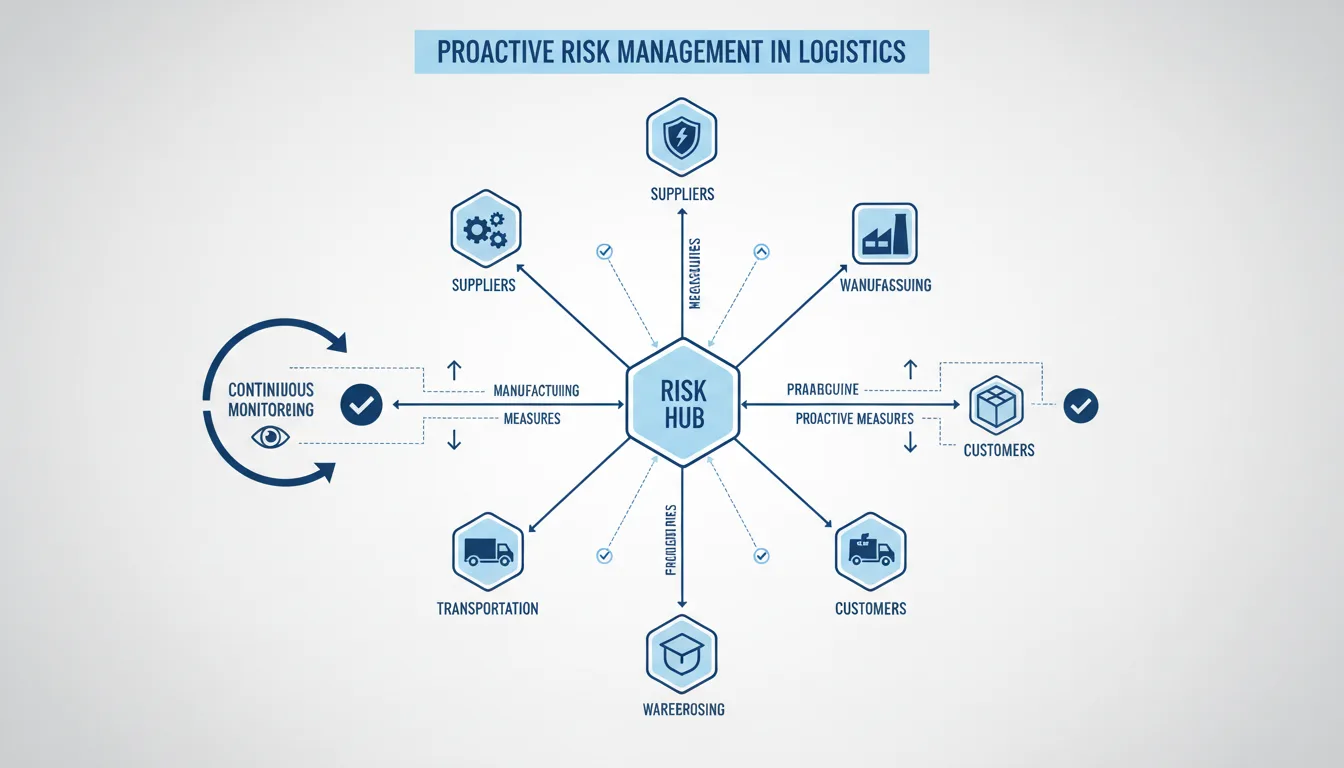
Proactive Risk Management in Logistics
Overview
Proactive risk management in logistics refers to the systematic process of identifying, analyzing, and mitigating potential risks before they materialize. This approach not only enhances the resilience of supply chains but also minimizes disruptions, thereby ensuring continuity in operations. Given the complex nature of global supply chains, understanding proactive risk management is crucial for logistics professionals, supply chain managers, and organizations aiming to sustain competitive advantage in their sectors.
Etymology and Origins
The term "risk management" emerged in the mid-20th century, primarily associated with finance and insurance sectors. According to Mula and Jha (2019), its application in logistics became increasingly relevant during the globalization of supply chains in the 1980s and 1990s. As companies expanded operations internationally, the need for systematic risk assessment grew, leading to the evolution of proactive strategies that prioritize prevention over reaction. The term has evolved to encompass various areas beyond finance, incorporating elements of supply chain integrity, operational resilience, and compliance.
Historical Development
The concept of risk management in logistics saw significant milestones throughout the decades:
- 1980s: The globalization of production and distribution practices led to a broader awareness of potential risks within the supply chain. The need for risk management frameworks surged, prompting companies to adopt systematic approaches to risk.
- 1990s: The adoption of Total Quality Management (TQM) principles promoted the integration of risk management into operational strategies. This era also marked the beginning of utilizing software solutions for risk assessment.
- 2000s: Technological advancements, including Enterprise Resource Planning (ERP) systems and the integration of data analytics, enabled better identification and analysis of risks inherent in logistics operations. Companies like SAP and Oracle pioneered ERP solutions that offered integrated risk management functionalities.
- 2010s: The rise of big data, machine learning, and artificial intelligence in logistics facilitated proactive risk identification and response strategies, allowing for more sophisticated simulations and modeling of potential scenarios. Moreover, the ISO 31000 standard was published to provide guidelines on risk management practices across various industries.
Key Figures and Pioneers
Notable contributors to the development of proactive risk management include:
- Dr. Robert B. Miller: An early advocate of integrating risk management into supply chain strategy during the 1990s, emphasizing quantitative risk assessment methodologies.
- Peter W. G. Schmid: Developed risk assessment frameworks that are widely adopted in logistics, focusing on quantitative models for predicting risk impact.
Major Publications
Key publications that shaped the field include:
- The book Principles of Supply Chain Management by G. S. P. Chan, detailing fundamental strategies for integrating risk assessment into supply chains.
- Numerous articles in journals such as the Journal of Supply Chain Management, which focused on risk strategies and frameworks, offering peer-reviewed insights on emerging trends.
Core Concepts
Proactive risk management incorporates several core concepts:
- Risk Identification: Techniques such as flow mapping and scenario analysis help recognize potential risks associated with supply chains. Tools like risk assessment matrices are commonly employed.
- Risk Assessment: This involves evaluating the likelihood and impact of identified risks, using methodologies like Failure Mode and Effects Analysis (FMEA) and risk-heat mapping.
- Mitigation Strategies: Organizations develop contingency plans, employ multi-sourcing strategies, and invest in advanced technologies like predictive analytics to mitigate risks. For example, using Warehouse Management Systems (WMS) can reduce operational risks significantly.
- Monitoring and Review: Continuous assessment allows logistics managers to adapt their strategies in response to emerging threats or changes in the market. Regular audits of risk strategies can lead to sustained improvements.
Types and Classifications
Several types of risks can be managed proactively in logistics:
- Operational Risks: Arising from internal processes, systems failures, or human errors in logistics operations. Mitigation may involve adopting Warehouse Management Systems (WMS) that optimize operations and minimize errors.
- Market Risks: Fluctuations in market demand or supply chain disruptions caused by geopolitical factors demand agility and flexibility. Adoption of scenario planning is crucial here.
- Compliance Risks: Regulations governing transportation and product handling require ongoing compliance efforts to avoid penalties and maintain operational licenses. Regular compliance audits and updates can help manage these risks efficiently.
Benefits and Advantages
Organizations that adopt proactive risk management strategies can realize numerous benefits:
- Enhanced Resilience: Firms can better withstand disruptions, leading to improved service levels and customer satisfaction.
- Cost Reduction: By anticipating and mitigating risks, businesses can save on potential losses associated with supply chain disruptions.
- Strategic Decision-Making: Data-driven insights strengthen strategic planning and resource allocation, promoting informed decision-making and enhancing competitiveness.
Challenges and Limitations
Despite its benefits, implementing proactive risk management poses several challenges:
- Resource Constraints: Smaller companies may struggle to dedicate sufficient resources towards comprehensive risk management initiatives. Research indicates that the lack of skilled personnel can hinder effective implementation.
- Complexity in Implementation: The integration of risk management into existing processes can be complicated, necessitating cultural shifts and training. Resistance to change is a common obstacle in many organizations.
- Dynamic Environments: Rapidly changing market conditions require ongoing adaptation of risk strategies, making it difficult to maintain effective measures over time. Staying updated on industry trends is crucial for resilience.
Best Practices
To maximize the effectiveness of proactive risk management, organizations should consider the following best practices:
- Conduct Regular Risk Assessments: Implement a schedule for routine evaluations of supply chain risks, using updated methodologies and metrics to track progress.
- Leverage Technology: Invest in tools that enhance visibility and facilitate real-time data analysis, such as inventory management systems that can trigger alerts when anomalies are detected.
- Develop a Risk Culture: Foster an organizational culture that prioritizes risk awareness and encourages open communication regarding potential issues. This can be achieved through training programs and workshops.
Technology and Tools
Innovative technologies play a crucial role in enhancing proactive risk management, including:
- Predictive Analytics: Tools that utilize historical data to forecast potential risks and prepare contingency plans. Platforms incorporating machine learning algorithms can identify patterns and enable preemptive action.
- Blockchain: This technology ensures transparency and traceability across the supply chain, minimizing fraud and errors by providing an immutable record of transactions.
- IoT Devices: Internet of Things (IoT) applications can monitor logistics operations in real time, providing alerts for anomalies that may indicate risks, thus enabling rapid response.
Conclusion
Proactive risk management is an indispensable element of modern logistics. By embracing systematic risk assessment processes and leveraging technological advancements, logistics professionals can safeguard operations, enhance efficiency, and ultimately drive business success in a volatile marketplace.