Proactive Management in Logistics
Proactive management in logistics enhances efficiency through foresight, strategic planning, and adaptability, ultimately improving supply chain performance.
Updated
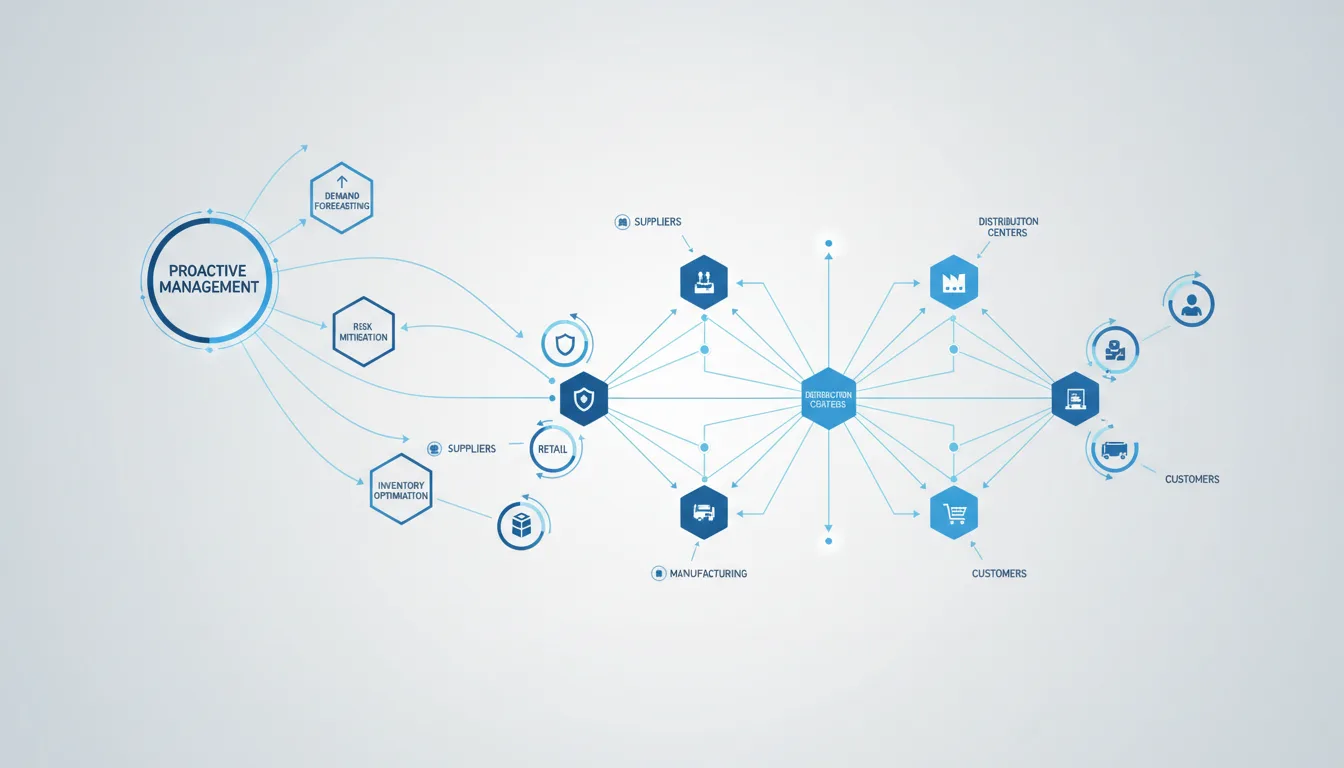
Overview
Proactive management in logistics is a forward-looking and anticipatory approach to supply chain and logistics operations, emphasizing foresight, robust planning, and comprehensive risk management. This methodology prioritizes identifying and mitigating potential disruptions, inefficiencies, and challenges before they manifest, ensuring that logistics processes operate with minimal interruption and maximum effectiveness. In an increasingly complex and volatile global supply chain environment, organizations embracing proactive management gain a significant competitive edge through enhanced responsiveness, superior operational efficiency, and consistent, reliable service delivery.
Etymology and Origins
The term "proactive" stems from the Latin roots—"pro" meaning "before" or "forward," and "actus" meaning "done" or "performed." While the linguistic components suggest an action taken in advance, the modern psychological and management concept of "proactivity" was first explicitly articulated by psychiatrist Viktor Frankl in his 1946 book, Man's Search for Meaning. Frankl introduced the idea of human proactivity as the freedom to choose one's attitude and response to circumstances, rather than being determined by them.
Its widespread adoption in management disciplines, including logistics and supply chain management, was significantly popularized by Stephen Covey in his 1989 best-seller, The 7 Habits of Highly Effective People, where "Be Proactive" is presented as the first habit. Covey defined proactivity as taking responsibility for one's choices and actions, rather than reacting to external conditions. This philosophical shift from merely reacting to problems to actively anticipating and preventing them became a cornerstone of modern management thinking, directly influencing the evolution of logistics practices throughout the late 20th and 21st centuries.
Historical Development
Proactive management in logistics has evolved significantly, mirroring advancements in technology, management theory, and global trade:
-
Early 20th Century & Pre-1950s: Foundational Concepts
While not explicitly called "proactive management," early logistics principles, particularly in military supply and large-scale industrial operations, involved rudimentary forms of foresight and planning to ensure resource availability. Concepts like materials handling and basic inventory control laid the groundwork for future proactive approaches. -
1950s-1970s: Emergence of Structured Planning
This era saw the development of more sophisticated inventory management techniques. Material Requirements Planning (MRP), pioneered in the 1960s, notably by IBM with its "Impact" system, revolutionized manufacturing by using a master production schedule to plan dependent demand, ensuring components were available before they were needed. This was a critical step towards proactive supply management.
Concurrently, just-in-time (JIT) manufacturing began to emerge from Toyota in Japan, focusing on minimizing waste and inventory by receiving goods only as they are needed, requiring highly proactive planning and strong supplier relationships. -
1980s: The Birth of Supply Chain Management
The term "Supply Chain Management" itself was coined by consultant Keith Oliver in 1982 while working at Booz Allen Hamilton. This period marked a shift from isolated logistics functions to an integrated view of the entire supply chain. Companies like Procter & Gamble began implementing initiatives to streamline processes across their extended networks, focusing on collaborative forecasting and vendor-managed inventory to proactively manage product flow and reduce lead times. -
1990s: Process Optimization and Early IT Integration
The adoption of lean manufacturing principles and Total Quality Management (TQM) became widespread, emphasizing continuous improvement and waste reduction, inherently proactive strategies.
The advent of sophisticated Enterprise Resource Planning (ERP) systems, evolving from earlier MRP systems, allowed for better integration of financial, manufacturing, and logistics data, enabling a more holistic and proactive approach to resource allocation and demand planning across the enterprise. -
2000s-Present: Digital Transformation and Resilience
The new millennium ushered in the digital age, characterized by rapid advancements in information technology. The internet facilitated real-time data exchange, leading to increased supply chain visibility.
Technologies such as cloud computing, advanced analytics, IoT (Internet of Things), and AI/Machine Learning (AI/ML) have become crucial for predictive capabilities. Modern visual inventory management systems and mobile warehouse management systems now provide tools for real-time monitoring, intelligent forecasting, and automated decision-making.
The focus has expanded from mere efficiency to supply chain resilience, with proactive management becoming essential for navigating global disruptions like pandemics, geopolitical shifts, and climate change impacts. Organizations leverage workflows and automation to build more adaptable and robust logistics networks.
Core Concepts
Proactive management in logistics is built upon several foundational pillars, each designed to anticipate and address challenges:
- Forecasting and Planning: This involves utilizing advanced predictive analytics and historical data to accurately anticipate future demand, identify seasonal patterns, and project potential supply chain disruptions. Proactive planning extends to capacity planning, route optimization, and resource allocation before operational needs arise.
- Risk Assessment and Mitigation: Systematically identifying potential risks—such as supplier failures, transportation delays, natural disasters, or geopolitical instability—and developing robust mitigation strategies. This includes diversifying suppliers, implementing contingency plans, and building buffer stock for critical items, ensuring resilience against foreseen challenges.
- Continuous Improvement: Implementing frameworks like Kaizen (Japanese for "good change"), Lean Six Sigma, or other process optimization methodologies to encourage incremental, ongoing improvements across all logistics operations. This proactive problem-solving aims to eliminate waste and prevent issues from recurring.
- Strategic Collaboration and Visibility: Fostering deep, transparent partnerships across the entire supply chain, from suppliers to customers. This enables improved data sharing, shared forecasting, and synchronized operations, leading to better collective responsiveness and the ability to anticipate changing market conditions or shared risks.
Industry Applications
Proactive management is a universal strategy, adaptable across diverse sectors:
- Retail: Companies implement proactive inventory management strategies through stock replenishment systems that leverage predictive demand models. This prevents stockouts during peak seasons and avoids overstock situations that tie up capital, optimizing shelf availability and sales.
- Manufacturing: Proactive maintenance strategies, including predictive maintenance of machinery using IoT sensors and data analytics, help avoid unexpected downtimes and production halts. For example, a sensor might detect unusual vibrations in a machine, triggering maintenance before a catastrophic failure occurs, thereby maintaining production schedules.
- E-commerce: Firms utilize real-time data analytics and AI to dynamically adjust fulfillment operations. This includes intelligent mobile order fulfillment routing, dynamic inventory allocation based on regional demand, and anticipating shipping delays to proactively communicate with customers, ensuring customer demands are met efficiently and transparently.
- Healthcare: Proactive management is critical for managing perishable medical supplies, vaccines, and emergency relief logistics. Systems monitor temperature-controlled environments and expiration dates to prevent spoilage and ensure critical supplies are always available, minimizing waste and improving patient outcomes.
Benefits and Advantages
The advantages of implementing proactive management practices in logistics are substantial and multifaceted:
- Increased Efficiency: By identifying potential issues early, operations can be streamlined, leading to smoother processes, reduced bottlenecks, and optimized resource utilization. This translates to faster lead times and improved throughput.
- Cost Reduction: Minimizing disruptions, avoiding emergency interventions, and optimizing inventory levels significantly lower operational costs. For instance, preventing a stockout through proactive planning saves costs associated with expedited shipping, lost sales, and customer churn.
- Enhanced Customer Satisfaction: Proactive approaches lead to more consistent fulfillment, reliable delivery times, and fewer errors, ultimately improving customer trust, loyalty, and brand reputation. Customers value transparency and the assurance that their orders will arrive as expected.
- Improved Resilience: A proactive supply chain is inherently more resilient to unforeseen events, capable of absorbing shocks and adapting quickly to changing market conditions or external disruptions without significant impact to operations.
Challenges and Limitations
While highly beneficial, implementing proactive management is not without its hurdles:
- Data Management and Integration: The necessity for vast amounts of accurate, real-time data from disparate sources can lead to significant complexities in systems integration, data quality, and analytical capabilities. Siloed data systems hinder comprehensive proactive insights.
- Organizational Resistance: Implementing proactive strategies often requires a significant cultural shift. Employees and management accustomed to reactive methods may resist new processes, technologies, and the increased accountability that comes with foresight and planning.
- Resource Allocation: Investing in the necessary technologies (e.g., AI, IoT, advanced WMS), training, and skilled personnel for proactive planning requires a substantial initial outlay. Companies may hesitate to allocate these resources without immediate, tangible returns.
- Unforeseeable Events: Despite best efforts, some "black swan" events are genuinely unpredictable, making it impossible to proactively mitigate every single potential disruption. Proactive management reduces risks but cannot eliminate them entirely.
Best Practices
To effectively implement proactive management and reap its full benefits, consider these best practices:
- Invest in Integrated Technology: Leverage modern, integrated tools such as Order Management Systems for end-to-end visibility, visual inventory management systems for real-time stock levels, and purchase order management software for proactive procurement planning. Tools like warehouse layout optimization can even proactively improve operational flow.
- Develop a Robust Data Strategy: Establish clear processes for data collection, validation, and analysis. Utilize predictive analytics platforms to transform raw data into actionable insights, enabling informed, anticipatory decision-making.
- Training and Development: Implement regular training sessions for staff at all levels to enhance their understanding and execution of proactive strategies. Foster a culture of continuous learning and problem prevention, where employees are empowered to identify and address potential issues.
- Establish Clear Feedback Loops and KPIs: Create mechanisms for continuous feedback from all stakeholders—suppliers, internal teams, and customers. Define and monitor Key Performance Indicators (KPIs) that reflect proactive goals, allowing for ongoing refinement and adaptation of strategies based on real-time insights and performance metrics.
- Scenario Planning and Simulation: Conduct regular scenario planning exercises and simulations to test the resilience of the supply chain against various potential disruptions. This proactive approach helps refine contingency plans and identify vulnerabilities before they are exposed in real-world events.
Future Trends
Looking ahead, the future of proactive management in logistics will be profoundly shaped by emerging technologies and evolving global demands:
- Advanced Analytics and AI: The implementation of AI and Machine Learning-driven predictive analytics will become even more sophisticated, enhancing forecasting accuracy, optimizing inventory levels autonomously, and enabling truly autonomous decision-making in some logistics processes. This will move beyond mere prediction to prescriptive actions.
- Blockchain Technology: Increased transparency and traceability across supply chains through blockchain could revolutionize proactive risk management by providing immutable records of product origins, movements, and conditions, thereby enhancing trust and significantly reducing fraud and delays.
- Sustainable Practices: Proactively managing sustainability will become a paramount focus. Organizations will increasingly integrate eco-friendly logistics solutions—such as optimizing routes to reduce emissions, using sustainable packaging, and planning for reverse logistics—to meet growing regulatory demands, consumer expectations, and corporate social responsibility goals.
- Digital Twins and Control Towers: The creation of "digital twins" of physical supply chains, combined with AI-powered "control towers," will offer unprecedented real-time visibility and predictive capabilities, allowing managers to simulate outcomes and proactively respond to potential issues before they impact the physical flow of goods.
Related Concepts
Proactive management intersects with various critical logistics and supply chain concepts:
- Risk Management: It is the very essence of anticipating disruptions and developing mitigation strategies.
- Supply Chain Collaboration: Fundamental for sharing critical data, forecasts, and strategies with partners to enhance collective visibility and responsiveness.
- Inventory Optimization: Critical for maintaining the right balance of stock—preventing both stockouts and excess inventory—through predictive and adaptive strategies. Cycle counting is a proactive method for maintaining inventory accuracy.
- Resilience Planning: Designing supply chains to withstand and quickly recover from disruptions, often requiring proactive contingency measures.
By adopting and continuously refining a proactive management approach, logistics professionals can not only prepare for future challenges but actively shape a resilient, efficient, and cost-effective supply chain, turning potential problems into opportunities for strategic advantage.
Sources
- Mobile Warehouse Management System
- Stock Replenishment Guide
- Order Management System
- Supply Chain Disruption Risk: The New Normal
- Viktor Frankl and the Human Will: A Journey of Discovery
- The 7 Habits: Habit 1 - Be Proactive
- MRP (Material Requirements Planning)
- From Logistics to Supply Chain Management
- Just-in-Time (JIT) Manufacturing
- The Man Who Coined “Supply Chain Management”
- Lean Manufacturing
- Visual Inventory Management System
- Workflows Overview
- Supply Chain Analytics for Predictive Planning
- What is Predictive Maintenance?
- Mobile Order Fulfillment Software
- Purchase Order Management
- Visual Warehouse Layout
- What Is Predictive Analytics and How Does It Work?
- Cycle Counting Guide