Physical Distribution Management
An overview of Physical Distribution Management, including its practices, historical development, core concepts, challenges, and technology.
Updated
Overview
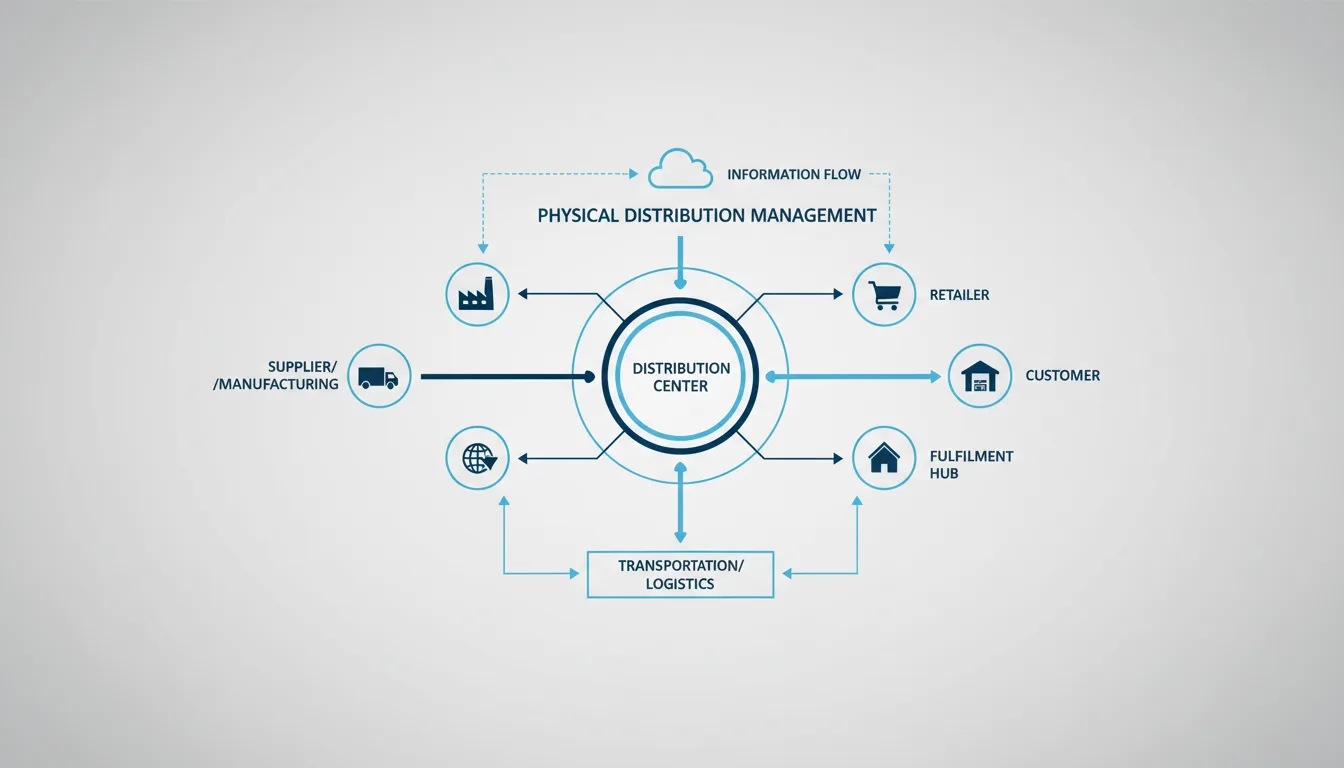
Physical Distribution Management (PDM) encompasses the comprehensive planning, implementation, and control of the efficient, effective forward and reverse flow and storage of goods, services, and related information from the point of origin to the point of consumption. It is a crucial component of the broader supply chain and involves strategic activities such as storage, transportation, order fulfillment, and inventory management. Efficient PDM helps companies reduce operational costs, improve customer satisfaction, and optimize their entire supply chain for competitive advantage and resilience.
Etymology and Origins
The term "physical distribution" emerged in the mid-20th century, specifically gaining prominence in the 1950s and 1960s, as a structured response to the increasing complexity of moving goods in a post-World War II industrial economy. Its linguistic roots are straightforward, combining "physical" to emphasize the tangible movement and handling of goods, and "distribution" to denote the allocation and delivery of products to markets.
One of the earliest explicit discussions of the concept as a distinct business function can be traced to academic and business literature of the 1950s. Early pioneers, such as Peter Drucker in his 1962 work, highlighted that distribution was often the "dark continent" of economic activity, ripe for cost savings and efficiency improvements. John F. Magee's seminal 1960 Harvard Business Review article, "Physical-Distribution Systems," is widely cited as formalizing the concept within management thought, advocating for an integrated approach to managing logistics activities rather than treating them as separate silos. This marked a significant shift from a purely production-centric view to one that recognized the strategic importance of getting products to customers efficiently.
Historical Development
Early Developments (Pre-1950s)
While the formal concept of PDM is relatively modern, the underlying activities have existed since trade began. Early distribution relied on rudimentary transportation infrastructure such as rivers, canals, and dirt roads. The Industrial Revolution in the 18th and 19th centuries spurred advancements in transportation, with the widespread adoption of railroads and steamships, significantly improving the speed and capacity for moving goods over long distances. However, management of these processes remained largely fragmented, focusing more on individual functions like shipping or warehousing rather than an integrated system. The early 20th century saw the rise of modern trucking and the development of standardized packaging, beginning to lay the groundwork for more systematic approaches as companies recognized the importance of efficient delivery systems for mass production and consumption.
1950s and 1960s: The Birth of Modern Logistics
This period witnessed the formal recognition of physical distribution as a distinct management discipline. Companies such as Procter & Gamble began to refine their distribution strategies, driven by the need to efficiently serve growing consumer markets and manage increasing product variety. A key development was the emergence of the "total cost concept" in logistics, championed by academics and consultants like Marvin Bower of McKinsey & Company, which emphasized minimizing the combined costs of transportation, warehousing, inventory holding, and order processing, rather than optimizing each in isolation. Seminal works, such as the first edition of the “Logistics Handbook” by James F. Robeson and R. G. House, published in the 1960s, provided foundational knowledge and systematic frameworks for this emerging field. The establishment of academic programs and professional associations further solidified logistics as a recognized area of study and practice.
The 1970s and 1980s: Computerization and Strategic Thinking
The 1970s brought the introduction of early computer systems into logistics, notably with the development of Material Requirements Planning (MRP) systems in manufacturing, which helped coordinate material flows for production. The 1980s saw significant advancements in information technology and a shift towards strategic thinking in distribution. The adoption of concepts like Just-in-Time (JIT) inventory management, popularized by Toyota, and Total Quality Management (TQM) significantly influenced distribution practices, pushing for reduced inventory levels and higher service quality. This decade also saw the rise of early Enterprise Resource Planning (ERP) systems which began to integrate various business functions, including distribution.
The 1990s and Beyond: Supply Chain Integration and E-commerce
In the 1990s, the concept of Physical Distribution Management evolved into the broader discipline of Supply Chain Management (SCM), integrating procurement, manufacturing, and customer relationship management with PDM. The advent of the internet and Electronic Data Interchange (EDI) played a pivotal role in streamlining order processing, enhancing communication, and improving visibility across the supply chain. The explosion of e-commerce in the late 1990s and early 2000s fundamentally reshaped PDM, demanding faster delivery, more flexible fulfillment options, and robust last-mile solutions. Modern PDM now leverages advanced analytics, automation, and real-time data to meet these complex demands.
Core Concepts
Physical Distribution Management involves several core concepts, each critical for optimizing the flow of goods:
- Transportation: The selection and management of appropriate modes (air, road, rail, water, pipeline) to move goods efficiently. This involves balancing speed, cost, and reliability. Modern PDM also focuses on intermodal transportation and last-mile delivery optimization.
- Warehousing: Encompasses the activities related to storing and handling goods in facilities (warehouses, distribution centers, fulfillment centers) prior to their distribution. Effective warehousing involves optimizing warehouse layout, efficient putaway strategies like bin put-away criteria, and advanced material handling equipment. The design and utilization of warehouse space can significantly impact efficiency, supported by modern warehouse management systems.
- Inventory Control: Maintaining optimal inventory levels to meet customer demand without incurring excessive holding costs or stockouts. Key practices include demand forecasting, setting safety stock levels, and implementing processes like stock replenishment and cycle counting to ensure accuracy. Visual inventory management systems provide real-time visibility.
- Order Fulfillment: The complete process from receiving an order to delivering the product to the customer. This includes picking, packaging, and shipping. Efficiency is enhanced through systems like Pick, Pack, Ship Software and mobile order fulfillment tools.
- Materials Handling: The movement, storage, protection, and control of materials and products throughout the manufacturing, warehousing, distribution, consumption, and disposal processes. Efficient materials handling reduces damage, optimizes space, and speeds up operations.
- Information Flow: The accurate and timely transmission of data across the distribution network. This includes order information, inventory levels, shipment tracking, and customer feedback. Modern PDM heavily relies on integrated systems and workflows for seamless information exchange.
Industry Applications
PDM is essential across various sectors, demonstrating its versatility and critical role in diverse economies:
- Retail: Companies like Walmart utilize sophisticated PDM strategies, including extensive distribution networks and cross-docking facilities, to ensure timely restocking of stores nationwide, minimizing stockouts and maximizing sales.
- E-commerce: Giants such as Amazon leverage advanced PDM technologies, including robotics and AI, to optimize order management and delivery timelines, offering consumers rapid and seamless shopping experiences. This includes complex mobile order fulfillment and last-mile delivery solutions.
- Manufacturing: For a car manufacturer like Toyota, PDM ensures the smooth flow of components from suppliers to assembly plants (inbound logistics) and finished vehicles to dealerships (outbound logistics), often employing Just-in-Time principles to reduce inventory costs and improve production efficiency.
- Food Distribution: Companies like Sysco manage complex cold chains and rapid distribution networks to deliver perishable goods to restaurants and institutions, requiring precise temperature control and expedited delivery schedules to maintain product quality and safety.
Benefits and Advantages
Efficient physical distribution management leads to several advantages:
- Cost Reduction: By optimizing transport routes, warehouse operations, and inventory levels, companies can significantly reduce operational costs, including freight, storage, and handling expenses. A WMS ROI calculator can help quantify these savings.
- Improved Customer Satisfaction: Faster, more reliable delivery times, reduced order errors, and accurate inventory information enhance the overall customer experience, fostering loyalty and repeat business.
- Enhanced Flexibility and Responsiveness: Adapting distribution methods to changing market conditions, such as seasonal demand spikes or new product launches, allows businesses to remain competitive and meet evolving customer expectations.
- Competitive Advantage: Superior PDM can differentiate a company from its competitors by offering better service, lower prices (due to cost savings), or innovative delivery options.
Challenges and Limitations
Despite its advantages, PDM faces several challenges in the modern business landscape:
- Complexity of Global Supply Chain Networks: The sheer number of stakeholders, geographical distances, regulatory requirements, and processes in global supply chains can result in significant inefficiencies and risks.
- Demand Variability and Forecasting Accuracy: Fluctuating consumer demand, often exacerbated by e-commerce and rapid market changes, can lead to excess inventory or costly stockouts. Utilizing automation and advanced analytics in the distribution process can mitigate these risks.
- Rising Transportation Costs: Fuel price volatility, driver shortages, and infrastructure limitations can drive up shipping expenses, impacting profitability.
- Labor Shortages and Workforce Management: Finding and retaining skilled labor for warehouse operations and transportation is an ongoing challenge, impacting operational efficiency and costs.
- Sustainability Pressures: Growing consumer and regulatory demand for environmentally friendly practices requires companies to adopt sustainable logistics solutions, which can involve significant investment and operational changes.
- Geopolitical Risks and Disruptions: Trade wars, natural disasters, and global pandemics can severely disrupt distribution networks, necessitating robust risk management and contingency planning.
Technology and Tools
Modern PDM relies heavily on advanced technology for optimization and efficiency:
- Warehouse Management Systems (WMS): These systems, such as a Mobile WMS, help streamline warehouse operations, manage inventory levels, optimize storage, and improve picking efficiency. They are crucial for tasks like batch picking and cross-docking.
- Transportation Management Systems (TMS): These tools assist in planning, executing, and optimizing the physical movement of goods, including route optimization, carrier selection, and freight auditing.
- Enterprise Resource Planning (ERP) Systems: Provide an integrated suite of business applications that manage and integrate core business processes, often including modules for inventory, warehousing, and order management, offering a holistic view of operations.
- Internet of Things (IoT): Sensors and connected devices provide real-time data on asset location, temperature, and condition, enhancing visibility and security in transit and storage.
- Artificial Intelligence (AI) and Machine Learning (ML): Used for advanced demand forecasting, route optimization, predictive maintenance of vehicles, and automated decision-making in warehouses.
- Robotics and Automation: Automated guided vehicles (AGVs), autonomous mobile robots (AMRs), and robotic arms are increasingly used in warehouses for tasks like picking, sorting, and putaway, improving speed and accuracy.
- Blockchain: Offers enhanced transparency and traceability across the supply chain, particularly valuable for verifying product origins and ensuring ethical sourcing.
Best Practices
To ensure effective PDM, companies should consider the following best practices:
- Invest in Integrated Technology: Implement systems like WMS and TMS that provide real-time data and analytics across the entire distribution network, fostering informed decision-making and end-to-end visibility. SkuSavvy's integrations hub can facilitate this.
- Optimize Network Design: Regularly review and adjust the location and capacity of warehouses, distribution centers, and transportation routes to align with market demand and cost efficiency.
- Foster Collaboration: Build strong relationships and collaborate closely with suppliers, carriers, and 3PLs to improve communication, responsiveness, and overall supply chain performance.
- Embrace Data-Driven Decision Making: Utilize analytics to monitor key performance indicators (KPIs), identify bottlenecks, forecast demand accurately, and continuously improve operations.
- Prioritize Workforce Training and Safety: Invest in regular training for staff on the latest technologies, safety protocols, and best practices to enhance productivity and reduce errors. Employee productivity tracking can also be a useful tool.
- Implement Robust Risk Management: Develop strategies to identify, assess, and mitigate potential disruptions, such as creating contingency plans for natural disasters or supplier failures.
- Focus on Sustainability: Integrate environmentally friendly practices into PDM, such as optimizing routes to reduce fuel consumption, using electric vehicles, and implementing sustainable packaging and waste reduction programs.
- Continuous Improvement: Cultivate a culture of feedback, innovation, and adaptability to respond proactively to changes in market conditions, technology, and customer expectations.
Future Trends
As technology continues to evolve and global markets shift, several trends are expected to profoundly shape the future of PDM:
- Increased Automation and Robotics: Expect wider adoption of AI-powered robotics, drones, and autonomous vehicles in warehouses and for last-mile delivery, leading to higher efficiency and reduced labor dependence.
- Hyper-personalization and On-Demand Delivery: Growing consumer expectations for customized products and immediate delivery will drive the development of more agile, localized fulfillment models and advanced mobile order fulfillment solutions.
- Sustainability and Circular Economy: Environmental concerns will push for greener logistics, including electric fleets, sustainable packaging, reverse logistics for returns and recycling, and a focus on reducing the carbon footprint of distribution networks.
- Predictive Analytics and AI: Advanced AI and machine learning algorithms will enable highly accurate demand forecasting, proactive problem-solving, and dynamic route optimization, moving from reactive to predictive PDM.
- Enhanced Supply Chain Visibility: Leveraging IoT, blockchain, and cloud platforms will provide end-to-end transparency, allowing for real-time tracking of goods and proactive management of disruptions.
- Integration of Physical and Digital Channels: The blurring lines between online and offline retail will necessitate seamless integration of physical distribution with e-commerce platforms, enabling omnichannel fulfillment strategies.
- Resilience and Agility: Global events will continue to emphasize the need for robust, flexible distribution networks that can quickly adapt to disruptions and maintain continuity of supply. This includes diversification of sourcing and distribution channels.
Sources
- Mobile Warehouse Management System
- Stock Replenishment Guide
- Pick, Pack, Ship Software
- Order Management System
- Automated Rate Selection
- Supply Chain Management Definition
- Distribution Center Strategies
- Managing for Results
- Physical-Distribution Systems
- History of US Transportation
- Total Cost Concept in Logistics
- The Next Frontier of Distribution Management
- The Logistics Handbook
- What is MRP?
- Just-in-Time (JIT) Inventory
- Total Quality Management (TQM)
- The Evolution of EDI
- Intermodal Shipping Basics
- Visual Warehouse Layout
- Bin Put-Away Criteria
- Cycle Counting Guide
- Visual Inventory System
- Batch Picking Guide
- Multi-Box Shipping
- Workflows Overview
- Walmart Supply Chain Investment
- Mobile Order Fulfillment Software
- Toyota Global Logistics
- Sysco Business Overview
- WMS ROI Calculator
- Risk Management Strategies in Supply Chain Planning
- Cross-Docking Guide
- WMS vs ERP Analysis
- Integrations Hub
- Productivity Tracking