Peak Season Planning
Peak season planning is crucial for logistics and supply chain management, ensuring readiness to handle increased demand effectively.
Updated
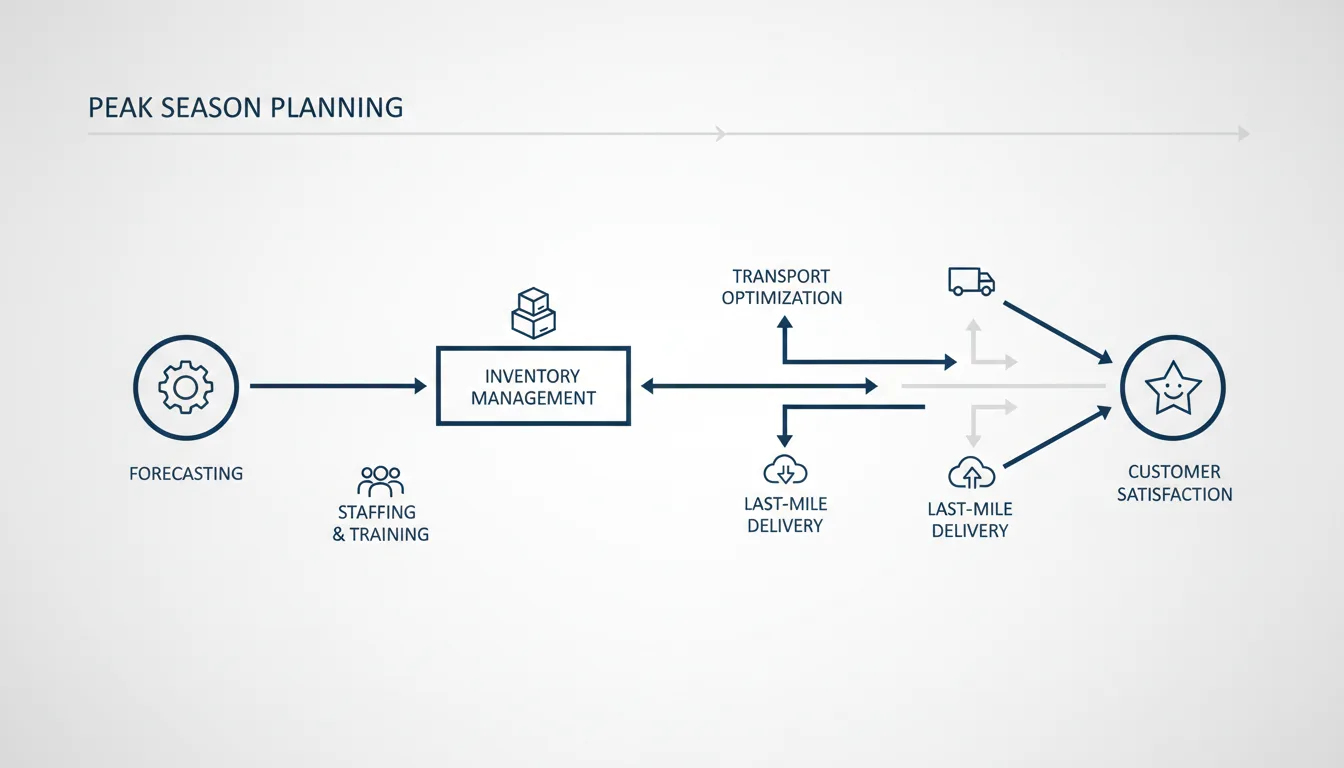
Peak Season Planning
Overview
Peak season planning refers to the strategic methods and processes developed to manage the heightened demand and operational challenges facing businesses during seasonal peaks. This period typically corresponds with holiday shopping, summer sales, or specific industry cycles, where companies experience significant order volume increases. Effective planning is essential for optimizing order fulfillment and ensuring that supply chains function smoothly under pressure.
Etymology and Origins
The term “peak season” originated from the retail and agriculture sectors, where certain times of the year saw a marked increase in production and sales activity. The first documented usage of the term dates back to the early 20th century, as businesses recognized the need for specialized approaches during high-demand periods. It derives from the English word "peak," which refers to the highest point, symbolizing the peak in demand levels. Over time, the term evolved to encompass various industries beyond retail and agriculture, including logistics and supply chain management, reflecting changes in consumer behavior and economic patterns. The recognition of peak seasons became increasingly vital with the rise of global trade and advancements in logistics technology.
Historical Development
Early Practices
Peak seasons have historically been important in agriculture and retail. For example, in the 1950s, suppliers in the United States started adopting more formalized systems for managing inventory levels during holiday seasons. During this period, industry giants like Piggly Wiggly, often credited as pioneers of self-service grocery stores, began to innovate inventory handling that accommodated seasonal peaks.
The Rise of Modern Logistics
With the globalization of supply chains and the introduction of technology in logistics, the concept of peak season planning expanded. Key advancements include:
- 1970s: Adoption of just-in-time inventory practices at companies like Toyota, allowing for more flexibility and responsiveness to demand fluctuations.
- 1990s: The introduction of information technology systems, such as the first Warehouse Management Systems (WMS) which helped optimize logistics processes during busy periods. Notable examples include the development of WMS software by companies like Manhattan Associates.
- 2010s: The emergence of AI and predictive analytics revolutionized forecasting and planning efficiencies, enabling businesses to react rapidly to demand changes. Companies capitalized on big data analytics tools, optimizing their capacity to forecast trends based on historical data.
This evolution was shaped by major industry events and standards such as ISO standards, which set benchmarks for quality and efficiency in logistics practices, further standardizing peak season strategies across regions.
Core Concepts
Effective peak season planning encompasses a range of strategies:
- Demand Forecasting: Utilizing historical sales data, current trends, and market analysis to anticipate demands, with tools leveraging machine learning for better accuracy such as those offered by Salesforce.
- Inventory Management: Implementing techniques such as stock replenishment to ensure sufficient stock levels without excess. Retailers often use inventory optimization algorithms to maintain balance during peak times.
- Resource Allocation: Identifying key resources, including labor and equipment, to optimize fulfillment processes. Leveraging mobile warehouse management systems can enhance workforce efficiency and real-time communication.
Types and Classifications
Peak season planning can be categorized into several types based on industry:
- Retail Planning: Focused on holiday seasons and sales events, emphasizing inventory accuracy and workforce management. Examples include Black Friday preparations by Walmart, which often begin months in advance.
- Manufacturing Planning: Concentrates on production schedules and supply chain logistics during times of high order volumes, such as back-to-school seasons in consumer goods.
- E-commerce Planning: Tailored for online businesses during spikes such as Black Friday and Cyber Monday, where companies may implement temporary warehouses, like those seen in Amazon's extensive logistics network, needing robust fulfillment strategies.
Industry Applications
Various industries implement peak season planning to enhance operational efficiency:
- Retail: Department stores such as Target and Macy’s increase stock levels and workforce during holiday seasons, utilizing advanced WMS solutions for precise inventory tracking.
- E-commerce: Online retailers, including Amazon, utilize automated order management systems to streamline high-volume transactions, often employing algorithms for dynamic pricing and stock availability.
- Food Services: Seasonal crop harvests require precise timing and logistics to manage perishables effectively, with companies like Grubhub adjusting their delivery logistics to accommodate peak meal order times during holidays.
Benefits and Advantages
Planning for peak seasons allows businesses to reap substantial benefits:
- Improved Customer Satisfaction: Timely deliveries and reduced stockouts lead to enhanced consumer trust and repeat purchases, as evidenced by a study by McKinsey & Company which highlighted the importance of reliable service during peak periods.
- Cost Efficiency: Optimizing labor and inventory management helps cut operational costs during busy periods by minimizing waste and improving productivity.
- Competitive Advantage: Companies that excel in peak planning, such as retailers who effectively manage seasonal trends, often outperform their competitors in customer service and sales, particularly during crucial retail calendars.
Challenges and Limitations
Although peak season offers opportunities, numerous challenges arise:
- Demand Volatility: Fluctuating customer behavior complicates inventory management, necessitating predictive models to mitigate uncertainty.
- Labor Shortages: Hiring seasonal workers quickly can be a challenge in competitive job markets, requiring businesses to adopt innovative recruiting strategies and incentives.
- Logistical Complexities: Increased order volume can overwhelm existing processes, requiring adaptive strategies and advanced scheduling tools.
Best Practices
Here are some best practices for effective peak season planning:
- Early Preparation: Start planning well in advance, ideally several months before the peak season, to allow for comprehensive strategy development. Companies like Best Buy typically initiate this process as early as six months in advance.
- Utilize Technology: Implement tools that assist in logistics and inventory management to streamline operations. Technologies employed may include cloud-based platforms for real-time updates.
- Continuous Monitoring: Regularly assess performance metrics during the peak to adjust strategies as needed and ensure objectives are met, using dashboards and reporting tools to track KPIs.
Future Trends
As e-commerce continues to grow, future trends in peak season planning may include:
- Increased reliance on automation and robotics in fulfillment centers, as seen with Walmart’s investment in robot technology for improved efficiency.
- Enhanced data analytics for accurate forecasting and resource allocation, integrating AI capabilities to predict demand spikes more accurately.
- A focus on sustainability and environmentally friendly practices in logistics operations, as companies strive to reduce their carbon footprint during the high-demand seasons.
Conclusion
In summary, peak season planning is a vital discipline within the logistics and supply chain fields, enabling businesses to navigate periods of high demand effectively. By understanding and implementing best practices, companies can enhance operational efficiencies, ultimately resulting in improved customer satisfaction and business growth.