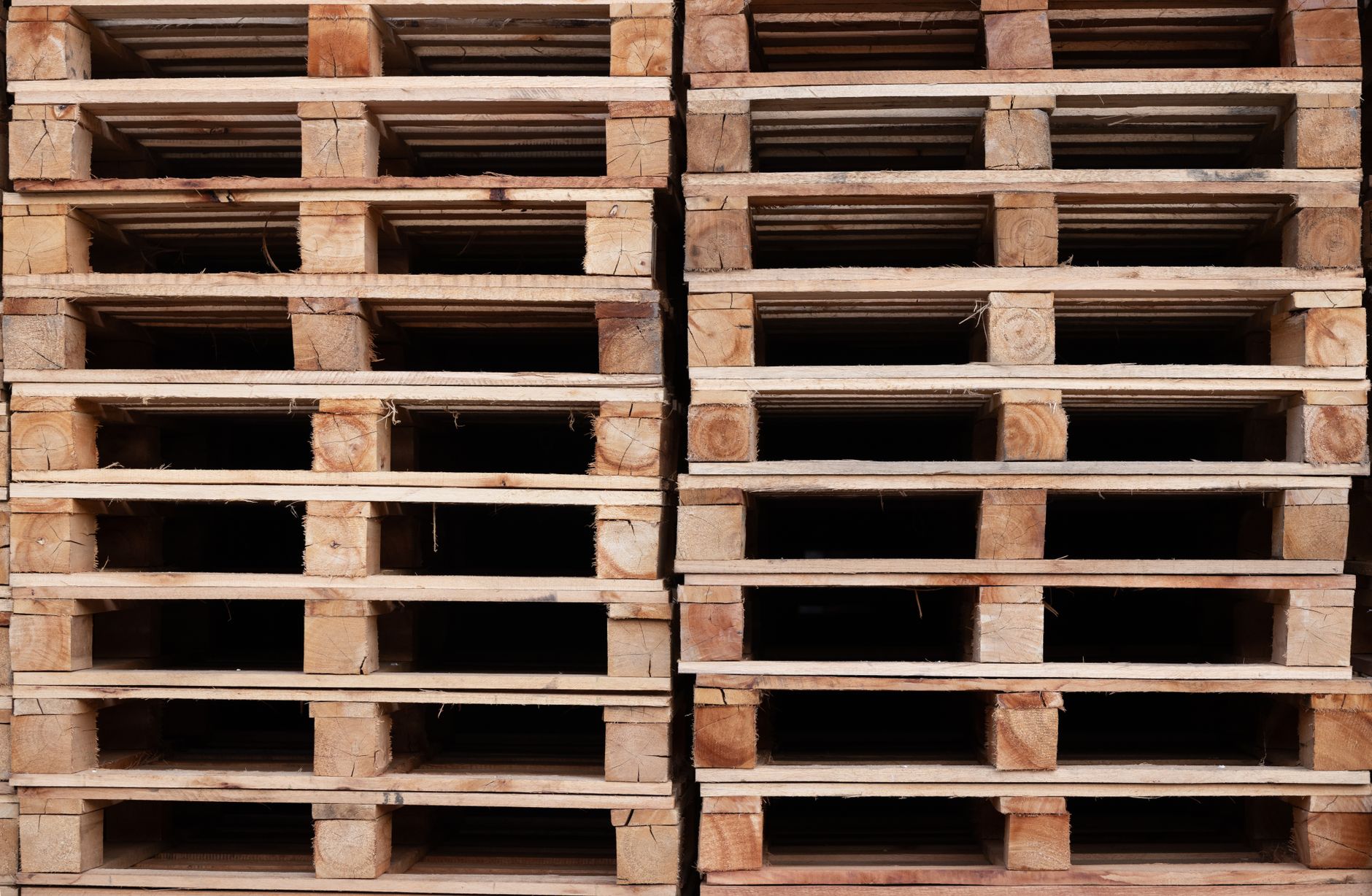
Overview
A pallet exchange program is an arrangement in which trading partners circulate reusable pallets rather than treating every pallet as disposable packaging. Participants may exchange equivalent pallets at delivery, maintain credits and debts for later settlement, or use a third-party pool that supplies and recovers pallets. The purpose is to keep suitable pallets available while allocating the costs and responsibilities of reuse.
Exchange depends on agreement about pallet specifications, condition, documentation, and settlement. The European Pallet Association’s EPAL system illustrates an open system built around standardized, repairable load carriers. By contrast, CHEP’s pooling model uses provider-owned pallets that circulate among participating businesses. Similar dimensions do not by themselves make pallets interchangeable: markings, quality rules, and contractual acceptance criteria determine whether a pallet qualifies as an equivalent return.
Etymology and Origins
A pallet is a platform used to support goods during handling and transport; exchange describes the transfer of a comparable item or corresponding credit in return. Merriam-Webster records several meanings and linguistic histories for “pallet”; the word’s multiple senses should not be assumed to share the same origin. The first documented use of the complete phrase “pallet exchange program” has not been established here.
In logistics, the terminology evolved to cover both immediate physical swaps and arrangements in which an obligation is settled later. The EPAL system uses the language of an open exchange pool, while commercial providers commonly describe their managed arrangements as pallet pooling. Pooling and exchange overlap, but provider-owned rental pallets are not necessarily exchanged or settled in the same way as participant-owned pallets.
Historical Development
Modern pallet exchange grew out of the adoption of forklifts and palletized unit loads in the first half of the twentieth century. During and after World War II, large-scale materials handling encouraged the use of reusable pallets; recurring movements between shippers, carriers, and receivers created practical incentives to return or replace them. No single inventor of pallet exchange is generally established.
In Europe, railway cooperation produced the standardized EUR pallet in 1961, providing a basis for interchange across participating networks. The European Pallet Association, established in 1991, administers an international quality-assurance system for EPAL load carriers. The EPAL Euro pallet’s nominal footprint is 800 × 1,200 mm; other principal dimensions used internationally are specified in ISO 6780. EUR and EPAL markings have not always been treated as automatically interchangeable, so programs should follow the current rules of the relevant pool rather than relying on size alone.
In parallel, commercial pooling developed around reusable equipment supplied and recovered by a pool operator. CHEP traces its origins to equipment left in Australia after World War II and the subsequent Commonwealth Handling Equipment Pool; its company history describes the development of its pooling business.
From the 1970s onward, barcodes and computerized business systems made it easier to record shipment and inventory events. The GS1 barcode standards underpin identification used across many supply chains. Later, electronic data interchange, online account reconciliation, and, in some applications, RFID and analytics extended visibility. These technologies support exchange administration, but their use varies by program.
Core Concepts and Process
An exchange agreement defines the acceptable pallet type and quality, the parties responsible for each movement, and the evidence needed to settle an obligation. A typical process is:
- Dispatch: The shipper records the number and type of pallets sent with a load.
- Receipt: The receiver and, where applicable, the carrier verify quantities and condition. Discrepancies are recorded on a delivery document or pallet receipt.
- Exchange or credit: The receiver supplies acceptable empty pallets immediately, or the parties record a balance for later settlement.
- Recovery and repair: Empty pallets return to a participant or approved repair channel. Damaged pallets are segregated according to the program rules.
- Reconciliation: Partners compare records, investigate differences, and settle outstanding balances under their agreement.
For example, if a carrier delivers 24 eligible pallets and receives 18 acceptable empties, the delivery may create a balance of six pallets owed, subject to the contract. A later return, agreed transfer, or financial settlement can clear the balance. The signed count and condition matter because an unsuitable pallet need not qualify as an equivalent replacement.
Warehouse records can support these controls. Barcode procedures and cycle counting can help identify and check pallet inventory, although they do not by themselves establish a contractual exchange ledger. Where systems must share movement data, an integration using SkuSavvy’s developer resources is a possible approach; its suitability for a particular pallet ledger requires technical assessment.
Types and Classifications
- Immediate physical exchange: The receiver gives the carrier or shipper an agreed number of equivalent empty pallets at delivery. This avoids an open balance but requires suitable empties at the dock.
- Deferred exchange: The parties record a pallet debt or credit and settle it later. This is useful when empties are unavailable, but it creates reconciliation work and counterparty risk.
- Open-pool exchange: Compatible pallets circulate among participants under shared specifications and quality rules. The EPAL system is an example; acceptance and settlement still depend on the parties’ arrangements.
- Managed pooling: A provider owns or controls the pallets, supplies them to customers, and arranges recovery and servicing. CHEP’s pooling services illustrate this model. Fees, reporting duties, and transfer-of-responsibility rules depend on the provider’s agreement.
- Closed-loop reuse: A company or defined group returns pallets within a controlled network. Specialized plastic or metal pallets can be used where their higher initial cost is justified by repeated trips or particular handling requirements.
Industry Applications and Benefits
Food, beverage, retail, and consumer-goods supply chains often move standardized unit loads between manufacturers, distribution centers, and stores. Exchange or pooling can reduce the need to purchase a new pallet for every shipment, provided recovery, repair, administration, and losses are controlled. It can also support consistent handling where pallet dimensions match equipment and storage systems.
Manufacturers with regular inbound and outbound routes may use closed loops for durable, application-specific pallets. In cross-docking, a consistent pallet specification helps goods move between vehicles with limited intermediate storage; the cross-docking process still requires checks on pallet condition and ownership or account responsibility.
Reuse is not automatically the lowest-cost or lowest-impact option: empty transport distance, repair rates, trip life, and loss rates affect the result. A comparison should include purchase or rental charges, handling, reverse transport, repair, administration, and disposal. Warehouse inventory visibility can support local stock control, while program-level balances may require separate records or integration.
Challenges, Standards, and Best Practices
Prevent disputed balances. Specify the pallet type, acceptable condition, count procedure, settlement deadline, and treatment of shortages in contracts. Reconcile by trading partner and location regularly; retain delivery receipts and resolve exceptions promptly. A useful measure is outstanding pallets by age, supplemented by loss rate and cost per completed pallet trip. For consistent reporting, define the start and end of a trip and the period used to calculate losses before comparing partners or programs.
Control quality and safety. Inspect pallets for broken components, protruding fasteners, contamination, and other defects before loading or acceptance. Segregate unsafe pallets and use authorized repair channels where the relevant pool requires them. Follow the applicable EPAL quality rules for EPAL equipment rather than assuming all visually similar pallets are interchangeable. In the United States, OSHA’s materials-handling rule also requires stored materials to be secured against sliding or collapse and storage areas to be kept free of hazards.
Plan for cross-border requirements. International movements of wood packaging may be subject to phytosanitary rules under ISPM 15. Check destination-country requirements, exemptions, treatment and marking rules, and the status of repaired or remanufactured wood packaging. Pool membership alone is not proof of compliance for every shipment.
Match records to physical flows. Define when responsibility transfers—for example, at dispatch, receipt, or an accepted account transfer—and ensure warehouse and carrier records use the same event. Purchase-order check-in procedures and barcode workflows can support receiving discipline; a dedicated pallet-accounting process may still be needed for credits, disputes, and settlements. Record the shipment reference, pallet type, quantities accepted and rejected, parties, event date, and evidence of agreement so that exceptions can be investigated without relying solely on an aggregate balance.